Source HVAC and Foodstuff Digital Food Thermometer for Home, Restaurant, and Industrial Use
Explore 30 listings for the HVAC and Foodstuff Digital Food Thermometer to compare features like accuracy, temperature range, and response time. Buyers can evaluate options from Guangdong and Hebei suppliers with customizable designs and CE, ROHS certifications for various applications.
Key considerations
Products List
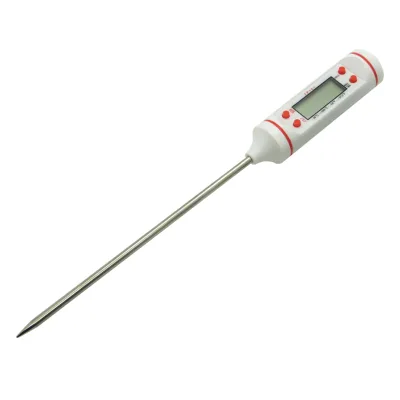


Digital Food Thermometer with Real-Time Reading Probe for BBQ Meat Liquid
$4.00 - $5.50
MOQ: 1000 Pieces


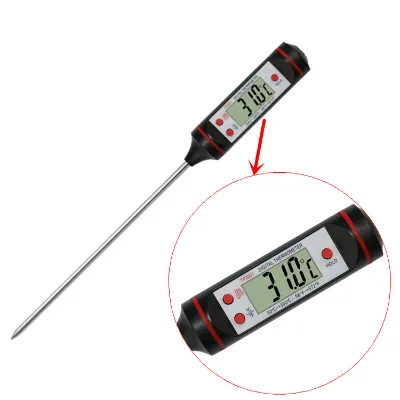
How to Read a Food Thermometer/ Meat Digital Thermometer Food Safe Thermometer
$2.35 - $2.50
MOQ: 100 pieces


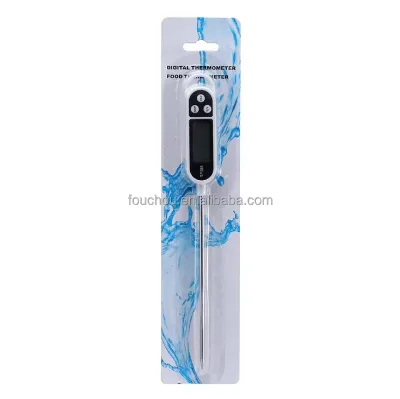

Digital Thermometer Cooking Food Probe Meat Kitchen BBQ Temperature Instruments
$0.60 - $0.95
MOQ: 10 Pieces
Comprehensive Sourcing Guide
Strategic Sourcing Guide for HVAC and Foodstuff Digital Food Thermometers
Understanding the Product Landscape and Core Specifications
The intersection of HVAC (Heating, Ventilation, and Air Conditioning) systems and foodstuff processing often requires precise thermal monitoring to ensure safety, efficiency, and regulatory compliance. In this context, the digital food thermometer serves as a critical diagnostic and operational tool. Unlike general-purpose thermometers, these devices are engineered to withstand the specific environmental conditions found in commercial kitchens, cold storage facilities, and industrial HVAC ducts where temperature gradients can be extreme. The core product category identified in current market data includes digital food thermometers with model numbers such as TP101-L, TP3001, and LDT-133. These devices are primarily categorized as thermometers with a specific feature set designed for cooking, BBQ, and industrial usage.
The technical specifications of these units reveal a high degree of standardization in the Chinese manufacturing sector, particularly from origins in Guangdong and Hebei. A fundamental observation across multiple product listings is the temperature measurement range, which consistently spans from -50°C to 300°C (-58°F to 572°F). This wide operational window is essential for applications ranging from deep-freeze monitoring in cold storage to high-heat searing in commercial grills. The resolution for these devices is typically 0.1°C or 0.1°F, allowing for granular data capture that is necessary for HACCP (Hazard Analysis and Critical Control Points) documentation. Furthermore, the accuracy is generally cited as ±1°C, with some industrial-grade variants claiming an accuracy of ≤0.5°C. Buyers must verify that the specific unit selected matches the precision requirements of their specific HVAC or food safety protocols, as a deviation of even a fraction of a degree can impact food safety compliance.
Compliance, Certification, and Regulatory Standards
When sourcing digital food thermometers for commercial use, particularly in the food and HVAC sectors, compliance with international safety and environmental standards is non-negotiable. The supply chain data indicates that products often adhere to CE and ROHS standards. The CE marking signifies conformity with health, safety, and environmental protection standards for products sold within the European Economic Area, while ROHS (Restriction of Hazardous Substances) ensures that the electronic components do not contain specific hazardous materials like lead or mercury. These certifications are critical for importing these devices into regulated markets.
However, buyers must exercise caution when interpreting these standards. While the data lists CE and ROHS as product standards, it does not provide specific test reports or certification body names. Therefore, procurement teams should not assume that every unit in a batch is automatically certified. Instead, the sourcing strategy must include a verification step where the supplier provides valid, up-to-date certificates of conformity for the specific model being ordered. Additionally, the standard measurement units are listed as Celsius, Fahrenheit, or a switchable Celsius/Fahrenheit format. This dual-standard capability is a significant feature for international supply chains, ensuring that the device can be used in regions with different regulatory temperature reporting requirements. The absence of specific national food safety certifications (such as FDA or NSF) in the provided data means that buyers must explicitly request these if their local jurisdiction mandates them for food contact equipment.
Cost Drivers and Economic Factors in Procurement
The economic landscape for digital food thermometers is influenced by several distinct variables, including the complexity of the probe, the durability of the housing, and the level of customization required. The observed price range in the market is substantial, spanning from $0.43 to $17.50 USD. This wide disparity is not merely a reflection of brand premium but is driven by the underlying specifications and production methods. Lower-cost units, often priced near the bottom of the range, typically feature basic blister packing, standard battery types like the 1.5V Lr44 button battery, and fixed probe lengths. In contrast, higher-priced units may offer advanced features such as data-hold functions, auto-shutoff capabilities to conserve power, and customizable probe dimensions.
The Minimum Order Quantity (MOQ) is another critical cost driver, with observed ranges extending from 1 unit to 1,000 units. For small businesses or pilot projects, the ability to source single items or small batches is advantageous, though the per-unit cost may be higher. Conversely, large-scale procurement for industrial HVAC or food processing chains can leverage the lower end of the price spectrum by meeting higher MOQ thresholds. Packaging also plays a role in cost; options range from simple blister cards and tubes to more robust color boxes and cartons. The choice of packaging affects not only the initial unit cost but also the logistics and storage efficiency during shipping. Buyers should calculate the total landed cost, including packaging, to determine the most economical option for their specific volume needs.
Typical Applications in HVAC and Food Processing
The versatility of digital food thermometers allows them to serve dual purposes in the HVAC and foodstuff industries. In the food processing sector, these devices are indispensable for ensuring that food products reach safe internal temperatures to eliminate pathogens. The "Cooking BBQ Thermometer" feature highlights their utility in high-heat culinary applications, where precise monitoring of meat and other proteins is required to prevent undercooking or overcooking. The sampling time of approximately 2 seconds is a key performance metric for these applications, allowing for rapid feedback in fast-paced kitchen environments.
In the HVAC context, the application is slightly different but equally critical. While the primary function remains temperature measurement, the devices are used to monitor the efficiency of cooling systems, check the temperature of air ducts, and ensure that food storage units within the facility maintain the correct thermal environment. The ability to measure down to -50°C makes these thermometers suitable for verifying the performance of industrial freezers and cold chain logistics. The "Industrial" usage tag found in the product data suggests that these units are built to withstand harsher environments than typical household models. The data-hold function is particularly useful in these scenarios, allowing technicians to record a reading without holding the probe in the exact spot, which is beneficial when working in tight or hard-to-reach ductwork.
Supplier Evaluation and Customization Capabilities
Evaluating suppliers for digital food thermometers requires a focus on their manufacturing capabilities and flexibility. The data indicates that the primary place of origin is Guangdong, China, with some production also occurring in Hebei. Guangdong is a major hub for electronics manufacturing, known for its supply chain efficiency and technical expertise. A critical factor in supplier selection is the "private mold" status. The provided information states that the products listed do not have private molds, meaning they are likely off-the-shelf designs rather than custom-engineered products. However, the data also explicitly lists "Customization: Available" and "Product Appearance: Customizable."
This apparent contradiction suggests that while the core mold may be shared, suppliers are willing to offer customization services such as branding, color variations (Black or White are observed), and potentially probe length adjustments. For buyers requiring specific branding or unique probe dimensions for specialized HVAC probes, the ability to customize the product appearance and dimensions is a significant advantage. The "Other Functions" listed, such as low power prompts and auto-shutoff, also indicate a level of sophistication in the firmware that can be tailored. Buyers should inquire about the lead times for these customizations, as they will invariably be longer than for standard stock items. Additionally, the "Single package size" and "Dimension" specifications (e.g., 2602515mm) provide a baseline for logistics planning, but customization will alter these figures.
Quality Control and Performance Verification
Ensuring the quality of digital food thermometers requires a rigorous approach to quality control (QC) that goes beyond relying on the supplier's self-reported specifications. The observed resolution of 0.1°C and accuracy of ±1°C or ≤0.5°C are theoretical values that must be validated through independent testing. Buyers should implement a sampling plan that includes testing for temperature accuracy across the entire range, from -50°C to 300°C. This is particularly important because the accuracy of a sensor can drift over time or vary depending on the ambient temperature.
The power supply, typically a 1.5V Lr44 button battery, is another area requiring QC attention. The "Low Power Prompt" feature is a valuable safeguard, but the actual battery life and the reliability of the prompt mechanism should be verified. Furthermore, the physical durability of the device is crucial, especially for industrial applications. The "Probe Length" being customizable implies that the probe material and construction are variable. Buyers should request samples to test the probe's resistance to corrosion, impact, and thermal shock. The "Data-Hold Function" and "Auto Shutoff" are software features that must be tested for reliability; a failure in the auto-shutoff could lead to battery drain, while a malfunctioning data-hold could result in lost critical data.
Long-Term Procurement and Supply Chain Considerations
Sourcing digital food thermometers is not a one-time transaction but a long-term relationship that requires strategic planning. The availability of "Customization" and the potential for "Private Mold" development (even if currently marked as "No" for specific models) suggest that suppliers are capable of evolving with the buyer's needs. For large organizations, establishing a long-term contract with a supplier in Guangdong or Hebei can secure better pricing and priority production slots. However, the lack of specific lead time data in the provided facts necessitates that buyers negotiate clear delivery schedules in their contracts.
The "Selling Units" being listed as "Single item" indicates a flexible purchasing model, but for bulk orders, the "Carton" or "Box" packing options become more relevant for shipping efficiency. Buyers should also consider the lifecycle of the product. Since the devices rely on replaceable button batteries, the availability of replacement parts and the ease of battery replacement should be factored into the total cost of ownership. Finally, the "Standard" of Celsius/Fahrenheit switchability ensures that the product remains relevant in global markets, but buyers must ensure that the firmware updates or hardware revisions do not inadvertently change the calibration standards. By maintaining a focus on verified specifications, robust quality control, and flexible supplier relationships, procurement teams can effectively manage the acquisition of digital food thermometers for both HVAC and foodstuff applications.
FAQs
What temperature range do these thermometers cover?
These devices measure from -50°C to 300°C (-58°F to 572°F). This wide range supports both deep-freeze monitoring in cold storage and high-heat searing in commercial grills for industrial applications.
How accurate are the temperature readings provided?
The accuracy is generally cited as 1°C, with some industrial-grade variants claiming an accuracy of ≤0.5°C. Buyers must verify that the specific unit selected matches the precision requirements of their food safety protocols.
Can I find units with CE and ROHS certifications?
Yes, products often adhere to CE and ROHS standards. However, buyers should verify that the supplier provides valid, up-to-date certificates of conformity for the specific model being ordered rather than assuming automatic certification.
What is the minimum order quantity for these items?
The observed minimum order quantity ranges from 1 to 1000 units. Small businesses can source single items, while large-scale procurement for industrial chains can leverage lower per-unit costs by meeting higher MOQ thresholds.
Are customization options available for the product appearance?
Customization is available for product appearance and probe length, even if the core mold is not private. Suppliers offer branding, color variations like black or white, and adjustable probe dimensions for specialized HVAC or food applications.
Which battery type powers these digital thermometers?
The power supply typically uses a 1.5V Lr44 button battery. The device includes a low power prompt feature, but actual battery life and reliability should be verified during quality control sampling before bulk purchasing.