Source Hydraulic Excavator O-Ring Kit for Seals, Engines, and Cylinders
Find and compare 30 hydraulic excavator o-ring kit options for cylinder seals, engine components, and stationary applications. Evaluate NBR and FKM materials, hardness ratings, and customization features to select the right seals for high-pressure and high-temperature environments.
Key considerations
Products List






Comprehensive Sourcing Guide
Hydraulic Excavator O-Ring Kit Sourcing Guide
Procuring a hydraulic excavator O-ring kit requires a disciplined approach to aligning component specifications with the rigorous demands of heavy machinery operation. These kits are essential for maintaining the integrity of hydraulic systems, preventing fluid leaks, and ensuring the longevity of critical actuators and pumps. Buyers must recognize that while the core function remains consistent, the specific material composition and dimensional tolerances vary significantly based on the operating environment, such as exposure to extreme temperatures or specific hydraulic fluids.
The sourcing process begins with a clear definition of the operational parameters, including pressure ranges and working media, which directly influence the selection of the correct seal material. Given that these components often operate under high pressure and high-speed conditions, verifying the hardness and temperature resistance of the rubber compounds is paramount. A mismatch in these attributes can lead to premature failure, resulting in costly downtime and potential safety hazards on the construction site.
Product Scope and Observed Listing Signals
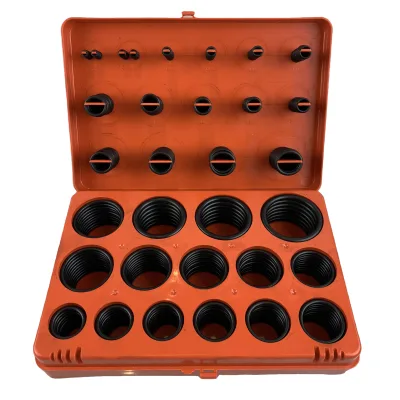
The market for hydraulic excavator O-ring kits presents a diverse range of product listings, often categorized under general terms like "O Ring Kit" or specific identifiers such as "Excavator O Ring" and "Rubber Seal O-ring Kit." Buyers should observe that product names can vary, with some listings emphasizing the kit format while others focus on individual components like the "O Ring Box" or "Name1: Rubber O Ring." This variation in nomenclature requires careful scrutiny of the product description to ensure the listing actually contains a comprehensive set of seals suitable for the intended machinery repair or maintenance task.
Listing signals also reveal significant variability in customization options and material availability. While some products are listed with standard dimensions, others explicitly offer "Customized" sizes and "Acceptable" OEM specifications, indicating a flexible supply chain capable of meeting unique equipment requirements. The observed presence of multiple color options, including black, white, green, red, yellow, and blue, suggests that suppliers may use color coding for different material grades or pressure ratings, a feature buyers should verify against their specific technical drawings to avoid confusion during installation.
Technical Specifications to Verify
Technical verification must begin with the material composition, as the supplied data indicates a range of options including NBR, FKM, Silicon, and HNBR. Each material offers distinct advantages regarding resistance to hydraulic oil, water, coal gas, and atmospheric conditions. Buyers must confirm that the selected material matches the specific working medium of their excavator, as NBR is commonly used for general hydraulic oil applications, while FKM or HNBR may be required for more aggressive chemical environments or higher temperature thresholds.
Pressure and temperature ratings are equally critical, with observed specifications ranging from 0 to 60 MPa and operational temperatures spanning from -20°C to +220°C, or even up to 300°C in some listings. It is essential to cross-reference these ranges with the actual operating conditions of the hydraulic system, noting that some products are rated for "High Pressure" and "High Speed" applications while others are designated for "Stationary Seal" usage. Additionally, hardness values typically fall between 20 and 90 Shore, and selecting the correct durometer is vital to ensure the seal can withstand extrusion forces without deforming or losing its sealing capability.
Compliance and Safety Documentation
While specific certification documents are not explicitly detailed in the provided product facts, buyers should expect suppliers to provide evidence of adherence to standard manufacturing practices, as indicated by the "Standard" and "Standanrd" classifications found in various listings. The absence of specific certification names in the data suggests that compliance is often implied through the product's adherence to recognized industry standards rather than a specific third-party badge. Procurement teams must therefore request explicit documentation regarding material safety data sheets (MSDS) and compliance with relevant international standards for rubber products used in heavy machinery.
Quality assurance documentation should also address the physical integrity of the seals, with observed requirements stating that products must be "free of knit, void, lack of material, tool mark and any imperfect." This visual and structural standard is a critical safety indicator, as defects can lead to sudden seal failure under high pressure. Buyers should insist on a quality control report that verifies these surface and structural attributes, ensuring that the delivered kits meet the rigorous safety expectations required for hydraulic systems operating in demanding construction environments.
Cost Drivers and Commercial Terms
Cost drivers for hydraulic excavator O-ring kits are heavily influenced by the level of customization and the complexity of the material formulation. Listings show a wide range of Minimum Order Quantities (MOQ), from as low as 10 pieces to 1000 pieces, and some specify 10 boxes as a baseline. This variability suggests that pricing structures are often tiered based on volume, with custom materials like FKM or specialized sizes commanding a premium over standard NBR options. Buyers must analyze their inventory needs against these MOQ thresholds to optimize their purchasing strategy and avoid unnecessary capital tie-up.
Commercial terms also encompass packaging and logistics, with observed data indicating "Carton Box" or "Carton" packaging and specific single package sizes like 10x10x20 cm. These packaging details impact shipping costs and storage efficiency, particularly for large orders. Furthermore, the acceptance of OEM services and custom processing implies that buyers may incur additional costs for tailored solutions. It is advisable to clarify whether the quoted price includes the cost of custom processing services and to understand the lead times associated with non-standard orders, as these factors can significantly affect the total cost of ownership.
Supplier Qualification and Quality Control
Supplier qualification should focus on their ability to provide consistent quality and their capacity for customization, as evidenced by the "Custom" processing service and "Acceptable" OEM status found in the listings. Buyers should verify the supplier's origin, noting that products are sourced from regions like Hebei and Fujian, China, which are known hubs for rubber manufacturing. Understanding the geographic origin can provide insights into the supplier's logistical capabilities and their familiarity with international shipping requirements, which is crucial for maintaining a reliable supply chain.
Quality control processes must be robust, with suppliers expected to adhere to the "Standard" or "Nonstandard" classifications mentioned in the product attributes. Buyers should request a detailed quality assurance protocol that outlines how the supplier ensures the "free of knit, void, lack of material" requirement is met for every batch. Additionally, the ability to provide "Customized Material" options indicates a supplier's technical competence, but this must be backed by a rigorous testing regime to ensure that the custom formulations perform reliably under the specific pressure and temperature conditions of the excavator's hydraulic system.
Long-Term Procurement Checks
Long-term procurement success depends on establishing a relationship with suppliers who can consistently deliver high-performance seals that meet the evolving needs of the machinery fleet. Buyers should monitor the consistency of product attributes, such as hardness and material composition, across multiple orders to ensure that the seals continue to perform as expected over time. Regular audits of the supplier's quality control records and material certifications will help maintain the integrity of the hydraulic systems and prevent unexpected failures.
It is also essential to track the performance of the seals in real-world applications, noting any deviations from the expected operational temperature range or pressure limits. Since the observed data includes a wide range of working media and temperature capabilities, buyers should maintain a feedback loop with their maintenance teams to identify any early signs of seal degradation. This proactive approach allows for timely adjustments to the procurement strategy, ensuring that the selected O-ring kits remain compatible with the machinery's operational demands and continue to provide reliable sealing performance.
FAQs
What materials are used for hydraulic excavator o-ring kits?
These kits typically use NBR, FKM, Silicon, or HNBR rubber materials. Customized material options are acceptable to meet specific application needs for hydraulic oil and water environments.
Can I customize the size and color of the o-ring kit?
Yes, the size is available as customized or based on AS568 and JIS standards. Colors include black, white, green, red, yellow, and blue, with customized options also acceptable.
What is the minimum order quantity for these o-ring kits?
The minimum order quantity varies by supplier but can be as low as 10 boxes or 10 pieces. Some listings indicate an MOQ of 1000 pieces depending on the specific vendor.
How does the hardness of the o-ring affect its performance?
The hardness ranges from 20 to 90 Shore, ensuring durability under high pressure up to 60MPa. This range supports high-speed and high-temperature applications in hydraulic systems.
Where are these hydraulic o-ring kits manufactured?
Products originate from locations such as Hebei and Fujian in China. The packaging is typically provided in carton boxes for safe transport and storage.
What is the operational temperature range for these seals?
The seals function effectively within a temperature range of -20 to +220 degrees Celsius. Some specifications extend this range to -25 to 300 degrees Celsius for extreme conditions.
Are OEM services available for custom o-ring kits?
Yes, OEM services are acceptable for customizing the product according to buyer requirements. Custom processing services are available to ensure the product meets specific engineering standards.