Source Hydraulic Folding Container House for Office, Hotel, Dormitory
Explore 30 listings for the Hydraulic Folding Container House with Buckle Fixing System, designed for offices, hotels, and construction site dormitories. Buyers can compare features like wind resistance, waterproof ratings, and fast installation options across multiple suppliers.
Key considerations
Products List


Collapsible House Folding Container House with Quick Setup for Storage
$1200.00 - $1600.00
MOQ: 1 Sets


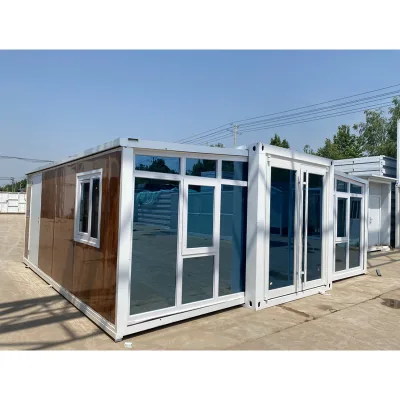


Foldable Modular Container House for Dealer Supply with Transport Efficient Design
$410.00 - $485.00
MOQ: 1 Square Meters
Youran Mushe (Shandong) Cultural and Creative Technology Co., Ltd


Fast Assemble Foldable Container House Portable Folding Container House
$999.00 - $1300.00
MOQ: 10 Pieces


Comprehensive Sourcing Guide
Strategic Sourcing Guide for Hydraulic Folding Container Houses with Buckle Fixing Systems
The global demand for rapid-deployment modular accommodation has elevated the hydraulic folding container house with a buckle fixing system to a critical asset in construction, emergency relief, and temporary hospitality sectors. This specific configuration combines the logistical efficiency of foldable units with the structural integrity provided by a hydraulic deployment mechanism and a secure buckle fixing system. For procurement professionals, navigating this category requires a disciplined approach to verifying technical claims, understanding cost drivers, and ensuring long-term operational viability. The following guide outlines the essential factors for sourcing these units, grounded in observed market data and technical specifications.
Technical Architecture and Deployment Mechanics
The core differentiator of a hydraulic folding container house lies in its structural system and deployment method. Unlike traditional rigid containers that require heavy lifting equipment for placement, these units utilize a hydraulic system to expand the structure from a compact, folded state to a fully habitable volume. The primary structural framework typically consists of a galvanized steel frame, often described as a galvanlized special profile combined with square tubes. This material choice ensures resistance to corrosion and provides the necessary load-bearing capacity for the folding mechanism.
The connection method is paramount for safety and stability. The observed market data highlights a "Hinged Folding Structure with Buckle Fixing System." This system allows the unit to be folded for transport and then locked into place using buckles, ensuring that the expanded structure maintains its geometric integrity under load. The hydraulic component facilitates the raising of the roof and walls, significantly reducing manual labor and installation time. In terms of dimensions, the standard models observed include 20FT and 40FT configurations, with specific model designations such as F1 and F2. The F1 model, for instance, is noted for a specific structural composition involving a galvanized steel frame and sandwich panels, while the F2 model may offer variations in application or capacity.
The envelope of the structure is critical for environmental performance. The walls and roof are constructed using sandwich panels, specifically noted as EPS (Expanded Polystyrene) sandwich panels in some configurations. These panels provide thermal insulation, moisture proofing, and leak-proof capabilities. The flooring is typically specified as an 18mm cement sanding board, offering a durable and level surface. The door system is often a special flat door with dimensions around 950×1970mm, designed to fit the foldable geometry while maintaining security.
Compliance, Safety Ratings, and Performance Verification
When sourcing hydraulic folding units, verifying compliance with safety and performance standards is non-negotiable. The market data indicates specific performance ratings that buyers must validate against local regulations. For wind resistance, observed specifications cite Level 11, which implies a high capacity to withstand severe weather conditions. However, buyers must confirm that this rating aligns with the specific wind zone requirements of the project location. Similarly, the waterproof rating is listed as IP65, indicating protection against dust and low-pressure water jets, which is essential for outdoor applications.
Fire safety is another critical compliance area. The data references a Fire Resistance Rating of Level a. In many jurisdictions, this classification corresponds to specific non-combustible or fire-retardant material standards. Procurement teams must request third-party test certificates to verify that the sandwich panels and structural steel meet the fire safety codes of the destination country. Additionally, seismic performance is described as "Excellent (Suitable for Seismic Zones)," suggesting the hinged and buckle-fixing design allows for some flexibility during ground movement. Nevertheless, for projects in high-risk seismic areas, local engineering certification is required to validate this claim.
The service life and durability are also key compliance metrics. While some data points suggest a structural durability of 20-30 years, other entries mention a service life of 10 years. This discrepancy highlights the importance of defining the expected usage intensity. Buyers should verify the warranty terms, which are commonly listed as 1 year for the overall product, and clarify what specific components are covered under this warranty. The electrical system is pre-wired with a distribution box and leakage protector, but the voltage and frequency must be verified to match the local grid standards.
Cost Drivers and Total Cost of Ownership
The pricing for hydraulic folding container houses varies significantly based on specifications, ranging from approximately $410 to $11,900 USD per unit. This wide range is driven by several factors, including the size (20FT vs. 40FT), the complexity of the hydraulic system, the quality of the sandwich panels, and the level of customization. The "Hydraulic" aspect itself is a major cost driver, as it involves precision engineering, pumps, and control systems that are more expensive than manual folding mechanisms.
Logistics costs are a significant component of the total cost of ownership. The primary advantage of these units is the ability to fold them for shipping, which can save up to 70% in logistic costs compared to rigid containers. However, the initial shipping cost must be calculated based on the folded volume. The packing method is typically "Container" shipping, with some units packed in bubble wrap or specifically designated 40HQ containers. Buyers must consider the MOQ (Minimum Order Quantity), which ranges from 1 to 16 units. Ordering in larger quantities often reduces the per-unit cost but increases the initial capital outlay.
Other cost drivers include the customization options. While customization is available, it invariably adds to the base price. Features such as specific electrical configurations, enhanced insulation, or specialized interior finishes will increase the unit cost. Additionally, the after-sale service and warranty terms can influence the long-term cost. A higher upfront price might be justified if it includes comprehensive after-sale support, spare parts availability, and extended warranty coverage.
Typical Applications and Usage Scenarios
The versatility of hydraulic folding container houses makes them suitable for a wide range of applications. The primary use case observed is for construction site temporary dormitories, where rapid deployment and durability are essential. These units provide immediate shelter for workers, reducing the time and cost associated with setting up traditional temporary housing. The "Fast Installation" attribute is particularly valuable in this context, allowing sites to become operational quickly.
Beyond construction, these units are increasingly used in the hospitality sector. The data lists applications for hotels and apartments, suggesting that the units can be configured for guest accommodation. The "Luxury Prefabricated Houses" keyword indicates that some models are designed with higher-end finishes and amenities to compete with traditional lodging. The ability to be easily movable and flexibly combinable allows for the creation of temporary resorts or pop-up hotels in remote locations.
Other applications include office spaces, multi-function usage areas, and emergency relief housing. The "Eco-Friendliness" and "Recycle" advantages make them suitable for projects with sustainability goals. The units can be disassembled and relocated, reducing waste. The "Outdoor" area specification confirms their suitability for external environments, provided they are installed on a suitable foundation. The occupancy capacity is typically noted as two people per unit, though this can vary based on the specific model and configuration.
Supplier Evaluation and Quality Control
Selecting the right supplier is critical for the success of any procurement project involving hydraulic folding units. Buyers should evaluate suppliers based on their manufacturing capabilities, specifically their experience with steel structures and sandwich panel integration. The origin of the products is predominantly China, with specific mentions of Henan and Hubei provinces. While these regions are known for manufacturing, buyers must verify the specific factory's quality control processes.
Key evaluation criteria include the supplier's ability to provide detailed technical drawings, material certificates, and test reports. The "Main Material" should be verified as Galvanized Steel Structure + EPS Sandwich Panel to ensure durability. The hinge mechanism, described as a Stainless Steel Shaft & Standard Shaft, should be inspected for quality and corrosion resistance. The floor material, specified as 18mm Cement Sanding Board, must be checked for thickness and load-bearing capacity.
Quality control should extend to the electrical system. The pre-wired distribution box and leakage protector must be installed correctly and tested for safety. The lighting system, typically LED strip lights, should be energy-efficient and durable. Buyers should also assess the supplier's after-sale service capabilities, including the availability of spare parts and technical support. The "After-Sale Service" attribute is listed, but the scope and duration of this service must be clearly defined in the contract.
Long-Term Procurement and Lifecycle Management
Procuring hydraulic folding container houses is not just a one-time transaction but a long-term investment. The lifecycle of these units can range from 10 to 30 years, depending on the structural durability and maintenance practices. Buyers should plan for regular maintenance, particularly for the hydraulic system and the buckle fixing mechanism. The "Life Span" of 20-30 years for structural durability suggests that with proper care, these units can serve for decades.
Maintenance costs should be factored into the total cost of ownership. The hydraulic system requires periodic inspection and potential fluid replacement. The sandwich panels and steel frame should be checked for signs of wear, corrosion, or damage. The "Eco-Friendliness" and "Recycle" advantages imply that the units can be repurposed or recycled at the end of their life, reducing environmental impact.
Buyers should also consider the scalability of their procurement strategy. The "Flexibly Combinable" nature of these units allows for easy expansion or reconfiguration of the housing facility. This flexibility is valuable for projects with changing requirements. The "Customization" availability allows for tailoring the units to specific needs, but buyers must balance customization with standardization to maintain cost efficiency.
In conclusion, sourcing hydraulic folding container houses with a buckle fixing system requires a thorough understanding of the technical specifications, compliance requirements, and cost drivers. By focusing on the structural integrity, safety ratings, and supplier capabilities, buyers can secure high-quality units that meet their operational needs. The long-term value of these units lies in their durability, flexibility, and ability to provide rapid, safe accommodation in diverse environments.
FAQs
What is the typical service life of a hydraulic folding container house?
The structural durability is estimated at 20 to 30 years, though some configurations list a service life of 10 years. This variation depends on usage intensity and maintenance practices, so buyers should verify warranty terms which are commonly listed as one year.
How much can hydraulic folding units save on logistics costs?
Foldable designs can save up to 70 percent in logistic costs compared to rigid containers. This efficiency is achieved by shipping the units in a compact folded state within standard containers, significantly reducing volume and freight expenses.
Which materials are used for the main structure and walls?
The main frame consists of galvanized steel profiles and square tubes, while walls use EPS sandwich panels. This combination ensures corrosion resistance, thermal insulation, and moisture proofing suitable for outdoor applications and various climate conditions.
Can these units be customized for specific applications like hotels?
Yes, customization is available for various uses including hotels, offices, and apartments. Buyers can specify dimensions like 20FT or 40FT and request specific electrical systems or interior finishes, though this will affect the base price and lead time.
What are the wind and waterproof ratings for these structures?
Observed specifications indicate a wind resistance level of 11 and a waterproof rating of IP65. These ratings suggest suitability for severe weather and outdoor environments, but local engineering certification is required to validate compliance with specific regional codes.
How is the installation process managed for these folding units?
Installation is described as fast using a hinged folding structure with a buckle fixing system. The hydraulic mechanism assists in expanding the unit, reducing manual labor, though standard installation procedures must be followed to ensure structural integrity.
What is the minimum order quantity for purchasing these houses?
The minimum order quantity ranges from one to sixteen units depending on the supplier. Ordering larger quantities often reduces the per-unit cost, but buyers must consider the initial capital outlay and storage requirements for the folded units.