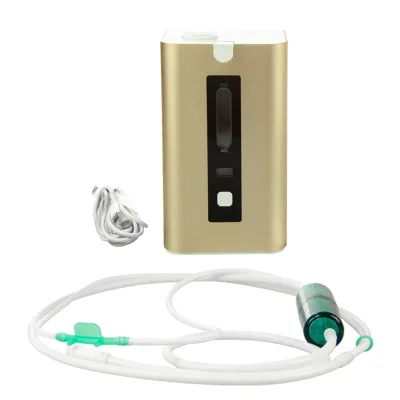
Source Portable Mini Hydrogen Inhaler for Medical, Electronic, and Gas Manufacturing
Explore 30 verified listings for the Portable Mini Hydrogen Inhaler, comparing models like EHM-H600-D and EHM-S3000 based on output rates and power ratings. Buyers can evaluate specifications such as water tank volume and hydrogen purity to find suitable units for medical or industrial applications.
Key considerations
Products List

600ml Hydrogen Breathing Generator Hydrogen Inhalation Machine Portable Inhaler
$540.00 - $600.00
MOQ: 1 Pieces

Hydrogen Generator Hydrogen Gas Inhaler Portable Hydrogen Breathing Machine
$650.00 - $800.00
MOQ: 1 Pieces


Hydrogen Gas Inhaler Portable Hydrogen Breathing Machine Hydrogen Therapy 99.99%
$205.00 - $260.00
MOQ: 1 Pieces


Mini Portable Hydrogen Inhaler H2 Breathing Machine Hydrogen Theropy Water
$720.00 - $900.00
MOQ: 1 Pieces


900ml Hydrogen Inhaler for Fatigue Relief Ideal for Office or Home Use
$1000.00 - $2000.00
MOQ: 1 Sets


Hydrogen Inhaler with High Output – Rechargeable & Easy-to-Use for Active Lifestyles
$480.00 - $1100.00
MOQ: 1 Pieces


Low Noise Spe High Quality Preferential Price Factory Direct Sales H2 Inhaler
$1080.00 - $1580.00
MOQ: 1 Pieces

Comprehensive Sourcing Guide
Strategic Sourcing Guide for Portable Mini Hydrogen Inhalers
Understanding the Product Category and Core Specifications
The market for portable mini hydrogen inhalers has expanded significantly as buyers seek compact solutions for hydrogen therapy. These devices are generally categorized as membrane hydrogen production machines designed to generate hydrogen gas from water for inhalation purposes. When evaluating products in this category, procurement professionals must first distinguish between industrial-scale generators and the specific "mini" or "portable" variants intended for personal or clinical use. The core technical architecture typically involves an electrolysis process where water is split into hydrogen and oxygen. The supply chain data indicates that these devices vary widely in capacity, with hydrogen output rates ranging from 100ml/Min to 3000ml/Min depending on the model class.
A critical observation in the current product landscape is the diversity in physical dimensions and power requirements. For instance, specific models like the EHM-A5 are designed with a compact footprint of 118.518cm and a water tank volume of 260ml, weighing only 1.6kg. In contrast, larger portable units such as the EHM-H600-D measure 420x440x550mm with a 2L water tank. Buyers must align their procurement needs with these physical constraints. A device intended for travel requires a significantly smaller form factor and lower power consumption, often operating on DC voltage outputs like DC3.5V/13A or DC12V/8A, whereas stationary or semi-portable units may require AC100~AC250V/50Hz input. The rating power also fluctuates, with some compact units operating at 65W or 80W, while others reach 300W or 700W. Understanding these specific technical parameters is the first step in filtering the supplier base to find units that meet the intended usage profile.
Technical Performance and Operational Metrics
When assessing the technical viability of a Portable Mini Hydrogen Inhaler, the hydrogen output rate and purity are the most critical performance indicators. The supply data reveals a spectrum of output capabilities. Entry-level portable models, such as the EHM-A5, produce a combined flow of Hydrogen 100ml/Min and Oxygen 50ml/Min, while mid-range units like the EHM-H150T offer a steady 150ml/Min output. Higher capacity portable units, such as the EHM-S3000, can achieve up to 3000ml/Min, though these may approach the size of desktop generators rather than true handheld devices. Purity levels are equally variable, with observed specifications ranging from 99.90% to 99.992%. For medical or therapeutic applications, higher purity is generally preferred to minimize the intake of impurities, but buyers must verify that the stated purity is achieved under the specific operating conditions of the device.
Noise levels represent another significant differentiator in this category. The product attributes indicate that some models are engineered for "Ultra Low" noise operation, which is essential for devices used in quiet environments like bedrooms or clinical settings. Others are simply rated as "Low" noise. This attribute directly impacts user comfort and the suitability of the device for long-duration sessions. Additionally, the water tank volume is a limiting factor for continuous operation. Models with 260ml or 550ml tanks require more frequent refilling compared to units with 2L or 4L capacities. Procurement teams should calculate the expected usage duration against the tank size to determine if a specific model meets the operational requirements without constant interruption. The machine size classification, ranging from compact to medium, further dictates the portability and storage requirements of the final product.
Compliance, Certification, and Safety Standards
In the realm of medical and health-related devices, compliance is non-negotiable. The observed product data confirms that reputable manufacturers in this sector typically provide certifications such as CE and RoHS. The CE marking indicates conformity with health, safety, and environmental protection standards for products sold within the European Economic Area, while RoHS (Restriction of Hazardous Substances) ensures the device does not contain specific hazardous materials. However, the presence of these certifications on a product listing is an observation that must be verified against the specific batch or model. Buyers should not assume that all listed products automatically satisfy these standards without requesting valid documentation.
Furthermore, while general industry standards like ISO 27001:2022 are mentioned in broader contexts regarding data security, they are not directly applicable to the physical manufacturing of hydrogen inhalers. Instead, buyers should focus on verifying that the device adheres to relevant electrical safety standards and medical device regulations applicable to their target market. The input voltage specifications, such as AC100~AC250V/50Hz, suggest a degree of global compatibility, but local regulatory bodies may require specific voltage adaptations or safety plugs. It is imperative to confirm that the "New" condition of the product is accompanied by valid certification documents that are current and applicable to the specific model number, such as EHM-HO900 or M60. Without these verifications, the risk of non-compliance in the destination market remains high.
Cost Drivers and Pricing Dynamics
The pricing structure for portable mini hydrogen inhalers is influenced by several key factors, including hydrogen output rate, purity, build quality, and certification status. The observed price range in the market spans from $100 to $2,000 USD, reflecting the vast difference between basic personal units and advanced medical-grade generators. Lower-priced units often correspond to smaller water tanks, lower output rates (e.g., 100ml/Min), and simpler power requirements. Conversely, units with higher output rates (e.g., 3000ml/Min), higher purity (99.992%), and robust construction (e.g., 700W rating) command prices at the upper end of the spectrum.
The Minimum Order Quantity (MOQ) is another critical cost driver. The data indicates an MOQ range of 1 to 2 units, suggesting that suppliers are flexible and may cater to both individual buyers and small procurement teams. This low barrier to entry allows buyers to test the market with small batches before committing to larger orders. However, buyers must be aware that unit costs may decrease with volume, even if the MOQ is low. Packaging also plays a role in the final cost; some models are shipped in simple cartons, while others come in gift bags or specialized packaging, which can add to the unit price. When negotiating, procurement professionals should request a breakdown of costs related to the hydrogen generation technology, the water tank material, and the certification fees to ensure transparency in the pricing structure.
Typical Applications and Market Segmentation
The application fields for portable mini hydrogen inhalers are diverse, ranging from personal wellness to professional medical settings. The product attributes explicitly list "Medical" and "Electronic" as application fields, indicating that these devices are suitable for therapeutic use in clinics as well as for personal health maintenance. The "Gas Manufacturing" purpose noted in some specifications suggests that certain models may be used in industrial or laboratory settings where small-scale hydrogen generation is required, though the "portable mini" designation primarily points toward consumer and clinical use.
For medical applications, the purity of the hydrogen and the stability of the output are paramount. Devices with a purity of 99.992% and specific output rates like 225ml/Min are likely targeted at professional environments where consistent therapy is required. In contrast, personal wellness devices may prioritize portability and ease of use, accepting slightly lower purity or output rates. The "Types" attribute identifies these as "Membrane Hydrogen Production Machine," a technology that is generally safer and more efficient for generating medical-grade hydrogen compared to other methods. Buyers should clearly define their target application segment before sourcing, as a device optimized for a medical clinic may be over-engineered and too expensive for a personal wellness market, and vice versa.
Supplier Evaluation and Quality Control Protocols
Evaluating suppliers for portable mini hydrogen inhalers requires a rigorous approach to quality control and verification. The product origin is listed as China, which is a major manufacturing hub for these devices, but this does not guarantee uniform quality across all suppliers. Buyers should verify the "Condition" of the products, ensuring they are "New" and not refurbished units. The "Parts" specification, such as the inclusion of a "Diffusion Tube," indicates specific internal components that affect performance and safety. Procurement teams should request detailed specifications for these parts to ensure they meet durability and safety standards.
Quality control should extend beyond the initial inspection. Buyers must verify the consistency of the hydrogen output rate and purity across different units. Given the variation in specifications observed in the market, a sample testing protocol is essential. This involves testing the actual output of the device against the claimed specifications, such as the 150ml/Min rate of the EHM-H150T or the 3000ml/Min of the EHM-S3000. Additionally, the noise level should be measured in a controlled environment to ensure it matches the "Ultra Low" or "Low" claims. Packaging integrity is also a key quality metric; whether the product arrives in a "Carton Box," "Gift Bag," or "1 Piece in a Carton," the packaging must protect the device during transit and provide clear instructions for operation.
Long-Term Procurement and Supply Chain Considerations
Sourcing portable mini hydrogen inhalers involves more than just the initial purchase; it requires a strategy for long-term supply chain stability. The "Customization" attribute being available suggests that suppliers may offer tailored solutions, such as specific branding, packaging, or minor technical modifications. This flexibility can be a significant advantage for buyers looking to differentiate their products in the market. However, customization often comes with higher MOQs or longer lead times, which must be factored into the procurement plan.
The "prod_packing" and "prod_standard" details provide insight into the logistics of the supply chain. Units with specific dimensions, such as 12 x 12 x 19cm or 48x30x78cm, will have different shipping costs and storage requirements. Buyers should calculate the total landed cost, including freight, based on these dimensions. Furthermore, the availability of spare parts, such as the diffusion tube, is crucial for long-term maintenance. A supplier that offers a robust after-sales support system and a reliable supply of replacement parts will be more valuable than one that only sells the initial unit. Finally, buyers should monitor the market for changes in certification requirements and standards, ensuring that their supply chain remains compliant with evolving regulations in their target markets. By focusing on these long-term factors, procurement professionals can build a resilient and efficient supply chain for portable mini hydrogen inhalers.
FAQs
What certifications do portable mini hydrogen inhalers typically have?
Most listed models carry CE and RoHS certifications to ensure safety and environmental compliance. Buyers should verify these documents for each specific batch, as the presence of certifications on a listing is an observation that requires validation against the specific model number before purchase.
How much does a Portable Mini Hydrogen Inhaler cost?
The observed price range for these devices spans from 100 to 2000 USD depending on capacity and features. Lower-priced units often have smaller water tanks and lower output rates, while higher-end models with greater purity and power command prices at the upper end of this spectrum.
Which models offer the highest hydrogen output rate?
The EHM-S3000 model offers the highest observed output rate of 3000ml/Min among the listed products. Other models provide lower rates such as 600ml/Min or 150ml/Min, so buyers must select based on their specific therapy or manufacturing requirements.
Can I customize the packaging for these hydrogen inhalers?
Customization is available for these products, allowing for tailored branding or packaging solutions. However, this flexibility may involve different Minimum Order Quantities or lead times, so procurement teams should confirm specific customization terms with the supplier before placing an order.
What is the typical water tank volume for these units?
Water tank volumes vary significantly, ranging from 260ml for compact models to 4L for larger portable units. Buyers should calculate expected usage duration against the tank size to ensure the device meets operational needs without requiring constant refilling during use.
Where are these portable mini hydrogen inhalers manufactured?
The product origin for the listed items is China, which is a major manufacturing hub for this technology. Buyers should verify the condition and certification documents for each specific model to ensure quality standards are met regardless of the manufacturing location.
What is the minimum order quantity for these devices?
The observed Minimum Order Quantity ranges from 1 to 2 units, indicating flexibility for small procurement teams. This low barrier allows buyers to test the market with small batches, though unit costs may decrease with larger volume orders.