Source Indoor Retail Metal Shelving for Shop, Supermarket, Drug Store
Find 30 options for Indoor Retail Metal Shelving designed for shops, supermarkets, and drug stores. Buyers can compare specifications like load capacity, dimensions, and surface treatments to select the right storage solution.
Key considerations
Products List


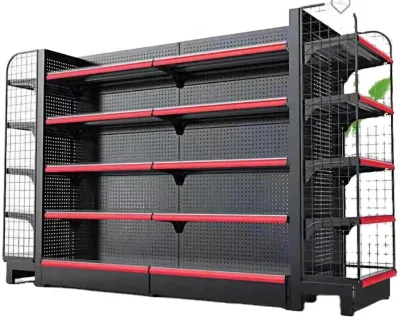

Custom Metal Shelf & Retail Display Rack for Supermarket Convenience Store
$48.00 - $49.00
MOQ: 1 Pieces


Commercial Retail Display Shelving for Supermarkets with High Load Capacity
$105.00 - $140.00
MOQ: 10 Pieces


Comprehensive Sourcing Guide
Strategic Sourcing Guide for Indoor Retail Metal Shelving
Understanding Product Specifications and Structural Variants
When sourcing Indoor Retail Metal Shelving, buyers must first distinguish between the specific structural configurations available in the market. The supply base offers distinct product types tailored to different load-bearing requirements and spatial constraints. One primary category is the pallet racking system, which is engineered for heavy-duty industrial and warehouse applications. These units often feature a "Heavy Weight" classification and can support significant loads, with specific models indicating a capacity of up to 500kg per unit in certain configurations. The structural integrity of these racks is typically derived from high-grade steel, specifically utilizing Q235 raw material, which provides a robust foundation for storing bulk inventory.
In contrast, the retail environment often demands a different profile, such as the supermarket shelf or medium-duty rack. These units are designed for high visibility and accessibility, frequently appearing in "Single Sided" or "Double Sided" configurations. The dimensions for these retail-specific models vary significantly; for instance, some standard supermarket shelf models are listed with dimensions around 900mm in width, 450mm in depth, and 2100mm in height. Other variants, such as medium-duty racks, may adhere to a standard footprint of 2000mm by 600mm by 2000mm. The height of these systems is another critical variable, ranging from 0 to 5 meters for standard retail units, while heavy-duty warehouse storage racks can extend from 5 to 15 meters.
Buyers should note that customization is a prevalent feature across these product lines. Many suppliers offer "Customized" options where dimensions, layers, and colors can be tailored to specific needs. The "Layers" attribute is often adjustable, allowing retailers to optimize vertical space. Furthermore, the "Style" of the shelving can vary, with "Backplane Style" being a common option for retail displays to enhance product visibility. The mobility of the units also presents a choice between "Fixed" installations and "Adjustable" configurations, depending on whether the layout requires permanent stability or flexible reconfiguration.
Compliance, Certification, and Material Standards
Verifying compliance and material standards is a non-negotiable step in the procurement of metal shelving for commercial use. The raw material used in these structures is a primary indicator of durability and safety. The supplied data confirms the use of Q235 steel, a standard carbon structural steel widely recognized for its strength and weldability. To ensure longevity, particularly in environments where moisture or chemical exposure might occur, surface treatments are essential. "Powder Coating" is the standard finish observed in the market, providing a protective layer that enhances the aesthetic appeal and offers "Corrosion Protection."
Regarding certifications, buyers must exercise caution and verify claims directly with the supplier. While some product listings reference a cluster of certifications including RMI, CE, ISO, and TUV, these should be treated as potential attributes rather than guaranteed facts for every unit. The presence of "CE" and "ISO 9001" is often cited in the broader market context, but specific product pages may list "Rmi/CE/ISO/TUV" as a collective capability. It is imperative for the buyer to request valid, current certification documents for the specific batch or model being purchased. Relying on general market knowledge without verifying the specific certification status of the supplier's current production line can lead to compliance gaps, especially when importing goods into regions with strict safety regulations.
The "Standard" for the product itself is another area requiring verification. While some models are listed with specific dimensional standards (e.g., 20006002000), others are marked as "Customized." In cases where a standard is not explicitly defined, the buyer must ensure that the design adheres to relevant local building codes and load-bearing safety standards. The "Design" process often involves professional CAD drawings, which serve as a blueprint for the final product. Ensuring that the supplier has a "CAD Drawing Professional" capability is crucial for validating that the custom specifications meet the intended engineering requirements before manufacturing begins.
Cost Drivers and Pricing Dynamics
The pricing of Indoor Retail Metal Shelving is influenced by a complex interplay of factors, including material costs, customization levels, and logistical requirements. The observed price range in the market is extensive, spanning from $0.50 to $500.00 USD. This wide variance is not indicative of quality differences alone but reflects the diversity of product types, from small individual shelf components to large, fully assembled pallet racking systems. The "Heavy Weight" classification of certain units often correlates with higher material usage and, consequently, higher costs.
Customization is a significant cost driver. While standard models may fall within a lower price bracket, "Customized" units that require special dimensions, specific layer configurations, or unique color finishes will incur additional charges. The "Color" attribute is often listed as "Customized to Your Needs," which implies a variable cost structure based on the complexity of the color matching and the volume of the order. Additionally, the "Packing" method affects the final landed cost. Options range from "Safe" packing to "Standard Export Packing" or "Packed in Bundles with Plwood Pallet." The latter is essential for international shipping to prevent damage during transit, but it adds to the overall weight and volume, thereby increasing freight expenses.
The Minimum Order Quantity (MOQ) also plays a pivotal role in unit pricing. The observed MOQ range is between 1 and 500 units. Buyers purchasing small quantities may face higher per-unit costs due to the setup and handling overheads associated with smaller production runs. Conversely, larger orders may benefit from economies of scale. However, buyers should be aware that "MOQ" values are not static; they can fluctuate based on the specific model and the supplier's current production capacity. It is advisable to negotiate MOQ terms that align with the buyer's inventory turnover rates and storage capabilities.
Typical Applications and Usage Scenarios
Indoor Retail Metal Shelving serves a multitude of applications, ranging from small convenience stores to large-scale industrial warehouses. The "Usage" attribute in the market data highlights a broad spectrum of environments, including "Shop," "Supermarket," "Drug Store," "Convenient Store," "Warehouse," and "Industrial" settings. The specific design of the shelving unit is often dictated by the type of goods being stored. For instance, "Supermarket Shelves" are optimized for displaying food, clothing, and beverages, often featuring "Single Sided" designs to maximize aisle visibility.
In industrial and warehouse contexts, the requirements shift towards durability and high load capacity. "Warehouse Storage Racks" and "Pallet Racking" systems are designed to handle heavy loads, with some models supporting up to 2000kg per arm. These units are critical for storing tools, bulk materials, and large inventory items. The "Serviceability" of these units is often described as "Common Use," indicating their suitability for high-traffic environments where frequent access is required. The "Development" stage of the product is also relevant; while some units are "Conventional," others are marketed as "New Type," suggesting modern design improvements that may offer better space utilization or ease of assembly.
The versatility of these systems allows them to be adapted for various retail needs. The "Layers" can be customized to accommodate different product sizes, and the "Mobility" can be adjusted to allow for rearrangement of the store layout. For example, "Adjustable" shelving is ideal for retail environments where product assortments change frequently, whereas "Fixed" shelving provides maximum stability for heavy, static inventory. The "Structure" of the unit, whether it is a "Rack" or a "Shelf," determines its primary function and the type of goods it can safely support.
Supplier Evaluation and Origin Verification
When evaluating potential suppliers, buyers must prioritize transparency regarding the origin of the products. The supplied data indicates that the primary manufacturing locations are in "China," with specific mentions of "Shandong Province" as a production hub. This geographic concentration suggests a mature supply chain with established logistics networks, but it also necessitates careful due diligence regarding the specific factory capabilities. Buyers should verify that the supplier is not merely a trading company but has direct access to manufacturing facilities that can guarantee the "Q235" steel quality and "Powder Coating" standards.
The "Lead Time" is another critical factor in supplier selection. The market data shows a range of delivery times, with some suppliers offering a standard "15 Days" lead time, while others provide a broader window of "5-20 Days." These variations can significantly impact the buyer's inventory planning and cash flow. A supplier with a consistent, shorter lead time may be preferable for just-in-time inventory strategies, whereas a longer lead time might be acceptable for seasonal stockpiling. Buyers should also inquire about the "Delivery Time" flexibility, as this can be influenced by order volume and customization requirements.
Furthermore, the "Product Name" and "Model" provided by the supplier should be cross-referenced with the buyer's technical requirements. Models such as "QIFEI-Medium Duty Rack," "QIFEI-Supermarket Rack," and "JH-CS01" represent specific product lines that may have distinct performance characteristics. Buyers should request detailed technical drawings and specifications for these models to ensure they meet the intended load and dimension requirements. The "Design" capability, particularly the ability to provide "CAD Drawing Professional" services, is a strong indicator of a supplier's technical competence and willingness to collaborate on custom solutions.
Quality Control and Long-Term Procurement Considerations
Ensuring the long-term reliability of Indoor Retail Metal Shelving requires a robust quality control (QC) framework. The "Condition" of the products is consistently listed as "New," but this does not preclude the need for pre-shipment inspections. Buyers should implement a QC protocol that verifies the structural integrity of the "Steel" components, the uniformity of the "Powder Coating," and the accuracy of the "Customized" dimensions. The "Feature" of "Corrosion Protection" should be validated through sample testing, especially if the shelving will be used in environments with high humidity or chemical exposure.
Packaging is a critical aspect of quality control during transit. The "prod_packing" attributes, such as "Safe," "Standard Export Packing," or "Packed in Bundles with Plwood Pallet," indicate the level of protection provided. For international shipments, the use of wooden pallets and bundled packing is essential to prevent damage from handling and environmental factors. Buyers should explicitly specify their packaging requirements in the purchase order to ensure that the supplier adheres to these standards.
Long-term procurement considerations also include the scalability and adaptability of the shelving system. As retail businesses grow or change their product offerings, the shelving must be able to accommodate these shifts. The "Adjustable" nature of the "Mobility" and the "Customized" capability of the "Layers" and "Dimensions" are key features that support long-term utility. Additionally, the "Serviceability" of the units should be evaluated to ensure that they can be easily maintained or repaired if necessary. By selecting shelving systems that offer these flexible attributes, buyers can protect their investment and ensure that their storage solutions remain relevant and functional for years to come.
Final Procurement Checklist and Verification Steps
To conclude the sourcing process, buyers should adhere to a strict verification checklist before finalizing any purchase. First, confirm the exact "Material" and "Raw Material" specifications, ensuring the use of Q235 steel. Second, verify the "Certification" status by requesting current certificates for RMI, CE, ISO, or TUV, rather than relying on general claims. Third, validate the "Dimensions" and "Load Capacity" against the specific needs of the retail or warehouse environment, paying close attention to the "Loading Capacity" per arm, which can range from 300 to 2000kg.
Fourth, review the "Lead Time" and "Delivery Time" to ensure alignment with the project schedule. Fifth, confirm the "Packing" method to guarantee safe transit. Finally, ensure that the "Customization" options are clearly defined in the contract, including any specific "Color" or "Design" requirements. By systematically addressing these factors, buyers can mitigate risks and secure high-quality Indoor Retail Metal Shelving that meets their operational and safety standards.
FAQs
What raw material is used for Indoor Retail Metal Shelving?
The shelving units are constructed from Q235 steel, a standard carbon structural steel known for its strength. This material ensures durability for both warehouse and retail environments while supporting heavy loads up to 500kg per unit.
How long is the typical lead time for delivery?
Delivery times typically range from 5 to 20 days depending on the order specifics. Some standard models may have a fixed lead time of 15 days, while customized orders require the full window to ensure quality and accuracy.
Can the dimensions of the shelving be customized?
Yes, dimensions and layers can be fully customized to meet specific needs. Buyers can request special sizes, and the design process often involves professional CAD drawings to ensure the final product fits the intended space perfectly.
Which certifications are available for these metal racks?
Products may carry certifications such as RMI, CE, ISO, and TUV, though these should be verified for specific batches. Buyers must request valid documents to ensure compliance with safety regulations in their target regions before purchasing.
What is the minimum order quantity for these units?
The minimum order quantity ranges from 1 to 500 units depending on the supplier and model. Smaller orders may incur higher per-unit costs, while larger volumes can benefit from economies of scale in production and shipping.
How much weight can the shelves support per arm?
Loading capacity varies by model, with some units supporting between 300 and 2000 kilograms per arm. Heavy-duty warehouse racks are designed for significant loads, while supermarket shelves typically handle lighter retail inventory.
Where are these shelving units manufactured?
The primary manufacturing locations are in China, with specific production hubs noted in Shandong Province. Buyers should verify the specific factory origin to ensure quality control and logistical efficiency for their import requirements.
What surface treatment protects the steel from corrosion?
Powder coating is the standard surface treatment applied to provide corrosion protection and enhance aesthetics. This finish ensures longevity in various environments, including warehouses and supermarkets, by shielding the Q235 steel from moisture and wear.