Source Industrial Custom Electrical Nameplate for Factories, OEMs, and Maintenance
Find 30 Industrial Custom Electrical Nameplate options for factories, OEMs, and maintenance teams. Compare materials like aluminum and steel, finishes such as glossy or matte, and certifications including RoHS to select the right durable labeling solution for your equipment.
Key considerations
Products List


Custom Logo Industrial Laser-Engraved Brass Tag & Etched Stainless Steel Nameplate
$0.10 - $0.70
MOQ: 500 Pieces

Custom Engraved Metal Nameplates for Industrial Equipment Identification
$0.10 - $0.70
MOQ: 500 Pieces


Custom Aluminum Nameplate Metal Nameplate for Electrical Control Panel Maker
$1.00 - $10.00
MOQ: 100 Pieces


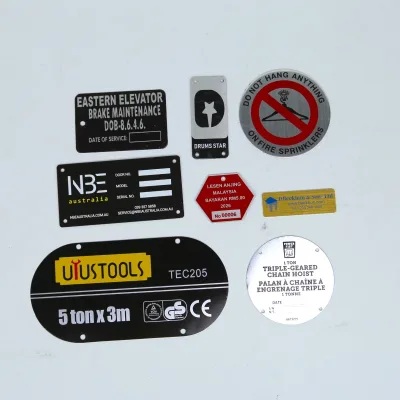

Comprehensive Sourcing Guide
Industrial Custom Electrical Nameplate Sourcing Guide
Sourcing industrial custom electrical nameplates requires a disciplined approach that balances technical durability with aesthetic precision. These components serve as critical identifiers for machinery, control panels, and electrical infrastructure, ensuring that operators can quickly and accurately identify equipment specifications, safety warnings, and maintenance requirements. The procurement process must account for the harsh environments these plates often inhabit, including exposure to moisture, chemicals, extreme temperatures, and physical abrasion. Buyers must prioritize materials and finishing processes that guarantee legibility and structural integrity over the product’s entire lifecycle, which can span decades in industrial settings.
The market for these components is diverse, ranging from simple static labels to complex, multi-layered assemblies with integrated security features. Procurement teams must navigate a wide array of customization options, including material selection, surface treatments, and attachment methods. Understanding the specific operational context of the end-use application is the first step in defining technical requirements. Whether the nameplate is intended for indoor office equipment or outdoor industrial machinery, the selection criteria differ significantly. This guide provides a structured framework for evaluating suppliers, verifying technical specifications, and ensuring compliance with relevant safety and quality standards.
Product Scope and Observed Listing Signals
The observed market signals indicate a broad spectrum of material compositions, with aluminium and steel being the most prevalent choices for industrial applications. Aluminium nameplates are often selected for their lightweight properties and natural corrosion resistance, making them suitable for environments where weight is a concern or where moderate exposure to the elements is expected. Steel variants, particularly those treated for corrosion resistance, offer superior strength and durability for heavy-duty industrial machinery. Buyers should verify the specific alloy grades and thicknesses to ensure they meet the mechanical stress requirements of the installation site.
Surface finishing and processing techniques play a pivotal role in the longevity and readability of the nameplate. Observed listings highlight processes such as laser engraving, polishing, and various enamel finishes, including soft, synthetic, and hard enamel options. Laser engraving provides permanent, high-contrast markings that are resistant to fading and wear, which is essential for long-term identification. Finishing options like glossy or matte coatings not only enhance aesthetic appeal but also protect the underlying material from UV degradation and chemical exposure. Buyers must align these finishing choices with the environmental conditions the nameplate will face, ensuring that the surface treatment provides adequate protection against the specific hazards of the operational environment.
Technical Specifications to Verify
Dimensional accuracy and shape customization are fundamental technical requirements for electrical nameplates. The observed data indicates that dimensions can be fully customized, often adhering to specific OEM service requirements or standard sizes such as 45x45x45 mm. Buyers must provide precise CAD drawings or detailed specifications to suppliers to ensure a perfect fit within the designated panel or equipment space. Tolerance levels should be clearly defined, especially for nameplates that require precise alignment with mounting holes or surrounding components. Deviations in size can lead to installation difficulties or compromised aesthetic integration, so verifying the supplier’s capability to maintain tight tolerances is crucial.
Attachment methods and adhesive properties are critical for ensuring the nameplate remains secure under vibration and thermal cycling. The use of 3M self-adhesive backing is a common observation, offering a strong bond for smooth surfaces. However, for rough or uneven surfaces, mechanical fastening options such as rivets or screws may be necessary. Buyers should verify the adhesive type and its resistance to temperature extremes and chemicals. Additionally, the plating options, including gold, silver, nickel, bronze, and copper, affect both the electrical conductivity and corrosion resistance of the nameplate. Selecting the appropriate plating is essential for maintaining signal integrity in electrical applications and preventing galvanic corrosion when in contact with other metals.
Compliance and Safety Documentation
Regulatory compliance is non-negotiable for electrical nameplates, particularly regarding environmental standards and material safety. The RoHS certification is a key indicator that the materials used in the nameplate are free from hazardous substances such as lead, mercury, and cadmium. This certification is often required for products sold in the European Union and other regions with strict environmental regulations. Buyers must request valid RoHS certificates from suppliers and verify that the certification covers all components of the nameplate, including adhesives, inks, and plating materials. Non-compliance can lead to significant legal and financial penalties, as well as barriers to market entry.
Safety documentation must also address the durability and legibility of the nameplate under various conditions. The observed lifetime estimates, ranging from 7 to 10 years for indoor use and 5 to 7 years for outdoor use, provide a baseline for expected performance. However, buyers should verify these claims against specific environmental stress tests, such as UV exposure, salt spray, and temperature cycling. Certifications related to indoor and outdoor usage, such as those indicated by specific location-based standards, help ensure that the nameplate will maintain its integrity and readability over its intended lifespan. Buyers should require test reports that demonstrate the nameplate’s resistance to fading, peeling, and corrosion under the specific conditions of the end-use application.
Cost Drivers and Commercial Terms
The cost of industrial custom electrical nameplates is influenced by several key factors, including material selection, production volume, and the complexity of the design. Aluminium and steel are the primary cost drivers, with the grade and thickness of the material directly impacting the unit price. Complex designs involving multiple layers, intricate engravings, or specialized finishes such as hard enamel or electroplating will also increase costs. Buyers should evaluate the total cost of ownership, considering not just the unit price but also the potential costs associated with premature failure or replacement due to inadequate durability.
Commercial terms, including minimum order quantities (MOQ) and payment conditions, vary significantly among suppliers. Some suppliers offer no MOQ limits, which is beneficial for small batch orders or prototyping, while others may require larger volumes to achieve competitive pricing. The observed MOQ range of 1 to 1000 units suggests a flexible market, but buyers must clarify the pricing tiers associated with different volumes. Additionally, packaging methods, such as corrugated cartons, plastic bags, or foam bags, can affect shipping costs and the risk of damage during transit. Buyers should negotiate clear terms regarding packaging standards to ensure that the nameplates arrive in pristine condition, minimizing the risk of rejects and delays.
Supplier Qualification and Quality Control
Supplier qualification is a critical step in ensuring the reliability and consistency of industrial custom electrical nameplates. Buyers should assess the supplier’s manufacturing capabilities, including their proficiency with processes such as die casting, die striking, stamping, and injection molding. The ability to perform silk screen printing, corrosion treatment, and electroplating in-house is a strong indicator of a supplier’s comprehensive service offering. Suppliers with integrated production lines can offer better quality control and faster turnaround times, reducing the risk of delays and inconsistencies.
Quality control procedures must be rigorous to ensure that every nameplate meets the specified standards. The observed 100% inspection rate is a positive indicator of a supplier’s commitment to quality. Buyers should request detailed quality control plans that outline the inspection points, testing methods, and acceptance criteria. Additionally, suppliers should provide evidence of their adherence to quality management systems, such as ISO 9001:2015, although this should be verified rather than assumed. Buyers should also inquire about the supplier’s process for handling defects and returns, ensuring that there is a clear mechanism for addressing any quality issues that may arise during production or after delivery.
Long-Term Procurement Checks
Long-term procurement success depends on establishing a robust relationship with suppliers who can support ongoing needs and adapt to changing requirements. Buyers should conduct regular performance reviews to assess the supplier’s consistency in meeting quality, delivery, and cost targets. This includes monitoring the supplier’s ability to maintain the specified tolerances, finish quality, and compliance certifications over time. Regular audits, both on-site and remote, can help identify potential issues before they impact production, ensuring a stable supply chain.
Continuous improvement and innovation are also key aspects of long-term procurement. Buyers should engage with suppliers to explore new materials, finishes, and technologies that can enhance the performance and aesthetics of the nameplates. This collaborative approach can lead to cost savings, improved durability, and better alignment with evolving industry standards. Additionally, buyers should maintain a diversified supplier base to mitigate risks associated with single-source dependencies. By fostering strong relationships and maintaining high standards, buyers can ensure a reliable supply of high-quality industrial custom electrical nameplates that support the long-term success of their operations.
FAQs
What materials are used for industrial custom electrical nameplates?
The products are primarily made from aluminium and steel. These materials support various finishing processes like polishing and photo sealing to ensure durability for indoor and outdoor use.
Can I request custom designs for these nameplates?
Yes, customization is available with options for laser engraving and silk screen printing. Buyers can specify dimensions and shapes through OEM services to meet unique branding requirements.
Which certifications do these nameplates hold?
The products carry RoHS certification to ensure compliance with environmental standards. Some listings also reference ISO standards for quality management in their production processes.
How are these nameplates packaged for shipping?
Packaging options include corrugated cartons, plastic bags, foam bags, and express delivery boxes. This ensures protection during transit for both small and large order quantities.
What is the expected lifetime of these nameplates?
Indoor use nameplates typically last between 7 to 10 years, while outdoor versions last 5 to 7 years. This lifespan depends on the specific material and finishing applied.
Are there minimum order quantity limits for these products?
Some suppliers offer no MOQ limits, allowing for flexible purchasing. Other listings indicate MOQs ranging from 1 to 1000 units depending on the specific customization and model selected.
What surface finishing options are available for these nameplates?
Finishing options include glossy or matte finishes, soft enamel, hard enamel, and synthetic enamel. Additional effects like concave or convex shapes can be achieved through specific processing methods.