Source Industrial Rugged WiFi 6 Router for SOHO, Enterprise, and Border
Find and compare 30 Industrial Rugged WiFi 6 Router models featuring 5G cellular, modular ports, and diverse VPN options. Buyers can evaluate specifications for SOHO, enterprise, and border router applications with flexible power and antenna configurations.
Key considerations
Products List


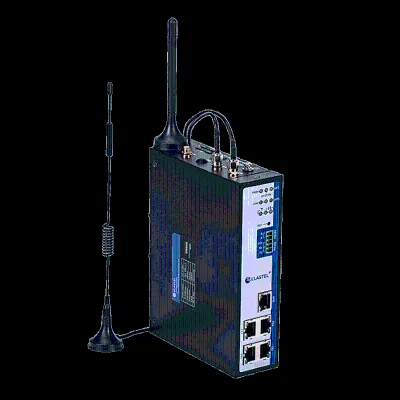
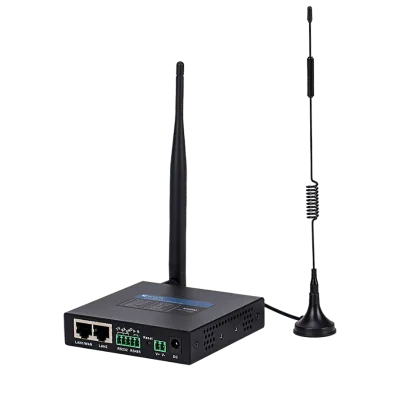


4G Unlock Ethernet Port Router Industrial Grade Gateway for IoT Solution
$60.00 - $80.00
MOQ: 1 Pieces


Industrial Wireless WiFi Router with SIM &SD Slot Support 2.4G/5.8g Frequency
$50.00 - $100.00
MOQ: 1 Pieces


Comprehensive Sourcing Guide
Strategic Sourcing Guide for Industrial Rugged Wi-Fi 6 Routers
The procurement of industrial-grade networking equipment requires a rigorous approach that balances technical performance with environmental resilience. When sourcing an industrial rugged Wi-Fi 6 router, buyers must navigate a complex landscape of specifications, certifications, and deployment scenarios. The market offers a diverse array of devices, ranging from single bus master-slave CPU architectures to modular line-rate routers designed for harsh environments. This guide outlines the critical factors for evaluating these devices, ensuring that the selected solution meets the specific demands of SOHO, enterprise, and industrial applications without relying on unverified claims.
Technical Architecture and Connectivity Specifications
The foundational layer of any industrial router selection involves understanding the underlying architecture and connectivity capabilities. In the observed product landscape, devices vary significantly in their processing and network handling. Some units are defined by a Single Bus Master-slave CPU architecture, which may offer specific latency characteristics suitable for deterministic industrial control. Others are classified as Line-Rate Routers, capable of handling traffic at full wire speed without bottlenecks.
Connectivity is paramount for rugged deployments. The port structure often dictates the flexibility of the installation. Modular port structures allow for expansion, whereas fixed configurations may be more cost-effective for standard setups. Transfer rates observed in the market range from 10/100Mbps to 10/100/1000Mbps. Buyers must verify the specific interface requirements of their network; for instance, a device offering 1 x GE WAN and 2 x GE LAN ports provides a different topology than one with 1 x WAN and 1 x LAN.
Wireless capabilities have evolved to support Wi-Fi 6 and even Wi-Fi 7 in some advanced models. The frequency bands typically support 2.4 GHz and 5 GHz dual-band operation. However, not all rugged routers support the latest standards; some legacy or specific industrial models may be limited to 802.11 a/b/g/n at 2.4 GHz. The antenna configuration is another critical variable. Options include external replaceable antennas, which allow for signal optimization in difficult RF environments, or internal antennas designed for compact, sealed enclosures. For cellular connectivity, the presence of 5G cellular modules or 4G LTE support is essential for remote sites. The SIM card configuration varies, with some units offering 1 or 2 slots to support carrier redundancy or multi-network failover.
Environmental Hardening and Physical Installation
Industrial environments demand equipment that can withstand extreme temperatures, vibration, and physical stress. The case material is a primary indicator of durability, with metal cases being the standard for rugged applications. These enclosures provide necessary shielding against electromagnetic interference (EMI) and physical impact.
Installation methods must align with the physical constraints of the deployment site. Common mounting options include pole mount, desktop, wall mount, and DIN-rail installation. The DIN-rail option is particularly valuable for control panels and industrial cabinets, allowing for secure, standardized mounting. Power supply requirements also vary; typical operating ranges observed include 5-40V, with some models offering an extended option of 5-60V to accommodate fluctuating power sources in remote locations.
Power over Ethernet (PoE) support is a significant feature for reducing cabling complexity. Devices may support PSE 802.3 af/at/bt standards, allowing them to be powered and managed through a single Ethernet cable. This is crucial for outdoor or hard-to-reach installations where running separate power lines is impractical. Additionally, the inclusion of DI/DO (Digital Input/Digital Output) ports, such as 4 x DI/DO, enables the router to interface directly with sensors and actuators, transforming it from a simple network device into an edge computing node for industrial automation.
Compliance, Certification, and Regulatory Standards
Navigating the regulatory landscape is a non-negotiable aspect of industrial procurement. Devices intended for global deployment must adhere to a strict set of certifications to ensure safety, electromagnetic compatibility, and environmental compliance. The observed market data indicates a robust suite of certifications, including CE, RoHS, UKCA, FCC, UL, TUV, RU, and Anatel.
The CE mark signifies conformity with health, safety, and environmental protection standards for products sold within the European Economic Area. RoHS compliance ensures that the device is manufactured without specific hazardous materials. For the United States, FCC certification is mandatory for radio frequency devices, while UL and ETL marks indicate compliance with North American safety standards. The UKCA mark is increasingly relevant for products entering the United Kingdom post-Brexit.
Buyers must verify that the specific model they are sourcing carries the necessary certifications for their target region. A device certified for the EU may not be legally deployable in the US without FCC approval. Furthermore, specific industries may require additional validation. For example, outdoor routers often require IP ratings for dust and water resistance, though these specific ratings should be verified against the manufacturer's datasheet rather than assumed. The presence of GNSS support, including Galileo, GPS, Beidou, and Glonass, is also a technical specification that may be required for time-sensitive applications, though it is often an optional feature.
Cost Drivers and Procurement Economics
Understanding the cost structure of industrial routers is essential for budgeting and total cost of ownership (TCO) analysis. The observed price range in the market spans from approximately $27.47 to $580 USD, reflecting the vast differences in capabilities and build quality. Several factors drive these costs.
First, the cellular technology is a major cost driver. Models equipped with 5G cellular modules are significantly more expensive than those limited to 4G LTE or Wi-Fi only. The inclusion of Wi-Fi 6 or Wi-Fi 7 support also commands a premium over older Wi-Fi 4 standards. Second, the physical ruggedization, such as metal casing and extended temperature ranges, adds to the manufacturing cost. Third, the complexity of the management features influences price; devices offering comprehensive NMS (Network Management System) integration via E-Lins, along with support for protocols like SNMP, SSH, and Telnet, are priced higher than basic web-managed units.
Minimum Order Quantity (MOQ) is another economic factor. The observed MOQ range spans from 1 to 1000 units. For pilot projects or small-scale deployments, buyers should look for suppliers with low MOQs to minimize inventory risk. However, for large-scale enterprise rollouts, negotiating lower unit costs with higher MOQs can yield significant savings. Customization availability is a key differentiator; while standard models are readily available, custom configurations involving specific firmware, port layouts, or branding may incur additional costs and longer lead times.
Typical Applications and Deployment Scenarios
Industrial rugged Wi-Fi 6 routers are deployed in a wide variety of scenarios where reliability is critical. The observed product attributes suggest applications in SOHO (Small Office/Home Office) and Enterprise environments, but the rugged nature of these devices makes them ideal for more demanding sectors.
Border Router applications are a primary use case, where the device serves as the gateway between a private network and the public internet or a wide area network. In these scenarios, the firewall capabilities and VPN support (including IPSec, OpenVPN, WireGuard, and L2TP) are vital for securing data transmission. Intermediate Node Routers are used in mesh networks or distributed systems to extend connectivity across a facility or geographic area.
Specific industries benefit from the modular and rugged design. In manufacturing, the DI/DO ports and serial communication options (RS232 or RS485) allow the router to interface with legacy machinery and modern IoT sensors. In transportation and logistics, the 5G and 4G cellular capabilities ensure connectivity for moving assets. Outdoor deployments, such as smart city infrastructure or remote monitoring stations, rely on the weather-resistant metal casings and PoE support. The ability to support dual-path Wi-Fi (WiFi4 & WiFi6) ensures backward compatibility while providing high-speed connectivity for modern devices.
Supplier Evaluation and Quality Assurance
Selecting the right supplier is as important as selecting the right product. Buyers should evaluate suppliers based on their ability to provide consistent quality and support. The product origin, such as Shenzhen, China, is a common manufacturing hub, but the specific factory's quality control processes are what matter most.
Buyers should request evidence of the supplier's quality management systems. While specific test results should not be assumed, suppliers should be able to provide documentation regarding their testing protocols for environmental stress, such as temperature cycling and vibration testing. The availability of a comprehensive management suite, including web interfaces, SMS, and command-line access, indicates a mature software development capability.
When evaluating potential partners, buyers should verify the supplier's track record in the specific industry sector. A supplier specializing in consumer electronics may not have the depth of experience required for industrial deployments. The availability of customization services is also a strong indicator of a supplier's flexibility and technical capability. Finally, the clarity of the documentation and the responsiveness of the technical support team are critical for long-term operational success.
Long-Term Procurement and Lifecycle Management
Procuring industrial routers is a long-term investment that requires planning for the entire lifecycle of the device. The modular nature of some routers allows for future upgrades, such as adding new port modules or upgrading cellular modules, which can extend the useful life of the hardware.
Firmware support is a critical consideration. Buyers must ensure that the supplier provides regular firmware updates to address security vulnerabilities and add new features. The support for various management protocols, including SNMP and SSH, facilitates integration with existing network monitoring tools, simplifying long-term maintenance.
Supply chain stability is another factor. Given the global nature of component shortages, buyers should assess the supplier's ability to maintain inventory levels and provide consistent lead times. The option for DIN-rail installation and PoE support often simplifies the physical infrastructure, reducing the need for frequent hardware replacements or rewiring. By focusing on devices with robust certifications, clear customization paths, and strong management capabilities, buyers can ensure a reliable and scalable network infrastructure that meets the evolving needs of their industrial operations.
FAQs
What certifications do industrial rugged Wi-Fi 6 routers typically hold?
These routers typically hold CE, RoHS, FCC, UL, and TUV certifications. Specific models may also include UKCA, RU, and Anatel marks to ensure global regulatory compliance for safety and electromagnetic compatibility.
Which cellular technologies are supported by these industrial routers?
Supported technologies include 5G cellular modules and 4G LTE standards. Some models offer dual SIM slots for carrier redundancy, while others may rely on wired or Wi-Fi connections for specific deployment scenarios.
Can these routers support PoE for simplified installation?
Yes, many models support Power over Ethernet using PSE 802.3 af/at/bt standards. This feature allows the device to receive power and data through a single Ethernet cable, reducing cabling complexity in outdoor or remote sites.
What is the typical price range for industrial rugged Wi-Fi 6 routers?
The observed price range spans from approximately 27.47 to 580 USD. Costs vary significantly based on cellular capabilities, ruggedization features, and whether the unit includes Wi-Fi 6 or Wi-Fi 7 support.
How can these routers be installed in industrial environments?
Installation options include DIN-rail, pole mount, desktop, and wall mount configurations. The metal case material provides durability, and the modular port structure allows for flexible expansion in harsh conditions.
What VPN protocols are available for secure network connections?
Available protocols include IPSec, OpenVPN, WireGuard, PPTP, L2TP, and ZeroTier. These features ensure secure data transmission for border routers and intermediate node applications in enterprise or SOHO settings.
Are customization options available for these industrial routers?
Customization is available for specific firmware, port layouts, or branding requirements. Buyers should verify lead times and costs, as custom configurations may differ from standard models regarding availability and production schedules.