Source Industrial Vacuum Furnace Molybdenum Sheets for Electronics, Aviation, and Chemical
Compare 30 listings of Industrial Vacuum Furnace Molybdenum Sheets with densities up to 10.2 g/cm³ and thicknesses from 0.1mm to 120mm. Buyers can evaluate suppliers offering ASTM, DIN, and GB standards with customized dimensions and polished surfaces for industrial and electronics applications.
Key considerations
Products List






Comprehensive Sourcing Guide
Strategic Sourcing Guide for Industrial Vacuum Furnace Molybdenum Sheets
Understanding Material Properties and Technical Specifications
When sourcing Industrial Vacuum Furnace Molybdenum Sheets, the primary objective is to identify materials that can withstand extreme thermal environments while maintaining structural integrity. Molybdenum is a refractory metal known for its exceptional performance under high-temperature conditions, making it a critical component in vacuum furnace linings and heating elements. The core material attributes observed in the market indicate a high density of approximately 10.2 g/cm³, which is a fundamental characteristic for distinguishing genuine molybdenum from other alloys or competing materials. This density is a non-negotiable physical constant for pure molybdenum, whereas tungsten, often used in similar applications, presents a significantly higher density of 19.3 g/cm³. Buyers must verify that the supplier provides test data confirming this specific density to ensure the material is not a lower-grade alloy or a composite.
The thermal properties of the sheet are equally critical for vacuum furnace applications. The material exhibits a high melting point of 2620 degrees Celsius, allowing it to operate in environments where standard metals would fail. Furthermore, the thermal conductivity is rated at 135 W/m·K, indicating excellent heat transfer capabilities essential for uniform temperature distribution within a furnace chamber. Conversely, the material possesses a low thermal expansion coefficient of 4.9 x 10⁻⁶/K, which minimizes dimensional changes during thermal cycling. This stability is vital for preventing warping or cracking in the rigid constraints of a vacuum chamber. The surface finish is typically described as bright polished, ground, or chemically cleaned, which reduces outgassing rates—a crucial factor in maintaining the high vacuum levels required for industrial processes.
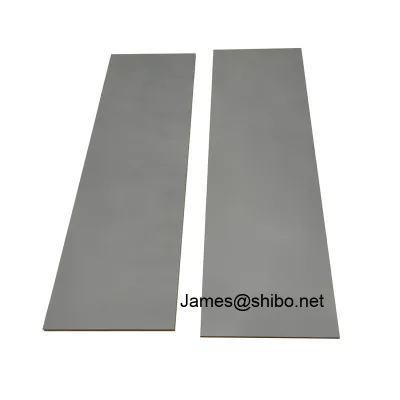
Dimensional specifications vary significantly based on the intended application. The thickness range for these sheets can extend from a minimum of 0.1 mm up to 120 mm, with some custom specifications reaching widths of up to 900 mm. The standard processing methods include precision CNC cutting, cold rolling, and alkali treatment. Buyers should note that while some listings mention specific model numbers like MS-1 or Mo-2, the most reliable approach is to request custom dimensions tailored to the furnace geometry. The shape availability is broad, encompassing rods, wires, sheets, and special shapes, but for vacuum furnace lining, flat sheets are the primary requirement. The material is classified as a non-alloy, meaning it is processed to maintain high purity, often exceeding 99.95%, which is essential for preventing contamination of the vacuum environment.
Compliance, Standards, and Certification Verification
In the industrial procurement of high-performance metals, compliance with international standards is not merely a formality but a prerequisite for operational safety and reliability. The molybdenum sheets available in the market are often associated with standards such as ASTM, DIN, and GB. These standards provide the framework for chemical composition, mechanical properties, and testing methods. However, the presence of a standard designation on a product listing does not automatically guarantee compliance. Buyers must explicitly verify that the specific batch of material meets the relevant ASTM or GB specifications for molybdenum. For instance, the ASTM standards typically govern the mechanical testing and chemical analysis required for refractory metals, while GB standards are prevalent for domestic Chinese manufacturing.
Certification plays a pivotal role in validating the quality management systems of the supplier. Many suppliers in this sector hold ISO 9001 certification, with some specifically referencing the ISO 9001:2008 version. This certification indicates that the supplier adheres to a standardized quality management process, which is a strong indicator of consistency in production. However, buyers should be aware that ISO 9001 certifies the management system, not the specific product performance. Therefore, it is necessary to cross-reference the certification with actual product test reports. The market data also highlights a "Customize" standard for product specifications, suggesting that many manufacturers operate on a made-to-order basis rather than maintaining a static inventory of pre-certified stock. This customization capability requires a more rigorous verification process, where the buyer must define the acceptance criteria based on the applicable ASTM or GB standards before production begins.
The origin of the material is another critical compliance factor. The majority of the supply chain for these sheets originates from China, with specific brand names like Shibo or Zhengzhou Shibo appearing in the market. While the country of origin is a known variable, the specific factory location and its audit history are often not disclosed in general listings. Buyers should request evidence of the manufacturing facility's adherence to environmental and safety regulations, particularly given the high-temperature processing involved. Additionally, the packaging standards, such as the use of plywood cases or export wooden cases with moisture-proof paper and PLA, are part of the logistical compliance. These packaging methods are designed to prevent oxidation and physical damage during transit, which is essential for maintaining the material's surface finish and purity upon arrival.
Cost Drivers and Pricing Structure Analysis
The pricing structure for Industrial Vacuum Furnace Molybdenum Sheets is influenced by a complex interplay of material costs, processing complexity, and order volume. The observed price range in the market is exceptionally broad, spanning from $0.10 to $102,000. This vast disparity is not indicative of a single product type but rather reflects the difference between small samples, standard stock sizes, and large-scale custom orders. The lower end of the spectrum likely represents small samples or very thin gauges intended for testing, while the upper end corresponds to large, custom-fabricated sheets with complex machining requirements. Buyers must understand that the unit price is rarely a flat rate; it is heavily dependent on the thickness, width, and surface finish specifications.
Material purity is a significant cost driver. Molybdenum with a purity greater than 99.95% commands a premium over lower-grade alloys. The refining process required to achieve such high purity levels involves advanced metallurgical techniques that increase production costs. Furthermore, the processing method adds substantial value. Sheets that undergo precision CNC cutting, cold rolling, or chemical cleaning to achieve a bright polished surface incur higher labor and equipment costs compared to standard rolled stock. The thickness of the sheet also impacts the price; thicker plates require more raw material and more energy-intensive processing to achieve the desired density and mechanical properties.
Minimum Order Quantity (MOQ) is another factor that influences the effective cost per unit. The observed MOQ range is between 1 and 10 units. For buyers requiring large quantities for a full furnace lining, a higher MOQ may result in a lower unit price due to economies of scale. Conversely, for prototyping or small-scale repairs, a low MOQ allows for flexibility but at a higher per-unit cost. Buyers should also consider the lead time implications of customization. Custom orders, which are common for vacuum furnace components, often have longer lead times than standard stock items. While specific lead time data is not universally available in the general listings, the customization nature of the product suggests that buyers should anticipate a longer procurement cycle compared to off-the-shelf components.
Typical Applications and Performance Requirements
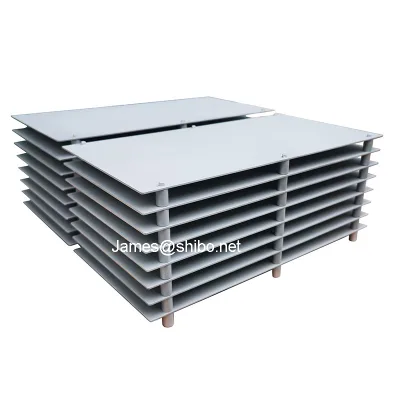
The primary application for molybdenum sheets in the industrial sector is within vacuum furnaces, where they serve as heating elements, structural supports, or vacuum chamber linings. The high melting point and low thermal expansion of molybdenum make it ideal for maintaining the integrity of the furnace environment under extreme thermal stress. In addition to vacuum furnaces, these sheets are utilized in the electronics industry for components that require high thermal conductivity and electrical stability. The chemical and medical sectors also leverage molybdenum sheets for their corrosion resistance and biocompatibility, particularly in processes involving high temperatures or reactive gases.
The versatility of the material extends to aviation and chemical processing, where the combination of high density and thermal stability is advantageous. In aviation, molybdenum components are used in high-temperature engine parts and structural elements that must withstand rapid thermal cycling. In chemical processing, the material's resistance to corrosion and its ability to maintain a clean surface through chemical cleaning processes make it suitable for reactors and heat exchangers. The flatness of the sheet, typically specified as ≤1%, is a critical performance metric for applications requiring precise alignment or sealing within a vacuum system. Any deviation from this flatness could compromise the vacuum seal or lead to uneven heating.
The surface finish is particularly important for applications involving vacuum environments. A bright polished or chemically cleaned surface minimizes the release of trapped gases (outgassing), which is essential for maintaining the high vacuum levels required for processes like sintering, annealing, or coating. The processing method, such as cold rolling or alkali treatment, directly impacts the surface quality and, consequently, the performance of the sheet in these applications. Buyers should ensure that the supplier can provide documentation verifying that the surface finish meets the specific requirements of their process, as a standard polished finish may not be sufficient for ultra-high vacuum applications.
Supplier Evaluation and Quality Control Protocols
Evaluating a supplier for molybdenum sheets requires a rigorous assessment of their technical capabilities and quality control systems. Given the high-performance nature of the material, buyers should prioritize suppliers who demonstrate a deep understanding of refractory metal processing. The presence of ISO 9001 certification is a baseline requirement, but it should be supplemented by inquiries into the supplier's specific quality control procedures for molybdenum. Buyers should request detailed test reports that verify the material's density, purity, thermal conductivity, and mechanical properties against the stated specifications.
The customization capability of the supplier is another key evaluation criterion. Since many vacuum furnace components require custom dimensions, the supplier must have the capacity for precision CNC cutting and specialized surface finishing. Buyers should assess the supplier's ability to handle complex geometries and tight tolerances, as the standard dimensions may not always fit the specific requirements of a vacuum furnace. The supplier's experience with similar applications, such as those in the electronics, chemical, or aviation sectors, is also a strong indicator of their reliability.
Quality control should extend beyond the final product to include the entire supply chain. Buyers should verify the supplier's sourcing of raw molybdenum to ensure it meets the required purity standards. The packaging process is also a critical quality control point; the use of moisture-proof paper and export wooden cases helps prevent oxidation and physical damage. Buyers should request photos or videos of the packaging process to ensure that the materials are handled correctly. Additionally, the supplier should have a clear protocol for handling non-conforming products, including a process for root cause analysis and corrective action.
Long-Term Procurement and Operational Considerations
Sourcing molybdenum sheets for industrial vacuum furnaces is a long-term commitment that requires careful planning and relationship management. The high cost of the material and the critical nature of its application mean that buyers should focus on building a sustainable supply chain rather than seeking the lowest initial price. This involves establishing clear communication channels with the supplier to ensure that any changes in specifications or requirements are managed effectively. Buyers should also consider the total cost of ownership, which includes not only the purchase price but also the cost of installation, maintenance, and potential downtime due to material failure.
The customization aspect of the product means that buyers should invest time in defining their requirements clearly before placing an order. This includes specifying the exact thickness, width, surface finish, and any special processing requirements. Ambiguity in these specifications can lead to delays and additional costs. Buyers should also plan for the lead time associated with custom orders, as the production of high-purity molybdenum sheets can take longer than standard stock items.
Finally, buyers should consider the scalability of their procurement strategy. As the demand for vacuum furnace components grows, the ability of the supplier to scale production while maintaining quality is crucial. Buyers should evaluate the supplier's capacity to handle larger orders and their ability to maintain consistent quality over time. By focusing on these long-term considerations, buyers can ensure a reliable supply of high-performance molybdenum sheets that meet the demanding requirements of industrial vacuum furnace applications.
Comparative Analysis of Material Specifications
To facilitate a clearer understanding of the available options, the following table summarizes the key technical specifications observed in the market for molybdenum sheets. This comparison highlights the variations in dimensions, surface finishes, and standards that buyers should consider when selecting a supplier.
| Specification Category | Observed Range/Value | Application Relevance |
|---|---|---|
| Density | 10.2 g/cm³ | Critical for structural integrity and thermal mass. |
| Melting Point | 2620 °C | Determines maximum operating temperature. |
| Thermal Conductivity | 135 W/m·K | Essential for uniform heat distribution. |
| Thermal Expansion | 4.9 x 10⁻⁶/K | Minimizes warping during thermal cycling. |
| Purity | >99.95% | Prevents contamination in vacuum environments. |
| Thickness Range | 0.1 mm (Min) to 120 mm | Dictates mechanical strength and heat capacity. |
| Width Range | Up to 900 mm (Max) | Influences furnace chamber design and coverage. |
| Surface Finish | Bright Polished, Ground, Chemical Cleaned | Reduces outgassing and improves vacuum quality. |
| Standards | ASTM, DIN, GB, ISO 9001 | Ensures compliance with international quality norms. |
| Packaging | Plywood Case, Wooden Box with Moisture-Proof Paper | Prevents oxidation and physical damage during transit. |
This table serves as a reference for buyers to verify that the materials they procure meet the necessary technical criteria for their specific industrial applications. By cross-referencing these specifications with supplier data, buyers can make informed decisions that balance performance, cost, and reliability.
FAQs
What is the purity level of Industrial Vacuum Furnace Molybdenum Sheets?
The purity level exceeds 99.95%, ensuring minimal contamination in vacuum environments. This high-grade material is essential for maintaining the integrity of sensitive industrial processes and preventing impurities from affecting the final product quality.
Which standards do these molybdenum sheets typically meet?
These sheets commonly meet ASTM, DIN, and GB standards for quality assurance. Buyers should verify specific batch compliance with these standards to ensure the material meets required mechanical and chemical properties for their specific application.
Can I request custom dimensions for these molybdenum sheets?
Yes, customization is available with thickness ranging from 0.1 mm up to 120 mm. Manufacturers offer precision CNC cutting and special shapes to fit specific furnace geometries or unique industrial requirements.
What is the density of the molybdenum sheets used in furnaces?
The density is approximately 10.2 g/cm³, which distinguishes it from tungsten alloys. This specific physical constant confirms the material is genuine molybdenum and suitable for high-temperature structural applications.
How is the surface finish of these sheets treated for vacuum use?
Surfaces are typically bright polished, ground, or chemically cleaned to reduce outgassing. This treatment is critical for maintaining high vacuum levels and preventing gas release during high-temperature industrial operations.
What packaging is used to protect these sheets during shipping?
Products are shipped in plywood cases or export wooden cases with moisture-proof paper. This packaging prevents oxidation and physical damage, ensuring the material arrives in pristine condition for immediate industrial use.