Source Waterproof Breathable Textile Motorcycle Jacket for Racing, Cycling, and Commuting
Compare 15 listings of waterproof breathable textile motorcycle jackets from China suppliers. These options feature windproof, breathable, and water-resistant properties suitable for racing, cycling, and general outdoor use with customizable sizes and materials.
Key considerations
Products List


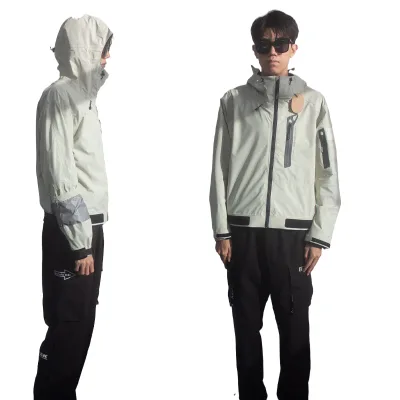
OEM Fabric Color Waterproof Rain Jackets Outdoor Motorcycle Hiking Waterproof Jacket
$32.70 - $34.24
MOQ: 100 pieces


Comprehensive Sourcing Guide
Strategic Sourcing Guide for Waterproof Breathable Textile Motorcycle Jackets
The global demand for high-performance protective gear has elevated the motorcycle jacket from a basic safety requirement to a critical component of rider ergonomics and comfort. For procurement professionals and B2B buyers, sourcing a Waterproof Breathable Textile Motorcycle Jacket requires a nuanced understanding of material science, supply chain logistics, and rigorous quality verification. The market offers a diverse array of options, ranging from standard polyester shells to advanced soft-shell technologies. This guide provides a disciplined framework for evaluating suppliers and products, ensuring that the final procurement aligns with safety standards and operational requirements without relying on unverified marketing claims.
Technical Specifications and Material Composition
The foundation of a reliable motorcycle jacket lies in its material composition and construction. In the current supply landscape, Polyester and Nylon are the dominant shell materials observed in manufacturing. Buyers must distinguish between standard polyester blends and specialized fabrics like WINDSTOPPER softshell, which offers specific performance metrics such as a waterproof rating of 10,000mm. The material technology is not merely a label but a functional determinant of the jacket's ability to repel water while allowing moisture vapor to escape, a critical balance for high-intensity activities like racing and cycling.
When evaluating product specifications, attention must be paid to the closure types and structural integrity. Zipper systems, often sourced from recognized manufacturers like YKK or SBS based on customer requirements, are the primary barrier against the elements. The presence of seamless fusing in certain models indicates advanced construction techniques that reduce weight and potential points of failure. Furthermore, the fabric's breathability is often linked to its weave density and the inclusion of anti-foul or water-resistant treatments. Buyers should verify if the product is a single-layer textile or a multi-layer system, as the latter often provides superior protection against abrasion and water ingress.
The following table outlines common material and feature variations observed in the market to assist in specification comparison:
| Feature Category | Common Observation | Verification Requirement |
|---|---|---|
| Primary Material | 100% Polyester, 100% Nylon, Spandex/Nylon blends | Confirm exact percentage and blend ratio in the technical data sheet. |
| Waterproof Rating | 10,000mm (specific to softshell variants) | Request hydrostatic head test results for the specific batch. |
| Breathability | Breathable, Quick Dry, Anti-Foul | Verify the specific breathability metric (e.g., RET value) if available. |
| Closure System | YKK, SBS Zippers | Inspect zipper pull quality and track smoothness during sampling. |
| Construction | Sewing, Seamless Fusing | Check seam tape integrity and stitching density per inch. |
Compliance, Certification, and Safety Standards
In the realm of protective motorcycle gear, compliance is non-negotiable. While some background information may reference certifications like CE, buyers must exercise caution and not assume that every listed product automatically possesses such status. The presence of a CE mark implies adherence to specific European safety standards regarding impact protection and abrasion resistance, but this must be verified through valid documentation for the specific model being procured.
Buyers should request proof of compliance for the specific production batch. Standards such as EN 17092 for motorcycle protective clothing define the levels of protection required. It is essential to distinguish between a jacket that is merely "waterproof" and one that meets the rigorous impact and abrasion standards required for motorcycling. The supply chain often includes products labeled with generic terms like "windbreak" or "waterproof" that may lack the structural reinforcement necessary for high-speed riding. Therefore, the procurement process must include a mandatory audit of the supplier's ability to provide valid test reports from accredited laboratories.
Furthermore, the standard of the product, often listed as 100% Nylon or Polyester, does not equate to a safety standard. Buyers must explicitly ask for the specific safety standard code (e.g., CE Level 1 or Level 2) and ensure that the supplier can produce the jacket with the necessary internal armor pockets or pre-installed protectors that meet these regulations. Relying solely on the material composition without verifying the safety certification can lead to significant liability issues and compromised rider safety.
Cost Drivers and Pricing Dynamics
Understanding the cost structure of waterproof breathable motorcycle jackets is vital for accurate budgeting and margin analysis. The observed price range in the market typically spans from $20 to $55 USD, but this variance is driven by several critical factors. The primary cost driver is the material technology; jackets utilizing advanced softshell fabrics with a 10,000mm waterproof rating will command a higher price point than those using standard polyester. Additionally, the complexity of the construction, such as the inclusion of seamless fusing or specialized printing methods like heat-transfer printing, adds to the manufacturing cost.
The Minimum Order Quantity (MOQ) is another significant factor influencing the unit cost. The market typically presents an MOQ range between 100 and 1000 units. Buyers ordering at the lower end of this spectrum may face higher per-unit costs due to the fixed costs of setup and material procurement. Conversely, larger orders can leverage economies of scale but require a robust sales forecast to avoid inventory stagnation. The customization options, including color, pattern type (solid, color blocking, floral, or animal prints), and branding, also impact the final price. Custom patterns or specific zipper requirements may incur additional tooling or setup fees.
Lead times also play a role in the total cost of ownership. Standard delivery times observed in the supply chain range from 30 working days after a PP sample is confirmed to 45-60 days after order confirmation. Expedited production, such as the support for 7-day sample orders, may come at a premium. Buyers must factor in these lead times when planning their inventory cycles to avoid stockouts, which can be more costly than the initial price difference between suppliers.
Typical Applications and Usage Scenarios
The versatility of waterproof breathable textile jackets allows them to serve a wide range of applications beyond traditional motorcycling. The observed usage data indicates that these products are frequently designed for Racing and Cycling, highlighting their suitability for high-exertion activities where moisture management is paramount. The feature set, including windproof, breathable, and quick-dry capabilities, makes these jackets ideal for endurance sports and professional racing environments.
However, the application extends to general outdoor activities as well. The availability of various sizes, from XS to XXXL, and the unisex design ensure that these jackets can cater to a broad demographic. The pattern types, ranging from solid colors to leopard, floral, and animal prints, suggest that some models are marketed towards lifestyle or fashion-conscious riders who prioritize aesthetics alongside functionality. For procurement, it is crucial to align the product selection with the end-user's specific environment. A jacket designed for high-speed racing may have different ventilation requirements compared to one intended for urban commuting or touring.
The supply type, often listed as OEM or ODM, indicates that these jackets can be tailored to specific brand identities. This flexibility allows buyers to create a product line that resonates with their target audience, whether it be professional racers seeking high-performance gear or recreational cyclists looking for versatile outerwear. Understanding the intended application helps in selecting the right balance of features, such as the level of waterproofing versus breathability, to ensure the product meets the specific needs of the user base.
Supplier Evaluation and Sourcing Strategy
Selecting the right supplier is a critical step in the procurement process. The supply chain for these jackets is predominantly centered in China, with specific manufacturing hubs noted in Taian, Shandong, and Hebei. When evaluating potential suppliers, buyers should prioritize those with a proven track record in textile manufacturing and a clear understanding of safety standards. The ability to offer customization, including specific zipper brands and pattern types, is a strong indicator of a supplier's flexibility and technical capability.
Buyers should assess the supplier's production capacity and lead time reliability. The observed delivery times of 30 to 60 days suggest a need for careful planning. Suppliers who support 7-day sample orders demonstrate a commitment to quality assurance and rapid prototyping, which is beneficial for validating product specifications before full-scale production. It is also essential to verify the supplier's ability to handle large volumes, given the typical MOQs of 100 to 1000 units.
Transparency in the supply chain is another key evaluation criterion. Buyers should request detailed information regarding the origin of raw materials, such as the specific type of polyester or nylon used. Suppliers who can provide clear documentation on their production processes, including the use of seamless fusing or specific printing methods, are more likely to deliver consistent quality. Additionally, the availability of the product in various colors and sizes, from White and Orange to Navy and Army Green, indicates a mature supply chain capable of meeting diverse market demands.
Quality Control and Long-Term Procurement Considerations
Implementing a robust quality control (QC) protocol is essential to mitigate risks associated with mass production. Given the critical nature of waterproof and breathable performance, buyers should establish clear acceptance criteria based on the observed specifications. This includes verifying the integrity of the zipper systems, the consistency of the waterproof coating, and the accuracy of the size measurements. The packing specifications, such as 1PC/Polybag with 10PCS/CTN or 8PCS/CTN, should be strictly adhered to to prevent damage during transit.
Long-term procurement considerations involve building a sustainable relationship with suppliers who can consistently meet quality and delivery standards. Buyers should consider the potential for supply chain disruptions and the need for buffer stock, especially given the lead times of up to 60 days. Establishing a clear communication channel for updates on production status and potential delays is vital. Furthermore, buyers should plan for continuous improvement by gathering feedback from end-users to refine future product specifications.
The ability to customize the product, including the supply type (OEM/ODM), offers a strategic advantage for long-term growth. By working closely with suppliers to develop unique features or branding, buyers can differentiate their offerings in a competitive market. However, this requires a deep understanding of the supplier's capabilities and a willingness to invest in the development phase. Ultimately, a successful sourcing strategy for waterproof breathable textile motorcycle jackets relies on a balance of technical rigor, supplier reliability, and a clear vision for the product's application in the market.
FAQs
What materials are used for waterproof breathable motorcycle jackets?
These jackets typically use 100% polyester or 100% nylon shells. Some advanced models feature WINDSTOPPER softshell technology with a 10,000mm waterproof rating for superior protection during high-intensity activities like racing.
Which zipper brands are available for customization on these jackets?
Buyers can request YKK or SBS zippers based on their specific requirements. The closure system is a critical component, and suppliers often allow customization to ensure the zipper meets the desired quality and performance standards.
Can suppliers provide samples within a week for these jackets?
Yes, some suppliers support 7-day sample order lead times for rapid prototyping. This option allows buyers to verify material quality and construction before committing to larger production runs with standard delivery times.
What is the typical minimum order quantity for these textile jackets?
The market typically presents a minimum order quantity ranging from 100 to 1000 units. Ordering at the lower end may result in higher per-unit costs, while larger orders leverage economies of scale for better pricing.
How long does production take after sample confirmation?
Standard delivery times range from 30 working days after the PP sample is confirmed to 45-60 days after order confirmation. Buyers must factor in these lead times when planning their inventory cycles to avoid stockouts.
What packaging options are available for shipping these jackets?
Jackets are commonly packed as 1 piece per polybag with 10 or 8 pieces per carton. Custom packaging requirements can also be accommodated by suppliers to meet specific logistical or branding needs.
Are these jackets suitable for racing and cycling activities?
Yes, the products are explicitly designed for usage in racing and cycling environments. Features like windproof, breathable, and quick-dry capabilities make them ideal for high-exertion activities where moisture management is critical.