Source Industrial Water Electromagnetic Flowmeter for Water, Fuel Oil, Wastewater
Compare 30 Industrial Water Electromagnetic Flowmeter options with varying accuracy, power supply, and customization features. These devices measure liquid flow in closed pipelines for industrial production, energy metering, and environmental protection applications.
Key considerations
Products List


Reliable Electromagnetic Flowmeter for Water and Wastewater Applications
$199.00 - $399.00
MOQ: 1 Pieces


High-Precision Electromagnetic Flow Meter for Oil and Water Measurement
$200.00 - $500.00
MOQ: 1 Pieces

High-Precision Electromagnetic Flow Meter for Water Management Solutions
$200.00 - $500.00
MOQ: 1 Pieces


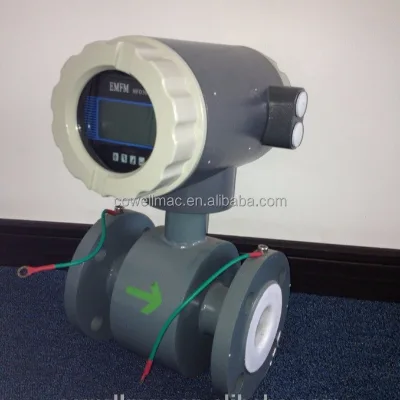

Comprehensive Sourcing Guide
Strategic Sourcing Guide for Industrial Water Electromagnetic Flowmeters
Understanding Core Technical Specifications and Performance Metrics
When sourcing industrial water electromagnetic flowmeters, buyers must first establish a rigorous understanding of the device's fundamental operating principles and performance boundaries. The core technology relies on electrical principles to measure the flow of conductive liquids within a closed pipeline. This makes the technology particularly suitable for applications involving water, wastewater, and various industrial fluids, provided the medium possesses sufficient conductivity. The primary observation from current market data indicates that these devices are designed for a turndown ratio of 150:1, a critical metric that defines the operational range between the minimum and maximum measurable flow rates. A high turndown ratio ensures that the flowmeter remains accurate even when process conditions fluctuate significantly, which is essential for maintaining efficiency in industrial production environments.
The accuracy of these instruments is a primary differentiator in the procurement process. Market observations suggest a typical accuracy range of ±0.2% to ±0.5%. Buyers should verify that the specific unit selected meets the precision requirements of their specific process control loops. Furthermore, the measuring principle is strictly electrical, utilizing sensors that can be configured as either tube or flange types depending on the installation requirements. The nominal diameter options observed in the current supply base range from DN3 to DN10, though larger industrial sizes are also available. For instance, specific models are noted with a DN100 configuration, indicating scalability for larger pipeline applications. The minimum velocity limit is a crucial parameter to consider, with observed data suggesting a limit of 0.1 m/s. This ensures that the flowmeter can detect flow without false readings at low velocities, which is vital for applications with variable flow rates.
Power supply configurations vary significantly across different models, and this must be aligned with the facility's electrical infrastructure. Available options include 220VAC, 24VDC with RS485 communication, and 220VAC with Hart protocol support. The output signal is predominantly 4-20mA, a standard industry signal for transmitting data to control systems. Buyers must ensure that the chosen power supply and output signal are compatible with their existing Distributed Control Systems (DCS) or Programmable Logic Controllers (PLC). Additionally, the operating environment imposes constraints on the device; the relative humidity tolerance is observed to be between 5% and 90%. This range must be evaluated against the specific environmental conditions of the installation site to prevent sensor degradation or electronic failure.
Compliance, Certification, and Regulatory Standards
Navigating the regulatory landscape is a non-negotiable aspect of sourcing industrial flowmeters. The devices listed in the current market data adhere to specific national and international standards, which serve as a baseline for quality and safety. The manufacturing process is explicitly stated to follow the GB/T2624-93 standard for design and manufacture, a Chinese national standard that governs the construction of flow measurement devices. This standard ensures that the physical dimensions, pressure ratings, and material selections meet defined engineering criteria. Furthermore, the verification process for these instruments is conducted in accordance with JJg 640-94, a national verification regulation that mandates specific testing protocols to ensure measurement reliability.
Certification status is a critical factor for international procurement. The observed supply base includes products certified under ISO, CE, RoHS, GB, ANSI, DIN, and JIS standards. The presence of ISO and CE certifications indicates compliance with general quality management systems and European safety directives, respectively. However, buyers must verify that the specific unit they are purchasing carries the valid certification documents, as certification status can vary by batch or specific model configuration. The IP rating and explosion-proof characteristics are also relevant for hazardous environments. Some models are identified as explosion-proof pressure transmitters or diffused silicon pressure transmitters, suggesting suitability for environments where flammable gases or vapors may be present.
The pressure extraction method is another compliance-related specification that affects installation and safety. The observed methods include angle contact pressure, flange pressure, and D-D/2 pre-extraction. These methods dictate how the pressure is measured relative to the flow stream and must be compatible with the pipeline geometry. The nominal pressure rating for these devices spans from 0.6 MPa to 32 MPa, covering a wide range of industrial pressures. Buyers must confirm that the selected pressure rating exceeds the maximum operating pressure of their specific pipeline to ensure a safe margin of error. Additionally, the medium temperature range is observed to be between -10°C and +450°C, which allows for application in both cryogenic and high-temperature processes, provided the specific model supports the upper limit.
Cost Drivers and Pricing Structure Analysis
The pricing structure for industrial electromagnetic flowmeters is influenced by a complex interplay of technical specifications, customization requirements, and material costs. The observed price range in the market is extensive, spanning from $85 to $56,200 USD. This wide variance is not arbitrary but reflects the differences in model complexity, sensor size, and additional features. Lower-priced units typically correspond to standard configurations with basic communication protocols and smaller nominal diameters. In contrast, the higher end of the price spectrum is associated with multi-variable flowmeter transmitters, custom-built units, or models designed for extreme pressure and temperature conditions.
Minimum Order Quantity (MOQ) is another significant cost driver. The observed MOQ range is from 1 to 100 units. For small-scale projects or pilot installations, buyers may find suppliers willing to sell single units, though the unit price may be higher due to the lack of economies of scale. Conversely, large-scale procurement projects can leverage the lower end of the MOQ range to negotiate better pricing, provided the order volume meets the supplier's threshold. The customization factor also plays a pivotal role in cost determination. While customization is available, it often incurs additional charges for engineering time, specialized tooling, and unique material selections. Buyers should be prepared for a cost premium if they require specific adaptations to the standard product line.
The packaging and shipping logistics also contribute to the total cost of ownership. The standard packaging is described as a paper carton, with options available for buyer-specific requirements. However, the weight of the units must be considered for shipping calculations. The single gross weight is observed to be approximately 2.000 Kg for standard units, though this can vary based on the nominal diameter and material construction. For larger models, such as the DN100 type, the weight and shipping costs will increase proportionally. Buyers should factor in these logistical costs when comparing total landed costs across different suppliers. Additionally, the warranty period, typically observed as 1 year, should be weighed against the potential cost of extended warranty services or maintenance contracts, which can impact the long-term financial viability of the procurement.
Typical Applications and Operational Scenarios
The versatility of electromagnetic flowmeters makes them suitable for a broad spectrum of industrial applications. The primary applications observed include water management, fuel oil handling, wastewater treatment, and energy metering. These devices are specifically designed for measuring the flow of conductive liquids in closed pipelines, making them ideal for municipal water supply systems, industrial cooling water loops, and sewage treatment facilities. The ability to measure corrosive liquids and gases further expands their utility in chemical processing and environmental protection sectors. For instance, the measurement of diesel fuel and nature gas in specific configurations highlights their adaptability to different fluid dynamics.
In the context of industrial production, these flowmeters serve as critical instruments for process control and optimization. By providing accurate flow data, they enable operators to maintain optimal production rates, minimize waste, and ensure product quality. The high turndown ratio of 150:1 is particularly beneficial in processes where flow rates fluctuate frequently, such as in batch processing or variable demand scenarios. The ability to measure low velocities, down to 0.1 m/s, ensures that even minor flow changes are detected, allowing for precise control in sensitive applications.
Environmental protection is another key application area. The flowmeters are used to monitor wastewater discharge, ensuring compliance with environmental regulations regarding effluent volume and flow rates. The robust design, including explosion-proof options and high-pressure ratings, allows these devices to operate reliably in harsh industrial environments. The specific mention of "Environmental Protection" as a main application underscores their role in regulatory compliance and sustainability initiatives. Furthermore, the use of these meters in energy metering applications suggests their importance in monitoring energy consumption and optimizing energy efficiency in industrial facilities.
Supplier Evaluation and Quality Assurance Protocols
Evaluating suppliers for industrial electromagnetic flowmeters requires a systematic approach that goes beyond price comparison. Buyers should prioritize suppliers who can demonstrate a clear track record of adhering to the observed national standards, such as GB/T2624-93. The origin of the products, with observed locations in Beijing and Chongqing, China, provides a geographical context, but the focus should remain on the supplier's ability to deliver consistent quality. The presence of certifications like ISO, CE, and RoHS should be verified through valid documentation, ensuring that the supplier maintains a robust quality management system.
Quality control should be an integral part of the supplier evaluation process. Buyers should inquire about the testing procedures used to verify the accuracy of the flowmeters, specifically referencing the JJg 640-94 verification standard. The supplier should be able to provide test reports that confirm the accuracy range of ±0.2% to ±0.5% for the specific models being purchased. Additionally, the warranty terms, typically observed as 1 year, should be clearly defined, including the scope of coverage and the process for handling claims. The availability of customization support, including OEM and ODM services, is another indicator of a supplier's flexibility and technical capability.
When evaluating suppliers, buyers should also consider the lead time and delivery capabilities. While specific lead times are not provided in the current data, the ability to meet project deadlines is crucial. The supplier's capacity to handle large orders, given the MOQ range of 1 to 100, should be assessed to ensure they can scale production as needed. The packaging standards, including the option for buyer-specific requirements, should be discussed to ensure that the products arrive in good condition. Finally, the supplier's after-sales support, including technical assistance and spare parts availability, should be evaluated to ensure long-term operational reliability.
Long-Term Procurement Considerations and Lifecycle Management
Sourcing industrial electromagnetic flowmeters is not merely a one-time transaction but a long-term commitment that requires careful planning for lifecycle management. The warranty period of 1 year is a standard starting point, but buyers should consider the total cost of ownership over the device's lifespan. This includes the cost of maintenance, calibration, and potential replacements. The durability of the materials used in the construction, such as the sensor and flange types, should be evaluated to ensure they can withstand the specific operating conditions of the application.
Calibration is a critical aspect of long-term maintenance. The flowmeters must be periodically calibrated to maintain their accuracy within the specified range of ±0.2% to ±0.5%. Buyers should establish a calibration schedule based on the manufacturer's recommendations and the criticality of the application. The availability of calibration services from the supplier or third-party providers should be confirmed to ensure that the devices remain compliant with regulatory standards.
Furthermore, the obsolescence of specific models should be considered. With the rapid evolution of industrial technology, buyers should ensure that the chosen models have a long production life or that the supplier has a plan for supporting discontinued products. The compatibility of the communication protocols, such as 4-20mA, Hart, and RS485, with future control system upgrades is also important. By selecting suppliers who offer robust customization and support, buyers can mitigate the risks associated with technological changes and ensure that their flow measurement infrastructure remains reliable and efficient for years to come.
Comparative Analysis of Key Product Attributes
To facilitate informed decision-making, the following table summarizes the key attributes observed in the current market for industrial water electromagnetic flowmeters. This comparison highlights the variations in specifications that buyers should consider when selecting a product.
| Attribute | Observed Range/Value | Relevance to Procurement |
|---|---|---|
| Accuracy | ±0.2% to ±0.5% | Determines suitability for high-precision process control. |
| Turndown Ratio | 150:1 | Indicates operational flexibility for variable flow rates. |
| Nominal Pressure | 0.6 MPa to 32 MPa | Must exceed maximum pipeline operating pressure. |
| Medium Temperature | -10°C to +450°C | Defines applicability for extreme thermal environments. |
| Power Supply | 220VAC, 24VDC+RS485, 220VAC+Hart | Must match facility electrical infrastructure. |
| Output Signal | 4-20mA | Standard for integration with DCS/PLC systems. |
| Certifications | ISO, CE, RoHS, GB, ANSI, DIN, JIS | Ensures compliance with international and local regulations. |
| Warranty | 1 Year | Baseline for after-sales support and risk mitigation. |
| Origin | Beijing, Chongqing, China | Provides context for logistics and supply chain stability. |
| MOQ | 1 to 100 Units | Influences procurement strategy for small vs. large projects. |
This comparative analysis serves as a reference point for buyers to align their specific requirements with the available market offerings. By carefully evaluating these attributes, buyers can select the most appropriate flowmeter for their industrial water applications, ensuring optimal performance and long-term value.
FAQs
What accuracy range do these flowmeters offer?
These devices typically provide an accuracy range of ±0.2% to ±0.5%. This precision ensures reliable measurement for industrial production and environmental protection applications where consistent data is critical.
Which power supply options are available for these meters?
Available power supply configurations include 220VAC, 24VDC with RS485, and 220VAC with Hart protocol. Buyers must select the option compatible with their facility's electrical infrastructure and control systems.
Can these flowmeters measure corrosive liquids and gases?
Yes, the main applications include measuring corrosive liquids and gases in addition to water and fuel oil. This versatility makes them suitable for chemical processing and wastewater treatment environments.
What certifications do the manufacturers hold?
Products are certified under ISO, CE, RoHS, GB, ANSI, DIN, and JIS standards. These certifications verify compliance with international quality management systems and safety directives for global procurement.
How is the turndown ratio defined for these instruments?
The turndown ratio is observed to be 150:1, allowing accurate measurement across a wide flow range. This high ratio supports efficient operation even when process conditions fluctuate significantly.
What is the nominal pressure rating for these devices?
The nominal pressure rating spans from 0.6 MPa to 32 MPa. This range covers diverse industrial pressures, ensuring safety margins for various pipeline operating conditions.
Which customization options are available for buyers?
Customization is available with support for OEM and ODM requirements. Buyers can request specific packaging, dimensions, or functional adaptations to meet unique project specifications.