Source Inflatable Snoopy for Advertising, Decoration, and Events
Find 30 options for Inflatable Snoopy characters suitable for outdoor advertising, promotional events, and festive decoration. Compare specifications such as size, material, and blower types to select the right replica for your campaign needs.
Key considerations
Products List

Japan Inflatable Snoopy Cartoon Character Hot Sale Inflatable Christmas Snoopy
$58.00 - $448.00
MOQ: 1 Pieces


Cartoon Inflatable White Snoopy Dog Lovely Inflatable Dog Animal for Display
$99.00 - $399.00
MOQ: 1 Pieces
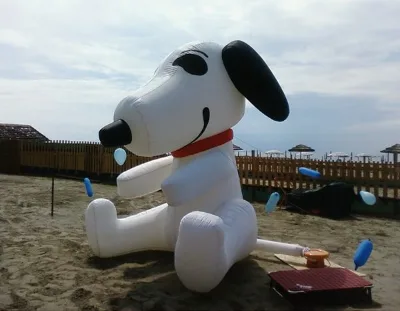
White Inflatable Cartoon snoopy Outdoor Decoration Cartoon Inflatable Dog snoopy for Sale
$200.00 - $1000.00
MOQ: 1 Minimum
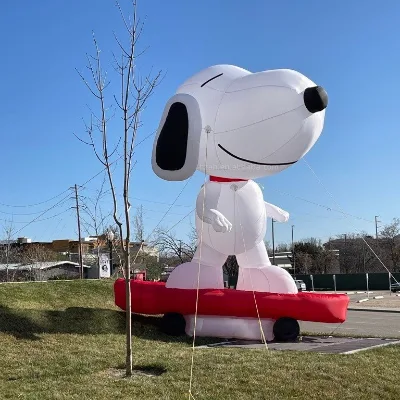

Hot Sale Christmas Snoopy Inflatable Advertising Item Giant Lovely Inflatables Hot Item
$1485.00 - $1755.00
MOQ: 1 Pieces


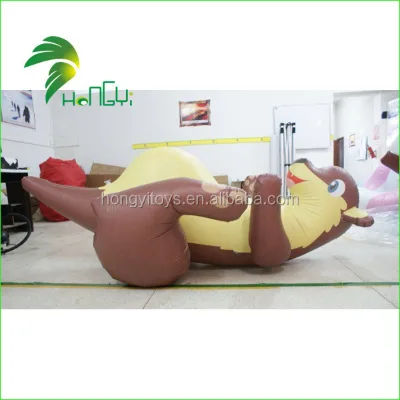
Hot Sale Good Quality Amazing & Naughty Inflatable Cartoon Otter for Sale
$299.00 - $599.00
MOQ: 1 Minimum


Comprehensive Sourcing Guide
Inflatable Snoopy Sourcing Guide
Sourcing inflatable cartoon mascots, particularly popular characters like Snoopy, requires a careful balance between aesthetic fidelity and structural integrity. These products are primarily designed for advertising, promotional events, and decorative purposes, serving as high-visibility assets for brand engagement. Buyers must recognize that while the visual appeal is driven by digital printing and character accuracy, the functional reliability depends heavily on material selection and blower performance. The market offers a wide range of options, from standard white replicas to fully customized designs, allowing businesses to tailor the inflatable to specific campaign themes or brand identities.
The procurement process involves navigating a diverse supplier landscape, often centered in manufacturing hubs like Guangdong and Zhejiang in China. Suppliers typically offer customization services, allowing buyers to specify dimensions, colors, and branding elements. However, the variability in product specifications means that buyers cannot assume uniformity across listings. It is essential to treat observed attributes as specific to individual supplier offerings rather than industry-wide standards. This guide provides a structured approach to evaluating these products, ensuring that procurement decisions are based on verified technical data, compliance documentation, and clear commercial terms.
Product Scope and Observed Listing Signals
The observed market for Inflatable Snoopy figures spans a broad price range, typically from $25.83 to $1,755 USD, reflecting significant variations in size, material quality, and customization depth. The minimum order quantity (MOQ) generally ranges from 1 to 1,000 pieces, indicating that suppliers cater to both small-scale promotional needs and large-scale commercial deployments. Buyers should note that lower price points often correlate with basic materials, such as standard nylon or oxford cloth, and simpler construction methods. Conversely, higher-priced items may feature enhanced durability, custom branding, or specialized blower systems. Understanding this spectrum helps buyers align their budget with their expected usage intensity and duration.
Listing signals also reveal important details about product configuration and logistics. Common specifications include heights ranging from 2 to 5 meters, with some models extending up to 30 feet or customizable dimensions. Materials observed include nylon and oxford cloth, each offering different trade-offs between weight, durability, and cost. The inclusion of accessories such as pumps, ropes, pegs, sandbags, and carry bags is standard, but the quality of these components varies. Shipping methods typically include sea, air, and express freight, with lead times often cited as 3-4 days after payment. Buyers must verify these logistics details with their specific supplier, as delays can impact event timelines.
Technical Specifications to Verify
Material selection is a critical technical factor that determines the inflatable’s lifespan and suitability for indoor or outdoor use. Suppliers may offer products made from nylon or oxford cloth, each with distinct properties regarding tear resistance and weatherability. Buyers should verify the denier count and coating quality of the fabric, as these metrics directly influence the product’s ability to withstand wind and UV exposure. Additionally, the inflation system must be evaluated; options include constant blowers or airtight designs. The choice between these systems affects noise levels, energy consumption, and the risk of deflation during power outages. Confirming the blower’s specifications ensures that the inflatable remains stable and visible throughout the event.
Dimensional accuracy and structural design are equally important for brand representation and safety. The product size can be customized, with common models ranging from 1 to 6 meters, but buyers must ensure that the inflated dimensions fit the intended display area. The style is typically described as an inflatable cartoon mascot, with specific models like the "Inflatable Christmas Snoopy" or "Inflatable White Snoopy" indicating seasonal or thematic variations. Buyers should request detailed technical drawings or 3D models to verify proportions and character accuracy. Furthermore, the printing method, often digital printing, should be assessed for color vibrancy and fade resistance, especially if the inflatable will be used outdoors under direct sunlight.
Compliance and Safety Documentation
Safety and regulatory compliance are paramount when deploying large inflatable structures in public spaces. Buyers must verify that the product holds relevant certifications, such as CE, UL, SGS, and UV resistance ratings. These certifications indicate that the materials and electrical components meet specific safety and environmental standards. For instance, UL certification is crucial for the blower’s electrical safety, while CE marking ensures compliance with European health, safety, and environmental protection standards. Buyers should request copies of these certificates and verify their validity with the issuing bodies. Relying on unverified claims can expose the buyer to liability in case of accidents or regulatory inspections.
In addition to product certifications, buyers should inquire about adherence to industry standards for inflatable structures. Standards such as EN14960 or ASTM F2374 provide guidelines for the design, construction, and testing of inflatable attractions. While not all suppliers may explicitly cite these standards, they represent best practices for ensuring structural integrity and user safety. Buyers should ask suppliers to confirm their compliance with these or equivalent local regulations. Furthermore, the warranty period, often cited as 2 to 3 years, should be clearly defined in the contract. This warranty should cover defects in materials and workmanship, providing a safety net for the buyer against premature failure.
Cost Drivers and Commercial Terms
The total cost of ownership for an Inflatable Snoopy extends beyond the unit price to include shipping, customs duties, and potential maintenance costs. The observed price range of $25.83 to $1,755 USD is influenced by factors such as material thickness, printing complexity, and blower quality. Buyers should request a detailed breakdown of costs to understand what is included in the price, such as packaging and accessories. Packaging is typically standard, using cartons and strong nylon carrying bags, but specialized packaging for fragile components may incur additional charges. Understanding these cost drivers helps buyers avoid hidden fees and budget accurately for the entire procurement cycle.
Commercial terms, including payment methods and delivery schedules, vary among suppliers. Common payment terms include T/T, Western Union, and sometimes PayPal or Visa, with some suppliers offering flexible options for repeat customers. Delivery times are often quoted as 3-4 days after payment, but this can be affected by production volume and shipping method. Buyers should negotiate clear delivery schedules and penalty clauses for delays, especially if the inflatable is required for a specific event. Additionally, the supply ability, often cited as 50,000 pieces per month, indicates the supplier’s capacity to handle large orders. Buyers should confirm this capacity to ensure timely delivery, particularly during peak seasons.
Supplier Qualification and Quality Control
Evaluating supplier qualification is essential to ensure a reliable partnership. Buyers should verify the supplier’s business license, manufacturing capabilities, and export experience. Suppliers located in Guangdong or Zhejiang, China, often have established supply chains and expertise in inflatable manufacturing. However, buyers should conduct due diligence to confirm the supplier’s reputation and financial stability. Requesting references from previous clients or visiting the factory, if possible, can provide valuable insights into the supplier’s operational practices. A qualified supplier will be transparent about their processes and willing to accommodate quality checks.
Quality control measures should be integrated into the procurement process to minimize the risk of receiving defective products. Buyers should specify quality standards in the contract, including acceptable tolerances for dimensions, color matching, and material defects. Pre-shipment inspections are highly recommended to verify that the products meet these standards before they leave the factory. Buyers can hire third-party inspection agencies to conduct these checks, ensuring an unbiased assessment. Additionally, buyers should establish a clear process for handling defects or damages upon receipt. This includes defining the timeline for reporting issues and the supplier’s responsibility for replacements or repairs.
Long-Term Procurement Checks
Long-term procurement success depends on establishing a robust relationship with the supplier and implementing continuous improvement strategies. Buyers should conduct regular performance reviews to assess the supplier’s reliability, product quality, and responsiveness. Key performance indicators (KPIs) such as on-time delivery rate, defect rate, and customer satisfaction should be tracked and discussed with the supplier. These reviews provide an opportunity to address any issues proactively and identify areas for improvement. A collaborative approach fosters trust and encourages the supplier to prioritize the buyer’s needs.
Furthermore, buyers should stay informed about industry trends and technological advancements in inflatable manufacturing. New materials, printing techniques, and blower technologies may offer improved performance or cost savings. Buyers should engage with their suppliers to explore these innovations and evaluate their potential benefits. Additionally, buyers should monitor regulatory changes that may impact the import or use of inflatable products in their target markets. Staying compliant with evolving standards ensures that the procurement process remains efficient and risk-free. By maintaining a proactive and informed approach, buyers can optimize their sourcing strategy and achieve long-term value from their Inflatable Snoopy procurement.
FAQs
What certifications do Inflatable Snoopy products have?
These products hold CE, UL, SGS, UV, and ISO9001 certifications. Some listings also mention EN standards for safety. Buyers should verify specific certificates for their target market requirements before placing orders.
Can I customize the size and design of the mascot?
Yes, customization is available for size, color, and logo printing. Sizes range from 1 to 6 meters or can be customized to 30 feet. Digital printing allows for unique designs on the nylon or Oxford cloth material.
How long does it take to receive the order after payment?
The delivery time is typically 3 to 4 days after payment is received. This fast turnaround applies to standard orders. Buyers should confirm specific lead times with the supplier as production schedules may vary.
What is the minimum order quantity for inflatable cartoons?
The minimum order quantity can be as low as 1 piece. Some suppliers list an MOQ of 1000 pieces depending on the specific model. Buyers should check individual product listings to confirm the exact MOQ for their needs.
Which materials are used to make these inflatable mascots?
Products are primarily made from Nylon or Oxford Cloth. These materials ensure durability for both indoor and outdoor use. The blower is either constant or airtight to maintain the shape of the inflatable character.
What warranty is provided for the inflatable products?
Warranty periods range from 2 to 3 years depending on the supplier. This coverage typically applies to manufacturing defects. Buyers should review the specific warranty terms included with their purchase agreement.
Where are these inflatable products manufactured and shipped from?
Products originate from Guangdong or Zhejiang, China. Shipping is available via sea, air, or express services like FedEx. The port of dispatch is usually Guangzhou or Shenzhen.