Source Injection Molded Plastic Tee Joint for Home Use
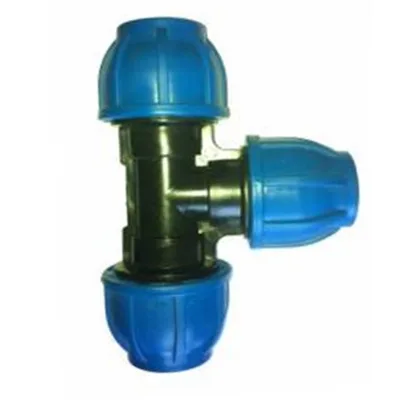
Find 30 Injection Molded Plastic Tee Joint options for household appliances, electronics, and hardware. Compare PVC and PA66+GF materials with ISO and API certifications to select the right fittings for your manufacturing needs.
Key considerations
Products List


Plastic Injection Mold for Tee Plastic PVC Pipe Fitting/Jointing/Connector
$3000.00 - $5000.00
MOQ: 1 Sets


Custom Plastic Injection Pipe Tee Connector Coupling Plumbing Fitting Mold
$1499.00 - $2599.00
MOQ: 1 Pieces




Comprehensive Sourcing Guide
Injection Molded Plastic Tee Joint Sourcing Guide
Sourcing injection molded plastic tee joints requires a disciplined approach that balances technical precision with commercial viability. These components serve as critical junctions in fluid and gas distribution systems, connecting three pipe lines in a T-shaped configuration. The procurement process must account for the specific material properties, molding techniques, and application environments that dictate performance. Buyers must navigate a market where specifications vary significantly based on the intended use, ranging from household appliances to heavy-duty industrial hardware. Understanding the interplay between design software, mold complexity, and material selection is essential for securing parts that meet rigorous engineering standards.
The following guide provides evidence-based procurement strategies for sourcing these components. It focuses on verifying technical attributes, ensuring compliance, and managing commercial risks. By adhering to the structured verification steps outlined below, procurement teams can mitigate the risk of receiving non-conforming goods. The guidance relies on observed market signals and trusted category knowledge to help buyers make informed decisions without relying on unverified supplier claims. This approach ensures that every sourcing decision is grounded in verifiable data and industry best practices.
Product Scope and Observed Listing Signals
The market for injection molded plastic tee joints exhibits a wide range of product variations, primarily driven by material composition and manufacturing complexity. Observed listings indicate a price range from $0.01 to $33,300, reflecting the disparity between simple single-cavity molds and complex multi-cavity systems. The minimum order quantity (MOQ) typically spans from 1 to 10,000 units, allowing for flexibility in prototyping and large-scale production runs. Buyers should note that the term "plastic" in this context often refers to thermosetting plastics or specific thermoplastics like PVC, PA66+GF, ABS, and PP, each offering distinct mechanical and thermal properties.
Listing signals also reveal significant diversity in customization options and finishing processes. Many suppliers offer custom designs supported by software tools such as Pro-E and UG, enabling tailored solutions for specific application needs. The production process often involves compound dies or single-process modes, with surface finishes ranging from standard polishing to black painting. Additionally, the origin of these products is predominantly China, with various certifications like ISO, API, and CE being commonly cited. Buyers must carefully distinguish between the final product specifications and the mold manufacturing capabilities, as some listings may refer to the mold itself rather than the finished fitting.
Technical Specifications to Verify
Verifying the technical specifications of injection molded plastic tee joints is crucial for ensuring compatibility and performance in the intended application. Key attributes to confirm include the molding method, which is typically injection molding, and the plastic type, which may be thermosetting or specific thermoplastics like PVC. The shape of the joint, often a reducing tee or equal tee, must match the piping system requirements. Buyers should also verify the connection type, such as press connections, and the head code, which is frequently round. These physical dimensions and connection methods directly impact the ease of installation and the integrity of the fluid or gas seal.
Material composition and structural integrity are equally important verification points. The material may be specified as PVC, PA66+GF, ABS, or PP, each offering different levels of durability and chemical resistance. Wall thickness standards, such as Sch Std, and pressure ratings, which can range up to 9000lbs, must be confirmed to ensure the joint can withstand operational stresses. Additionally, the production techniques, including welding or molded construction, and the finish, such as black painting, should be verified. The presence of features like hot runners, multi-cavity molds, and efficient cooling systems with beryllium copper inserts can influence production efficiency and part quality, so these details should be clarified with the supplier.
Compliance and Safety Documentation
Compliance with relevant standards and certifications is a non-negotiable aspect of sourcing injection molded plastic tee joints. Buyers should request documentation verifying adherence to standards such as GB, DME, or ISO, depending on the target market and application. Certifications like ISO, API, and CE are commonly cited and indicate that the supplier has met specific quality and safety management requirements. However, buyers must verify the scope of these certifications to ensure they cover the specific product type and manufacturing process. Relying on generic certification claims without verifying their applicability can lead to compliance gaps in regulated industries.
Safety and material compliance are also critical, particularly for applications involving household appliances, electronics, or furniture. Buyers should ensure that the materials used, such as PVC or PA66+GF, comply with relevant environmental and health regulations, such as TSCA or RoHS, if applicable. The production process should be documented to confirm that no hazardous substances are introduced during molding or finishing. Additionally, buyers should inquire about the supplier’s ability to provide approval tryouts at their plant, which can serve as a final verification of product quality and compliance before mass production begins.
Cost Drivers and Commercial Terms
Understanding the cost drivers for injection molded plastic tee joints is essential for effective budgeting and negotiation. The primary cost factors include the complexity of the mold design, the number of cavities, and the material type. Multi-cavity molds with hot runners and efficient cooling systems increase initial tooling costs but can reduce per-unit production costs through higher efficiency. Material costs vary significantly based on the plastic type, with reinforced materials like PA66+GF typically being more expensive than standard PVC or ABS. Buyers should also consider the impact of surface finishing processes, such as polishing or painting, on the final price.
Commercial terms, including MOQ and lead times, play a significant role in the total cost of ownership. While observed MOQs range from 1 to 10,000 units, higher volumes often result in better per-unit pricing. Buyers should negotiate clear terms regarding payment schedules, shipping responsibilities, and warranty coverage. It is also important to clarify any additional costs for customization, such as design changes or special packaging requirements. Packaging options, such as cardboard boxes or steel boxes, can affect shipping costs and product protection, so these details should be included in the commercial agreement.
Supplier Qualification and Quality Control
Supplier qualification is a critical step in ensuring the reliability and consistency of injection molded plastic tee joints. Buyers should assess the supplier’s manufacturing capabilities, including their use of advanced design software like Pro-E and UG, and their experience with complex mold designs. The supplier’s quality control processes, including tolerance checks and coating applications, should be thoroughly evaluated. Suppliers that offer interchangeable inserts with tight tolerances, such as 0.005mm, demonstrate a commitment to precision and consistency. Additionally, the supplier’s ability to provide technical support, including approval tryouts, is a strong indicator of their confidence in their product quality.
Quality control measures should extend beyond the final product to include the molding process itself. Buyers should inquire about the supplier’s use of efficient cooling systems and beryllium copper inserts, which can improve part quality and reduce cycle times. The ejection system, whether driven by hydraulic cylinders or mechanically, should be evaluated for its impact on part integrity. Suppliers that employ compound dies or single-process modes should provide detailed documentation on how these processes are controlled to ensure consistency. Regular audits and sample inspections can help verify that the supplier maintains high quality standards throughout the production run.
Long-Term Procurement Checks
Long-term procurement success depends on establishing robust relationships and continuous improvement mechanisms with suppliers. Buyers should implement regular performance reviews to assess the supplier’s ability to meet quality, delivery, and cost targets. Feedback loops should be established to address any issues promptly and to identify opportunities for process optimization. Suppliers that offer customized solutions and technical support are valuable partners for long-term projects, as they can adapt to changing requirements and provide innovative solutions. Maintaining open communication and collaborative problem-solving can lead to better outcomes and stronger partnerships.
Continuous monitoring of market trends and technological advancements is also essential for staying competitive. Buyers should stay informed about new materials, molding techniques, and compliance requirements that may impact their sourcing strategy. Regularly updating supplier qualification criteria and quality control processes can help mitigate risks and ensure that the supply chain remains resilient. By focusing on long-term relationships and continuous improvement, buyers can secure a reliable supply of high-quality injection molded plastic tee joints that meet their evolving needs.
FAQs
What material is used for the Injection Molded Plastic Tee Joint?
The product utilizes PVC as the primary material, processed via injection molding. It is classified as a thermosetting plastic with a liquid plastic form. This combination ensures durability for applications in household appliances, electronics, and hardware. The design supports both equal and reducing tee configurations for versatile piping needs.
Can the plastic tee joint be customized for specific projects?
Yes, customization is available for these injection molded plastic tee joints. Buyers can request specific designs using Pro-E or UG software. The manufacturing process allows for tailored solutions, including specific head codes and connection types. This flexibility ensures the fittings meet unique project requirements and integration standards.
What certifications do these plastic tee connectors hold?
These fittings hold ISO, API, and CE certifications, ensuring compliance with international standards. The manufacturing process adheres to GB standards for quality control. These credentials verify the product's reliability for use in electronic, hardware, and home use applications. Buyers can trust the certified quality for professional and residential installations.
How is the plastic injection mold designed for efficiency?
The mold features a multi-cavity design with hot runner technology for efficient production. It includes improved cooling systems with beryllium copper inserts. The ejection is driven by hydraulic cylinders or mechanically. This design supports high-volume manufacturing while maintaining precision for PVC and PA66+GF materials used in tee joints.
What is the packaging method for these pipe fittings?
The plastic tee joints are packaged in either cardboard boxes or steel boxes. This packaging protects the fittings during transit and storage. The choice of packaging depends on the specific order requirements and shipping logistics. Secure packaging ensures the products arrive in optimal condition for immediate installation in various applications.
Which applications are suitable for these injection molded tees?
These tees are suitable for household appliances, electronics, hardware, and home use. They are also applicable in the automotive sector for car components. The robust construction supports various pressure ratings and connection types. This versatility makes them ideal for diverse industrial and residential piping systems requiring reliable plastic joints.