Source Injection Molded Plastic Router Enclosure for Industrial Use
Find 30 options for Injection Molded Plastic Router Enclosure units tailored for networking and industrial applications. Compare customization features, material grades like PA66 and ABS, and mold specifications to identify suitable suppliers for your electronic accessory needs; compare the available evidence and request quotations based on your requirements.
Key considerations
Products List


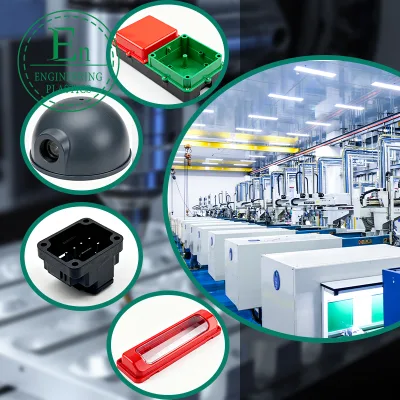


Comprehensive Sourcing Guide
Injection Molded Plastic Router Enclosure Sourcing Guide
Buyers seeking injection molded plastic router enclosures must first recognize that these components serve critical roles in protecting sensitive electronic accessories from environmental stress and physical impact. The observed product attributes indicate a strong focus on applications within the electronics sector, where durability and precise fitment are paramount for operational safety. Sourcing decisions should prioritize suppliers who explicitly list "Injection Molding Plastic Parts" as their core competency, ensuring the manufacturing process aligns with the complex geometries required for router housing.
When evaluating potential vendors, procurement teams should verify that the supplier offers customization capabilities for both color and specific dimensions, as standard sizes rarely meet unique router integration needs. The available data confirms that materials such as PA66, PP, ABS, and PU are commonly utilized, allowing for tailored mechanical properties like heat resistance or chemical stability. Buyers must ensure that the selected partner can accommodate custom drawings or samples, as the standard for these enclosures is often defined by specific client requirements rather than generic industry templates.
Product Scope and Observed Listing Signals
The market for these enclosures displays a wide variance in pricing and minimum order quantities, ranging from nominal unit costs to significant bulk investments. This disparity often reflects the complexity of the mold design, the specific plastic type selected, and the volume commitments required by the manufacturer. Buyers should be prepared to navigate a spectrum where some suppliers demand high volumes, such as 5,000 units, while others may offer more flexible entry points for prototyping or smaller batch production runs.
Listing signals frequently highlight the use of advanced manufacturing techniques like hot chamber die casting and precision machining centers to achieve tight tolerances. The observed product models suggest a diverse range of configurations, including single or multi-cavity molds, which directly influence production speed and unit economics. Procurement professionals must scrutinize these signals to determine if the supplier's capacity matches their volume needs, ensuring that the chosen partner can deliver consistent quality without compromising on the structural integrity of the enclosure.
Technical Specifications to Verify
Technical due diligence requires a rigorous verification of the mold steel and cavity configuration to ensure long-term production viability. The industry standard often involves high-grade steels such as P20, 718, or S136, which are selected based on the anticipated shot count and the abrasive nature of the plastic materials used. Buyers must confirm that the supplier specifies a mold life expectancy, typically ranging from 500,000 to one million shots, to guarantee that the tooling will not degrade prematurely during mass production cycles.
Material selection is equally critical, with thermosetting plastics and dispersoid forms offering distinct advantages for specific router environments. The sourcing guide indicates that runners are often hot runner systems, which improve material efficiency and reduce cycle times, but this requires precise temperature control during the molding process. Procurement teams should demand detailed specifications on the plastic type, such as PA66 or ABS, and verify that the surface treatment processes, including polishing or texturing, meet the aesthetic and functional requirements of the final assembly.
Compliance and Safety Documentation
Ensuring regulatory compliance is a non-negotiable step when sourcing electronic accessories that may be deployed in various global markets. While specific certifications like ISO 9001:2000 and TS16949 are observed in the supply base, buyers must independently verify that the supplier maintains active, valid certificates relevant to their specific production lines. Relying on general claims without current documentation can lead to significant risks, particularly when the enclosures are intended for use in environments with strict safety or environmental regulations.
Documentation should also cover the specific standards applied to the product design and manufacturing processes, such as SGS verification or adherence to custom drawing standards. Buyers should request evidence that the supplier follows a rigorous quality management system, as this ensures consistency in the production of router enclosures that must withstand mechanical stress and electrical hazards. Without clear proof of compliance, the risk of product failure or regulatory rejection increases, potentially jeopardizing the entire supply chain for the electronic components housed within.
Cost Drivers and Commercial Terms
The total cost of ownership for injection molded router enclosures is heavily influenced by the complexity of the mold design and the chosen material specifications. Factors such as the number of cavities, the type of runner system, and the surface finish requirements can significantly alter the unit price and the initial tooling investment. Buyers must understand that while some suppliers offer low unit costs, these may come with higher minimum order quantities or longer lead times that impact overall project economics.
Commercial terms regarding packaging and shipping are also critical variables that affect the final landed cost. The observed data suggests that products are typically packed in waterproof bags within wooden boxes or cartons on wooden pallets to prevent damage during transit. Procurement teams should negotiate clear terms for sample times, which can extend up to 50 days, and ensure that the supplier provides transparent pricing structures that account for all potential variables, including material fluctuations and mold maintenance costs.
Supplier Qualification and Quality Control
Supplier qualification must extend beyond basic certifications to include a deep assessment of their manufacturing capabilities and quality control protocols. Buyers should verify that the supplier utilizes advanced machinery, such as horizontal pressure chamber structures and precision die casting methods, to ensure dimensional accuracy. The ability to produce custom designs based on 2D or 3D drawings is a key indicator of a supplier's flexibility and technical proficiency in handling complex router enclosure geometries.
Quality control processes should be validated through on-site audits or detailed reports that demonstrate the supplier's ability to maintain tight tolerance grades, such as Grade 5. It is essential to confirm that the supplier has a robust system for inspecting finished products, including checks on surface preparation and material consistency. Without a proven track record of quality assurance, the risk of receiving defective enclosures that fail to protect the internal electronics remains unacceptably high for critical applications.
Long-Term Procurement Checks
Establishing a sustainable supply chain requires ongoing monitoring of the supplier's ability to maintain consistent quality and delivery performance over time. Buyers should implement regular audits to ensure that the mold life and production capacity remain aligned with their long-term volume forecasts. This proactive approach helps mitigate the risk of production delays or quality degradation that can occur as tooling ages or as material specifications change in the market.
Continuous communication regarding design updates and material availability is also vital for maintaining the integrity of the router enclosure supply. Procurement teams should establish clear protocols for handling design changes, ensuring that any modifications to the 2D or 3D drawings are accurately reflected in the production process. By fostering a collaborative relationship with the supplier, buyers can ensure that the injection molded enclosures continue to meet the evolving needs of their electronic accessory products throughout the product lifecycle.
FAQs
What materials are used for injection molded plastic router enclosures?
Common materials include PA66, PP, ABS, and PU. These engineering plastics offer durability and heat resistance. Custom material selection is available to meet specific environmental or mechanical requirements for your electronic accessories.
Can I customize the color and size of the enclosure?
Yes, both color and size are fully customizable. You can provide 2D or 3D drawings for precise sizing. Customized colors are available to match your brand identity or specific design requirements for the final product.
What is the typical lead time for sample production?
The sample time is approximately 50 days. This duration allows for proper mold design, machining, and testing. Expedited options may vary based on complexity and current factory capacity for your specific injection molding project.
Which certifications apply to these plastic molding services?
Certifications include ISO, TS16949, and ISO 9001:2000. These standards ensure quality management and manufacturing consistency. Additional standards like SGS may apply depending on specific product requirements and regional compliance needs for electronic components.
What is the minimum order quantity for custom molds?
The MOQ is typically 5000 units. This quantity supports the amortization of mold costs for injection molding. Lower quantities may be possible for existing molds, but custom tooling usually requires higher volumes for economic viability.
How is the product packed for shipping?
Products are packed in cartons with wooden pallets. Alternatively, waterproof bags are used inside with wooden boxes outside. This ensures protection during transit and prevents damage to the precision-molded plastic parts during international shipping.