Source Injection Molded Polycarbonate Plastic for automotive, electronics, and medical
Find 30 suppliers offering Injection Molded Polycarbonate Plastic with customizable grades and certifications. Compare specifications for automotive, electronics, and medical applications to select the right material for your project needs.
Key considerations
Products List


Custom Molded Plastic Polycarbonate Parts, OEM Made Per Drawing or Sample
$0.09 - $0.99
MOQ: 500 Pieces


Injection Molding Service: Cost-Efficient Polycarbonate Plastic Products
$0.10 - $0.50
MOQ: 1000 pieces


Injection Molding Service: Durable Polycarbonate Copolymer Plastic Products
$0.22 - $0.32
MOQ: 1000 pieces


Durable Virgin and Recycled Polycarbonate Plastic for All Applications
$1120.00 - $1280.00
MOQ: 20 Tons


Comprehensive Sourcing Guide
Strategic Sourcing Guide for Injection Molded Polycarbonate Plastic
Understanding Material Specifications and Form Factors
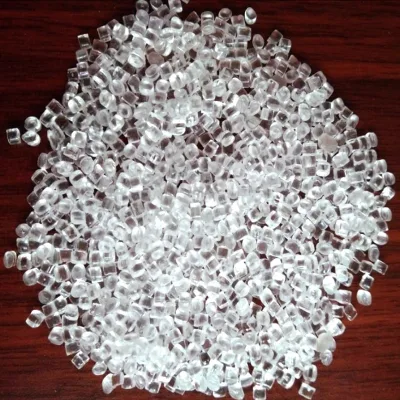
When sourcing injection molded polycarbonate (PC) plastic, buyers must first distinguish between the raw material form and the final molded component. The supply chain for this core keyword often presents a duality where the same vendor may offer raw granules or finished molded parts. Based on observed market data, the raw material form is frequently listed as "Plastic particles" or "Granule," with specific grades ranging from hot melt and molding grades to extrusion, rotational molding, and blown film grades. This variety indicates that the material is versatile, suitable for processes requiring high flow, high strength, or specific thermal properties.
The chemical identity is consistently identified as PC, often paired with other engineering plastics like ABS, PA66, PP, and TPU in mold material specifications. This suggests that the sourcing landscape includes manufacturers capable of handling multi-material projects or complex alloying. The physical appearance of the raw material is typically observed in "Natural / Black" colors, though customization is explicitly available. For the final product, the shape is defined as "Plastic particles" for the raw state, transitioning to complex geometries defined by the mold cavity.
Buyers should note that the material is available in specific grades such as "High Flow," "Aging Resistance," "Antistatic," and "High Temperature Resistance." These attributes are critical for applications in the automotive, electronic, and medical sectors. The presence of "High crystallinity (HCPP)" and "Wear Resistance" grades further expands the potential use cases to include heavy-duty components. When evaluating a supplier, it is essential to verify if the specific grade required for your application (e.g., food grade or optical grade) is explicitly listed in their technical data sheet, as the general listing often aggregates multiple capabilities.
Technical Capabilities and Mold Engineering
The core of the injection molding process lies in the precision of the mold tooling. Sourcing guides must emphasize that the quality of the final part is inextricably linked to the mold's design and material. Observed specifications indicate that mold materials are selected from high-performance steels such as S316h, Nak80, 718h, P20, H13, and S136h. These materials are chosen for their durability and ability to withstand the high pressures and temperatures associated with polycarbonate processing. The hardness of these mold components is typically observed in the range of 45-56 HRC, a standard range that ensures longevity while maintaining surface finish quality.
The mold design itself is a significant differentiator among suppliers. Data shows a prevalence of "Multi Cavity" designs, which allow for high-volume production efficiency, though "Single Cavity" options are also available for prototyping or low-volume runs. The runner system is predominantly described as a "Cold Runner," which is a standard configuration for thermoplastic injection molding. The mold base options include major international standards such as LKM, Hasco, and Dme, or can be customized upon request. This flexibility is crucial for buyers who need to integrate with existing assembly lines or specific machine interfaces.
Production capabilities are further defined by the "Shaping Mode" as Injection Mould, with a "Single-Process Mode" for surface finishing. The surface finish process is explicitly noted as "Polishing," which is vital for achieving the "High Gloss" feature observed in the product attributes. For optical grade applications, the level of polishing and the mold cavity finish must be verified to ensure light transmission properties are not compromised. The mold life is estimated between 500,000 to 1,000,000 shots, a metric that buyers should use to calculate the total cost of ownership over the product lifecycle. Design software used for these molds is identified as UG, indicating a capability for complex 3D modeling and simulation.
Compliance, Certification, and Regulatory Standards
Navigating the regulatory landscape is a critical step in sourcing injection molded polycarbonate. The supply chain for this material often involves multiple layers of compliance, particularly for industries like medical, automotive, and food packaging. Observed certification data lists "COA/MSDS/TDS" (Certificate of Analysis, Material Safety Data Sheet, Technical Data Sheet) as standard documentation provided by suppliers. These documents are non-negotiable for verifying the chemical composition and safety of the raw material.
Furthermore, specific industry certifications are frequently observed, including "ISO" and "CE" marks. The presence of an ISO certification suggests adherence to international quality management standards, which is a baseline requirement for many B2B contracts. For medical applications, the "Med" and "Medical" application tags in the product attributes imply that the material may meet specific biocompatibility or sterilization standards, though buyers must verify the exact standard (e.g., ISO 10993) rather than assuming compliance based on the general tag.
The "Food Grade" and "Med" attributes indicate that the material is suitable for direct contact with food or pharmaceutical products. However, the specific regulatory bodies (such as FDA in the US or EFSA in Europe) must be confirmed. The "Customization" attribute suggests that suppliers can tailor the material or the final part to meet unique regulatory requirements, but this must be documented in the TDS. Buyers should also verify the "Standard" attribute, which is listed as "customization" or "Customized Product," meaning that while the base material may be standard, the final compliance documentation must be generated for the specific batch or project.
Cost Drivers and Procurement Economics
The economics of sourcing injection molded polycarbonate are influenced by several variables, including material grade, mold complexity, and order volume. The observed price range in the market is extremely broad, spanning from $0.01 to $1500. This wide variance is not indicative of a single product but rather reflects the spectrum from raw granules to fully finished, complex molded assemblies. A raw bag of PC particles will sit at the lower end of this spectrum, while a high-precision, multi-cavity mold with custom finishing and certification will command the higher prices.
The Minimum Order Quantity (MOQ) is another significant cost driver, with observed ranges from 1 to 1000 units. This flexibility allows buyers to source small batches for prototyping or large volumes for mass production. The "Selling Units" are typically listed as "Single item," which can be misleading; buyers must clarify whether this refers to a single mold, a single part, or a single batch of material. The "Single package size" of 50x50x50 cm and "Single gross weight" of 25.000 kg provide logistical benchmarks for shipping and storage, which can impact the total landed cost.
Packaging is also a cost factor. Options include "Wooden Box," "Cartons," or "Customized Packaging." For high-value or sensitive components, wooden boxes may be necessary to prevent damage during transit, adding to the cost. Conversely, for bulk raw materials, cartons or bulk bags may be sufficient. The "Customized Packaging" option allows for branding or specific handling requirements, which can be a value-add for certain supply chains. Buyers should request a detailed breakdown of costs, separating the tooling (mold) cost from the per-unit production cost, as the amortization of the mold cost over the production volume is a key determinant of the final price.
Typical Applications and Industry Alignment
The versatility of injection molded polycarbonate is evident in the wide array of applications listed in the market data. The material is explicitly tagged for use in "Electronic and electrical components," "Automotive parts," and "Power tool accessories." These sectors demand high strength, heat resistance, and dimensional stability, all of which are attributes observed in the product features. The "Optical grade" application suggests use in lenses, light guides, or transparent covers where clarity and light transmission are paramount.
In the consumer sector, the material is used for "Household Appliances," "Home Use," and "Furniture." The "High Gloss" and "Toughened grade" attributes make it suitable for visible exterior parts of appliances and durable furniture components. The "Sports equipment" application indicates a need for impact resistance and lightweight properties. For industrial uses, "Wire and cable grades" and "Filling grade" suggest applications in insulation and structural reinforcement.
The medical and agricultural sectors also feature prominently. The "Medical" and "Med" tags, combined with "Food Grade," point to applications in medical devices, surgical instruments, and food packaging. In agriculture, the "Weather Resistant" and "Aging Resistance" features are critical for components exposed to the elements. The "Special materials for cast films" and "Plate grade" applications further highlight the material's adaptability to various manufacturing processes beyond standard injection molding.
Supplier Evaluation and Quality Assurance
Evaluating a supplier for injection molded polycarbonate requires a rigorous assessment of their technical capabilities and quality systems. Buyers should verify the "Mold Life" of 500K~1000K Shots as a baseline for durability, but also request historical data on actual production runs. The "Design Software" being UG is a positive indicator of modern design capabilities, but the buyer should also inquire about the supplier's in-house engineering team and their ability to perform mold flow analysis.
Quality control should be a central part of the evaluation. The presence of "COA/MSDS/TDS" is a minimum requirement, but buyers should also ask for specific test results related to their application, such as tensile strength, impact resistance, and thermal stability. The "Surface Finish Process" of polishing should be verified against the required aesthetic standards, especially for optical or high-gloss applications. The "Installation" method being "Fixed" suggests that the molds are designed for permanent or semi-permanent setups, which requires careful planning for production scheduling.
The "Service" offering of "Custom Injection Mold/Molding" indicates a partner-oriented approach, but buyers must ensure that the supplier has the capacity to handle the specific volume and timeline required. The "Customization" availability for both the product and the packaging is a strong positive, but it must be accompanied by clear communication protocols to avoid errors. Finally, the "Place of Origin" being China, specifically "Dongguan," is a major manufacturing hub, but buyers should verify the specific factory's location and audit their facilities to ensure they meet the required quality and ethical standards.
Long-Term Procurement and Supply Chain Resilience
Sourcing injection molded polycarbonate is not a one-time transaction but a long-term partnership. The "Customized" nature of the product and mold means that changes in design or material requirements can have significant impacts on the supply chain. Buyers should establish clear change management protocols with their suppliers to handle design iterations or material substitutions. The "Mold Cavity" options, whether single or multi, should be aligned with the projected production volume to ensure cost efficiency over time.
Supply chain resilience is also a consideration. The "Lead time" and "Location" factors, while not explicitly detailed in the provided data, are critical for planning. Buyers should assess the supplier's ability to scale production during peak demand and their contingency plans for raw material shortages. The "Certification" status, particularly ISO and CE, should be kept up to date, as regulatory changes can affect the marketability of the final product.
Finally, the "Standard" attribute being "Customized Product" implies that the supply chain is flexible but requires active management. Buyers should invest in building strong relationships with their suppliers to ensure that the "Service" level remains high and that the "Quality Control" processes are consistently applied. By focusing on these long-term considerations, buyers can secure a reliable supply of high-quality injection molded polycarbonate components that meet their technical and commercial objectives.
FAQs
What grades of polycarbonate are available for injection molding?
Available grades include hot melt, molding, extrusion, and blown film varieties. Specific options cover high flow, antistatic, and optical grades suitable for automotive and medical applications.
Which mold materials are used for high-durability polycarbonate parts?
Mold cores typically utilize P20, H13, 718, or S136h steel. These materials ensure hardness between 45-56 HRC and support a mold life of 500,000 to 1,000,000 shots.
Can suppliers provide polycarbonate with ISO and CE certifications?
Yes, suppliers often provide ISO and CE certifications alongside COA, MSDS, and TDS documents. These certifications verify compliance with international quality standards for electronic and household applications.
What is the typical minimum order quantity for polycarbonate particles?
The minimum order quantity ranges from 1 to 1000 units depending on the supplier. Buyers can source single items for prototyping or larger batches for mass production needs.
How is the polycarbonate material packaged for shipment?
Packaging options include wooden boxes, cartons, or customized packaging solutions. Standard single package sizes are often 50x50x50 cm with a gross weight of 25 kg.
Which applications are suitable for high-temperature resistant polycarbonate?
Suitable applications include automotive parts, power tool accessories, and electronic components. The material also supports wire and cable grades requiring high temperature resistance and aging stability.
What customization options are available for polycarbonate injection molds?
Customization is available for mold cavities, runner systems, and surface finishes. Buyers can request multi-cavity designs with cold runners and specific polishing levels for high gloss.