Source IP44 Hexagonal LED Luminaire for Warehouses, Workshops, Garages
Compare 30 listings for the IP44 Hexagonal LED Luminaire featuring aluminum alloy bodies, various wattages, and customizable sizes. Buyers can evaluate specifications like IP ratings, lumen output, and installation options from suppliers in China.
Key considerations
Products List


IP44 Grade LED Aluminum Profile Luminaire High Standard LED Linear Light
$9.00 - $12.00
MOQ: 10 Pieces


LED Aluminum Profile Luminaire Linear Lighting Fixtures LED Linear Light
$9.00 - $12.00
MOQ: 10 Pieces


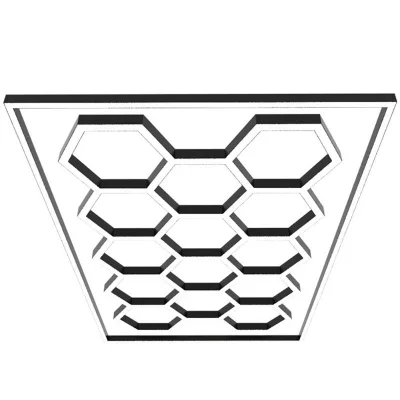
Customized Bespoke Lighting Suspended LED Hexagonal Linear Light for Meeting Room
$50.00 - $200.00
MOQ: 10 Pieces


High Efficiency Aluminum 6063-T5 Hexagon LED Linear Light 5 Years Warranty
$20.00 - $30.00
MOQ: 1 Pieces




Comprehensive Sourcing Guide
Strategic Sourcing Guide for IP44 Hexagonal LED Luminaires
The global demand for specialized lighting solutions has driven the need for precise procurement strategies, particularly for niche geometries like hexagonal LED luminaires. Buyers searching for an IP44 Hexagonal LED Luminaire must navigate a complex supply chain where product attributes vary significantly between manufacturers. This guide provides an evidence-based framework for sourcing these specific fixtures, focusing on technical verification, compliance validation, and supplier evaluation without relying on unverified market claims. The objective is to equip procurement professionals with the knowledge to identify products that meet rigorous operational standards while avoiding common pitfalls in the B2B lighting sector.
Technical Architecture and Material Composition
Understanding the physical and electrical architecture of the luminaire is the first step in any sourcing process. The core keyword implies a specific geometric shape and an ingress protection rating, but the underlying material composition dictates longevity and performance. In the observed market data, aluminum alloy is a dominant material choice for the lamp body and light body material. This material selection is critical because aluminum offers superior thermal conductivity, which is essential for dissipating heat generated by LED chips, thereby extending the lifespan of the light source.
The hexagonal shape is a distinct design feature often associated with modern aesthetic requirements. Sourcing documents indicate that the shell color is available in black, white, silver, and gold, allowing for customization to match interior design schemes. The finished surface treatment often involves spraying, which contributes to the anti-corrosion and waterproof properties required for an IP44 rating. Buyers must verify that the specific hexagonal model they are considering utilizes a robust aluminum alloy shell rather than cheaper alternatives that may degrade under UV exposure or humidity.
Electrical specifications are equally vital. The power consumption for these units can range widely, with observed wattages including 15W, 9W, 18W, 36W, 48W, 60W, 80W, and 100W. The light output efficiency is typically measured in lumens per watt, with a range of 60-100lm/W observed in high-quality units. The Power Factor (PF) is a crucial metric for electrical efficiency, with a standard target of 0.9 to ensure minimal energy waste and reduced strain on the electrical grid. Furthermore, the Color Rendering Index (Ra) should be verified, with 80 being a common benchmark for general commercial and industrial applications. The driver type is another technical differentiator; constant current isolated drivers are preferred for stability, ensuring consistent light output regardless of voltage fluctuations.
Ingress Protection and Environmental Durability
The IP44 rating is a non-negotiable specification for many applications, indicating protection against solid objects larger than 1mm and water splashes from any direction. However, the term "IP44" alone does not guarantee performance; the manufacturing process determines the actual seal integrity. The observed product attributes highlight features such as "Waterproof," "Dust-Proof," and "Anti-corrosion." These are not merely marketing terms but functional requirements that must be validated through testing.
For hexagonal luminaires, the joints between the hexagonal panels and the mounting structure are potential weak points for water ingress. Buyers should request evidence of gasket quality and sealing methods used during the assembly process. The surface treatment, often described as spraying, plays a significant role in preventing corrosion, especially in environments with high humidity or chemical exposure. The standard specifications for these units often include customization options for size and shape, but the IP rating must remain consistent across all custom dimensions.
The input voltage range is another factor influencing environmental suitability. Units operating on AC100-277V or AC220-240V offer flexibility for international deployment. However, the compatibility of the driver with these voltage ranges must be confirmed to ensure the IP44 rating is not compromised by electrical failures. The irradiated area, typically ranging from 10 to 15 square meters for specific models, should be calculated based on the mounting height and the specific lumen output to ensure adequate illumination without over-specifying the product.
Compliance, Certification, and Regulatory Standards
Navigating the regulatory landscape is a critical component of B2B procurement. While specific certification statuses can vary by supplier, the presence of CE and RoHS certifications is a baseline expectation for products originating from major manufacturing hubs like Guangdong, China, or Ningbo. These certifications indicate compliance with European safety standards and restrictions on hazardous substances, respectively.
Buyers must exercise caution when interpreting certification claims. The provided data lists "CE" and "RoHS" as observed attributes, but these should be treated as observations rather than universal guarantees for every listed product. It is the responsibility of the procurement team to verify that the specific batch of hexagonal luminaires being purchased carries valid, up-to-date certification documents. The standard specifications often mention "Standard Specifications Or Customized," which implies that compliance might be tied to the specific configuration ordered.
In addition to CE and RoHS, other standards may apply depending on the destination market. The product origin, frequently listed as Guangdong or Zhongshan in China, suggests a concentration of manufacturing capabilities, but it does not inherently guarantee quality. Buyers should request test reports that specifically address the IP44 rating and the electrical safety of the constant current drivers. The warranty period, often observed as 5 years for certain models, is a strong indicator of the manufacturer's confidence in their compliance and durability claims, but it should be backed by clear terms and conditions.
Cost Drivers and Pricing Dynamics
The pricing of hexagonal LED luminaires is influenced by a complex interplay of factors, including material costs, customization levels, and order volume. The observed price range in the market spans from $0.46 to $750, a vast disparity that reflects the difference between small components and complete, high-specification fixtures. The cost is heavily driven by the aluminum alloy content, the complexity of the hexagonal molding, and the quality of the LED chips used, such as Epistar, which is noted in the product data.
Order Volume (MOQ) is a significant cost driver. The observed MOQ range of 1 to 2000 units indicates that suppliers offer flexibility for small-scale projects but may require bulk commitments for custom colors or specialized finishes. Customization, including specific shell colors, dimensions, and surface treatments, invariably increases the unit cost. The "Standard Shipping Packaging or Customized" option also impacts the final price, as specialized packaging for fragile hexagonal units requires additional materials and labor.
Buyers should analyze the total cost of ownership rather than just the unit price. A lower-priced unit with a shorter warranty or inferior driver may result in higher maintenance costs over time. The 5-year warranty observed in some models suggests a higher initial investment but potentially lower long-term costs. Additionally, the origin of the product, whether from Guangdong or Ningbo, can influence logistics costs and lead times, which should be factored into the overall budget.
Supplier Evaluation and Quality Assurance
Selecting the right supplier requires a rigorous evaluation process that goes beyond the product listing. The diversity of product origins, including Guangdong, Ningbo, and Zhongshan, indicates a competitive market with varying levels of expertise. Buyers should prioritize suppliers who demonstrate transparency in their manufacturing processes and provide detailed technical documentation. The availability of customization is a key differentiator, but it must be balanced with the supplier's ability to maintain quality control during the production of non-standard items.
Quality assurance protocols should be a central part of the supplier evaluation. This includes verifying the consistency of the aluminum alloy composition, the precision of the hexagonal molding, and the reliability of the LED chips. The use of SMD2835 rigid strip types is a common specification, but the quality of the soldering and the thermal management system are critical for performance. Suppliers should be able to provide samples for testing, allowing buyers to verify the IP44 rating and the actual lumen output before committing to a large order.
The warranty terms are a strong indicator of supplier confidence. A 5-year warranty, as observed in specific models, suggests a commitment to product longevity. However, buyers must ensure that the warranty covers both the LED driver and the light body, as these are the components most prone to failure. The packaging method, whether color boxes or cartons, also reflects the supplier's attention to detail and their understanding of the product's fragility during transit.
Typical Applications and Installation Considerations
Hexagonal LED luminaires with an IP44 rating are versatile and suitable for a wide range of applications. Their modern style and geometric shape make them ideal for commercial spaces, retail environments, and residential areas where aesthetics are paramount. The ability to be suspended or ceiling-mounted offers flexibility in installation, allowing designers to create unique lighting patterns and focal points. The anti-glare feature, often associated with these units, enhances visual comfort in office and educational settings.
The specific wattage and lumen output determine the suitability for different spaces. For instance, a 15W unit with a 10-15 square meter irradiated area is well-suited for small offices or retail displays, while higher wattage options like 100W may be required for large industrial warehouses or high-ceilinged atriums. The input voltage compatibility ensures that these luminaires can be deployed in various regions without the need for complex voltage conversion systems.
Installation considerations also include the durability of the mounting hardware and the ease of maintenance. The hexagonal shape may require specialized mounting brackets or connectors to ensure a secure fit. Buyers should verify that the supplier provides clear installation instructions and that the design allows for easy access to the driver for future replacements. The customization of the size and shape allows for integration into complex architectural designs, but it requires precise planning to ensure the IP44 rating is maintained during installation.
Long-Term Procurement and Maintenance Strategy
Sourcing hexagonal LED luminaires is not a one-time transaction but part of a long-term procurement strategy. The longevity of the product depends on the quality of the materials, the robustness of the electrical components, and the effectiveness of the thermal management system. Buyers should establish a maintenance schedule that includes regular inspections of the seals and the cleaning of the lens to maintain the IP44 rating and light output.
The availability of spare parts, such as replacement drivers or LED modules, is crucial for minimizing downtime. Suppliers who offer customized packaging and standard specifications are more likely to have a robust supply chain for these components. The 5-year warranty observed in the market provides a safety net, but buyers should also consider the cost of extended warranties or service contracts for critical applications.
In conclusion, sourcing IP44 hexagonal LED luminaires requires a meticulous approach that balances technical specifications, compliance requirements, and cost considerations. By focusing on the verified attributes of aluminum alloy construction, constant current drivers, and standardized certifications, buyers can make informed decisions that ensure the reliability and performance of their lighting installations. The flexibility in customization and the wide range of power options allow for tailored solutions that meet the specific needs of diverse projects, provided that the supplier evaluation process is rigorous and the quality control measures are strictly enforced.
FAQs
What materials are used for the lamp body?
The lamp body is constructed from aluminum alloy to ensure superior thermal conductivity and durability. This material choice supports the anti-corrosion and waterproof features required for an IP44 rating in various environments.
Which certifications are typically available for these units?
Products often carry CE and RoHS certifications to meet European safety and environmental standards. Buyers should verify specific batch documentation as these are observed attributes rather than universal guarantees for every listed item.
Can the size and shape be customized?
Yes, the size and shape are customizable to meet specific project requirements. While standard hexagonal shapes are common, dimensions like side length and overall size can be tailored, though this may affect pricing and lead times.
What is the typical warranty period for these luminaires?
Some models offer a five-year warranty period indicating manufacturer confidence in product longevity. This warranty typically covers the LED driver and light body, but specific terms and conditions must be confirmed with the supplier.
How is the surface treated to ensure durability?
The surface undergoes spraying treatment to provide waterproof, dust-proof, and anti-corrosion protection. This process is essential for maintaining the IP44 rating and preventing degradation in humid or chemically exposed environments.
What power options are available for these fixtures?
Power options range from 9W to 100W depending on the specific model and application needs. Common wattages include 15W, 18W, 36W, and 60W, with efficiency typically measured between 60 to 100 lumens per watt.