Source IP44 Industrial Plug for Factories, Construction, and Power Supply
Compare 30 verified listings for the IP44 Industrial Plug suitable for factories, construction sites, and power supply applications. Buyers can evaluate specifications including current ratings, certifications like VDE and PSE, and customization options from suppliers in Zhejiang, China.
Key considerations
Products List


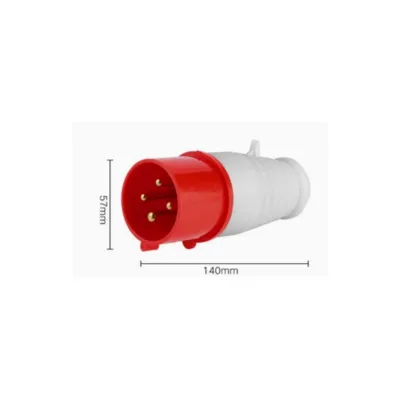
Honle IP44 55 67 Plug for Industry Application 63A Industrial Plug Socket
$1.00 - $2.00
MOQ: 500 Pieces

Honle IP44 55 67 Plug for Industry Application 32A Industrial Plug Socket
$1.00 - $2.00
MOQ: 500 Pieces

Honle IP44 55 67 Plug for Industry Application 16A Industrial Plug Socket
$1.00 - $2.00
MOQ: 500 Pieces


Comprehensive Sourcing Guide
Sourcing Guide for IP44 Industrial Plug Solutions
Procuring industrial-grade electrical connectivity requires a rigorous approach that balances technical performance with regulatory compliance. When searching for an IP44 Industrial Plug, buyers must navigate a complex landscape of standards, material specifications, and supplier capabilities. The core keyword "IP44 Industrial Plug" indicates a specific requirement for dust and water resistance suitable for demanding environments, yet the actual product offerings vary significantly in their underlying construction and certification status. This guide provides a structured framework for evaluating potential suppliers and products based on verified attributes and industry best practices, ensuring that procurement decisions are grounded in factual evidence rather than marketing assertions.
Technical Specifications and Functional Attributes
The fundamental technical profile of an IP44 Industrial Plug centers on its ability to protect against solid objects larger than 1mm and water splashes from any direction. While the IP44 rating is a critical observation, the physical implementation of this rating depends heavily on the product's shape, current capacity, and interface type. Available product data indicates that these connectors often feature a round shape, though some variations may present as EP (likely referring to a specific plug profile or housing style). The functional application is strictly defined for industrial environments and power supply contexts, distinguishing them from standard residential outlets.
Current capacity is a primary differentiator among available models. The observed range spans from 16A to 32A, with some specifications listing higher capacities such as 40A, 50A, and even up to 320A in specific industrial configurations. Buyers must verify the exact amperage required for their specific machinery, as exceeding the rated current can lead to thermal failure. Furthermore, the interface type is noted as AC/DC, suggesting versatility in power delivery systems, though the primary function is listed as AC Plug or Industrial Plug Socket. The grounding configuration is another critical variable; some units are specified as Non-Grounding, while others may support grounding depending on the specific model and regional standard compliance.
The physical construction materials also play a vital role in durability. Specifications mention PVC shells, copper conductors, and iron fittings. The choice of material impacts the plug's resistance to corrosion, mechanical stress, and temperature fluctuations. For instance, a PVC shell offers good electrical insulation and flexibility, while iron fittings provide structural rigidity. The packing specifications vary widely, ranging from single units in plastic bags to bulk cartons containing 600 pieces, which influences logistics planning and inventory management for large-scale projects.
Compliance and Certification Verification
Navigating the certification landscape is essential for ensuring that an IP44 Industrial Plug meets the legal and safety requirements of the target market. The product data reveals a diverse array of certifications, including VDE, PSE, CCC, CE, ISO, and SAA. These acronyms represent distinct regional standards: VDE is prominent in Germany, PSE in Japan, CCC in China, CE in Europe, and SAA in Australia. The presence of these certifications on a product listing does not guarantee that every single unit in a batch possesses them; rather, it indicates that the supplier claims compliance with these standards for specific models.
Buyers must exercise caution when interpreting standard claims. The data lists European Standard, British Standard, German Standard, South African Standard, Italian Standard, IEC Standard, American Standard, and Australian Standard. However, it also notes that the product standard can be "Customized" or "Customizable." This suggests that while standard compliance is available, many industrial plugs are tailored to specific project requirements. The specification "CE P0141" and model numbers like "311," "323," and "C66P" serve as unique identifiers that should be cross-referenced with the supplier's documentation to confirm the exact standard version applied.
Crucially, the data mentions "IEC 60309" in a low-confidence background section. While this is a widely recognized standard for industrial plugs, the guide advises against asserting its universal application without direct verification from the supplier. Instead, buyers should request test reports or certification documents that explicitly link the specific model number to the claimed standard. The presence of ISO 9001 certification indicates a quality management system, which is a positive indicator of process consistency, but it does not replace product-specific safety certifications.
Cost Drivers and Pricing Dynamics
The pricing structure for IP44 industrial plugs is influenced by a combination of material costs, certification fees, and order volume. The observed price range in the market spans from $0.04 to $50.00 USD. This wide variance reflects the differences in current rating, material quality, and certification complexity. A basic 16A plug with a PVC shell and standard packaging will likely fall at the lower end of this spectrum, whereas a 320A unit with heavy-duty iron fittings and multiple international certifications will command a premium price.
Minimum Order Quantity (MOQ) is another significant cost driver. The observed MOQ range extends from 1 to 10,000 units. Suppliers offering low MOQs (e.g., 1 or 100 units) are often more suitable for prototyping or small-scale maintenance projects, while high-volume buyers may negotiate better unit prices by committing to orders near the 10,000-unit threshold. The packaging format also affects the effective cost per unit; bulk packaging like "600PCS/CTN" reduces per-unit shipping and handling costs compared to individual retail packaging.
Buyers should be aware that "Customization" is an available attribute, which inherently adds to the cost. Customizing the standard, shape, or interface type requires tooling changes and potentially new certification processes. Therefore, the final cost is not merely a function of the base product price but also the degree of modification required. It is prudent to request a detailed breakdown of costs, separating the base unit price from customization fees and certification surcharges, to ensure transparency in the procurement process.
Typical Applications and Operational Context
The primary application for IP44 industrial plugs is the industrial environment, where reliability under adverse conditions is paramount. These connectors are designed for use in power supply systems that operate in settings exposed to dust, moisture, and mechanical stress. The specific mention of "Industrial Place" and "Industrial Use" in the product attributes reinforces their suitability for factories, construction sites, and outdoor equipment.
The versatility of the interface type (AC/DC) allows these plugs to be used in a variety of power distribution scenarios. For example, they may serve as the connection point for heavy machinery, temporary power distribution units (PDUs), or mobile generators. The current ratings of 16A to 32A (and higher) make them appropriate for powering motors, lighting arrays, and heating elements. However, the specific application must be matched to the plug's rating; using a 16A plug for a 32A load would result in overheating and potential failure.
The "Non-Grounding" attribute found in some models indicates that these plugs may be used in double-insulated systems or specific low-voltage applications where grounding is not required by the local electrical code. Conversely, in high-power industrial settings, grounding is often mandatory for safety. Buyers must verify the grounding configuration against the specific operational requirements of their facility to ensure compliance with local electrical safety regulations.
Supplier Evaluation and After-Sales Support
Evaluating a supplier for IP44 industrial plugs requires looking beyond the product specifications to assess their overall capability and support structure. The data indicates that brands such as Cowinelec, Gxt, and Clipol are available, alongside OEM and ODM options. This suggests that buyers can choose between branded products or custom-manufactured solutions. The availability of OEM/ODM services implies that suppliers are willing to customize branding and specifications, which is valuable for companies looking to integrate these components into their own product lines.
After-sales service is a critical factor in long-term procurement. The product data confirms that "Yes" for After-sales Service is available, with some listings specifying "Product Guidance." Additionally, warranty periods are listed as either 1 Year or 3 Years. A longer warranty period often reflects the supplier's confidence in the product's durability and quality. Buyers should explicitly clarify the terms of the warranty, including what constitutes a defect, the process for claims, and whether the warranty covers shipping costs for returns.
When evaluating suppliers, it is essential to verify their origin. The data points to China, specifically Zhejiang, as the primary production location. While this region is a major hub for electrical manufacturing, buyers should conduct due diligence on the specific factory's quality control processes. The ability to provide consistent quality across large batches is crucial, especially when dealing with high-volume orders. Suppliers who offer customization should also demonstrate a robust process for managing design changes and ensuring that the final product meets the agreed-upon specifications.
Quality Control and Long-Term Procurement Strategy
Ensuring the quality of IP44 industrial plugs requires a proactive approach to quality control (QC). Given the wide range of certifications and standards observed, buyers should implement a rigorous inspection protocol. This includes verifying the IP44 rating through independent testing if possible, checking the material composition of the shell and fittings, and confirming the electrical continuity and insulation resistance. The presence of certifications like ISO 9001 suggests that the supplier has a quality management system, but this should be supplemented with product-specific inspection reports.
Long-term procurement considerations involve building a sustainable supply chain. The availability of customization allows for future-proofing the supply chain, enabling buyers to adapt to changing standards or operational needs. However, this flexibility must be balanced with the risk of supply chain disruption. Buyers should consider diversifying their supplier base to mitigate risks associated with single-source dependencies. Additionally, the lead time and production capacity of the supplier should be factored into inventory planning, especially for critical industrial applications where downtime is costly.
In conclusion, sourcing IP44 industrial plugs requires a meticulous evaluation of technical specifications, certifications, and supplier capabilities. By focusing on verified attributes such as current rating, material composition, and warranty terms, buyers can make informed decisions that ensure safety, reliability, and cost-effectiveness. The dynamic nature of the industrial plug market, with its diverse standards and customization options, demands a strategic approach that prioritizes quality and compliance over price alone.
FAQs
What certifications are available for IP44 industrial plugs?
Available certifications include VDE, PSE, CCC, CE, ISO, and SAA. These standards vary by region, so buyers must verify which specific certification applies to their target market and the exact model number before purchasing.
Which current ratings are offered for these industrial plugs?
Current ratings typically range from 16A to 32A, with some models supporting up to 320A. Selecting the correct amperage is critical to prevent thermal failure, so match the rating to your specific machinery load requirements.
Can these plugs be customized for specific project needs?
Yes, customization is available for standards, shapes, and interface types. Buyers should expect additional costs and potential lead time increases when requesting tailored specifications like specific pin numbers or unique material compositions.
Where are these industrial plugs manufactured and shipped from?
Products originate from China, specifically the Zhejiang region. This location is a major hub for electrical manufacturing, offering a wide range of options from OEM to branded solutions like Cowinelec and Clipol.
What is the typical price range for IP44 industrial plugs?
The observed price range spans from 0.04 to 50 USD per unit. Costs vary significantly based on current capacity, material quality, and certification complexity, with higher-rated units commanding premium prices.
How does the Minimum Order Quantity affect procurement?
MOQ ranges from 1 to 10,000 units depending on the supplier and customization level. Low MOQs suit prototyping, while high-volume orders near 10,000 units often secure better unit pricing and bulk packaging benefits.