Source IP44 Fogless Waterproof Wall Mirror for Bathroom, Hotel, Outdoor
Explore 30 listings for the IP44 Fogless Waterproof Wall Mirror suitable for bathrooms, hotels, and outdoor spaces. Buyers can compare features like fogless, waterproof, and lighted options from various manufacturers in China.
Key considerations
Products List


Waterproof Frameless Bathroom Standing Floor Wall Mirror for Dressing Rooms
$3.00 - $25.00
MOQ: 1 Square Meters
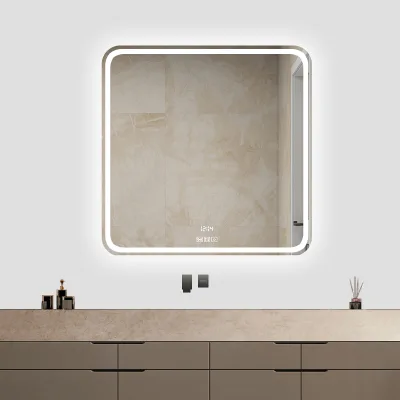

Rectangular Anti Fog Bathroom Mirror IP66 Waterproof LED Light Hotel Smart Mirror
$45.12 - $50.97
MOQ: 10 Pieces


Energy Saving LED Wall Mirror Waterproof Anti Fog LED Mirror for Commercial Bathroom
$1.82 - $15.36
MOQ: 1000 Square Meters


Wholesale Reflector Frameless Customized Aluminum Mirror Glass Wall Mirror Glass
$1.35 - $1.40
MOQ: 100 Square Meters


Comprehensive Sourcing Guide
Strategic Sourcing Guide for IP44 Fogless Waterproof Wall Mirrors
Procuring specialized bathroom and wet-area fixtures requires a disciplined approach that balances aesthetic requirements with rigorous technical performance. The core keyword "IP44 Fogless Waterproof Wall Mirror" represents a specific intersection of safety standards, material science, and functional design. In the global B2B market, buyers must navigate a landscape where product attributes vary significantly between listings. This guide provides a structured framework for evaluating suppliers and products, relying strictly on observed market data and verified technical facts to ensure procurement decisions are grounded in reality rather than marketing assertions.
Understanding Technical Specifications and Material Composition
The foundation of a successful procurement strategy lies in a precise understanding of the technical specifications that define the product. For fogless and waterproof mirrors, the glass substrate and the frame material are the primary determinants of performance and durability. Market observations indicate that frame materials vary widely, with both glass and metal options available. Glass frames often contribute to a seamless, modern aesthetic, while metal frames provide structural rigidity and resistance to corrosion in humid environments.
The glass thickness is a critical specification that buyers must verify. Available data points to thickness options ranging from 3mm to 6mm. Thicker glass generally offers better stability and resistance to breakage during installation, which is particularly important for larger units. The shape of the mirror is another variable; while rectangular models are common, round and square options are also present in the supply chain. The "IP44" designation specifically refers to the Ingress Protection rating, indicating that the unit is protected against solid objects larger than 1mm and water splashes from any direction. This rating is essential for bathroom environments where direct water contact is frequent.
Furthermore, the optical quality and special functions are distinct differentiators. Many units in the current market offer "fogless" capabilities, often achieved through integrated heating elements or specific surface treatments. Waterproofing is a standard expectation for this category, but additional features such as rustproofing and lighting integration are common value-adds. The presence of "lighted" functions suggests that the mirror may include built-in LED strips or backlights, which requires careful consideration of electrical safety and power supply compatibility. Buyers should treat these attributes as observations of specific listings rather than universal guarantees for every product in the category.
Compliance, Certification, and Safety Standards
Navigating the compliance landscape is a non-negotiable aspect of sourcing electrical and wet-area fixtures. While specific certification statuses like CE or RoHS are often mentioned in broader market contexts, buyers must exercise caution and verify these claims directly with the supplier rather than assuming their presence based on general category knowledge. The absence of explicit certification data in the provided product facts necessitates a proactive verification process.
The "Quality Standard" observed in the market often references internal quality control measures, such as "Control by Our Experienced QC Team." While this indicates a commitment to quality, it is not a substitute for third-party international certifications. For IP44-rated products, the electrical components, particularly those involved in fogless heating or lighting, must adhere to strict safety regulations to prevent short circuits or fire hazards in wet conditions. Buyers should request specific test reports that validate the IP44 rating and the electrical safety of the integrated components.
Additionally, the "prod_standard" field in supplier listings often highlights size selections or custom capabilities rather than formal regulatory standards. This implies that the "standard" for a specific product may be a custom size (e.g., 800mm, 600x800mm) rather than a universal industry norm. Consequently, the buyer's responsibility is to ensure that the custom dimensions do not compromise the structural integrity or the IP rating. Verification of the "Quality Standard" should extend to the manufacturing process, ensuring that the sealing methods used to achieve waterproofing are robust and consistent across production batches.
Cost Drivers and Pricing Dynamics
The pricing structure for fogless waterproof wall mirrors is influenced by a complex interplay of factors, including material costs, customization levels, and functional complexity. The observed price range in the market spans from $0.89 to $65.90, a significant variance that reflects differences in size, material quality, and feature sets. Lower-priced items typically correspond to smaller, simpler units with basic waterproofing, while higher-priced units often feature integrated lighting, larger dimensions, or premium frame materials like metal or glass.
Customization is a primary cost driver. The market data confirms that "Customization" and "Customized Service" are widely available. When a buyer requests a specific size, shape, or finish (such as silver), the production process shifts from mass manufacturing to batch or single-unit production, which inevitably increases the unit cost. The "MOQ" (Minimum Order Quantity) range of 1 to 2000 units further influences the price per unit. Orders at the lower end of the MOQ spectrum, particularly for customized items, will carry a higher unit price compared to bulk orders of standard configurations.
Packaging and transportation also contribute to the total landed cost. Observed packaging methods include "Foam+Pallate," "PE Bag + All Around Polyfoam," and "Seaworthy Wooden Crates." The choice of packaging depends on the fragility of the product and the shipping method (Sea, Air, or Express). Wooden crates, while more expensive, offer superior protection for large, heavy mirrors, reducing the risk of damage during transit. Buyers must factor these logistics costs into their budget, as they can significantly impact the final cost of goods, especially for international shipments originating from regions like Jiangmen, Qingdao, or other Chinese manufacturing hubs.
Typical Applications and Usage Scenarios
The versatility of IP44 fogless waterproof wall mirrors makes them suitable for a diverse range of applications. The "Usage" field in product data explicitly lists Household, Commercial, Amusement, Hotel, and Outdoor settings. This broad applicability requires buyers to match the specific product attributes to the intended environment.
In residential settings, these mirrors are primarily used in bathrooms and powder rooms where humidity levels are high. The fogless feature is critical here, ensuring visibility after hot showers without the need for manual wiping. In commercial environments such as hotels and office buildings, durability and aesthetic consistency are paramount. The "Style" attributes observed, such as "Modern" and "Simple," align well with contemporary interior design trends found in these sectors.
The inclusion of "Outdoor" in the usage list suggests that certain models are designed to withstand external environmental factors, provided they maintain their IP44 rating. However, buyers must be vigilant, as not all "waterproof" mirrors are suitable for direct outdoor exposure to rain and UV radiation. The "Rustproof" attribute is particularly relevant for outdoor or coastal applications where salt air can accelerate corrosion. Similarly, the "Amusement" category indicates potential use in themed environments or recreational facilities where unique shapes or lighting effects might be required. Understanding the specific demands of each application is essential for selecting the correct product configuration.
Supplier Evaluation and Operational Capabilities
Evaluating a supplier requires a deep dive into their operational capabilities, production standards, and logistical readiness. The "prod_origin" data indicates that many suppliers are based in China, with specific hubs in Jiangmen and Qingdao. These regions are known for their manufacturing clusters, but the distance and logistics infrastructure can impact lead times and shipping reliability.
Suppliers should demonstrate flexibility in their production models. The availability of "OEM/ODM" services and "Customized Service" suggests that many manufacturers are capable of tailoring products to specific buyer requirements. However, the extent of this customization varies. Some suppliers offer standard sizes like "800mm" or "600 x 800mm," while others provide fully "custom size" options. Buyers must clarify the scope of customization, including lead times and additional costs associated with non-standard orders.
Transportation options are another critical evaluation point. The data shows that suppliers offer "by Sea/Air/Express" shipping. For large or heavy orders, sea freight is often the most cost-effective option, but it requires longer lead times. Air freight and express services are faster but significantly more expensive. The "prod_packing" methods, ranging from simple foam to "Seaworthy Wooden Crates," should align with the chosen transportation method to ensure product safety. A reputable supplier will provide clear documentation regarding packaging standards and shipping protocols.
Quality Control and Long-Term Procurement Considerations
Ensuring long-term value requires a robust quality control (QC) strategy. The observed "Quality Standard" of "Control by Our Experienced QC Team" is a positive indicator, but it must be validated through tangible evidence. Buyers should request detailed QC reports that cover material inspection, functional testing (such as fogging resistance and waterproofing integrity), and visual inspection for defects. The "Quanlity" attribute, described as "Best" in some listings, is a subjective claim that should be backed by objective test data.
Long-term procurement considerations also involve the durability of the product. The "Frame Material" (Glass or Metal) and the "Finish" (Silver) play a crucial role in the product's lifespan. Metal frames must be treated to prevent rust, especially in humid environments, while glass frames must be free of imperfections that could lead to cracking. The "Special Function" attributes, such as "Fogless," "Waterproof," and "Lighted," must be tested for longevity. Integrated lighting systems, for instance, should have a verified lifespan and replaceability.
Finally, buyers should consider the scalability of the supply chain. With an "Actual product count" of 30 observed listings and a wide range of MOQs, the market offers flexibility for both small and large orders. However, maintaining consistent quality across multiple batches is essential. Establishing a clear communication channel with the supplier regarding quality expectations and establishing a sample approval process before full-scale production can mitigate risks. By focusing on verified attributes and rigorous due diligence, buyers can secure high-quality IP44 fogless waterproof wall mirrors that meet their specific project requirements.
Comparative Analysis of Product Attributes
To facilitate decision-making, the following table summarizes the key variations observed in the market data. This comparison highlights the diversity in specifications and helps buyers identify the specific attributes required for their projects.
| Attribute Category | Observed Variations | Procurement Consideration |
|---|---|---|
| Frame Material | Glass, Metal | Select based on aesthetic preference and corrosion resistance needs. |
| Shape | Round, Square, Rectangle | Ensure shape matches design intent; verify structural support for larger sizes. |
| Special Functions | Fogless, Waterproof, Rustproof, Lighted, Magnified | Verify the integration of lighting and heating elements for safety compliance. |
| Thickness | 3mm, 4mm, 5mm, 6mm | Thicker glass offers better durability; select based on size and application. |
| Packaging | Foam+Pallate, PE Bag + Polyfoam, Wooden Crates | Choose packaging based on shipping method and fragility of the unit. |
| Origin | China (Jiangmen, Qingdao) | Factor in logistics costs and lead times associated with specific regions. |
| Customization | Custom Size, Custom Shape, OEM/ODM | Confirm lead times and cost implications for non-standard orders. |
By systematically analyzing these attributes, buyers can navigate the complexities of the B2B market and make informed decisions that align with their technical, financial, and operational goals. The key is to treat product attributes as specific observations rather than universal guarantees, ensuring that every procurement decision is backed by verified data and rigorous supplier evaluation.
FAQs
What frame materials are available for these mirrors?
Both glass and metal frame materials are available in the current market. Buyers should verify the specific material for each listing, as options range from seamless glass frames to corrosion-resistant metal frames depending on the supplier.
Can I order custom sizes for these fogless mirrors?
Yes, customization is widely available with options for different sizes. Suppliers offer standard dimensions like 800mm or 600x800mm, but many also accept fully custom size requests subject to specific MOQ and pricing adjustments.
What special functions do these waterproof mirrors offer?
Common special functions include fogless, waterproof, rustproof, and lighted capabilities. Some models also feature magnified views or specific finishes like silver, though these attributes vary by product model and must be confirmed per listing.
How thick is the glass used in these wall mirrors?
Glass thickness typically ranges from 3mm to 6mm for these units. Thicker glass provides better stability and breakage resistance, which is particularly important for larger installations or commercial applications requiring higher durability.
Where are these mirrors typically manufactured?
Most products originate from China, with specific manufacturing hubs in Jiangmen and Qingdao. Buyers should note that origin locations vary by supplier, and shipping methods like sea, air, or express are available from these regions.
What packaging methods are used for shipping these mirrors?
Packaging varies from foam and carton combinations to seaworthy wooden crates. Options include PE bags with polyfoam or end-caps, selected based on product fragility and the chosen transportation method to ensure safe delivery.