Source IP67 Threaded Aviation Plug for Industrial, Automotive, and Marine
Compare 30 IP67 Threaded Aviation Plug options featuring brass contacts, PA66 housings, and rated currents up to 5A. These connectors support AC/DC interfaces with IP67 and IP68 sealing for reliable power transmission in demanding environments.
Key considerations
Products List


Model Sin1571 IP67 3p 63A European Standard Industrial Plug or Aviation Plug
$15.80 - $15.90
MOQ: 500 Pieces


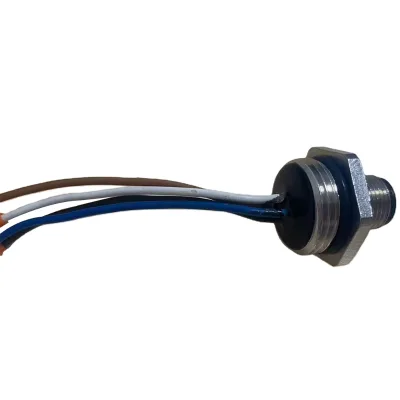

Aviation Plug Connector High Stability Metal Circular Plug for Aviation Socket
$3.62 - $4.27
MOQ: 100 Pieces


Comprehensive Sourcing Guide
Strategic Sourcing Guide for IP67 Threaded Aviation Plugs
Understanding Technical Specifications and Variants
When sourcing IP67 threaded aviation plugs, buyers must first distinguish between the specific construction materials and electrical ratings that define performance. The market offers distinct variants, primarily categorized by their housing and terminal materials. One common configuration utilizes a thermoplastic plastic PA66 shell, noted for its flame-retardant grade properties, which is ideal for applications requiring lightweight durability. In contrast, heavy-duty industrial environments often demand a zinc alloy or brass nickel-plated housing to ensure mechanical robustness against impact and corrosion. The terminal material is equally critical; observed specifications include copper galvanized, phosphor copper, and brass with gold plating. Gold plating is particularly significant for maintaining low contact resistance, with observed values as low as 3.8mΩ, ensuring signal integrity in high-frequency power applications.
The electrical ratings vary significantly based on the pin configuration. For plugs with 3 or 4 pins, the rated voltage is typically observed at 250V, whereas 5-pin configurations often operate at a lower 125V. Current ratings generally fall between 2A and 5A, with specific models supporting up to 4A. The pin count is a primary driver of functionality, with options ranging from 2 to 8 pins, including specific configurations for 2, 3, 4, 5, and 6 pins. The interface type is predominantly AC/DC, supporting a wide range of power needs. Buyers should also verify the wire gauge compatibility, which is frequently specified as 20AWG, and the wiring range, typically spanning from 3.5mm to 6.8mm. The sealing material, often epoxy resin or rubber, works in conjunction with the IP67 rating to prevent ingress of dust and water, a requirement for outdoor or harsh industrial deployments.
Compliance, Certification, and Regulatory Standards
Navigating the compliance landscape is essential for B2B procurement, as different regions and industries mandate specific certifications. The supply chain for these connectors frequently lists certifications such as MSDS, CE, ISO 9001, and RoHS. These documents indicate that the manufacturer adheres to safety, environmental, and quality management standards. Additionally, some listings reference ISOCE and RoHS, which further validate the product's compliance with international safety and hazardous substance restrictions. It is crucial for buyers to verify that the specific batch or model they are purchasing carries these certifications, as they are not universal across all SKUs.
Regarding technical standards, the industry often references IEC61076-2-104 for industrial circular connectors. This standard governs the mechanical and electrical characteristics of the interface. For mechanical specifications, the thread standard is a critical identifier; observed data points to the 7/16-28 UNS U.S. Standard Screw for certain threaded models, while others may utilize M12 or M8 metric threads. The coding system for these plugs is another area requiring strict verification, with available options including A, B, D, X, T, L, K, and S. These codes determine the pinout configuration and ensure that mating plugs and sockets are compatible, preventing electrical faults. Buyers must confirm that the selected coding matches their existing system infrastructure to avoid costly integration errors.
Cost Drivers and Pricing Dynamics
The pricing for IP67 threaded aviation plugs is influenced by a complex interplay of material costs, manufacturing complexity, and order volume. The observed price range in the market spans from $0.05 to $15.90 USD, a wide disparity that reflects the difference between basic plastic-bodied connectors and high-performance metal-encased variants. The primary cost driver is the housing material; zinc alloy and brass nickel-plated units command a premium over thermoplastic PA66 models due to the raw material costs and the additional machining required. Similarly, the contact material significantly impacts price. Connectors with phosphor copper contacts and gold plating are more expensive than those with standard brass or copper galvanized terminals, as the plating process adds value through enhanced conductivity and corrosion resistance.
Order volume is the second major factor influencing unit cost. The Minimum Order Quantity (MOQ) varies widely, ranging from 1 unit for sample testing to 1,000 units for bulk procurement. Buyers should anticipate a non-linear cost curve where the per-unit price decreases as the order quantity increases. Customization is another variable that can elevate costs. While customization is available for many models, including specific pin counts, coding, and cable diameters (such as Pg7 for 4-6mm cables or Pg9 for 6-8mm cables), these bespoke requirements often incur additional tooling or setup fees. The packaging method, typically PE bags or paper boxes, is a minor cost factor but should be considered for logistics efficiency. Understanding these drivers allows procurement teams to negotiate effectively and select the most cost-effective solution that meets technical requirements without over-specifying.
Typical Applications and Environmental Suitability
The versatility of IP67 threaded aviation plugs makes them suitable for a broad spectrum of applications, particularly where reliability in harsh conditions is paramount. The IP67 rating indicates that the connector is dust-tight and can withstand temporary immersion in water, making it ideal for outdoor machinery, agricultural equipment, and marine environments. The operating temperature range of -40ºC to +85ºC further expands its utility, allowing deployment in extreme cold or high-heat industrial settings. The high-frequency capability of these connectors supports applications in telecommunications and data transmission where signal integrity is critical.
In the power sector, these plugs are frequently used for power distribution and control systems. The rated current of 2A to 5A and voltage ratings of 60V to 250V make them suitable for low-voltage power distribution, sensor networks, and control circuits in automation. The durability rating of more than 500 mating cycles ensures that they can withstand repeated connection and disconnection in maintenance-heavy environments. Specific applications include industrial automation, where the threaded coupling provides a secure, vibration-resistant connection that prevents accidental disengagement. The availability of various pin configurations allows them to serve as multi-function interfaces, combining power, signal, and ground connections in a single compact unit. Buyers should match the specific environmental rating and pinout to the operational demands of their machinery to ensure long-term reliability.
Supplier Evaluation and Quality Assurance
Evaluating suppliers for IP67 threaded aviation plugs requires a rigorous approach to quality assurance. Buyers should prioritize suppliers who provide transparent documentation regarding their manufacturing processes and material sourcing. The origin of the products is a key indicator, with many high-volume suppliers operating out of China. While this does not inherently imply lower quality, it necessitates a thorough vetting of the supplier's quality control protocols. Key verification points include the consistency of the sealing material, the integrity of the gold plating on contacts, and the precision of the threading.
Quality control should extend beyond the final product to include the testing of critical attributes. Buyers must verify that the contact resistance remains within the specified limits, such as the observed 3.8mΩ, and that the insulation resistance meets the required standards, with some specifications noting an impedance of ≤5MΩ. The durability of the connector should be validated through cycle testing to ensure it meets or exceeds the 500-cycle benchmark. Furthermore, the mechanical strength of the housing, whether PA66 or metal, must be tested to ensure it can withstand the physical stresses of the intended application. Suppliers should be able to provide test reports or third-party validation for these attributes. It is also advisable to request samples for in-house testing before committing to large orders, ensuring that the physical fit and electrical performance align with project specifications.
Long-Term Procurement and Supply Chain Considerations
Sourcing IP67 threaded aviation plugs is not merely a transactional activity but a strategic decision that impacts long-term operational continuity. Buyers should consider the availability of spare parts and the consistency of the supply chain. The wide range of pin options and coding systems means that future maintenance may require specific variants that are not immediately available. Establishing a relationship with a supplier who can guarantee consistent production of specific models, such as the M12 Metal Assembled Screw or the M8 Metal Assembled Plug, is crucial. The lead time for these products can vary, and buyers should factor in potential delays when planning inventory levels.
Standardization is another critical consideration. By selecting connectors that adhere to widely recognized standards like IEC61076-2-104, buyers can ensure interoperability with a broader range of components and reduce the risk of obsolescence. The availability of customization options allows for future-proofing, but it requires careful management to avoid creating a fragmented inventory of unique parts. Buyers should also consider the packaging and logistics aspects; the use of PE bags and paper boxes is standard, but bulk packaging options may be necessary for large-scale deployments. Finally, maintaining a clear record of the certifications and specifications for each batch purchased will facilitate easier troubleshooting and warranty claims in the event of product failure. By focusing on these long-term factors, procurement teams can build a resilient supply chain that supports the reliability and efficiency of their industrial operations.
FAQs
What certifications do these IP67 threaded aviation plugs have?
These plugs commonly hold MSDS, CE, ISO 9001, and RoHS certifications. Some listings also reference ISOCE and RoHS to validate compliance with international safety and hazardous substance restrictions for industrial use.
Which housing materials are available for these connectors?
Housing options include thermoplastic plastic PA66 for lightweight durability and zinc alloy or brass nickel-plated materials for heavy-duty environments. The choice depends on whether the application requires flame retardancy or mechanical robustness against impact.
How does the pin count affect the rated voltage?
Rated voltage varies by pin configuration, with 3 or 4 pins typically supporting 250V while 5-pin models often operate at 125V. This distinction ensures the connector matches the specific electrical requirements of the power or signal application.
Can I customize the pin count and coding for these plugs?
Customization is available for pin counts ranging from 2 to 8 pins and various coding types like A, B, D, X, T, L, K, and S. Buyers must confirm that the selected coding matches their existing system infrastructure to prevent electrical faults.
What is the operating temperature range for these aviation plugs?
The applicable temperature range spans from -40ºC to +85ºC, allowing deployment in extreme cold or high-heat industrial settings. This durability supports use in outdoor machinery, agricultural equipment, and marine environments where conditions fluctuate.
What is the minimum order quantity for these connectors?
The minimum order quantity ranges from 1 unit for sample testing to 1,000 units for bulk procurement. Buyers should anticipate a non-linear cost curve where the per-unit price decreases as the order quantity increases significantly.
Which standards govern the mechanical and electrical characteristics?
The industry often references IEC61076-2-104 for industrial circular connectors to govern mechanical and electrical characteristics. Thread standards like 7/16-28 UNS U.S. Standard Screw or M12 metric threads are also critical identifiers for compatibility.