Source IP67 Waterproof Armored Cable Boot for Industrial, Outdoor, and Marine Use
Find 30 options for the IP67 Waterproof Armored Cable Boot designed for industrial, outdoor, and marine applications. Buyers can compare materials like PVC and rubber, certifications including CE and ISO, and customization services from suppliers in China.
Key considerations
Products List


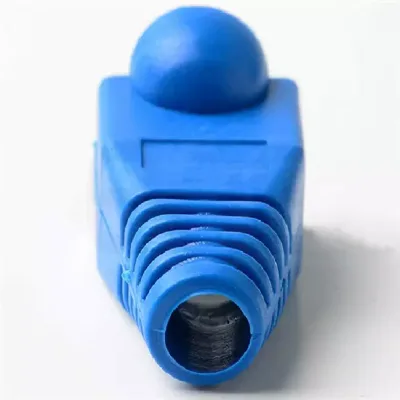
Colorful Ethernet RJ45 Patch Cable PVC Strain Relief Boot Modular Plug Boot
$0.02 - $0.08
MOQ: 1000 Pieces




Comprehensive Sourcing Guide
Strategic Sourcing Guide for IP67 Waterproof Armored Cable Boots
The procurement of specialized cable protection components, specifically IP67 waterproof armored cable boots, requires a rigorous approach to ensure compatibility, durability, and regulatory compliance. These components serve as critical interfaces in industrial and commercial networking environments, protecting the junction between flexible cabling and rigid connectors from environmental stressors. The market presents a diverse array of materials and configurations, ranging from rigid PVC constructions to flexible rubber-based solutions. Buyers must navigate a landscape where product attributes vary significantly, necessitating a detailed understanding of material science, certification standards, and supply chain logistics before finalizing a procurement strategy.
Material Composition and Environmental Durability
The primary differentiator among cable boots is the base material, which dictates the component's resistance to environmental factors such as moisture, chemicals, and physical abrasion. The supplied data indicates a bifurcation in material availability, with Polyvinyl Chloride (PVC) and various rubber compounds being the most prominent options. PVC-based products are frequently cited in the context of standard patch cords and modular plugs, offering a cost-effective solution for general-purpose applications. These units often feature a circular head code and are designed to fit specific connector types like the RJ45.
Conversely, for applications requiring superior flexibility and resistance to harsh chemicals, rubber-based materials are essential. The available data lists a wide spectrum of rubber compounds, including NBR (Nitrile), HNBR (Hydrogenated Nitrile), FKM (Fluoroelastomer), FFKM (Perfluoroelastomer), EPDM, and Silicone. These materials are selected based on specific performance requirements. For instance, NBR and HNBR are noted for their oil resistance, making them suitable for industrial settings where lubricants or hydraulic fluids are present. FKM and FFKM offer even higher chemical resistance and thermal stability, often required in aerospace or heavy chemical processing environments.
When evaluating material options, buyers must verify the specific compound against the operating environment. The observed product attributes highlight features such as "Oil Resistant," "Chemical Resistant," and "Durable" as key selling points for rubber variants. Additionally, the color options for these components are extensive, including black, white, red, blue, and green, which can be leveraged for color-coding cable management systems. The distinction between disposable and non-disposable variants is also critical; while some products are marked as non-disposable for long-term reuse, others may be designed for single-use scenarios, influencing the total cost of ownership.
Technical Specifications and Dimensional Standards
Precision in dimensional specifications is paramount for the successful installation of cable boots. The product data reveals that while some items adhere to strict standard measurements, others offer fully customized sizing. For example, specific models are listed with a standard dimension of 27 ± 0.5mm, indicating a tolerance level that must be maintained for proper fitment on standard connectors. However, other entries explicitly state "Customized Sizes" as a specification, suggesting that off-the-shelf dimensions may not suffice for specialized armored cabling systems.
The connector interface is another critical technical parameter. The majority of the observed products utilize the RJ45 connector type, often paired with a circular head code. This configuration is standard for Ethernet applications but requires verification to ensure the boot's internal geometry matches the specific armor termination method of the cable being used. The IP rating, a crucial metric for waterproofing, is referenced in the data as "IPMaterial," which implies a correlation between the material choice and the ingress protection capability. While the core keyword specifies IP67, buyers must confirm that the specific rubber or PVC formulation achieves this rating under the intended pressure conditions, as some data points mention "High Pressure Resistant" capabilities.
Packaging standards also vary, with observed ranges from 100 pieces per bag to 100 pieces per bag in plastic bags with carton outer packaging. These packaging details impact logistics planning and inventory management. Buyers should verify whether the packaging provides adequate protection against moisture and physical damage during transit, especially for rubber components that may be sensitive to temperature fluctuations or UV exposure before installation.
Compliance, Certification, and Regulatory Adherence
Navigating the regulatory landscape is a non-negotiable aspect of sourcing industrial cable accessories. The supplied facts highlight a variety of certifications that suppliers may claim, including CE, ISO, RoHS, FDA, LFGB, CIQ, and EEC. The presence of these certifications suggests that the products are intended for markets with strict safety and environmental regulations, such as the European Union and North America.
CE marking indicates conformity with health, safety, and environmental protection standards for products sold within the European Economic Area. ISO certifications, particularly ISO 9001, suggest a commitment to quality management systems, ensuring consistent manufacturing processes. RoHS compliance is vital for electronic components, restricting the use of hazardous substances like lead and mercury. For applications involving food processing or medical devices, FDA and LFGB certifications become relevant, ensuring the materials do not leach harmful substances.
Buyers must exercise caution when interpreting these certifications. The data lists different certification combinations for different product lines; for instance, one rubber product line lists FDA, CE, LFGB, CIQ, and EEC, while another PVC line lists CE, ISO, and RoHS. It is essential to verify that the specific batch or model ordered carries the necessary certifications for the target market. Relying on a supplier's general claim without verifying the specific product documentation can lead to compliance failures. Furthermore, the "Standard" field in the data sometimes lists material types (e.g., "PVC") rather than technical standards, requiring buyers to request specific test reports to validate performance claims.
Cost Drivers and Economic Considerations
The pricing and economic factors for IP67 waterproof armored cable boots are influenced by material complexity, customization levels, and order volume. The observed price range in the market spans from $0.01 to $70, a vast disparity that reflects the difference between basic PVC components and high-performance FFKM rubber boots. The lower end of the spectrum likely corresponds to standard, non-customized PVC items, while the higher end encompasses specialized rubber compounds with custom molding and rigorous testing.
Minimum Order Quantity (MOQ) is a significant cost driver. The data indicates an MOQ range from 1 to 5000 pieces. Suppliers offering low MOQs, such as 1 or 100 pieces, are typically more expensive per unit but provide flexibility for prototyping or small-scale projects. Conversely, the 5000-piece MOQ observed for certain rubber custom products suggests economies of scale that can significantly reduce the unit cost for large-volume procurement. Buyers must balance the need for inventory flexibility against the desire for lower unit prices.
Customization is another factor that drives cost. The data explicitly lists "Customization: Available" and "Customized" as attributes for many items. Custom molds, specific color requirements, and unique dimensional specifications incur additional tooling and setup costs. While the standard "Chinese Style" or generic configurations may be readily available, bespoke solutions require a longer lead time and higher initial investment. The "Service" attribute, listing OEM and ODM capabilities, confirms that suppliers are willing to tailor products, but this service comes at a premium compared to buying off-the-shelf inventory.
Supplier Evaluation and Supply Chain Logistics
Selecting the right supplier involves evaluating their geographic location, production capacity, and logistical capabilities. The data points to two primary manufacturing hubs: Zhejiang, China, and Shanghai, China. Both regions are well-established centers for electronics and rubber manufacturing, offering access to a robust supply chain. However, the specific location can impact shipping costs and lead times.
Lead times vary based on the product type and customization level. Standard items may have a delivery time of 7-15 days, while customized rubber products might require 10-15 days or longer. The "Delivery Time" and "Deliverytime" fields in the data show slight variations, indicating that buyers should confirm the current production schedule with the supplier. Shipping methods are diverse, including express, air, sea, and truck transport. For time-sensitive projects, air freight or express shipping may be necessary, despite the higher cost. For bulk orders where cost is the primary concern, sea freight is the most economical option, though it extends the overall lead time.
Supplier reliability is further indicated by their ability to handle large volumes. The observation of an MOQ of 5000 pieces for certain rubber products suggests that some suppliers are geared towards large industrial contracts. Buyers should assess whether the supplier has the capacity to meet their volume requirements without compromising quality. Additionally, the "Service" attribute highlighting OEM and ODM capabilities suggests that suppliers are equipped to handle complex supply chain requests, including branding and specific engineering requirements.
Quality Control and Long-Term Procurement Strategy
Ensuring long-term quality requires a proactive approach to quality control (QC) and supplier relationship management. The "Feature" attributes listed, such as "Durable" and "High Pressure Resistant," are claims that must be validated through independent testing or rigorous supplier audits. Buyers should request test reports for IP67 ratings, specifically verifying the water and dust ingress protection under the specified pressure conditions. For rubber components, testing for oil resistance, chemical resistance, and tensile strength is essential to ensure the boots will not degrade in the field.
The "Disposable" attribute, marked as "Non-Disposable" for certain items, implies a design for longevity. However, the actual lifespan depends on the operating environment. Buyers should establish a maintenance schedule and replacement criteria based on visual inspections and performance testing. The "Weight" attribute, listed as 150g for some items, can serve as a baseline for quality verification; significant deviations in weight may indicate material density issues or manufacturing defects.
For long-term procurement, establishing a partnership with suppliers who offer consistent quality and reliable lead times is crucial. The availability of "Customized" options allows for future-proofing the supply chain, enabling buyers to adapt to new cable standards or environmental requirements without changing suppliers. By focusing on suppliers with robust certification portfolios and proven track records in the specified regions (Zhejiang and Shanghai), buyers can mitigate risks associated with supply chain disruptions and quality inconsistencies.
Comparative Analysis of Product Attributes
To facilitate decision-making, the following table summarizes the key attributes observed in the market for IP67 waterproof armored cable boots, highlighting the trade-offs between material types and specifications.
| Attribute Category | PVC-Based Products | Rubber-Based Products |
|---|---|---|
| Primary Material | PVC | NBR, HNBR, FKM, FFKM, EPDM, Silicone |
| Key Features | Cost-effective, Standard Fit | Oil Resistant, Chemical Resistant, High Pressure |
| Typical Certification | CE, ISO, RoHS | FDA, CE, LFGB, CIQ, EEC, ISO |
| MOQ Range | 1 - 5000 PCS | 5000 PCS (for custom) |
| Customization | Available (Standard Models) | Highly Customized (Sizes, Colors) |
| Lead Time | 7-15 Days | 10-15 Days |
| Application | General Cable, RJ45 Modular Plug | Industrial, Heavy Duty, Harsh Environments |
| Packaging | 100PCS/Bag | Plastic Bag + Carton |
This comparison underscores that while PVC offers a viable solution for standard networking applications, rubber compounds are necessary for demanding industrial environments. The choice between the two depends on the specific operational requirements, budget constraints, and the need for customization. By carefully analyzing these attributes, buyers can make informed decisions that align with their technical and economic objectives.
FAQs
What materials are used for IP67 waterproof armored cable boots?
These boots are primarily made from PVC or various rubber compounds like NBR, FKM, and Silicone. PVC is common for standard patch cords, while rubber variants offer superior oil and chemical resistance for harsh industrial environments.
Which certifications do these cable boots typically hold?
Common certifications include CE, ISO, RoHS, FDA, LFGB, CIQ, and EEC. Buyers must verify that the specific product batch carries the necessary certifications for their target market, as different product lines may have varying compliance levels.
Can I find customized sizes for these cable boots?
Yes, customized sizes are available for many models, including specific rubber custom products. While some items adhere to standard dimensions like 27 ± 0.5mm, others allow for bespoke molding to fit specialized armored cabling systems.
What is the minimum order quantity for rubber custom products?
The minimum order quantity for rubber custom products is typically 5000 pieces. Lower MOQs starting from 1 piece are available for standard items, but bulk orders are required to access economies of scale for specialized rubber compounds.
How long does delivery take for these cable protection components?
Delivery times generally range from 7 to 15 days depending on the product type and customization level. Standard items may ship faster, while customized rubber products often require the full 10 to 15 days for production and packaging.
Where are these cable boots manufactured?
Manufacturing locations include Zhejiang and Shanghai, China, which are established hubs for electronics and rubber production. Buyers should confirm the specific origin as it can impact shipping costs and lead times for their specific order.
Are these boots suitable for high-pressure environments?
Yes, many rubber-based variants are designed to be high-pressure resistant and durable. Features like oil resistance and chemical resistance make them suitable for industrial settings where environmental stressors and physical abrasion are common concerns.