Source IP67 Universal LED Grille Light for Home, Engineering, and Automotive
Explore 30 listings for the IP67 Universal LED Grille Light suitable for home furnishing, engineering projects, and vehicle applications. Buyers can compare specifications like voltage, material, and certifications to find the right fit for their needs.
Key considerations
Products List

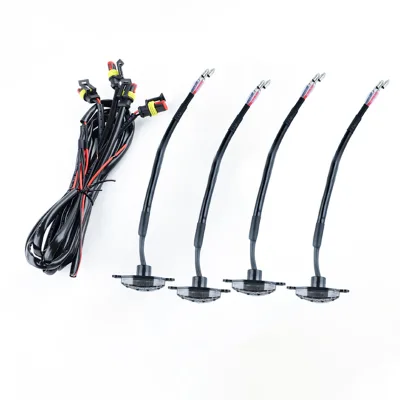

Acrylic Lamp Cover for LED Grille Light
$1.00 - $2.00
MOQ: 1000 Pieces
Dongguan City Tangxia Dachang Plastic Hardware Processing Factory


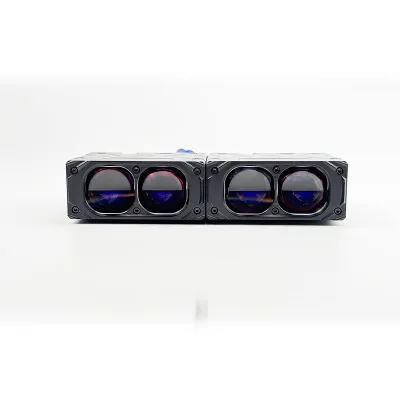


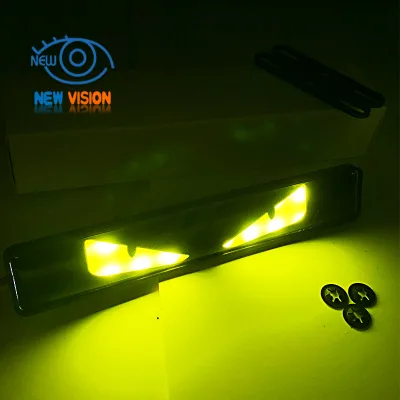


$3.00 - $3.20
MOQ: 800 PCS

Comprehensive Sourcing Guide
Strategic Sourcing Guide for IP67 Universal LED Grille Lights
Procuring industrial and automotive lighting solutions requires a rigorous approach to technical verification and supplier vetting. The core keyword "IP67 Universal LED Grille Light" represents a specific niche where environmental resilience, electrical safety, and dimensional compatibility intersect. Buyers in this sector must navigate a complex landscape of product attributes, ranging from material composition to certification standards. This guide provides a structured framework for evaluating potential suppliers and products, ensuring that procurement decisions are grounded in verified data rather than marketing assertions. The following sections detail the critical technical specifications, compliance requirements, cost factors, and quality control measures necessary for a successful sourcing strategy.
Technical Specifications and Performance Metrics
When evaluating LED grille lights, the primary focus must be on the intersection of physical dimensions, electrical parameters, and environmental ratings. The term "universal" implies adaptability across various chassis or installation frameworks, yet specific dimensional constraints often dictate compatibility. In the observed market data, product standards vary significantly, with some units adhering to dimensions such as 112mm W*49mm H, while others may be designed for recessed installation with specific depth requirements. Buyers must verify that the physical footprint of the selected unit aligns with the intended mounting surface, as the "IP Installation: Recessed" attribute suggests specific cutout requirements that differ from surface-mounted alternatives.
Electrical performance is equally critical. The voltage rating is a fundamental specification that must match the vehicle or system architecture. Data indicates the presence of DC12v units, which is standard for automotive applications, but buyers must confirm this explicitly as some industrial variants may operate on different voltage rails. Power consumption, often listed as Rated Power, typically ranges around 6W for these specific grille units, though higher wattage options exist for more demanding applications. The color temperature range observed in some listings, such as -40 ℃ ~+80 ℃, refers to the operational temperature range rather than the light's color output, a distinction that is vital for avoiding misinterpretation of product capabilities.
The material composition directly influences durability and light quality. Common materials include ABS+LED and PMMA, each offering distinct advantages. ABS provides structural rigidity suitable for rugged environments, while PMMA (acrylic) is often preferred for its optical clarity and light diffusion properties. The lamp type is consistently identified as LED, ensuring energy efficiency and longevity. However, the specific Light Color configuration, such as "3 for 1, 4 for 1, 5 for 1, 6 for 1," indicates modular or multi-functional designs that require careful selection based on the desired illumination pattern. Buyers should also note the Emitting Color attribute, which may be "Changeable" in certain models, suggesting programmable or dynamic lighting features that differ from static white or yellow outputs.
Compliance and Certification Verification
Certification is not merely a formality but a prerequisite for market access and safety assurance. The supply chain for LED grille lights is heavily regulated, with multiple certification bodies issuing standards that vary by region. Observed data lists a robust array of certifications including CCC, CE, EMC, RoHS, UL, and SGS. The presence of these marks indicates that the product has undergone testing for electromagnetic compatibility, restriction of hazardous substances, and electrical safety. However, buyers must treat these as observations of specific listings rather than universal guarantees for all "universal" products.
The IP67 rating is a critical compliance metric for this product category. It signifies that the unit is dust-tight and can withstand immersion in water up to 1 meter for 30 minutes. While some listings explicitly state "IP67 grade" and "Water proof," others may only list "IP Installation: Recessed" without specifying the ingress protection level. This discrepancy highlights the necessity for buyers to request explicit IP rating documentation for every batch. Furthermore, the standard length of LED strips or modules, ranging from 600mm to 3600mm, must be verified against the application's spatial requirements. The "Customized Length: on Requested" attribute suggests that non-standard dimensions are possible, but this introduces variables in production time and cost that must be managed during the procurement process.
Safety standards such as CE/ISO/ROHS/SGS/UL provide a baseline for quality, but the specific application context determines which are mandatory. For automotive applications, UL and CE are often non-negotiable, while industrial settings may prioritize EMC and RoHS compliance. Buyers should verify that the supplier can provide valid test reports for these certifications, as the mere presence of a logo on a product page does not guarantee current validity or batch-specific compliance.
Cost Drivers and Pricing Structures
Understanding the cost structure of LED grille lights is essential for budgeting and negotiation. The observed price range of 1-88 USD reflects a wide spectrum of product quality, feature sets, and volume tiers. Several factors drive these price variations. First, the material composition plays a significant role; units constructed with high-grade PMMA or specialized ABS compounds will command a premium over basic plastic housings. Second, the inclusion of advanced drivers, such as the Tridonic brand mentioned in some listings, adds to the cost but ensures higher reliability and longer lifespan.
Volume is another primary cost driver. The Minimum Order Quantity (MOQ) ranges from 1 to 1000 units, indicating that suppliers offer flexibility for small-scale testing but require larger commitments for bulk pricing. The "Selling Units: Single item" attribute suggests that some suppliers are willing to sell individual units, likely at a higher per-unit cost compared to bulk orders. Additionally, customization options, such as "Customization: Available" and "Customized Length," introduce variable costs. Custom molds, specific color temperatures, or unique packaging requirements will inevitably increase the unit price.
Packaging and logistics also contribute to the final cost. The "Single package size" of 20X14X5 cm and "Single gross weight" of 0.400 kg are standard metrics for shipping calculations. However, for larger orders, the "Export Standard Package" or "PE Bag and Carton Box" configurations may differ, affecting freight charges. Buyers should request a detailed breakdown of costs, including the base product price, tooling fees for customization, and shipping expenses, to accurately compare supplier quotes.
Typical Applications and Installation Contexts
The versatility of IP67 universal LED grille lights makes them suitable for a diverse range of applications. The "Application: Engineering, Home Furnishing" attribute indicates that these lights are not limited to automotive use but are also deployed in architectural and interior design projects. In engineering contexts, such as heavy machinery or industrial vehicles, the IP67 rating ensures protection against dust and water ingress, which is critical for operational safety in harsh environments. The "Condition: New" attribute confirms that these are fresh products, suitable for immediate deployment in new builds or retrofits.
In automotive applications, the "OE No.: led grille light" and "Car Model: all models" attributes suggest a broad compatibility. However, the "Universal" designation should be interpreted with caution. While the lights may fit various models, the specific mounting hardware and electrical connectors often require adaptation. The "Light Color" options, including "yellow black" or "White," allow for customization to match vehicle aesthetics or regulatory requirements. For home furnishing, the "Style: Modern" and "CRI: >80" attributes indicate that these units are designed to provide high-quality illumination with accurate color rendering, making them suitable for residential or commercial interior lighting.
Installation methods vary based on the product design. The "IP Installation: Recessed" attribute points to a specific mounting technique where the light is embedded into a surface, requiring precise cutouts. This contrasts with surface-mounted options that may be easier to install but less aesthetically integrated. Buyers must assess the installation environment to determine the most appropriate mounting style, considering factors such as surface material, accessibility, and the need for waterproofing.
Supplier Evaluation and Quality Control
Selecting the right supplier is as important as selecting the right product. The "Place of Origin: Guangdong, China" and "prod_origin: Dongguan, Guangdong" or "Zhejiang, China(Mainland)" data points highlight the concentration of manufacturing hubs in these regions. While these locations are known for high-volume electronics production, buyers must conduct thorough due diligence to ensure quality consistency. The "Warranty: 2 Years" and "Warranty: 1years" discrepancies observed in the data underscore the importance of clarifying warranty terms before finalizing an order. A longer warranty period often indicates higher confidence in product reliability, but it must be backed by clear terms and conditions.
Quality control measures should be a central part of the supplier evaluation process. Buyers should inquire about the supplier's internal testing protocols, particularly for IP ratings and electrical safety. The "Resistance: Waterproof" attribute is a claim that must be validated through third-party testing or in-house quality assurance reports. Additionally, the "Lifetime: 50000 hours" specification is a critical performance metric that should be supported by accelerated life testing data. Buyers should request sample units to verify these claims before committing to a large order.
Packaging standards also reflect the supplier's attention to detail. The "prod_packing: Export Standard Package" and "Export Carton. Mount Kit & Switch Included" attributes suggest that some suppliers provide comprehensive packaging that includes necessary accessories. This reduces the risk of damage during transit and ensures that the buyer receives all components required for installation. Buyers should verify that the packaging is robust enough to protect the units, especially given the "Single gross weight" and dimensions observed.
Long-Term Procurement and Lifecycle Management
Sourcing LED grille lights is not a one-time transaction but part of a long-term supply chain strategy. The "Customization: Available" attribute offers the potential for tailored solutions, but it also requires a commitment to ongoing communication and specification management. Buyers should establish clear guidelines for future orders, including acceptable tolerances for dimensions, color consistency, and performance metrics. The "Standard Length" options provide a baseline, but the ability to request custom lengths ensures that the supply chain can adapt to changing project requirements.
Lifecycle management involves monitoring the performance of the installed units over time. The "Lifetime: 50000 hours" specification suggests a long operational life, but real-world conditions may vary. Buyers should implement a maintenance schedule that includes regular inspections for signs of wear, water ingress, or electrical failures. The "Warranty" terms should be reviewed periodically to ensure they remain valid and relevant to the specific application.
Finally, buyers should consider the environmental impact of their procurement decisions. The "RoHS" and "CE" certifications indicate compliance with environmental regulations, but buyers can further enhance sustainability by selecting suppliers who prioritize energy efficiency and recyclable materials. The "Material: ABS+LED" and "PMMA" options offer different recycling pathways, and understanding these can help in meeting corporate sustainability goals. By focusing on long-term value rather than just initial cost, buyers can build a resilient and efficient supply chain for LED grille lighting solutions.
FAQs
What certifications do ip67 universal led grille lights typically have?
These lights often carry CCC, CE, EMC, RoHS, UL, and SGS certifications. Buyers must verify specific test reports for each batch as certifications vary by listing and are not universal guarantees for all products.
Can I find ip67 universal led grille lights with a 2-year warranty?
Yes, some listings explicitly state a 2-year warranty while others offer 1 year. Buyers should clarify warranty terms before ordering since discrepancies exist across different supplier listings and product models.
Which voltage ratings are available for ip67 universal led grille lights?
DC12v is a standard rating observed for automotive applications. Buyers must confirm voltage explicitly as some industrial variants may operate on different rails, and mismatched voltage can cause system failure.
How do material choices affect IP67 Universal LED Grille Light durability?
Common materials include ABS+LED for structural rigidity and PMMA for optical clarity. The material composition directly influences durability, with ABS suited for rugged environments and PMMA preferred for light diffusion.
What is the typical operating temperature range for these lights?
Some specifications list an operational range of -40 to +80 degrees Celsius. This refers to the environmental operating limits rather than color temperature, which is vital for avoiding misinterpretation of product capabilities.
Can I customize the length of ip67 universal led grille lights?
Customized lengths are available upon request for standard options like 600 to 3600mm. This introduces variables in production time and cost that must be managed during the procurement process.
What is the minimum order quantity for ip67 universal led grille lights?
MOQs range from 1 to 1000 units depending on the supplier. Small-scale testing may allow single item purchases, but bulk pricing typically requires larger commitments to the manufacturer.