Source ISO CE Square Eye Plate for Marine, Shipping, and Industrial Use
Find 30 ISO CE Square Eye Plate options from verified suppliers in China. Compare specifications like material grades 304 and 316, load capacities, and customization services for marine, shipping, and industrial applications.
Key considerations
Products List




Comprehensive Sourcing Guide
Strategic Sourcing Guide for ISO CE Square Eye Plates
Understanding Product Specifications and Material Variants
When sourcing square eye plates, buyers must first establish a clear understanding of the fundamental technical specifications that define the product's utility and structural integrity. The core keyword "ISO CE Square Eye Plate" indicates a demand for lifting hardware that adheres to specific international standards and carries recognized certification marks. Based on available market data, these components are primarily manufactured from stainless steel, with the most common grades being 304, 316, and 202. The choice of material grade is critical, as 304 and 316 offer superior corrosion resistance, making them suitable for marine and heavy industrial environments, while 202 provides a cost-effective alternative for less aggressive conditions.
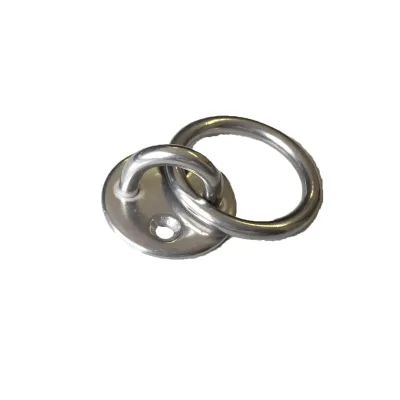
The physical geometry of the product is equally significant. The square pad eye plate is distinct from its round counterparts, often featuring a flat, square base designed for secure welding or bolting to structural surfaces. The dimensions of these plates vary significantly, with standard thicknesses ranging from 3mm to 9mm, though custom sizes are frequently available to meet specific engineering requirements. The eye itself, the circular opening through which the load is applied, must be precisely machined to ensure smooth interaction with shackles or hooks. Buyers should verify that the forging tolerance is maintained within a tight range, typically around +/-0.5mm, to guarantee that the hole alignment and overall geometry do not compromise the load path.
Surface treatment is another vital specification. The standard finish for these plates often involves sand blasting followed by polishing, resulting in a clean, silver appearance that not only enhances aesthetics but also removes surface imperfections that could act as stress concentrators. The molding style is predominantly forging, a process that aligns the grain structure of the metal to improve strength and durability compared to casting methods. This forging process is often accompanied by normalizing heat treatment to relieve internal stresses, ensuring the component can withstand the dynamic loads associated with lifting and lashing operations.
Compliance Verification and Certification Standards
Navigating the compliance landscape is essential for any procurement of industrial lifting hardware. The presence of "ISO" and "CE" in the search query suggests a requirement for products that meet rigorous international quality and safety benchmarks. While the supplied data confirms that CE certification is a common attribute for these products, buyers must exercise due diligence to verify the validity of these marks on a per-shipment basis. The CE mark indicates conformity with health, safety, and environmental protection standards for products sold within the European Economic Area, but it is not a guarantee of performance without supporting documentation.
In addition to CE, the data references several other standards and certifications that are relevant to the industry. The AISI (American Iron and Steel Institute) standard is cited as a material reference, ensuring the steel grade meets specific chemical and mechanical properties. Furthermore, ISO standards, including ISO 9001 for quality management systems, are often associated with reputable manufacturers, although the specific certification status of a supplier should be confirmed directly rather than assumed from general market descriptions. The SGS standard is also mentioned, indicating that third-party inspection and testing services are frequently utilized to validate product quality.
Buyers should request a Certificate of Conformity (CoC) or a Mill Test Report (MTR) for every batch of square eye plates purchased. These documents provide traceability back to the raw material batch and confirm that the final product has undergone the necessary testing procedures. It is crucial to understand that while "Customized" standards are available, the baseline requirements for lifting equipment usually involve adherence to specific load limits and safety factors. The data indicates a minimum breaking strength of four times the working load limit, a safety factor that is standard in many jurisdictions but must be explicitly stated in the product datasheet.
Cost Drivers and Pricing Dynamics
The pricing of square eye plates is influenced by a complex interplay of material costs, manufacturing complexity, and order volume. The observed price range in the market spans from $0.01 to $200, a wide spectrum that reflects the diversity in size, material grade, and customization level. Small, standard-sized plates made from 202 stainless steel will naturally fall at the lower end of this spectrum, whereas large, heavy-duty plates made from 316 stainless steel with custom dimensions and special markings will command a premium price.
Material grade is the primary cost driver. 316 stainless steel contains molybdenum, which significantly increases its corrosion resistance compared to 304, resulting in a higher raw material cost. Consequently, products specified for marine or chemical environments will be more expensive. The manufacturing process also impacts cost; forging is generally more expensive than casting but offers superior mechanical properties. Additionally, surface treatments such as sand blasting and polishing add labor and equipment costs, particularly if a high-gloss finish is required.
Order volume plays a decisive role in the final unit price. The Minimum Order Quantity (MOQ) ranges from 1 to 1000 units, suggesting that suppliers are willing to accommodate small prototype orders but offer significant economies of scale for bulk purchases. For large quantity orders, suppliers often provide special marking services and customized packing solutions, which can further influence the total cost structure. Buyers should be aware that while the unit price may decrease with volume, the total investment must account for lead times and logistics. The standard lead time for these products is approximately 45 days, which can affect cash flow and project scheduling.
Typical Applications and Usage Scenarios
Square eye plates are versatile components found across a wide array of industrial sectors. Their primary application is in lifting and lashing operations, where they serve as secure attachment points for slings, chains, and shackles. In the shipping and logistics industry, these plates are frequently used on shipping containers and heavy machinery to facilitate safe transport and handling. The heavy-duty load capacity of these plates makes them suitable for environments where significant forces are applied, such as in shipyards, construction sites, and heavy manufacturing plants.
The marine industry is another critical application area. The corrosion resistance of 304 and 316 stainless steel makes these plates ideal for use on yachts, offshore platforms, and marine vessels where exposure to saltwater is constant. In these settings, the square shape allows for a larger surface area for welding, ensuring a robust connection to the vessel's hull or deck. The architectural sector also utilizes square eye plates, often for structural support or as decorative yet functional elements in large-scale installations.
Beyond heavy industry, these plates serve as instrument accessories in various mechanical systems. Their precision machining and high strength make them suitable for applications requiring reliable load transfer in sensitive equipment. The versatility of the product is further enhanced by the availability of customization, allowing manufacturers to tailor the eye plate to specific mounting requirements or environmental conditions. Whether used for temporary rigging or permanent structural integration, the square eye plate remains a fundamental component in ensuring operational safety and efficiency.
Supplier Evaluation and Quality Control Protocols
Selecting a reliable supplier for square eye plates requires a rigorous evaluation process that goes beyond simple price comparison. Buyers should prioritize suppliers who demonstrate a clear commitment to quality control and transparency. The data indicates that suppliers in China, particularly in regions like Ningbo and Shandong, are major sources of these products. While these regions offer competitive pricing and established manufacturing capabilities, buyers must verify the specific capabilities of each supplier.
Quality control should be a central part of the supplier evaluation. The inspection methods used, such as caliper measurements and Coordinate Measuring Machine (CMM) testing, are critical for verifying dimensional accuracy. A reputable supplier will have a documented quality assurance process that includes visual inspections, dimensional checks, and potentially non-destructive testing. The ability to provide detailed test results and inspection reports is a strong indicator of a supplier's reliability.
Furthermore, the supplier's capacity for customization and after-sales service should be assessed. The availability of custom sizes, special markings, and specialized packing options suggests a flexible manufacturing process. Buyers should inquire about the supplier's response time to quality issues and their willingness to provide samples for pre-production validation. The lead time of 45 days is a standard benchmark, but suppliers who can offer expedited options or have a track record of on-time delivery should be given preference.
Long-Term Procurement and Operational Considerations
Sourcing square eye plates is not merely a transactional activity but a strategic decision that impacts long-term operational safety and efficiency. Buyers must consider the lifecycle of the product, including its durability, maintenance requirements, and potential for replacement. The forging process and normalizing heat treatment contribute to the longevity of the plates, but regular inspection is necessary to detect signs of wear, corrosion, or fatigue.
Procurement strategies should also account for supply chain resilience. Given the global nature of the stainless steel market, price fluctuations and material availability can impact lead times and costs. Establishing a relationship with a supplier who has a stable supply of raw materials and a robust production schedule can mitigate these risks. Additionally, buyers should consider the environmental impact of their procurement choices, favoring suppliers who adhere to sustainable manufacturing practices and offer recyclable packaging options.
Finally, the integration of square eye plates into existing systems requires careful planning. The compatibility of the eye plate with existing lifting gear and structural components must be verified to ensure a seamless fit. Customization options allow for tailored solutions, but they also require precise communication of requirements to avoid errors. By focusing on quality, compliance, and supplier reliability, buyers can ensure that their procurement of square eye plates supports the safety and efficiency of their operations for years to come.
Comparative Analysis of Product Attributes
To facilitate a clearer understanding of the variations available in the market, the following table summarizes key attributes observed in square eye plate products. This comparison highlights the differences in material, finish, and standard compliance that buyers should consider during their selection process.
| Attribute | Common Observation | Variations / Notes |
|---|---|---|
| Material Grade | 304, 316, 202 Stainless Steel | 316 offers highest corrosion resistance; 202 is cost-effective. |
| Shape | Square | Available in Round variants with specific model codes. |
| Surface Finish | Sand Blasted, Polished | Customized finishes available upon request. |
| Manufacturing Process | Forging | Includes normalizing heat treatment. |
| Tolerance | +/-0.5mm | Critical for eye alignment and load distribution. |
| Certification | CE, ISO, SGS | Verify specific certificate validity per batch. |
| Packing | Cartons, Bags, Plywood Box | Special packing available for large quantities. |
| Origin | China (Ningbo, Shandong) | Verify specific factory location for logistics planning. |
| Lead Time | 45 Days | Subject to customization and order volume. |
| Load Capacity | Heavy Duty | Minimum breaking strength is 4x Working Load Limit. |
This structured approach to understanding product attributes ensures that buyers can make informed decisions based on verified data rather than assumptions. By adhering to these guidelines, procurement teams can secure high-quality square eye plates that meet the demanding requirements of modern industrial applications.
FAQs
What certifications do ISO CE square eye plates typically have?
These plates commonly carry CE certification and may meet ISO standards. Buyers should verify specific documentation like Mill Test Reports for every batch to ensure compliance with international safety benchmarks.
Which material grades are available for these stainless steel plates?
Available types include 304, 316, and 202 stainless steel. The choice depends on the environment, with 304 and 316 offering superior corrosion resistance for marine or heavy industrial applications.
How is the minimum breaking strength defined for these lifting plates?
The minimum breaking strength is four times the working load limit. This safety factor ensures the component can withstand dynamic loads associated with lifting and lashing operations in heavy industry.
Can suppliers provide custom sizes and special markings for large orders?
Yes, customization is available including special markings for large quantities. Buyers can request custom sizes and specific packing solutions like plywood boxes or cartons to meet unique engineering requirements.
What is the standard lead time for manufacturing these eye plates?
The standard lead time is approximately 45 days. This duration accounts for the forging process, normalizing heat treatment, and surface treatments like sand blasting or polishing required for quality assurance.
Which locations are the primary sources for these steel products?
Products originate from China, specifically from regions like Ningbo and Shandong. These locations host factories capable of producing heavy-duty lifting hardware with various certifications and material grades.