Source ISO CE Symons Cone Crusher for Mining Stone Construction
Compare 30 verified ISO CE Symons Cone Crusher options from Chinese manufacturers. Buyers can evaluate specifications like crushing degree, motor power, and feed size for ore mining, stone industry, and construction applications.
Key considerations
Products List

Cone Crusher Eccentric Bushing Symons Cone Crusher
$1800.00 - $3500.00
MOQ: 1 Pieces
SHENYANG HUAYUE BRILLIANT MINING MACHINERY MANUFACTURING CO.,LTD

Crusher Bowl for Symons Cone Crusher Spare Parts
$1200.00 - $2500.00
MOQ: 1 Pieces
SHENYANG HUAYUE BRILLIANT MINING MACHINERY MANUFACTURING CO.,LTD


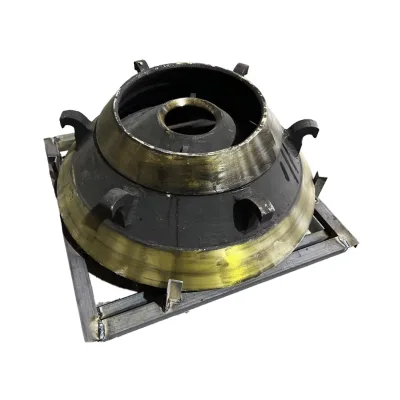


Flexible Drive Hydraulic Adjustment Stable Performance Symons Series Cone Crusher
$65000.00 - $80000.00
MOQ: 1 Pieces

Secondary Tertiary Crushing Automatic Cavity Clearing Symons Series Cone Crusher
$65000.00 - $80000.00
MOQ: 1 Pieces

Hot Sale High Efficient Stone Crushing Machine 4FT Symons Cone Crusher
$57500.00 - $58000.00
MOQ: 1 Pieces

US Classic Technologies Secondary Crushing Symons Series Cone Crusher for Medium Crushing
$65000.00 - $80000.00
MOQ: 1 Pieces

Hot Selling Reliable Hydraulic Function OEM Quality Symons 3FT Cone Crusher
$38000.00 - $39140.00
MOQ: 1 Pieces


Comprehensive Sourcing Guide
Strategic Sourcing Guide for ISO and CE Certified Symons Cone Crushers
Understanding the Symons Cone Crusher Market and Core Specifications
The Symons cone crusher remains a cornerstone in the global aggregate and mineral processing industries, valued for its reliability in secondary and tertiary crushing applications. When sourcing equipment under the core keyword "ISO CE Symons Cone Crusher," buyers must first distinguish between the generic Symons design and specific modern implementations that adhere to current international standards. The market data indicates a diverse range of configurations, including models such as the Symons Eccentric, Symons Bowl, and Symons Mantle & Bowl Liner, alongside specific model identifiers like KL1300 and KLM1380. These variations suggest that the term "Symons" often refers to the crushing principle and liner geometry rather than a single, uniform machine model.
Technical specifications vary significantly across the product listings observed. For instance, one configuration is identified as a "5.5FT Symons Cone Crusher," while others are categorized by their crushing degree, such as "Coarse Crusher" or "Fine Grinding Machine." The material composition is a critical differentiator, with listings specifying "Cast Steel" and "Steel Maganess Chrome" as primary materials. This distinction is vital for buyers assessing wear resistance and longevity. Furthermore, the manufacturing process is consistently noted as "Casting," which influences the grain structure and mechanical properties of the crusher components. Surface treatments also vary, with options including "Galvanized," "Spray-Paint," and "Polishing," each serving different environmental and operational needs.
The drive mechanism is another key technical variable. Buyers may encounter units with "Hydraulic" drives, which offer advanced adjustment and protection features, or "Electric" drives, which are standard for many fixed installations. The motor power for specific units observed reaches up to 160kw, indicating a capacity for heavy-duty industrial applications. The crushing style is described as "Grinding & Impact," and the maximum feed size for certain models is listed as 160mm. These parameters define the operational envelope of the machine and must be matched precisely to the feed material characteristics of the buyer's site.
Compliance Verification and Certification Standards
Navigating the certification landscape is essential for international procurement, particularly when the search term includes "ISO" and "CE." The presence of these acronyms in a product listing does not automatically guarantee compliance; rather, it signals the need for rigorous verification. The provided data highlights specific certifications such as "CE" and "ISO 9001:Manufacturing Process:Casting." It is important to note that while "ISO 9001" is a recurring standard in the background data, the specific version (e.g., 2000, 2008, or current iterations) must be confirmed with the supplier, as older versions may not meet current regulatory requirements for export to certain markets.
Buyers should verify that the "CE" marking corresponds to the specific machinery directives applicable to the crusher's design and intended use. The CE mark indicates conformity with health, safety, and environmental protection standards for products sold within the European Economic Area. However, the data also lists standards such as "GB" (Guobiao, Chinese National Standards), "ASME," "AISI," "ASTM," and "ISO." A compliant machine intended for global deployment should ideally meet a combination of these standards. For example, a crusher might be manufactured according to "GB" standards but designed to meet "ASME" or "AISI" requirements for specific components like the eccentric or bowl liner.
The "Standard" field in product listings often references the crusher type itself, such as "According to crusher type," or specific material standards like "steel Maganess Chrome." This ambiguity requires buyers to request detailed compliance documentation. The "prod_standard" field may also list "Export Standard," which is a general term and should be defined further. Buyers must ensure that the supplier can provide valid, up-to-date certificates from recognized bodies. The presence of "ISO 9001:Manufacturing Process:Casting" suggests a focus on the quality management of the casting process, which is the primary manufacturing method for these crushers. This is a positive indicator, but it should be cross-referenced with the specific ISO 9001 certificate number and its validity period.
Cost Drivers and Pricing Variables in the Supply Chain
The pricing structure for Symons cone crushers is highly variable, influenced by a complex matrix of factors including customization, material grade, and shipping logistics. The observed price range in the market spans from $1.4 to $200,000 USD. This wide disparity reflects the difference between purchasing individual replacement parts, such as liners or mantles, and acquiring a complete, fully assembled crushing unit. Buyers must clearly define their scope of procurement to avoid confusion between component costs and system costs.
Several specific cost drivers emerge from the product attributes. The "Customization" feature is listed as "Available" and "Support," which implies that non-standard configurations will incur higher costs. Customization may involve altering the crushing chamber geometry, changing the motor power, or specifying unique surface treatments like "Spray-Paint" or "Galvanized" finishes to suit specific environmental conditions. The "Color" attribute, which includes options like "Yellow," "White/Blue/Grey," or "Customized," can also impact pricing, particularly if the buyer requires specific safety color codes or branding.
Material costs are a significant component of the final price. The use of "Cast Steel" versus specialized alloys like "Steel Maganess Chrome" will result in different price points. Higher-grade materials generally offer better wear resistance and longer service life, justifying a higher initial investment. Additionally, the "Weight" of the machine, observed at 27t for certain models, directly affects shipping and handling costs. The "prod_packing" is described as "Standard Export Packing," "Export Standard Packing," or specifically "40hq" (40-foot high cube container). The choice of packaging and the resulting container size will influence freight charges, especially for international shipments from origins like "Liaoning, China" or "Shanghai China."
The "MOQ" (Minimum Order Quantity) ranges from 1 to 500 units. For buyers seeking a single complete crusher, the MOQ is likely flexible, but for those purchasing spare parts or liners in bulk, the MOQ may be higher. The "Delivery Time" is noted as "15 Working Days" for specific configurations, but this lead time can fluctuate based on the level of customization and the current production schedule of the manufacturer. Buyers should factor in these variables when budgeting for total project costs, including freight, insurance, and potential customs duties.
Typical Applications and Operational Performance
Symons cone crushers are engineered for a wide array of industrial applications, primarily in the "Stone Industry," "Mineral Industry," "Construction," and "Machinery & Hardware" sectors. The "Usage" attribute explicitly mentions "Ore Mining," highlighting the machine's critical role in extracting and processing valuable minerals. The "Crushing Degree" varies from "Coarse Crusher" to "Fine Grinding Machine," indicating that these units can be configured for different stages of the crushing circuit.
The "Compressive Strength (For Crushing)" is a critical performance metric, with observed values exceeding 300MPA. This high compressive strength capability allows the crusher to handle hard and abrasive materials, such as granite, basalt, and various ores, without premature failure. The "Crushing Style" is described as "Grinding & Impact," which suggests a mechanism that combines compression and attrition to reduce material size efficiently. This is particularly important for producing high-quality aggregates for construction or finely ground material for mineral processing.
The "Application" field further clarifies the versatility of these machines. Whether used for primary, secondary, or tertiary crushing, the Symons design offers a balance of efficiency and durability. The "Condition" is listed as "New," ensuring that buyers receive equipment with full operational life and warranty coverage. The "Weight" of 27t for certain models suggests a robust build capable of withstanding the high forces generated during crushing operations. Buyers should match the specific model, such as the "KL1300" or "KLM1380," to their required throughput and feed size. The "Max Feed Size" of 160mm for some models indicates the upper limit of material that can be processed, which is a key constraint in plant design.
Supplier Evaluation and Manufacturing Capabilities
Selecting the right supplier is paramount when sourcing heavy industrial machinery. The data identifies the "Supplier Type" as "Manufacturer," which is a significant advantage for buyers seeking direct pricing, technical support, and customization capabilities. Manufacturers typically have greater control over the production process, from raw material selection to final assembly, compared to trading companies. The "Factory Visit" attribute is noted as "Warmly Welcomed," indicating a level of transparency and openness that allows buyers to verify production capabilities firsthand.
The "prod_origin" is listed as "Liaoning, China" and "Shanghai China," two major industrial hubs known for heavy machinery production. Liaoning is particularly renowned for its casting and metallurgical industries, which aligns with the "Casting" manufacturing process used for these crushers. Shanghai, on the other hand, is a major port city, facilitating efficient export logistics. Buyers should verify the specific factory location to ensure it matches the claimed origin and to assess the logistical implications of the shipment.
When evaluating a supplier, buyers should look for evidence of the "Customized Service" support. The ability to tailor the crusher to specific needs, such as adjusting the "Drive" type or "Surface Treatment," is a strong indicator of a capable manufacturer. The "Standard" field, which includes "GB," "ASME," "AISI," and "ASTM," suggests that the manufacturer is familiar with international standards and can produce equipment to meet diverse regulatory requirements. Buyers should request proof of these standards compliance, such as material test reports or design certifications, to ensure the supplier's claims are substantiated.
Quality Control and Long-Term Procurement Considerations
Ensuring the quality of a Symons cone crusher requires a multi-faceted approach, focusing on materials, manufacturing processes, and post-delivery support. The "Surface Treatment" options, including "Galvanized," "Spray-Paint," and "Polishing," play a crucial role in the machine's resistance to corrosion and wear. Buyers should verify that the surface treatment is applied consistently and meets the required thickness and adhesion standards. The "prod_packing" is described as "Standard Export Packing" or "Export Standard," which should include protective measures to prevent damage during transit, especially for heavy components weighing up to 27t.
Long-term procurement considerations extend beyond the initial purchase price. The "Customization" and "Customized Service" attributes suggest that the supplier can provide ongoing support for maintenance and upgrades. Buyers should inquire about the availability of spare parts, such as "Symons Mantle & Bowl Liner" or "Symons Bowl," and the lead times for their delivery. The "Delivery Time" of "15 Working Days" for specific models is a benchmark, but buyers should confirm lead times for spare parts to ensure minimal downtime in their operations.
Quality control should also encompass the "Certification" and "Standard" verification. Buyers must ensure that the "CE" and "ISO 9001" certifications are valid and applicable to the specific model being purchased. The "Standard" field, which may list "Export Standard" or specific material standards like "steel Maganess Chrome," should be cross-referenced with the buyer's local regulations. Additionally, the "Condition" of the machine, listed as "New," should be verified upon delivery to ensure that no damage occurred during shipping or handling.
In conclusion, sourcing an ISO and CE certified Symons cone crusher requires a detailed understanding of the technical specifications, compliance requirements, and supplier capabilities. By carefully evaluating the factors discussed in this guide, buyers can make informed decisions that ensure the acquisition of high-performance, reliable, and compliant crushing equipment suitable for their specific industrial applications. The wide range of models, from the "5.5FT Symons Cone Crusher" to the "KL1300," offers flexibility, but the key to success lies in matching the right specifications to the buyer's operational needs while maintaining strict adherence to quality and safety standards.
FAQs
What certifications do Symons cone crushers typically hold?
These crushers often carry CE and ISO 9001 certifications. Buyers must verify the specific version of the ISO standard, such as 9001:2008 or current iterations, to ensure compliance with current export regulations.
How is the manufacturing process for these crushers defined?
The primary manufacturing process is casting, which determines the grain structure of the components. Surface treatments like galvanizing, spray-painting, or polishing are applied to protect the cast steel or manganese chrome materials.
Which models are available for Symons cone crushers?
Available models include the Symons Eccentric, Symons Bowl, and specific identifiers like KL1300 and KLM1380. Some units are designated as 5.5FT Symons Cone Crushers, varying by crushing degree and application.
Can buyers customize the drive and surface treatment options?
Customization is available for drive types, including hydraulic or electric options. Surface treatments can be selected from galvanized, spray-paint, or polishing finishes to suit specific environmental and operational needs.
What is the typical delivery time for these machines?
The standard delivery time is 15 working days for specific configurations. This lead time may fluctuate based on the level of customization required and the current production schedule of the manufacturer.
Where are these crushers manufactured and shipped from?
Products originate from industrial hubs in Liaoning and Shanghai, China. Liaoning is known for casting, while Shanghai serves as a major port, facilitating efficient export logistics for international buyers.