Source Italy Carel Morgue Refrigerator for Labs, Mortuaries, and Hospitals
Compare 30 Italy Carel Morgue Refrigerator units from verified Chinese suppliers. Buyers can evaluate temperature ranges, compressor options, and stainless steel materials for lab, mortuary, and hospital applications.
Key considerations
Products List
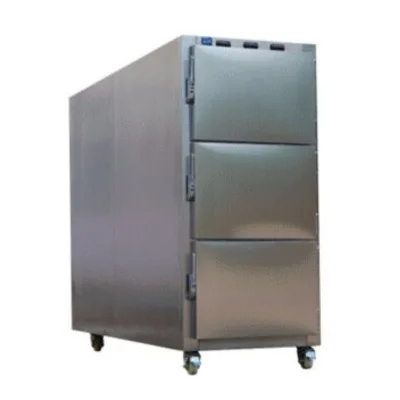
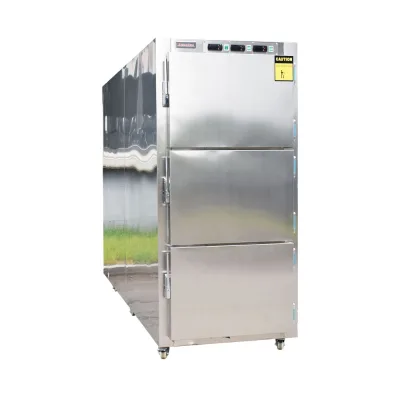
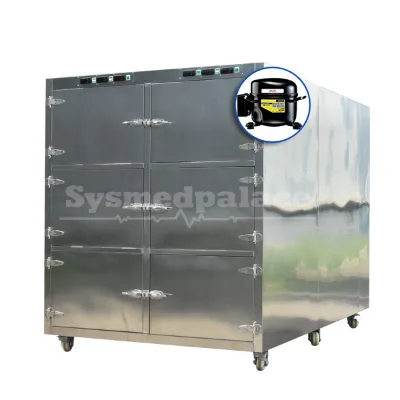
End Opening Transfer Options Morgue Refrigerator 6 Body Mortuary Freezer
$2350.00 - $2400.00
MOQ: 1 sets
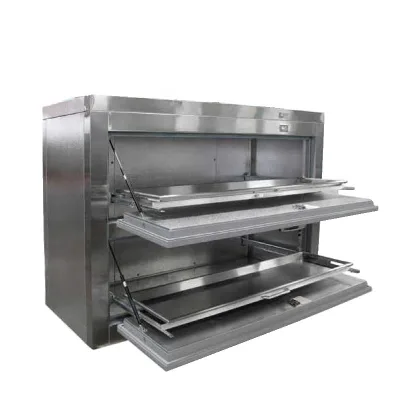
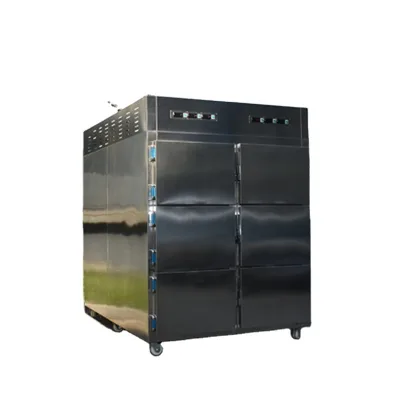
SYSMEDICAL Stacked 6 Body End Opening Morgue Refrigerator Transfer Options
$2211.00 - $2468.09
MOQ: 1 sets
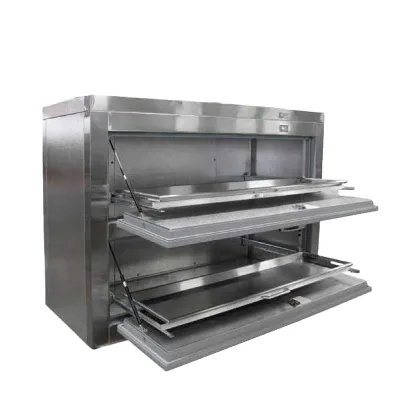
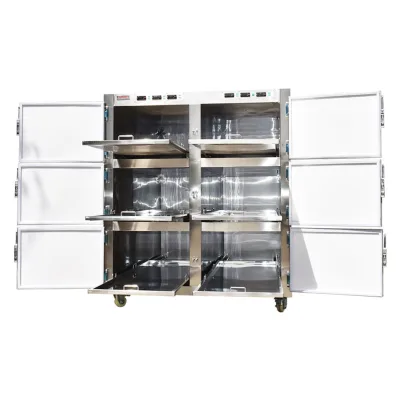
Stainless Steel Electric Morgue 1 2 3 4 6 8 9 Dead Body Freezer Box
$1890.00 - $2150.00
MOQ: 1 Minimum

Stainless Steel Morgue Bodies Morgue Refrigerator Mortuary Refrigerator for Hospital
$2999.00 - $4999.00
MOQ: 1 Pieces

Good Price Morgue Equipment 1/3/4/6/9 Bodies Medical Morgue Refrigerator
$1899.00 - $3899.00
MOQ: 1 Pieces


Corpse Refrigerator with Alarm Function Cadaver Storage Morgue Cabinet
$1700.00 - $1800.00
MOQ: 1 Pieces

Medical Equipment Mortuary Cooler Corpses Cabinet Morgue Refrigerator
$900.00 - $1000.00
MOQ: 1 Pieces


Advanced Morgue Refrigerator for Secure Corpse Preservation Solutions
$2250.00 - $3200.00
MOQ: 1 Pieces

9 Corpses Mortuary Refrigerator, Cadaver Fridge Morgue Fridge with Stainless Steel
$4800.00 - $6500.00
MOQ: 1 Pieces
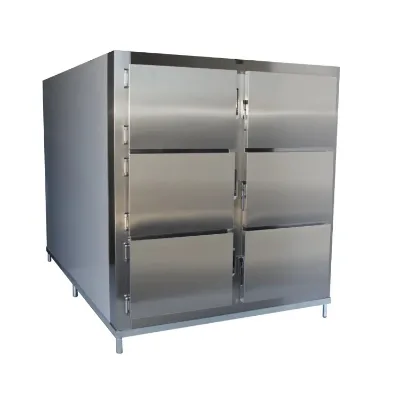
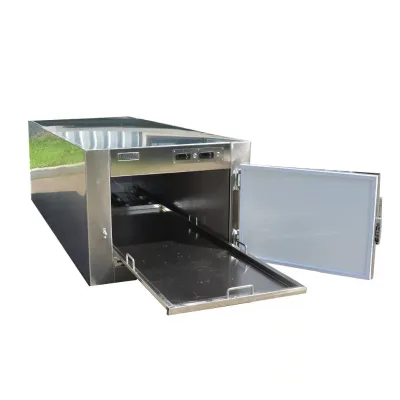


Sy-Stg03 Mortuary Equipment Morgue Corpse Fridge Body Refrigerator for Hospital
$595.00 - $995.00
MOQ: 1 Sets

Sy-Stg03 Stainless Steel Mortuary Refrigerator 3door Cadaver Freezer for Hospital Use
$595.00 - $999.00
MOQ: 1 Sets


Comprehensive Sourcing Guide
Strategic Sourcing Guide for Italy Carel Morgue Refrigeration Systems
Understanding the Technical Architecture of Advanced Morgue Units
When sourcing equipment specifically described as an "Italy Carel Morgue Refrigerator," buyers must first distinguish between the core refrigeration control system and the overall mechanical assembly. The presence of an "Italy CAREL" temperature controller is a significant technical differentiator in the morgue and mortuary sector. This component serves as the central nervous system for temperature regulation, ensuring precise maintenance of the internal environment required for the preservation of human remains. Based on observed product attributes, these units are designed to operate within a specific thermal envelope, typically ranging from minus 16 to 5 degrees Celsius, or in some configurations, minus 16 to 10 degrees Celsius. This range is critical for balancing the needs of short-term storage with long-term preservation without causing tissue damage or freezing artifacts.
The physical construction of these units often utilizes high-grade stainless steel, with options including 201 or 304 grades. The 304 stainless steel variant is frequently preferred for its superior rustproof properties and resistance to corrosion in high-humidity morgue environments. The structural integrity is further supported by robust dimensions, with observed specifications for single-body units reaching approximately 2460mm in height and 830mm in width, while larger multi-body configurations can extend to 2520mm by 1580mm. The internal capacity is equally vital, with inner opening sizes observed at 1950mm by 630mm by 440mm for single-door models. These dimensions directly influence the number of body trays the unit can accommodate, with specific models designed to hold three bodies, while others are engineered for six-body capacity.
The refrigeration method employed in these systems is typically a single-door, single-control cooling architecture, which simplifies the operational interface for mortuary staff. However, the complexity lies in the compressor selection. While some units may utilize domestic compressors, high-end configurations often feature imported Secop compressors, with specific mentions of German Secop units in certain listings. The number of compressor sets can vary, with some heavy-duty models incorporating three distinct compressor sets to ensure redundancy and reliability. The power source is generally standardized at 220V and 50Hz, which aligns with common industrial electrical standards in many regions, though buyers must verify local grid compatibility.
Compliance Verification and Certification Protocols
In the procurement of medical and mortuary equipment, compliance is not merely a formality but a critical safety and legal requirement. The "Italy Carel" controller itself is a component manufactured by a reputable entity, but the final assembly of the morgue refrigerator must meet broader international and local standards. Observed product data indicates that certain units carry CE authentication, a mandatory conformity mark for products sold within the European Economic Area. This certification suggests that the equipment meets EU safety, health, and environmental protection requirements. However, buyers must not assume that every unit with a Carel controller automatically possesses full CE certification; the certification applies to the complete system, not just the control panel.
Beyond the CE mark, buyers should verify if the equipment adheres to specific material standards. The use of 304 stainless steel is a strong indicator of quality, as it meets specific metallurgical standards for food-grade and medical-grade applications. While some background knowledge suggests standards like ASTM E84 for fire resistance or ISO 9001:2015 for quality management, these should not be asserted as facts unless explicitly confirmed by the supplier's documentation. The buyer's responsibility is to request the specific test reports and certificates that validate these claims. For instance, if a supplier claims the unit meets a specific fire safety standard, the buyer must ask for the corresponding test certificate from an accredited laboratory.
The warranty terms also serve as a proxy for compliance and manufacturer confidence. Observed data shows warranty periods ranging from 12 months to 3 years. A longer warranty period, such as the 3-year after-sales service provided in some listings, often indicates a higher level of manufacturer commitment to the product's durability and compliance with quality standards. However, the scope of the warranty must be clearly defined. Does it cover the compressor, the control system, or the entire cabinet? Buyers should scrutinize the warranty documentation to ensure it covers the specific components that are most prone to failure, such as the compressor and the temperature controller.
Cost Drivers and Pricing Dynamics in Morgue Refrigeration
The pricing of morgue refrigerators is influenced by a complex interplay of factors, including the number of body trays, the quality of the compressor, the grade of stainless steel, and the sophistication of the control system. The observed price range for these units spans from 65 to 6500 USD, a wide disparity that reflects the diversity in specifications and build quality. At the lower end of the spectrum, units may feature 201 stainless steel, domestic compressors, and basic temperature controllers. In contrast, the higher price points are associated with 304 stainless steel, imported German Secop compressors, and the inclusion of the Italy Carel temperature controller.
The number of compressor sets is another significant cost driver. Units with three compressor sets, as noted in some specifications, will command a higher price due to the increased complexity of the refrigeration circuit and the redundancy provided. Similarly, the size of the unit plays a crucial role. A single-body unit with dimensions of 2460mm by 830mm will be less expensive than a six-body unit measuring 2520mm by 1580mm. The gross weight of the unit, which can range from 400kg to 800kg, also impacts shipping costs and logistics, which are often factored into the total landed cost.
Buyers must also consider the "Single package size" and "Package Dimension" when calculating logistics costs. For example, a single package size of 2640mm by 940mm by 1880mm requires specialized shipping arrangements compared to smaller units. The "Single gross weight" of 440kg or 800kg further influences freight charges. While the base price of the equipment is important, the total cost of ownership includes installation, maintenance, and energy consumption. Units with advanced controllers like Carel may offer better energy efficiency, potentially offsetting a higher initial purchase price over the lifespan of the equipment.
Typical Applications and Operational Scenarios
Morgue refrigerators are primarily designed for use in laboratory and mortuary settings, specifically for the storage of human remains. The product attributes explicitly state the application as "Lab" and "Adult," indicating that these units are intended for professional use in medical, forensic, and funeral service facilities. The "European style" design noted in some listings suggests an aesthetic consideration, which may be relevant for facilities where the equipment is visible to the public or families. However, the primary function remains clinical and functional.
The double alarm mode, featuring both sound buzzer and light flashing alarms, is a critical feature for these applications. In a morgue setting, maintaining the correct temperature is non-negotiable. A failure in the cooling system could lead to rapid deterioration of remains, which is not only a loss of value but also a significant ethical and legal concern. The alarm system ensures that any deviation from the set temperature range (minus 16 to 5 degrees Celsius) is immediately detected and communicated to the staff. This feature is essential for facilities that operate 24/7 or have limited staffing, as it provides a fail-safe mechanism against equipment failure.
The "Type: Genes & Life Science Equipments" classification suggests that these units may also be used in research contexts where biological samples or remains need to be preserved under controlled conditions. The ability to maintain a stable temperature over extended periods is vital for forensic investigations, where the condition of the remains can impact the accuracy of autopsies and other analyses. The "Feature: Rustproof" attribute is particularly important in morgue environments, which often have high humidity levels due to the presence of refrigeration units and the nature of the stored items. Rust can compromise the structural integrity of the unit and contaminate the stored remains, making rustproof materials a necessity rather than a luxury.
Supplier Evaluation and Vendor Selection Criteria
Selecting the right supplier for a morgue refrigerator requires a rigorous evaluation process that goes beyond the initial product listing. Buyers should prioritize suppliers who can provide comprehensive documentation regarding the origin of components, particularly the compressor and the temperature controller. The distinction between "Domestic/Imported Secop Optional" and "Germany Secop" is a key indicator of quality. Suppliers who are transparent about their supply chain and can provide proof of the origin of these critical components are generally more reliable.
The "Place of Origin" is another factor to consider. While some units are manufactured in Zhejiang, China, others originate from Liaoning, China. Both regions have established manufacturing capabilities, but the specific factory's track record and quality control processes should be verified. Buyers should request information about the manufacturer's production capacity, quality assurance protocols, and history of fulfilling similar orders. The "Brand Name" listed, such as "Zeedo" or "Sysmedpalace," should be cross-referenced with the actual manufacturer to ensure there is no confusion between the trading entity and the production facility.
After-sales service is a critical component of supplier evaluation. The observed data mentions "Free Spare Parts" and warranty periods ranging from 1 to 3 years. Buyers should clarify the terms of the after-sales service, including the availability of spare parts, the response time for service calls, and the scope of the warranty. A supplier that offers a 3-year warranty with free spare parts is demonstrating a higher level of confidence in their product and a commitment to long-term support. However, buyers must ensure that the warranty terms are clearly defined in the contract, including any exclusions or conditions that might void the coverage.
Quality Control Measures and Inspection Protocols
Quality control for morgue refrigerators involves a multi-layered approach that covers material inspection, component verification, and performance testing. The use of 304 stainless steel should be verified through material certificates or mill test reports. Buyers should request these documents to ensure that the steel meets the specified grade and is free from contaminants that could lead to corrosion. The "Single gross weight" and "Package Dimension" should also be verified against the supplier's specifications to ensure that the unit is built to the stated dimensions and can withstand the rigors of transportation.
Performance testing is another essential aspect of quality control. The temperature range of minus 16 to 5 degrees Celsius must be validated through independent testing. Buyers should request test reports that demonstrate the unit's ability to maintain the required temperature under various load conditions and ambient temperatures. The "Double Alarm Mode" should be tested to ensure that both the sound buzzer and light flashing alarm function correctly and are triggered at the appropriate temperature thresholds. The "Temperature controller: Italy CAREL" should be verified to ensure that it is a genuine product and not a counterfeit or unauthorized copy.
The "Warranty: 1 Year" or "12 months" and "3 Years warranty" terms should be reviewed in the context of the quality control measures employed by the manufacturer. A robust quality control process should result in a lower failure rate, which justifies a longer warranty period. Buyers should also consider the "After-sales Service Provided" as an extension of the quality control process. A supplier that offers a 3-year warranty and free spare parts is likely to have a more rigorous quality control process than one that offers only a 1-year warranty.
Long-Term Procurement Considerations and Lifecycle Management
Procuring a morgue refrigerator is a long-term investment that requires careful consideration of the total cost of ownership and the lifecycle management of the equipment. The "Single package size" and "Single gross weight" are important factors to consider for installation and maintenance. Units that are too large or heavy may require special handling equipment or structural modifications to the facility, which can add to the initial cost. Buyers should assess the facility's infrastructure to ensure it can accommodate the unit's dimensions and weight.
Energy efficiency is another long-term consideration. While the "Power Source: 220V, 50HZ" is standard, the efficiency of the compressor and the insulation of the unit will impact energy consumption over time. Units with advanced controllers like Carel may offer better energy efficiency, which can result in significant cost savings over the lifespan of the equipment. Buyers should request energy consumption data from the supplier to make an informed decision.
The "Feature: Rustproof" attribute is crucial for the longevity of the unit. In a morgue environment, the unit is exposed to high humidity and potential chemical exposure. A rustproof unit will maintain its structural integrity and appearance for a longer period, reducing the need for repairs or replacement. Buyers should also consider the "After-sale Service: Free Spare Parts" as a long-term benefit. The availability of spare parts ensures that the unit can be maintained and repaired without significant downtime, which is critical for facilities that rely on the equipment for daily operations.
Finally, the "Warranty" and "After-sales Service Provided" should be viewed as part of the long-term procurement strategy. A supplier that offers a 3-year warranty and free spare parts is providing a level of security that can protect the buyer from unexpected costs and downtime. Buyers should ensure that the warranty terms are clearly defined and that the supplier has a proven track record of honoring their commitments. By carefully evaluating these long-term factors, buyers can make a procurement decision that ensures the reliable and efficient operation of the morgue refrigerator for years to come.
Comparative Analysis of Key Specifications
To facilitate a clearer understanding of the variations in morgue refrigerator specifications, the following table summarizes the key attributes observed in the product data. This comparison highlights the differences in dimensions, materials, and components that influence the selection process.
| Attribute | Model A (3-Body) | Model B (6-Body) | Model C (Single) |
|---|---|---|---|
| Model Number | STG3E | STG-6 | THP773 |
| Dimensions (mm) | 24608301780 | 252015801850 | 24208601860 |
| Inner Opening (mm) | 1950630440 | N/A | 1950630440 |
| Material | 304 Stainless Steel | 201 Stainless Steel | Stainless Steel 201/304 |
| Compressor | Germany Secop | Donperr | Domestic/Imported Secop |
| Temperature Range | -16 to 5°C | -16 to 10°C | -16 to 5°C |
| Gross Weight (kg) | 440 | 800 | 400 |
| Warranty | 12 Months | 3 Years | 1 Year |
| Controller | Italy CAREL | N/A | N/A |
| Alarm Mode | Sound & Light | Sound & Light | Sound & Light |
This table illustrates the diversity in specifications available in the market. Buyers should use this information to align their specific needs with the appropriate model, ensuring that the selected unit meets the required capacity, material standards, and performance criteria. The presence of the Italy Carel controller in Model A is a notable feature that may justify a higher price point for buyers prioritizing precision and reliability. Conversely, Model B offers a larger capacity and a longer warranty, which may be more suitable for high-volume facilities. By carefully comparing these attributes, buyers can make an informed decision that balances cost, performance, and long-term value.
FAQs
What temperature range does the Italy Carel Morgue Refrigerator maintain?
The unit maintains a temperature range from minus 16 to 5 degrees Celsius. Some configurations can extend this range up to 10 degrees Celsius depending on the specific model and compressor settings.
Which stainless steel materials are used in the construction of these units?
These units are constructed using either 201 or 304 stainless steel. The 304 grade is preferred for its superior rustproof properties and resistance to corrosion in high-humidity morgue environments.
How many body trays can a single Italy Carel Morgue Refrigerator hold?
Specific models are designed to hold either three or six body trays. The capacity depends on the internal opening size and the overall dimensions of the specific unit configuration selected.
Can the Italy Carel Morgue Refrigerator operate with imported compressors?
Yes, the units can be equipped with imported Secop compressors, including German models. Some heavy-duty configurations also feature three distinct compressor sets to ensure operational redundancy and reliability.
What warranty periods are available for Italy Carel morgue refrigerators?
Warranty periods typically range from 12 months to 3 years. Some suppliers offer extended after-sales service with free spare parts, indicating a higher level of manufacturer commitment to product durability.
How does the double alarm mode function in these morgue units?
The system features both a sound buzzer alarm and a light flashing alarm. This dual mechanism ensures immediate detection and communication of any temperature deviations from the set range to the staff.
What certifications are available for Italy Carel morgue refrigerators?
Certain units carry CE authentication, which is mandatory for products sold within the European Economic Area. This certification indicates the equipment meets EU safety, health, and environmental protection requirements.