Source Italian Minimalist Velvet Throw Pillow for Living Room, Bedroom, Sofa
Find 30 verified suppliers offering Italian Minimalist Velvet Throw Pillow options with custom designs and varying materials. Compare features like anti-static properties, removable covers, and eco-friendly fillings to match your sourcing needs.
Key considerations
Products List
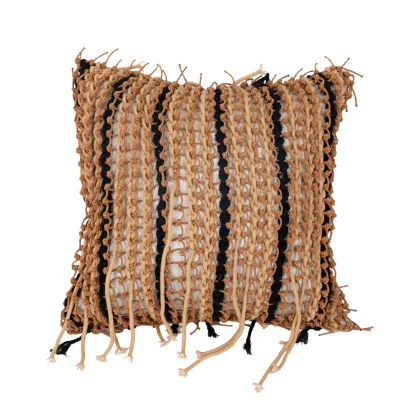
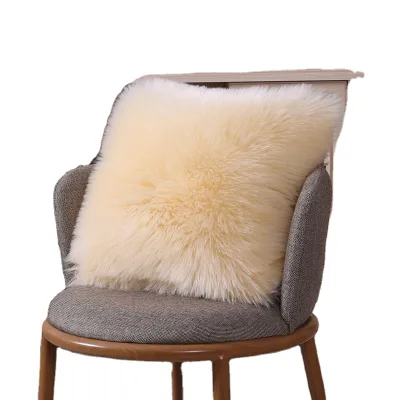
High Quality Pillow Decorative Convenient Storage Faux Fur Pillow Designer Throw Pillows
$2.50 - $2.60
MOQ: 4999 pieces
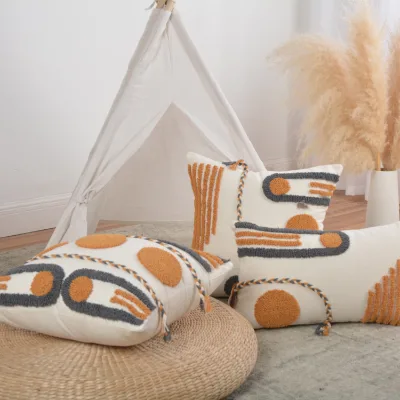
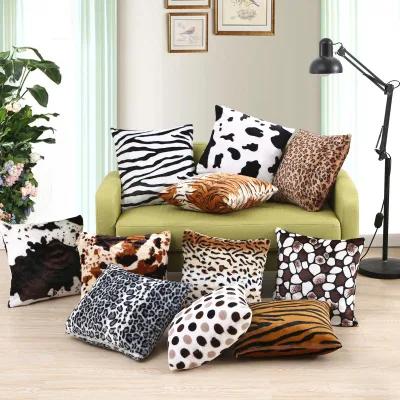


Customized Fashionable Bedding Sofa Bed and Couch Decorative Stuffer Throw Pillows
$1.45 - $2.56
MOQ: 400 piece/pieces


Comprehensive Sourcing Guide
Strategic Sourcing Guide for Italian Minimalist Velvet Throw Pillows
The global market for home textiles has seen a sustained shift toward minimalist aesthetics, with Italian design principles serving as a benchmark for quality and elegance. When sourcing "Italian minimalist velvet throw pillows," buyers must navigate a complex landscape where the term "Italian" often denotes a design origin or a specific finish rather than the location of manufacturing. While the core keyword suggests a specific style, the actual supply chain for such items frequently involves manufacturers in China who replicate these high-end aesthetics. A disciplined procurement strategy requires distinguishing between marketing claims and verifiable product attributes, ensuring that the final goods meet the rigorous standards expected of Italian design while maintaining cost efficiency. This guide outlines the essential technical, compliance, and operational factors necessary for a successful procurement cycle.
Technical Specifications and Material Composition
The foundation of a high-quality throw pillow lies in its material composition and construction. For a product described as minimalist velvet, the fabric must exhibit a specific pile density and hand-feel that mimics the luxurious texture associated with Italian mills. In the context of available supply chain data, polyester is a dominant material choice, often cited as 100% polyester or a blend with cotton. Buyers should verify that the velvet fabric meets specific color fastness standards, such as National Standards, to ensure the deep, rich hues characteristic of minimalist designs do not fade under light exposure.
The filling material is equally critical for maintaining the pillow's shape and comfort. Common specifications include PP fiber (polypropylene) or a blend of cotton and polyester. A typical weight for a standard 50x50cm throw pillow ranges around 1500g, though this can vary based on the density of the filling. The dimensions are often standardized at 50x50cm, with a thickness of approximately 8-10cm to provide a plush, modern silhouette. The shape is typically rectangular or square, aligning with minimalist geometric preferences, though custom shapes are available for specialized orders. The care instructions must be clearly defined; while some pillows feature removable and washable covers for practicality, others may require dry cleaning only, particularly if the velvet is delicate or the construction involves intricate stitching.
Design Aesthetics and Customization Capabilities
The "Italian minimalist" label implies a design philosophy that prioritizes clean lines, neutral color palettes, and a lack of ornate detailing. However, the actual product data reveals a wide spectrum of design capabilities, including laser carving, embroidery, and various patterns such as solid, striped, or character-based graphics. For a buyer seeking a true minimalist aesthetic, it is essential to filter out products with complex patterns like festivals, cartoons, or heavy plant motifs unless they are part of a specific, curated collection.
Customization is a significant driver in this sector. Many suppliers offer "Custom Logo Accepted" services and accept customized designs, allowing brands to imprint their identity subtly. The logo application methods vary, with embroidery and laser carving being prominent techniques. When evaluating potential partners, buyers must confirm whether the customization process aligns with the minimalist ethos. For instance, a laser-carved logo might offer a sleek, integrated look, whereas embroidery could provide a more tactile, traditional feel. The ability to accept custom colors is also vital, as the minimalist palette often relies on specific shades of brown, beige, or grey. Buyers should request physical samples to verify that the "custom" color matches the intended design vision, as digital representations can be misleading.
Compliance, Certification, and Safety Standards
In the B2B procurement of home textiles, compliance with safety and environmental standards is non-negotiable. The supply data indicates that products often claim to be eco-friendly, non-toxic, and anti-static, with specific mentions of anti-dust mite properties. These claims must be backed by verifiable documentation. Buyers should not rely solely on supplier assertions but must request test reports that confirm the material's compliance with relevant international standards.
For products originating from China, verifying adherence to National Standards for color fastness is a baseline requirement. Additionally, if the pillows are intended for export to the European Union or North America, they must meet specific flammability and chemical safety regulations. The term "Italian" in the product title does not automatically confer EU certification; therefore, buyers must explicitly ask for proof of compliance with standards such as OEKO-TEX or specific EU REACH regulations regarding textile chemicals. The "Eco-Friendly" attribute should be scrutinized to understand what specific processes or materials justify this claim. Without third-party certification, such labels remain marketing terms rather than verified facts.
Cost Drivers and Pricing Dynamics
The pricing of throw pillows is influenced by a complex interplay of factors, including material quality, customization complexity, and order volume. The observed price range in the market spans from $0.39 to $20.00 USD, a wide variance that reflects differences in quality and production methods. The lower end of the spectrum typically corresponds to standard polyester fills and basic velvet fabrics with minimal customization. The higher end likely includes premium materials, intricate embroidery, or specialized finishes that mimic high-end Italian manufacturing.
Minimum Order Quantities (MOQ) are another critical cost driver. The data shows an MOQ range from 1 to 4999 units, with specific instances of 50 PCS and 1000 PCS. For buyers seeking to test the market or launch a niche minimalist collection, suppliers with lower MOQs (e.g., 50 PCS) are preferable, even if the unit cost is slightly higher. Conversely, large-scale procurement can leverage economies of scale to reduce the per-unit cost, provided the buyer can commit to higher volumes. It is important to note that the "Small Orders: Accepted" attribute suggests flexibility in the supply chain, but buyers should be aware that lead times and shipping costs may vary significantly based on order size.
Supplier Evaluation and Origin Verification
When sourcing products labeled as "Italian," it is crucial to verify the actual place of origin. The provided data indicates that many products are manufactured in regions such as Jiangsu and Hebei in China. This is a common scenario where the design inspiration is Italian, but the production is localized to cost-effective manufacturing hubs. Buyers should not assume that a product labeled "Italian style" is manufactured in Italy unless explicitly stated and verified.
Supplier evaluation should focus on their technical capabilities and consistency. Key attributes to assess include the "technics" used, such as handcrafted methods versus industrial production. Handcrafted items often command a premium and offer unique quality, but they may also present challenges in terms of consistency and lead time. The "model number" and "brand name" (e.g., JIOLITE, Langyu, HR) serve as identifiers for specific product lines, but buyers should be cautious of generic branding that may indicate a lack of brand identity. A robust supplier evaluation process involves checking the supplier's history of delivering "Luxury Elegant" products and their ability to maintain quality across different batches.
Quality Control and Long-Term Procurement Strategy
Implementing a rigorous quality control (QC) protocol is essential to ensure that the delivered pillows meet the expected standards. Key QC checkpoints should include the inspection of the velvet pile for uniformity, the verification of stitching quality, and the assessment of the filling distribution. The "unpick and wash" attribute is a critical quality indicator; buyers must confirm whether the cover is removable and washable, as this impacts the product's longevity and maintenance.
For long-term procurement, establishing a clear communication channel with the supplier regarding design changes and material updates is vital. The ability to accept "Customized Designs" suggests a collaborative relationship, but buyers must ensure that the supplier has the capacity to scale production without compromising quality. Additionally, monitoring the "Single package size" and "Single gross weight" is important for logistics planning, as these factors directly impact shipping costs and storage requirements.
Comparative Analysis of Product Attributes
To facilitate decision-making, the following table summarizes key attributes observed in the market for throw pillows, highlighting the variations that buyers must navigate.
| Attribute Category | Common Observation | Critical Verification Point |
|---|---|---|
| Material | Polyester, Polyester/Cotton | Verify fiber content percentage and softness. |
| Filling | PP Fibre, Cotton, Poly Filling | Check density and weight (e.g., 1500g). |
| Dimensions | 50x50cm, 50x50x8cm | Confirm thickness and shape consistency. |
| Care | Removable/Washable, Dry Clean Only | Ensure care instructions match intended use. |
| Customization | Logo, Color, Design Accepted | Verify MOQ and lead time for custom orders. |
| Origin | Jiangsu, Hebei, China | Confirm if "Italian" refers to design or origin. |
| Certification | National Standards, Eco-Friendly | Request third-party test reports for safety. |
Conclusion
Sourcing "Italian minimalist velvet throw pillows" requires a nuanced approach that balances aesthetic desires with practical supply chain realities. While the market offers a wide array of options with varying prices, MOQs, and material compositions, the key to success lies in rigorous verification of claims. Buyers must prioritize material quality, ensure compliance with safety standards, and maintain clear communication regarding customization and logistics. By focusing on these core elements and avoiding assumptions about origin or certification, procurement teams can secure high-quality products that align with their brand values and customer expectations. The journey from concept to delivery involves careful selection of suppliers who can deliver on the promise of luxury and elegance, regardless of the actual manufacturing location.
FAQs
What materials are used for Italian minimalist velvet throw pillows?
These pillows typically use polyester or polyester cotton blends for the cover. The filling often consists of PP fiber or a mix of cotton and polyester to ensure softness and shape retention while meeting eco-friendly standards.
Can buyers customize the logo and design on these pillows?
Yes, suppliers accept customized designs and offer custom logo services via embroidery or laser carving. Buyers can request specific colors and patterns, though the final output depends on the supplier's technical capabilities and minimum order quantities.
What is the typical minimum order quantity for these products?
Minimum order quantities vary significantly, ranging from as low as 50 pieces to as high as 4999 units. Some suppliers require 1000 pieces for standard orders, while others accommodate small orders to help buyers test the market before scaling up.
Where are these velvet throw pillows typically manufactured?
Most products are manufactured in China, specifically in regions like Jiangsu and Hebei. While the design may be inspired by Italian minimalism, the actual production location is often in these Chinese manufacturing hubs rather than Italy itself.
How should these pillows be cleaned and maintained?
Care instructions vary by product, with some covers being removable and washable while others require dry cleaning only. Buyers must verify the specific care label, as some items are not removable and washable, requiring professional maintenance to preserve the velvet texture.
What are the standard dimensions for a luxury throw pillow?
Standard dimensions are often 50 by 50 centimeters with a thickness of approximately 8 to 10 centimeters. The weight typically ranges around 1500 grams, though custom shapes and sizes are available depending on the specific supplier and design requirements.
Do these pillows meet safety and environmental standards?
Many products claim to be eco-friendly, non-toxic, and anti-static, often adhering to National Standards for color fastness. Buyers should request third-party test reports to verify compliance with international safety regulations before finalizing large procurement orders.