Source Italian Pallissandro Blue Marble Slab for Countertops, Floors, Walls
Compare 30 listings for Italian Pallissandro Blue Marble Slab featuring polished and brushed finishes with customizable dimensions. Buyers can evaluate specifications like density, thickness, and packing options for villa, hotel, and indoor projects.
Key considerations
Products List


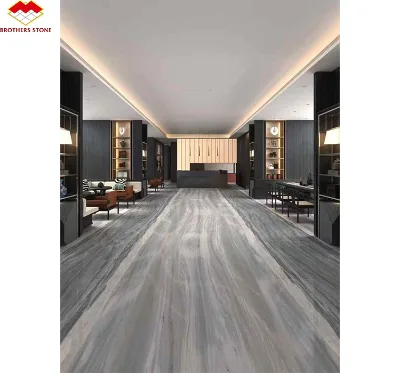
Foshan Palissandro Italian Pallisandro Blue Galaxy Marble Slab for Floor Tile Design
$130.00 - $200.00
MOQ: 20 square
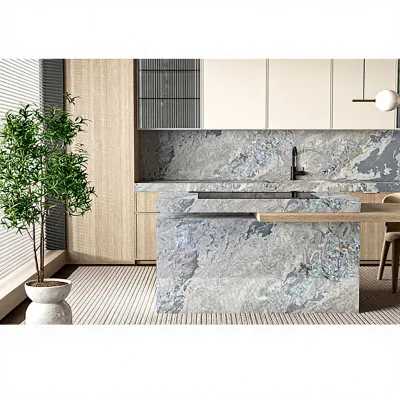
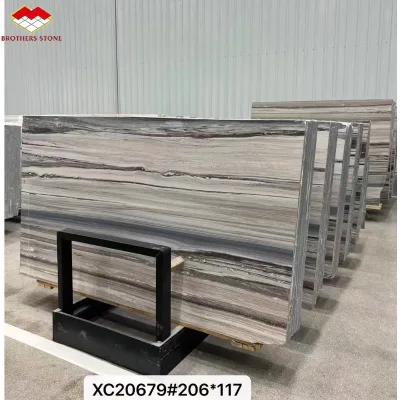
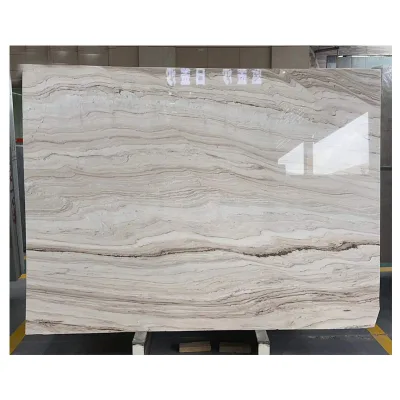
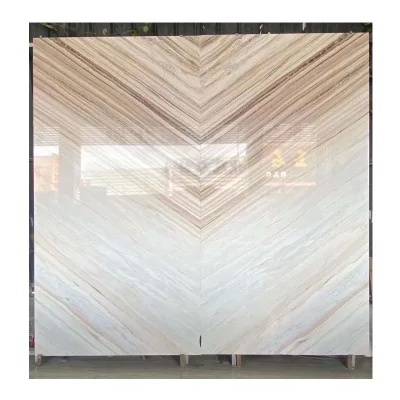

Italian Marble Slabs Palissandro Blue Blue Gold Sand Marble for Flooring
$80.00 - $150.00
MOQ: 20 Square Meters


New Palissandro Blue Marble Granite Stone Slab for Wall Tile Decoration
$60.00 - $65.00
MOQ: 100 Square Meters

Nature Italy Palissandro White Blue Marble Quartz Slab for Tiles or Countertop
$180.00 - $250.00
MOQ: 50 Square Meters

Nature Italy Calacarra Golden White Marble Slab for Countertops and Tiles
$450.00 - $1000.00
MOQ: 10 Square Meters

Nature Marble St. Laurence Black Golden Slab for Countertops and Tile
$80.00 - $110.00
MOQ: 10 Square Meters

Palissandro Blue Marble Is Suitable for Walls, Countertops and So on.
$50.00 - $100.00
MOQ: 30 Square Meters


Italian Palissandro Blue Marble Polished Slabs for Tiles and Countertops
$10.00 - $100.00
MOQ: 100 Square Meters

Rosso Red Calacatta Burgundy Marble Slab for Luxury Interior Projects
$60.00 - $100.00
MOQ: 300 Square Meters


Calacatta Burgundy Rosso Pink Marble Slabs for Countertops and Wall
$60.00 - $100.00
MOQ: 300 Square Meters


White Blue Galaxy Palissandro Bronze Marble Slab with Blue Vein Stone
$50.00 - $200.00
MOQ: 100 Square Meters


Italian Bianco Classico Palissandro White Marble for Floor and Wall Covering Tiles
$80.00 - $450.00
MOQ: 100 Pieces

Italy Bianco Palissandro White Marble Polished Slabs for Hotel Floor Tile Price Wall Decoration
$80.00 - $450.00
MOQ: 100 Pieces

Luxury Palissandro Blue Marble Slab for Table/Flooring/Wall Marble Tiles Price
$40.00 - $50.00
MOQ: 100 Square Meters

Comprehensive Sourcing Guide
Strategic Sourcing Guide for Italian Pallissandro Blue Marble Slabs
Understanding the Product Profile and Market Variability
When sourcing Italian Pallissandro Blue marble slabs, buyers must first navigate the inherent complexity of natural stone classification. The core keyword refers to a specific aesthetic and geological profile, yet the market data reveals a significant divergence in origin claims and physical attributes. While the search term explicitly targets "Italian" origin, the available product facts indicate a mixed supply chain where some listings cite "China" as the place of origin while others specify "Italy." This discrepancy is a critical starting point for procurement strategy. A buyer must verify the actual geological source before finalizing any contract, as the provenance directly influences the stone's mineral composition, veining patterns, and market value.
The product facts highlight that the stone is identified as "100% Natural" and falls under the "Calcite" marble type. This chemical classification is vital for understanding the material's reactivity and maintenance requirements. The observed density ranges from 2.6 to 2.7 g/cm³, which serves as a baseline for quality assessment. However, buyers should not assume that every listing labeled "Pallissandro Blue" meets these exact physical parameters. The market data shows variations in color descriptions, with some entries listing "White" and others "Blue," suggesting that the "Blue" in the name may refer to the specific veining or undertone rather than the base stone color. Consequently, the procurement process must prioritize physical verification of the slab's hue and grain over the marketing label alone.
Technical Specifications and Dimensional Standards
Technical due diligence is paramount when ordering large-format stone slabs. The supply data presents a wide range of dimensional specifications that must be reconciled with project requirements. One set of facts indicates a standard size of 320cm in length by 160cm in width, with thickness options of 2cm or 3cm. In contrast, other listings specify a thickness of 16mm (1.6cm) or a single package size of 250x150x2 cm. These variations indicate that "standard" dimensions are not universal across the industry and are often dictated by the specific quarry or the processing facility's capabilities.
Buyers must explicitly define their required thickness and dimensions in the purchase order. The data confirms that "Customizable Shape" and "As per requested" dimensions are available, which is a significant advantage for complex architectural projects. However, the "Standard or Customized Size" attribute implies that custom cuts may incur additional processing time or costs. The surface finishing options observed include "Polished" and "Brushed Finish." The choice between these finishes will impact the stone's slip resistance and light reflection properties. A polished finish offers a high-gloss, reflective surface suitable for interior walls and countertops, while a brushed finish provides a more matte, textured appearance often preferred for flooring in high-traffic areas.
| Attribute | Observed Range in Data | Procurement Verification Requirement |
|---|---|---|
| Thickness | 2cm, 3cm, 16mm | Confirm exact millimeter tolerance required for structural integrity. |
| Dimensions | 320x160cm, 250x150cm, Custom | Verify if the supplier can meet the specific project layout without waste. |
| Surface Finish | Polished, Brushed | Request physical samples to confirm texture and gloss level. |
| Density | 2.6-2.7 g/cm³ | Validate via density test if the stone is for heavy-load applications. |
| Form | Big Slab | Ensure the slab size matches the transport vehicle capacity. |
Compliance, Certification, and Origin Verification
The distinction between the product name and the actual place of origin is a primary compliance risk in this category. While the search term specifies "Italian," the provided facts list "China" as a place of origin for several entries, while others correctly identify "Italy." This suggests that the market contains both genuine Italian stone and stone from other regions that may be marketed under similar names. Buyers must demand proof of origin, such as a certificate of origin or quarry documentation, to ensure they are purchasing authentic Italian Pallissandro Blue.
Regarding certifications, the data includes a low-confidence background note regarding "CE" certification. It is crucial to treat this as an unverified observation rather than a guaranteed attribute. Buyers should not assume that all listed products carry CE marking. Instead, the procurement strategy must include a specific request for valid certification documents. The "Customized" standard mentioned in the data further complicates compliance, as it implies that some products may not adhere to a rigid international standard but rather to a bespoke agreement between the buyer and supplier. Therefore, the buyer must define the required standards (e.g., ISO, EN, or specific national building codes) in the contract rather than relying on the supplier's default "Customized" designation.
Cost Drivers and Pricing Dynamics
The observed price range for these products spans from 10 to 1500 USD, a variance that reflects the extreme diversity in product quality, size, and origin. A price at the lower end of this spectrum likely corresponds to smaller tiles, lower-grade stone, or products originating from non-Italian sources. Conversely, prices approaching the upper limit are indicative of large-format Italian slabs with premium finishes and verified provenance. The "Selling Units" are listed as "Single item," which suggests that pricing may be per slab or per square meter, but the unit of measure is not explicitly standardized in the provided facts.
Several factors drive the cost beyond the raw material price. The "Delivery Time" is noted as 15-25 days, which impacts the overall logistics cost and inventory planning. The "Trade term" is listed as FOB (Free on Board) or CNF (Cost and Freight), meaning the buyer is responsible for insurance and freight costs once the goods leave the port of origin. Additionally, the "MOQ" (Minimum Order Quantity) varies from 1 to 300 units, with one specific entry citing 2 sqm. For large projects, the ability to negotiate a lower MOQ or a consolidated shipment can significantly affect the unit cost. Buyers must also account for the "Wooden Frame" or "Wooden Crate Packaging" costs, which are essential for protecting the stone during international transit but add to the total landed cost.
Supplier Evaluation and Quality Assurance Protocols
Selecting a reliable supplier for high-value natural stone requires a rigorous evaluation of their quality control (QC) infrastructure. The product facts highlight a "QC Team" and a "Warehouse Slab" as key advantages, suggesting that some suppliers maintain inventory and perform inspections before shipping. A critical attribute noted is that "All products checked by experienced QC pieces by pieces." This piece-by-piece inspection is a significant differentiator from suppliers who only perform random sampling. Buyers should verify this claim by requesting a copy of the QC report or a video walkthrough of the inspection process for the specific batch they intend to purchase.
The "After-sale Service" includes "Online technical support," which is valuable for resolving issues related to installation or maintenance. However, the "Warranty" is listed as only "1 Year," which is relatively short for natural stone, a material expected to last decades. This short warranty period suggests that the supplier's confidence may be limited to the initial installation phase or that the stone is prone to specific defects that require careful monitoring. The "Brand Name" "Brothers Stone" appears in the data, but buyers should not rely on brand reputation alone. Instead, they should evaluate the supplier's "Project Solution Capability," which includes "graphic design" and "Others," indicating the ability to assist with visualization and layout planning.
Typical Applications and Design Integration
The versatility of Pallissandro Blue marble is evident in its listed applications, which include "Countertop, Floor, Wall," "Indoor, Villa, Hotel," and "Tiles Project." The stone's "Design Style" is described as "Modern," and its "Grade" includes "Luxury, Classic, Modern, Beautiful." This suggests that the material is suitable for high-end residential and commercial interiors where a sophisticated aesthetic is required. The "Feature" list includes "Waterproof, Eco-Friendly, Durable," which are desirable traits for kitchen countertops and bathroom vanities.
However, the "Usage" also lists "sink and basin," which requires careful consideration of the stone's porosity. As a calcite-based marble, it is naturally susceptible to etching from acidic substances. Buyers must ensure that the chosen finish (Polished or Brushed) aligns with the intended use. For example, a polished finish on a kitchen countertop may show etching more readily than a honed or brushed finish. The "Application" to "Wall" and "Floor" indicates that the stone is used in both vertical and horizontal planes, but the structural load-bearing capacity must be verified based on the specific thickness (2cm vs. 3cm vs. 16mm).
Long-Term Procurement and Maintenance Considerations
Long-term procurement planning for Italian Pallissandro Blue marble involves more than just the initial purchase; it requires a strategy for maintenance and lifecycle management. The "1 Year Warranty" and "Online technical support" indicate that the supplier expects to be involved in the early stages of the project's life. Buyers should plan for regular sealing and cleaning protocols to maintain the stone's "Eco-Friendly" and "Durable" features. The "Customized" nature of the product means that replacement slabs may be difficult to source later if the quarry runs out of the specific vein pattern. Therefore, it is advisable to order a surplus of material at the time of the initial purchase to ensure consistency for future repairs or expansions.
The "Market" data lists "USA; Canada; Australia; UK etc," indicating a global demand that may lead to supply chain fluctuations. Buyers in these regions should consider the "Delivery Time" of 15-25 days when planning project schedules. The "Single gross weight" of 40.000 kg for a single package highlights the logistical challenges of handling these heavy slabs. Proper on-site storage and handling equipment must be arranged in advance to prevent damage. Ultimately, the success of a procurement project for this material depends on the buyer's ability to navigate the variations in origin, specifications, and quality control, ensuring that the final product meets the rigorous standards of luxury interior design.
FAQs
Can I get custom shapes for Italian Pallissandro Blue marble slabs?
Yes, custom shapes are available for this marble slab. The product facts confirm that the shape is customizable to meet specific project requirements, allowing for tailored designs in various architectural applications.
What is the standard thickness for these marble slabs?
The standard thickness observed is 16mm, though options of 2cm or 3cm are also listed in the data. Buyers must verify the exact millimeter tolerance required for their specific structural integrity needs before ordering.
Which surface finishes are available for this marble product?
Both polished and brushed finishes are available for this marble slab. The choice between these finishes impacts the stone's slip resistance and light reflection, with polished suitable for walls and brushed preferred for flooring.
How long does delivery take for these marble slabs?
The delivery time ranges from 15 to 25 days for these products. This timeline should be factored into project planning, especially since the trade terms are typically FOB or CNF, placing logistics responsibility on the buyer.
What is the minimum order quantity for purchasing this marble?
The minimum order quantity varies from 1 unit up to 300 units, with one specific entry citing 2 square meters. Buyers should check the specific supplier's MOQ policy as it can significantly affect the unit cost.
Can I verify the origin of the Italian Pallissandro Blue marble?
Yes, origin verification is critical as some listings cite China while others specify Italy. Buyers must demand proof of origin, such as a certificate of origin, to ensure they are purchasing authentic stone from the correct geological source.
What warranty is provided for these marble slab products?
A 1-year warranty is provided for these marble slab products. This relatively short period suggests the supplier's confidence is limited to the initial installation phase, requiring careful monitoring for defects during the first year.