Source Jacard Knitted Eyelash Lace for Bridal, Lingerie, and Home Textiles
Compare 24 verified listings for Jacquard Knitted Eyelash Lace featuring raschel fabric technology and customizable edge finishing. Buyers can evaluate options for bridal gown manufacture, lingerie trim, and home textiles with varying elasticity and color production capabilities.
Key considerations
Products List

Eyelash Lace Nylon White Availiable Lace Knitted Jacquard Lace for Dress
$4.15 - $4.30
MOQ: 100 Meters


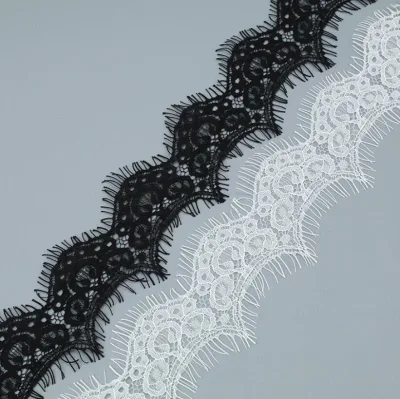
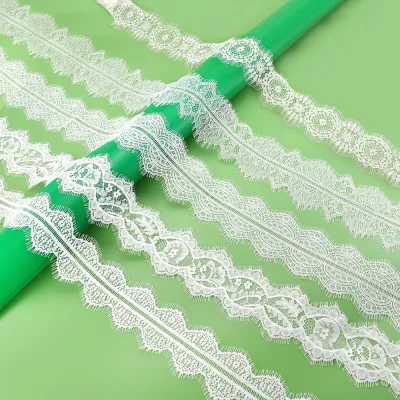


20cm Smooth Nylon Spandex Eyelash Lace for Comfort Wear with Soft Stretch
$0.20 - $0.26
MOQ: 1000 Yards


15cm Stretchy Nylon Spandex Eyelash Lace for Comfort Wear with Soft Touch
$0.20 - $0.26
MOQ: 1000 Yards


Comprehensive Sourcing Guide
Strategic Sourcing Guide for Jacquard Knitted Eyelash Lace
The global textile market offers a vast array of decorative trims, yet few materials combine the structural integrity of knitted fabrics with the delicate aesthetic of eyelash lace as effectively as Jacquard Knitted Eyelash Lace. For procurement professionals in the bridal, lingerie, and home textile sectors, sourcing this specific material requires a nuanced understanding of its technical composition, production capabilities, and supply chain dynamics. This guide provides a disciplined framework for evaluating suppliers and specifications based on verified product attributes and industry standards, ensuring that procurement decisions are grounded in observable facts rather than marketing assertions.
Technical Specifications and Material Composition
Understanding the fundamental construction of Jacquard Knitted Eyelash Lace is the first step in defining precise procurement requirements. The material is fundamentally a warp-knitted fabric, a process that distinguishes it from weft-knitted alternatives by offering superior dimensional stability and resistance to runs. The core material composition observed in high-quality listings is predominantly nylon, a synthetic fiber chosen for its durability, elasticity, and ability to hold complex patterns. The production of this lace often utilizes Raschel fabric technology, a specific type of warp knitting that allows for the creation of intricate, openwork designs with high precision.
The visual and tactile characteristics are defined by the "eyelash" craft, which involves adding looped or fringed edges to the fabric, creating a soft, textured appearance ideal for bridal gowns and lingerie trims. The pattern generation is achieved through jacquard mechanisms, allowing for geometric or floral motifs that are integral to the fabric structure rather than printed on the surface. A critical technical specification to verify is the width of the fabric. Market observations indicate standard widths ranging from 58 to 60 inches, though custom widths are frequently available, with some suppliers offering sizes as small as 0.6 cm up to 150 cm.
Elasticity is another paramount technical attribute. Buyers must distinguish between medium and high elasticity variants, as this directly impacts the garment's fit and comfort. Medium elasticity is often suitable for structured bridal applications, while high elasticity is preferred for lingerie trims where stretch is essential. The fabric is typically available in white, but the production process allows for dyed finishes, with some manufacturers capable of matching specific customer color swatches to ensure brand consistency. The edge finishing is equally critical; options include scalloped edges for a soft, romantic look or cut-out edges for a more modern, geometric aesthetic.
Compliance, Certification, and Safety Standards
In the B2B textile sector, compliance is not merely a regulatory hurdle but a prerequisite for market access, particularly for products intended for intimate wear or children's clothing. While specific certification statuses such as Oeko-Tex, REACH, or ISO 9001 are often cited in general industry knowledge, procurement teams must verify these claims on a per-supplier basis rather than assuming they apply to all listed products. The supply chain for nylon-based lace often involves complex chemical processes, making verification of chemical safety standards essential.
Buyers should explicitly request documentation regarding the "Color Production" methods used. Since the fabric is dyed, the dyes and auxiliary chemicals must comply with relevant regional regulations. For example, if the target market is the European Union, compliance with REACH regulations regarding restricted substances is mandatory. Similarly, for products entering the North American market, adherence to specific flammability and chemical safety standards is required. The "prod_standard" field in supplier data often lists dimensions like 150cm or 300x150cm, but these refer to physical dimensions rather than safety certifications. Therefore, the buyer must treat safety certifications as a distinct verification step.
When evaluating a potential supplier, the procurement team should request a Certificate of Analysis (CoA) or a specific test report from an accredited third-party laboratory. This report should confirm the absence of prohibited azo dyes, heavy metals, and formaldehyde. It is also important to verify the "prod_origin," which is frequently listed as China or specific hubs like Ningbo. While these regions have robust textile manufacturing infrastructures, the presence of a manufacturing hub does not automatically guarantee compliance with international safety standards. The verification of these standards must be a contractual obligation, ensuring that the supplier provides up-to-date test results for every batch of lace delivered.
Cost Drivers and Pricing Dynamics
The pricing of Jacquard Knitted Eyelash Lace is influenced by a complex interplay of material costs, production complexity, and order volume. The observed price range in the market spans from $0.02 to $4.50 per unit, a variance that reflects differences in width, pattern complexity, and order quantity. The primary cost driver is the raw material, specifically the grade of nylon used. High-tenacity nylon, which offers better durability and a softer hand feel, commands a premium over standard grades. Additionally, the "Raschel Fabric" technology and the specific "Eyelash Lace" craft require specialized machinery and skilled labor, which adds to the base production cost.
Order volume is the second significant factor. The Minimum Order Quantity (MOQ) observed in the market ranges from 1 unit to 10,000 units. Suppliers offering low MOQs, such as single units or small batches, typically charge a higher unit price to cover setup costs and machine time. Conversely, bulk orders of 10,000 units or more can significantly reduce the per-unit cost. Buyers should also consider the customization costs. While customization is available for patterns, colors, and edge finishing, these modifications often incur additional setup fees or higher MOQ thresholds.
Packaging and logistics also contribute to the final landed cost. Standard packaging includes plastic membranes or cartons, but custom packaging requests, such as specific roll lengths or branded labeling, can increase costs. The "prod_packing" specification often lists "as Customer Request," which implies flexibility but also potential cost variability. Furthermore, the delivery method—whether by air, ship, or train—affects the total cost. Air freight is significantly more expensive but reduces lead time, while sea freight is cost-effective for large volumes but requires longer planning horizons. Buyers must balance these factors to optimize their total cost of ownership without compromising on quality or delivery schedules.
Typical Applications and Design Integration
Jacquard Knitted Eyelash Lace is a versatile material with applications spanning several high-value textile sectors. The most prominent application is in bridal gown manufacture, where the delicate eyelash edge and intricate jacquard patterns add a touch of elegance and sophistication to wedding dresses. The fabric's breathability and wrinkle resistance make it suitable for long-wear garments that must maintain their shape throughout the event. In this sector, the white color is the standard, but custom dyeing capabilities allow for ivory, blush, or other pastel shades to match specific bridal themes.
The lingerie and undergarment industry is another major application area. The high elasticity of the lace ensures a comfortable fit that moves with the body, while the breathable nature of the nylon fabric prevents skin irritation. The "Lingerie Trim" application often utilizes the cut-out edge finishing to create modern, seamless looks. The material's ability to be produced in various widths allows designers to create intricate borders for bras, panties, and bodysuits. The "Geometry" pattern observed in some listings is particularly popular in contemporary lingerie designs that favor bold, architectural lines over traditional floral motifs.
Beyond fashion, the lace finds use in home textiles and clothing accessories. The "Home Textiles" application includes decorative trims for curtains, tablecloths, and bedding, where the eyelash edge adds a soft, textured contrast to smoother fabrics. In general clothing, the lace can be used as a trim for sleeves, necklines, and hems, adding a feminine touch to everyday wear. The "Garment" usage category confirms its versatility across different types of apparel. When integrating this lace into a design, buyers should consider the fabric's weight and drape, which are influenced by the knitting density and the specific "Eyelash Lace" craft used.
Supplier Evaluation and Quality Control
Selecting the right supplier for Jacquard Knitted Eyelash Lace requires a rigorous evaluation process that goes beyond price comparisons. The first step is to verify the supplier's production capabilities. The "Manual Process" and "Around" descriptors in some listings suggest that certain aspects of the production may involve manual intervention, which can impact consistency. Buyers should inquire about the ratio of automated to manual processes to ensure that the final product meets strict quality standards. The "Fabric Technology" of Raschel knitting is a key indicator of quality; suppliers with advanced Raschel machines can produce more complex and consistent patterns.
Quality control should be a continuous process throughout the procurement cycle. Buyers must establish clear acceptance criteria for the "Features" of the lace, such as wrinkle resistance, waterproofing (if applicable), and elasticity. The "Edge Finishing" must be inspected for consistency, ensuring that scalloped or cut-out edges are uniform and free from fraying. The "Color Production" process should be monitored to prevent color bleeding or fading, especially for dyed fabrics. Suppliers should provide samples for free before committing to a bulk order, allowing buyers to test the fabric's performance in real-world conditions.
Lead time is another critical factor in supplier evaluation. The observed delivery time for samples is typically within one week, while bulk production lead times range from 10 to 25 days. Buyers should verify these timelines against their production schedules to avoid delays. The "prod_model" numbers, such as LF-011, LM-019, or cwn3517, serve as unique identifiers for specific product lines. Buyers should request detailed specifications for each model to ensure that the selected product meets their design requirements. Finally, the supplier's location, often in China or Ningbo, should be considered in terms of logistics and communication time zones.
Long-Term Procurement Considerations
Sourcing Jacquard Knitted Eyelash Lace is not a one-time transaction but a long-term strategic partnership. Buyers should focus on building relationships with suppliers who demonstrate reliability, flexibility, and a commitment to quality. The availability of customization, including matching customer color swatches and custom packaging, is a significant advantage for brands looking to differentiate their products. However, these customizations require clear communication and detailed specifications to avoid errors.
Sustainability is becoming an increasingly important consideration in the textile industry. While the supplied facts do not explicitly mention eco-friendly materials, buyers should proactively ask suppliers about their environmental practices, such as water usage in dyeing processes and waste management. The use of nylon, a petroleum-based product, raises questions about recyclability and end-of-life disposal. Buyers may wish to explore suppliers who offer recycled nylon options or have implemented sustainable manufacturing practices.
Inventory management is another long-term consideration. The wide range of widths and patterns available allows for a diverse product portfolio, but it also requires careful inventory planning. Buyers should consider the "Standard" widths of 58/60 inches and the custom width options of 0.6-150 cm to optimize their stock levels. The ability to produce small batches or custom sizes can help reduce inventory waste, but it may come at a higher cost. Ultimately, the goal is to establish a supply chain that is resilient, responsive, and capable of supporting the brand's growth and innovation in the competitive textile market.
FAQs
What material is used for this Jacquard Knitted Eyelash Lace?
The primary material is nylon, chosen for its durability and elasticity. This synthetic fiber supports the Raschel fabric technology used to create the intricate eyelash patterns and ensures the lace remains breathable and wrinkle-resistant for bridal or lingerie applications.
Which edge finishing options are available for this lace?
Available edge finishing options include scalloped edges and cut-out edges. The scalped style suits bridal gowns for a soft look, while the cut-out edge is often used for modern lingerie trims, allowing designers to select the finish that matches their specific garment requirements.
Can I request custom colors for this nylon lace product?
Yes, custom color production is available to match customer color swatches. The fabric is typically dyed, and suppliers can accommodate requests for specific shades, ensuring the white or dyed lace aligns perfectly with your brand's color palette for clothing or home textile projects.
How wide is the standard fabric width for this product?
The standard fabric width ranges from 58 to 60 inches. However, custom widths are frequently available, with some suppliers offering sizes as small as 0.6 cm up to 150 cm, allowing for flexible integration into various garment designs and home textile applications.
What is the typical lead time for bulk production orders?
The typical lead time for bulk production is between 10 and 25 days. Sample delivery is faster, usually within one week, but the bulk timeline depends on order volume and customization needs, so buyers should confirm specific schedules with their chosen manufacturer before placing an order.
Which applications are suitable for this warp knitting lace?
This lace is suitable for bridal gown manufacture, lingerie trims, and home textiles. Its high or medium elasticity and breathable properties make it ideal for intimate wear and decorative trims, while the durable nylon construction ensures it maintains shape in various clothing and fabric applications.
How does the MOQ vary for this specific lace product?
The minimum order quantity ranges from 1 unit to 10,000 units depending on the supplier. Lower MOQs allow for small batch testing or sample orders, while higher volumes typically secure better pricing, so buyers should check specific supplier terms to align with their procurement volume needs.