Source Japanese Soaking Acrylic Freestanding Bathtub for Homes, Hotels, and Apartments
Explore 30 listings for the Japanese Soaking Acrylic Freestanding Bathtub designed for residential and commercial use. Buyers can compare specifications, customization options, and pricing to find the ideal soaking tub for bathrooms, hotels, or apartments.
Key considerations
Products List


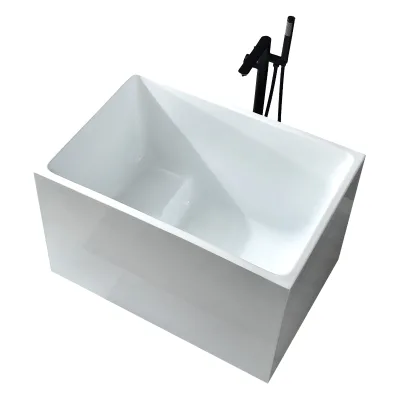
Acrylic Hot Sale Deep Soaking Freestanding Bathtub Acrylic Freestanding
$1188.00 - $2688.00
MOQ: 5 Pieces


Freestanding Acrylic Freestanding Bathtub with Stainless Stand Support
$40.00 - $220.00
MOQ: 50 Pieces


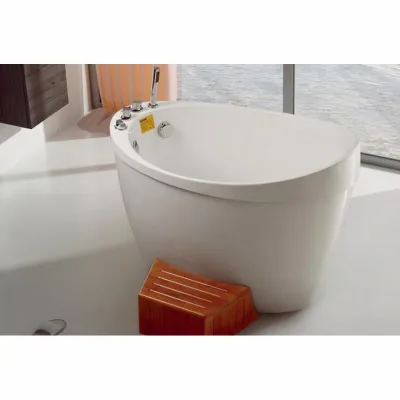
Hot Sale Luxury Indoor Simple Soaking Bathroom Freestanding Acrylic Bathtub
$237.00 - $245.00
MOQ: 5 Pieces

Attractive Fashion Acrylic Cheap Freestanding Bathtub with Soaking Function
$252.81 - $257.26
MOQ: 5 Pieces




Comprehensive Sourcing Guide
Strategic Sourcing Guide for Japanese Soaking Acrylic Freestanding Bathtubs
Understanding the Product Category and Core Specifications
The Japanese Soaking Acrylic Freestanding Bathtub represents a distinct niche within the global bathroom fixture market, characterized by deep vessel designs intended for full-body immersion. Unlike standard Western tubs that prioritize wide seating areas, this category focuses on vertical depth to accommodate the traditional Japanese bathing ritual. Based on available market data, these units are predominantly constructed from high-grade acrylic, a material selected for its thermal retention properties and structural resilience. The observed product attributes confirm that the primary material is acrylic, often finished with a polished surface to ensure a smooth, non-porous texture that resists staining and facilitates easy cleaning with mild detergents.
The structural design of these units varies, with the majority of observed listings falling under the "Freestanding Tub" or "Freestanding Soaking Bathtub" classification. However, buyers must exercise caution as the market also includes "Built-in Tub" configurations that may share similar aesthetic traits but differ fundamentally in installation requirements. The shape is typically rectangular, aligning with the space-saving design philosophy often cited in this category. Dimensions observed in the supply chain range significantly, with specific standard sizes noted as 1350x680x620mm and 1500x1500x720mm, while other listings indicate a broader range of 1200-1700mm in length. The depth is a critical differentiator; while some units measure 390mm in height, others reach up to 720mm, directly influencing the soaking capability. The drain placement is a variable attribute, with observations showing both center and right-side configurations, requiring buyers to verify the specific plumbing layout of their installation site before ordering.
Technical Compliance and Certification Verification
When sourcing high-value bathroom fixtures, verifying compliance with international standards is paramount to ensure safety and durability. The supply chain data indicates that certain manufacturers hold ISO9001 certification, which validates their quality management systems rather than the specific product performance. Buyers should not assume that all listed products possess this certification or any other specific mark unless explicitly confirmed by the supplier for the specific model. While some background information mentions CE certification, this should be treated as a potential attribute rather than a guaranteed fact for every unit in the category.
Buyers must rigorously verify the specific product standards applicable to the model. The observed data lists various dimensional standards, such as 1170x700x600mm and 1700x700x390mm, but these are specific to individual models like VH-031B or BZ-2810. There is no universal standard dimension for "Japanese soaking" tubs; therefore, the buyer's primary task is to match the supplier's provided technical drawing to the physical constraints of the intended bathroom space. Furthermore, the "Standard Export Packing" and "Carton Package" or "Wooden Packing" options suggest that packaging standards vary by supplier and order volume. It is essential to confirm that the packaging meets the requirements for long-distance shipping to prevent acrylic cracking or surface scratches, which are common risks during transit.
Cost Drivers and Procurement Economics
The pricing landscape for Japanese soaking acrylic freestanding bathtubs exhibits significant volatility, with observed market listings ranging from $20 to $2,688 USD. This wide disparity is driven by several key factors, including the thickness of the acrylic sheet, the complexity of the molding process, and the inclusion of additional features. Lower-priced units often represent basic acrylic shells with minimal reinforcement, while premium models may incorporate integrated massage systems, aromatherapy capabilities, or custom finishes. The "Function" attribute in the market data lists options ranging from simple "Bathing" to complex "Whirlpool/Massage Bathtubs," which directly correlates with the price point.
Minimum Order Quantity (MOQ) is another critical economic variable. While some suppliers offer an MOQ of 1 unit, making it accessible for individual procurement, the standard market observation indicates an MOQ of 10 sets for many bulk suppliers. This creates a tiered procurement strategy where small buyers may face higher per-unit costs or limited model selection, whereas large buyers can negotiate better rates by meeting the 10-set threshold. The production time is also a cost driver, with a typical lead time of 30 to 35 days after order confirmation. Buyers must factor this into their project timelines, as delays in production can cascade into installation delays. Additionally, the "Customization" attribute is widely available, but custom orders typically incur higher costs and longer lead times compared to standard stock models.
Typical Applications and Installation Scenarios
The application scope for these bathtubs is diverse, extending beyond the traditional residential bathroom. The market data explicitly lists "Residential (Bathroom)," "Hotel," "Apartment," and "Household" as primary usage scenes. The "Indoor Tub" and "Outdoor Tub" classifications suggest that some models are engineered to withstand varying environmental conditions, though buyers must verify the specific UV and weather resistance ratings for outdoor installations. The "Space-Saving" design style is particularly relevant for modern apartments and smaller homes where floor space is at a premium.
Installation type is strictly defined as "Freestanding" for the core keyword, meaning the unit stands independently without surrounding walls or enclosures. This requires a clear floor area and accessible plumbing connections. The "Manual Control" and "Hand Control" mechanisms observed indicate that most units rely on traditional stoppers and overflow drains rather than automated electronic systems, though some advanced models may offer optional faucet additions. The drain type is consistently listed as "Manual Drain," which simplifies maintenance but requires the user to manually operate the stopper. The "Capacity" is noted as "1 Person," confirming that these are single-occupancy vessels designed for deep immersion rather than communal bathing.
Supplier Evaluation and Operational Due Diligence
Evaluating a supplier for this specific product category requires a focus on their manufacturing capabilities and logistical reliability. The origin of the products is predominantly China, with specific hubs like Foshan, Guangdong, identified as key manufacturing centers. Buyers should verify the supplier's physical location and production capacity to ensure they can meet the required lead times. The "After-Sales Service" attribute often includes "Online Technical Support," which is a baseline expectation but should be supplemented with inquiries about warranty claims handling and spare parts availability.
The warranty period observed in the market is typically 2 years. Buyers must scrutinize the terms of this warranty to understand what is covered, such as structural integrity versus surface finish defects. The "Maintenance" requirement is listed as "Easy to Clean with Mild Detergent," but the supplier should provide specific care instructions to prevent damage from harsh chemicals. Additionally, the "Customized" status varies, with some models being non-customized and others fully customizable. Buyers seeking unique dimensions or colors must confirm the supplier's flexibility and the associated costs. The "Product Type" consistency is also vital; ensuring the supplier specializes in "Freestanding Soaking Bathtubs" rather than general bathroom fixtures reduces the risk of receiving a product that does not meet the specific depth and immersion requirements of the Japanese style.
Quality Control and Long-Term Procurement Considerations
Quality control for acrylic bathtubs centers on the integrity of the material and the finish. The "Polished" surface finishing is a standard attribute, but buyers should request samples or detailed photos to verify the gloss level and absence of orange-peel textures. The "Structure" of the tub, whether freestanding or built-in, must be robust enough to support the weight of the water and the occupant without flexing. The "Design Style" of "Modern" or "Space-Saving" should be evaluated against the actual product photos to ensure the aesthetic matches the buyer's vision.
Long-term procurement considerations involve the lifecycle of the product. The "Usage Scene" of "Home Bathing for Relaxing" implies that the tub will be used frequently, necessitating high durability. The "Function" of "Soft Cleaning" and "Aromatherapy" suggests that the internal surface must be resistant to chemical residues from bath oils and salts. Buyers should also consider the "Packing" method; "Wooden Packing" offers superior protection for high-value units compared to standard cartons. Finally, the "Drain Location" (Center or Right) must be verified against the site's plumbing infrastructure to avoid costly retrofits. By adhering to these verification steps and relying on the observed data ranges for dimensions, materials, and lead times, buyers can navigate the complex market of Japanese soaking acrylic freestanding bathtubs with confidence and precision.
Comparative Analysis of Key Product Attributes
To assist in decision-making, the following table summarizes the key variable attributes observed in the market for Japanese soaking acrylic freestanding bathtubs. This comparison highlights the range of options available and the specific points of verification required during the sourcing process.
| Attribute Category | Observed Variations | Verification Requirement |
|---|---|---|
| Material | Acrylic (Polished) | Confirm acrylic thickness and resin quality. |
| Shape | Rectangular | Verify dimensions against floor plan. |
| Installation | Freestanding | Ensure floor load capacity and plumbing access. |
| Dimensions | 1170x700x600mm to 1700x700x390mm | Match specific model standard to space. |
| Drain Location | Center, Right | Align with existing plumbing layout. |
| Control Type | Manual, Hand Control | Confirm operation mechanism and ease of use. |
| Function | Bathing, Massage, Aromatherapy | Verify if extra functions are included or optional. |
| MOQ | 1 Set to 10 Sets | Negotiate based on order volume. |
| Lead Time | 30 - 35 Days | Plan production schedule accordingly. |
| Warranty | 2 Years | Review terms for structural vs. cosmetic coverage. |
| Origin | China (Foshan, Guangdong) | Verify supplier location and export capability. |
| Packing | Carton, Wooden, Standard Export | Confirm packaging type for shipping safety. |
This structured approach ensures that buyers can systematically evaluate suppliers and products, minimizing the risk of mismatched specifications and ensuring a successful procurement outcome for Japanese soaking acrylic freestanding bathtubs.
FAQs
What material is used for these bathtubs?
The primary material is acrylic, finished with a polished surface to ensure smoothness and stain resistance. This material offers structural resilience and good thermal retention for deep soaking experiences.
Can I customize the dimensions of the tub?
Customization is available for many models, allowing buyers to request specific sizes or features. However, custom orders typically incur higher costs and may extend the standard production lead time beyond the usual 30 to 35 days.
What is the typical minimum order quantity?
The standard market observation indicates an MOQ of 10 sets for bulk suppliers, though some vendors may accept orders as low as 1 unit. Meeting the 10-set threshold often secures better pricing and model selection.
How long does production take after confirmation?
Production time is typically 30 to 35 days after order confirmation. Buyers must factor this lead time into their project schedules to avoid delays in installation and final delivery.
Which certifications do the manufacturers hold?
Some manufacturers hold ISO9001 certification, which validates their quality management systems. Buyers should verify this specific certification for their chosen model rather than assuming all units possess it or any other marks like CE.
What is the warranty period for the product?
The observed warranty period is typically 2 years. Buyers must scrutinize the terms to understand coverage for structural integrity versus surface finish defects before finalizing the purchase.
Where are these bathtubs manufactured?
The products originate primarily from China, with Foshan, Guangdong identified as a key manufacturing hub. Buyers should verify the specific supplier location to ensure export capabilities and logistical reliability.
What drainage options are available for installation?
Drain placement varies, with observations showing both center and right-side configurations. Buyers must verify the specific drain location against their site's plumbing layout before ordering to avoid costly retrofits.