Source Japanese Style Melamine Bowl for Dining, Serving, and Catering
Find 16 Japanese Style Melamine Bowl options from verified Chinese manufacturers. Buyers can compare certifications like FDA and LFGB, customization features, and pricing ranging from $0.23 to $8.34 for various models and sizes.
Key considerations
Products List




Comprehensive Sourcing Guide
Strategic Sourcing Guide for Japanese Style Melamine Bowls
Understanding Product Specifications and Material Integrity
When sourcing Japanese style melamine bowls, the primary focus must be on the material composition and dimensional consistency that define the aesthetic and functional quality of the product. The core material identified in the supply chain for these items is melamine, a thermosetting plastic known for its durability and resistance to chipping compared to ceramic alternatives. This material choice is critical for buyers seeking lightweight, shatter-resistant tableware that mimics the visual appeal of traditional ceramics without the associated fragility. The supply data indicates that these products are explicitly non-disposable, signaling a design intent for repeated use in commercial or high-volume residential settings.
Dimensional standards vary significantly across different models, requiring precise verification against the specific application. The observed specifications include a range of standardized sizes, such as 125mm x 125mm x 44mm and 120mm x 120mm x 42mm, which likely correspond to standard rice or side dish bowls. Other models feature larger dimensions, such as 182mm x 182mm x 90mm, suitable for noodle or soup servings. Buyers must note that some listings reference specific model numbers like PG-754, JT-12122, and WT-12139, each associated with distinct standard dimensions. Additionally, diameter specifications are provided for certain items, such as a 9-inch diameter, which is a common size for serving bowls. The "Japanese style" designation often implies specific proportions, such as a wider rim and a deeper base, which can be verified by cross-referencing the listed standard dimensions against the intended culinary use.
Compliance and Certification Verification
In the global food service industry, regulatory compliance is non-negotiable, particularly for products originating from major manufacturing hubs. The supply data confirms that suppliers in this category frequently hold a robust portfolio of certifications, including CE/EU, FDA, CIQ, LFGB, and EEC. These certifications are essential for validating that the melamine resin used meets safety standards for food contact in various jurisdictions. The presence of LFGB (German Food and Feed Code) and FDA (US Food and Drug Administration) approvals suggests that the products are suitable for export to Western markets where migration limits for melamine and formaldehyde are strictly enforced.
Buyers must verify that the specific batch of products they intend to purchase carries the current valid certification documents. While the data lists certifications as available attributes, it does not guarantee that every single unit in a large order is individually tested. The presence of "Without Ethylene Oxide Sterilization" in the product attributes is a notable observation, indicating that the manufacturing process does not rely on this specific sterilization method, which is common for durable plastics but requires alternative hygiene controls during production. For buyers targeting the European market, the CE marking and EEC compliance are mandatory, while those supplying the US market must ensure FDA compliance is explicitly documented for the specific product model. The CIQ (China Inspection and Quarantine) certification further validates that the goods have passed Chinese export quality and safety inspections.
Cost Drivers and Minimum Order Quantities
The financial structure of sourcing melamine tableware is influenced by several variables, including customization levels, packaging requirements, and order volume. The observed price range for these items spans from $0.23 to $8.34 USD. This wide disparity is not merely a reflection of material costs but is heavily driven by the complexity of the design, the specific model, and the level of customization. Lower-priced items typically represent standard, unicolor models with minimal branding, while higher-priced units likely incorporate multicolor designs, custom logos, or more complex shapes that require additional molding and finishing steps.
Minimum Order Quantities (MOQ) are a critical factor in budgeting and inventory planning. The data indicates an MOQ range of 48 to 1500 units. Some suppliers may offer low entry points, such as 100 units for specific models, while others require bulk commitments of up to 1500 units to unlock pricing tiers or to justify the setup costs for custom molds. Buyers should be aware that the "Customized" attribute is available, which often implies a higher MOQ to amortize the cost of new tooling. The packaging method also impacts the final landed cost; options range from individual polybag packing to more complex "Inner Box + Master Box" configurations. The latter adds material and labor costs but provides better protection during transit and enhances the product's presentation for retail.
Typical Applications and Design Versatility
Japanese style melamine bowls are versatile tools designed for a variety of culinary and commercial applications. The primary use case is in food service, where the durability of melamine allows for high turnover in restaurants, cafeterias, and fast-food establishments. The specific dimensions observed, such as the 27x8cm and 15.5x4.5cm sizes, suggest suitability for specific serving styles, including sauces, condiments, or small side dishes. The "Ramen Noodle Bowls" and "Tableware Sauce Bowl" model names confirm their application in serving hot liquids and small portions, leveraging the heat resistance properties of high-quality melamine.
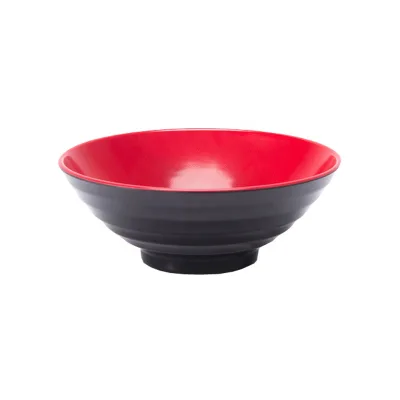
Beyond standard food service, the design flexibility allows for niche applications. The "Design: as Your Requirement" attribute indicates that manufacturers can adapt the aesthetic to match specific brand identities or thematic requirements. The availability of "Custom" colors, including options like Red and Black, as well as "Multicolor" and "Unicolor" finishes, supports diverse branding strategies. Furthermore, the data reveals a specialized application for pet feeding, with specific models designed for dogs, featuring "Fixed Time Feeding" capabilities and "Recyclable" attributes. This demonstrates that the manufacturing capabilities extend beyond human tableware into the pet care sector, utilizing the same durable material base. The "OEM: Yes" attribute confirms that these products can be rebranded for private label retailers, making them suitable for e-commerce brands and retail chains looking to expand their product lines without developing proprietary molds.
Supplier Evaluation and Origin Verification
When evaluating potential suppliers for melamine tableware, the geographic origin and logistical capabilities are key indicators of reliability. The supply data consistently identifies the origin as China, with specific mentions of "China (Mainland)" and ports of shipment including Shanghai or Ningbo. These are major maritime hubs known for efficient container handling and a dense network of manufacturers. Buyers should verify the supplier's proximity to these ports, as this can influence freight costs and lead times. The standard delivery time observed is approximately 20 to 40 days, which is a typical window for sea freight from China to international destinations, though this can vary based on the specific destination and current shipping conditions.
Supplier evaluation should also focus on the ability to manage the "Customization" and "Logo" requirements. The acceptance of logos and the availability of OEM services suggest that suppliers are equipped to handle branding requests. However, buyers must confirm the lead time implications of customization. While standard models may ship within the 20-40 day window, custom designs involving new molds or specific color matching may extend this timeline. The "Stick Label" packaging option for certain models suggests a more streamlined approach for smaller orders or specific branding needs, whereas the "Inner Box + Master Box" option indicates a more premium packaging solution. Buyers should request samples to verify the quality of the logo application and the durability of the packaging before committing to large orders.
Quality Control and Long-Term Procurement Considerations
Ensuring consistent quality in melamine production requires a rigorous quality control (QC) framework. The non-disposable nature of the product means that it must withstand repeated washing and handling without degrading. Buyers should verify that the melamine resin used is of food-grade quality, free from excessive formaldehyde or melamine migration, which is supported by the presence of FDA and LFGB certifications. The "Feature: Eco-Friendly" and "Recyclable" attributes suggest that some manufacturers are incorporating sustainable practices, but buyers should request specific data on the recyclability of the material and the environmental impact of the production process.
For long-term procurement, establishing a relationship with a supplier who offers consistent model availability is crucial. The variety of model numbers, from PG-754 to YE83769, indicates a broad catalog, but buyers should ensure that the specific models they select are not subject to frequent discontinuation. The "Customized" attribute offers a path to differentiation, but it also introduces the risk of supply chain disruption if the custom tooling is not maintained. Buyers should negotiate contracts that include provisions for maintaining tooling and ensuring consistent material quality over time. Additionally, the "Fixed Time Feeding" feature for pet bowls highlights the importance of functional design; for human tableware, similar functional attributes like stackability, microwave safety (if applicable), and dishwasher durability should be verified through third-party testing.
| Attribute Category | Observed Data Points | Procurement Verification Focus |
|---|---|---|
| Material | Melamine, Steel (for pet models) | Verify food-grade resin certification (FDA/LFGB). |
| Dimensions | 125x125x44mm, 182x182x90mm, 9-inch | Match specific model standards to culinary needs. |
| Certifications | CE/EU, FDA, CIQ, LFGB, EEC | Request current test reports for specific batches. |
| MOQ | 48 - 1500 units | Negotiate tiered pricing based on volume. |
| Packaging | Polybag, Inner Box + Master Box, Stick Label | Assess protection needs vs. cost impact. |
| Origin | China (Mainland) | Verify port of shipment (Shanghai/Ningbo). |
| Lead Time | 20-40 Days | Plan inventory buffers for custom orders. |
By adhering to these verification steps and understanding the nuances of the supply data, buyers can effectively source high-quality Japanese style melamine bowls that meet both functional and regulatory requirements. The key lies in balancing the desire for customization with the practical constraints of cost, lead time, and quality assurance.
FAQs
What certifications do Japanese style melamine bowls typically hold?
These bowls commonly hold FDA, CE/EU, LFGB, CIQ, and EEC certifications. These documents validate that the melamine resin meets safety standards for food contact in various jurisdictions, ensuring compliance for export to Western markets.
How are Japanese style melamine bowls packaged for shipping?
Packaging options include inner box plus master box, individual polybags, or stick labels. The choice depends on the specific model and order volume, with boxed options offering better protection and presentation for retail distribution.
Which dimensions are standard for Japanese style melamine bowls?
Standard dimensions include 125mm by 125mm by 44mm and 182mm by 182mm by 90mm. Some models also feature a 9-inch diameter, allowing buyers to select sizes appropriate for rice, noodles, or side dishes.
Can I customize the logo and color of these bowls?
Yes, customization for logos and colors is available for most models. Buyers can request custom designs, multicolor finishes, or specific hues like red and black, though this may affect the minimum order quantity and lead time.
What is the typical lead time for ordering melamine bowls?
The standard delivery time is approximately 20 to 40 days. This window accounts for production and sea freight from major ports like Shanghai or Ningbo, though custom orders may require additional time for tooling.
How much is the minimum order quantity for these bowls?
Minimum order quantities range from 48 to 1500 units depending on the supplier and model. Some specific items may have an MOQ of 100, while others require bulk commitments to justify setup costs for custom molds.
Are these bowls suitable for commercial food service use?
Yes, they are designed for repeated use in commercial settings like restaurants and cafeterias. The non-disposable nature and durable melamine material ensure they withstand high turnover and frequent washing without chipping.