Source Kids Bento Box for school lunch, travel snacks, and picnics
Compare 30 verified suppliers offering Kids Bento Box options in plastic and metal materials. Buyers can evaluate microwavable features, eco-friendly designs, and customization options for food storage needs.
Key considerations
Products List


Bento Style Kids Lunch Box Stainless Steel Bento Lunch Box for School Kids
$2.99 - $6.99
MOQ: 300 Pieces


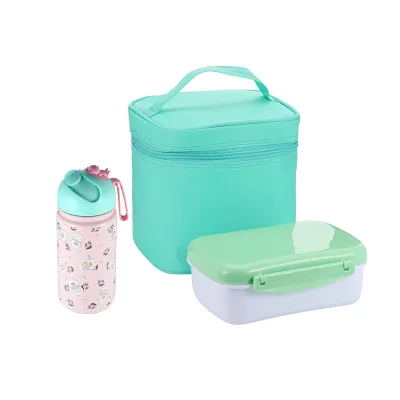


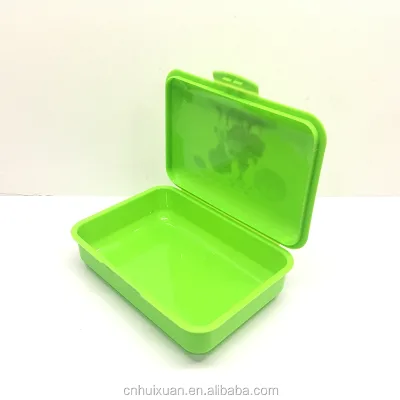
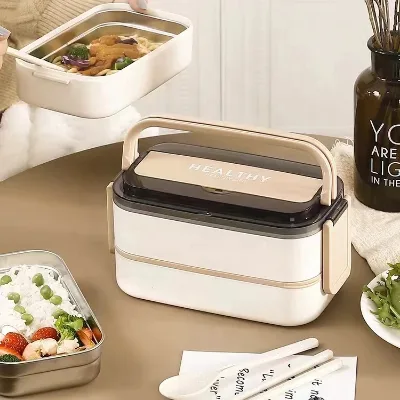
Comprehensive Sourcing Guide
Strategic Sourcing Guide for Kids Bento Boxes
Navigating the global market for children's food storage solutions requires a disciplined approach that balances safety, functionality, and cost-efficiency. For procurement professionals, the "Kids Bento Box" category represents a complex intersection of regulatory compliance, material science, and supply chain logistics. The following guide synthesizes observed market data and technical requirements to provide a robust framework for sourcing these essential items. Buyers must prioritize verification of product attributes against actual supplier capabilities rather than relying on generic marketing claims.
Technical Specifications and Material Composition
The foundation of a successful procurement strategy lies in understanding the specific technical attributes of the product. In the current market, kids bento boxes are predominantly manufactured using two primary material classes: plastic and metal. Each material offers distinct advantages regarding weight, durability, and thermal properties.
Plastic variants are frequently observed with specific weight and volume metrics that define their utility. For instance, a typical plastic model may feature a volume of 800ml and a weight of approximately 95.3g, packaged in a color box with a carton quantity of 60 pieces. The dimensions of such units often align with a standard size of 18147.5cm. In contrast, metal constructions, often marketed as lunch boxes, present different physical profiles. A metal option might weigh 170g or 180g, with a volume capacity ranging from 600ml to 1600ml depending on the specific model. The physical dimensions for metal units can vary significantly, with observed standard sizes including 1798.8cm or 1896.5cm.
When evaluating technical specifications, buyers must scrutinize the packaging details and carton dimensions, as these directly impact shipping costs. Plastic models may be shipped in cartons measuring 714038cm containing 60 pieces, whereas metal variants might utilize a 52.555.546cm carton holding 90 pieces. Another observed configuration for metal units involves a single package size of 26X13X8 cm with a poly bag and carton outer packaging. The "Multicolor" attribute is a common feature across plastic models, allowing for customization to appeal to younger demographics. Conversely, metal units often emphasize surface finishes such as "Sanding Polish" or "Mirror Polish," which are critical for both aesthetic appeal and hygiene maintenance.
Compliance and Certification Verification
Safety is the paramount concern when sourcing products intended for children. The market data indicates that high-confidence certifications include FDA and LFGB standards. These certifications are not merely marketing labels but represent rigorous testing for food contact safety. Buyers must verify that the specific product model, whether plastic or metal, carries valid certification documentation. For example, while some plastic containers are explicitly listed with FDA and LFGB compliance, other metal lunch boxes may only list LFGB. This discrepancy necessitates a strict verification process where the buyer confirms the certification status for every batch ordered.
The "Food" and "Tableware" usage attributes confirm the intended application, but the certification status must be validated against the specific material composition. A plastic box labeled as "Microwavable" requires specific thermal stability testing, which is often covered under FDA standards. Similarly, metal products with a "Serving Food" function must ensure that the surface treatment does not leach harmful substances. The presence of a "Customized" logo is a common feature, but buyers must ensure that the ink or printing process used for customization also adheres to food safety standards.
Cost Drivers and Pricing Dynamics
Understanding the cost structure of kids bento boxes is essential for budgeting and negotiation. The observed price range in the market spans from $0.33 to $17.20 USD. This wide variance is driven by several factors, including material type, certification level, and customization complexity. Plastic models, which often weigh less and utilize standard molding processes, tend to occupy the lower end of the price spectrum. In contrast, metal lunch boxes with mirror polish finishes and larger capacities (up to 1600ml) command higher price points due to the cost of raw materials and the labor-intensive polishing processes.
The Minimum Order Quantity (MOQ) is another significant cost driver. Market observations show an MOQ range from 16 to 3000 units. Smaller MOQs, such as 16 or 300 pieces, allow for lower initial capital expenditure but may result in a higher unit cost. Larger orders, such as those requiring 500 or 3000 pieces, typically benefit from economies of scale. For instance, a specific metal lunch box model may have an MOQ of 300 pieces, while another variant might require 500 pieces. Buyers should align their order volume with their inventory turnover rates to optimize the unit price without overstocking.
Typical Applications and Functional Design
The functional design of kids bento boxes extends beyond simple food storage. The primary application is for "Food" containment, but specific models are designed for "Serving Food" or as general "Tableware." The "Multifunction" design attribute is increasingly common, suggesting features such as compartmentalization or stackability that cater to varied meal needs. The "Eco-Friendly" attribute is also a key differentiator, appealing to environmentally conscious parents and schools.
Volume capacity is a critical functional metric. While some models are standardized at 800ml, others offer a range of 600ml to 1600ml to accommodate different age groups and meal sizes. The "Microwavable" feature is particularly relevant for plastic containers, allowing children or parents to reheat meals directly in the container. However, this feature must be verified against the material's thermal limits. The "Customization" availability allows buyers to tailor the product with specific logos or colors, which is vital for corporate gifting, school uniforms, or brand promotion.
Supplier Evaluation and Origin Analysis
Evaluating suppliers requires a focus on their geographic origin and production capabilities. The market data indicates that products originate from specific regions in China, including Guangdong and Zhejiang. These regions are known for their established manufacturing ecosystems for both plastic and metal goods. A supplier located in Guangdong may specialize in metal lunch boxes with complex polishing processes, while a Zhejiang-based supplier might focus on plastic injection molding.
Buyers should assess the supplier's "Supply Ability," which in observed cases is listed as 10,000 pieces per month. This figure helps determine if the supplier can meet large-scale demand without compromising quality or delivery timelines. The "Delivery" lead time is another critical factor, with observed standard lead times of 20 days. However, this can vary based on order volume and customization requirements. It is essential to confirm the actual lead time during the negotiation phase, as production schedules can shift.
Quality Control and Inspection Protocols
Implementing a robust quality control (QC) protocol is non-negotiable for kids' products. The inspection process should begin with verifying the "Product Name" and "Model Number" to ensure the correct item is being manufactured. For plastic models, checks should include verifying the "Weight" (e.g., 95.3g) and "Volume" (800ml) against the specification sheet. For metal models, the surface finish (Sanding Polish vs. Mirror Polish) and weight (170g or 180g) must be inspected.
Packaging integrity is another area of focus. The "Package" type, whether Color Box, OPP Bag, or Poly Bag + Carton, must be consistent with the order requirements. The "Qty/CTN" (Quantity per Carton) and "CTN Size" must be accurate to prevent shipping errors and damage. For example, a carton size of 714038cm should consistently hold 60 pieces of a specific plastic model. Any deviation in the "G.W./N.W." (Gross Weight/Net Weight) ratio could indicate packaging issues or missing components.
Long-Term Procurement Considerations
Sourcing kids bento boxes is not a one-time transaction but a long-term partnership. Buyers should consider the scalability of the supplier's production lines. The "Customized" logo and "Eco-Friendly" features suggest a market trend toward personalization and sustainability. Suppliers who can adapt their production lines to meet changing design trends will be more valuable partners. Additionally, the "Standard" dimensions (e.g., 18147.5cm) should be evaluated for compatibility with existing storage solutions or lunch bags.
Finally, buyers must maintain a clear record of all certifications and test results. The "LFGB" and "FDA" certifications should be re-verified annually or with every new production batch to ensure ongoing compliance. By adhering to these rigorous standards and maintaining a data-driven approach to supplier evaluation, procurement professionals can secure a reliable supply of high-quality kids bento boxes that meet both safety regulations and market demands.
| Attribute Category | Plastic Model Observations | Metal Model Observations |
|---|---|---|
| Material | Plastic | Metal |
| Certification | FDA, LFGB | LFGB |
| Weight | 95.3g, 170g, 180g | 170g, 180g |
| Volume | 800ml | 600/800/1200/1400/1600ml |
| Dimensions | 18147.5cm | 1798.8cm, 1896.5cm |
| Surface Finish | N/A | Sanding Polish, Mirror Polish |
| MOQ | 16 - 3000 (varies) | 300, 500 |
| Lead Time | 20 Days | 20 Days |
| Origin | China | Guangdong, Zhejiang, China |
| Features | Microwavable, Eco-Friendly, Multicolor | Serving Food, Multifunction |
This comparative table highlights the distinct profiles of the two main material categories. While plastic offers versatility in color and microwavability, metal provides durability and a premium finish. Buyers must select the material that best aligns with their specific application requirements and target demographic preferences. By carefully analyzing these attributes, procurement teams can make informed decisions that ensure product safety, cost-effectiveness, and market competitiveness.
FAQs
What certifications do kids bento boxes have?
High-confidence certifications include FDA and LFGB standards for food safety. While some plastic models list both FDA and LFGB, metal variants may only list LFGB, so buyers must verify the specific model's documentation before ordering.
Which materials are used for kids bento boxes?
The market primarily uses plastic and metal for these containers. Plastic models often weigh around 95.3g with an 800ml volume, whereas metal options typically weigh between 170g and 180g and offer larger capacities up to 1600ml.
Can buyers customize the logo on these boxes?
Yes, customization is available for logos on both plastic and metal models. Buyers can request specific branding, but they must ensure the printing process adheres to food safety standards like FDA or LFGB to maintain product compliance.
What is the typical lead time for delivery?
The observed standard delivery lead time is 20 days for production. This timeline may vary based on order volume and customization requirements, so buyers should confirm the actual schedule during the negotiation phase with the supplier.
How does the MOQ vary for these products?
Minimum Order Quantities range from 16 to 3000 units depending on the supplier and model. Specific metal lunch boxes may require 300 or 500 pieces, while other variants allow for smaller initial orders to reduce capital expenditure.
What are the standard dimensions for plastic models?
Plastic models typically have standard dimensions of 18*14*7.5cm and a volume of 800ml. These units are often packaged in color boxes with a carton quantity of 60 pieces, measuring 71*40*38cm for shipping efficiency.
Where are these products manufactured?
Products originate from specific regions in China, including Guangdong and Zhejiang. Guangdong suppliers often specialize in metal lunch boxes, while Zhejiang-based facilities may focus on plastic injection molding for the Kids Bento Box category.