Source Laboratory Drum Vacuum Filter for Industry, School, Hospital
Explore 30 verified options for the Laboratory Drum Vacuum Filter designed for environmental protection, chemical industry, and yeast production. Buyers can compare specifications like volume, filtration efficiency, and material to find the right fit for industrial, school, or hospital applications.
Key considerations
Products List


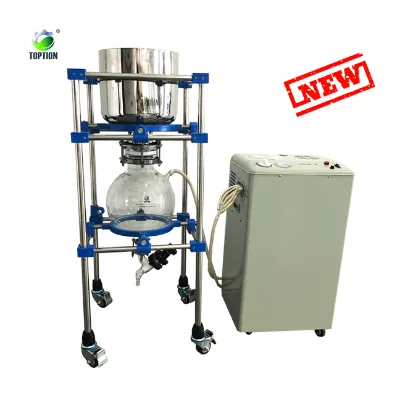
Large/Small Vacuum Filter Stainless Steel Filters Filtration Equipment Laboratory
$693.00 - $915.00
MOQ: 1 Pieces

PP Material Vacuum Filter Buchner Funnel Lab Vacuum Filtration Apparatus
$693.00 - $915.00
MOQ: 1 Pieces


Automatic Laboratory Vacuum Filter for Lab Test of Solid-Liquid in Sample
$2500.00 - $2899.00
MOQ: 1 Sets



Comprehensive Sourcing Guide
Strategic Sourcing Guide for Laboratory Drum Vacuum Filters
Selecting the appropriate Laboratory Drum Vacuum Filter requires a rigorous understanding of technical specifications, operational constraints, and supplier capabilities. This guide synthesizes available product data to assist procurement professionals in navigating the market for filtration equipment used in industrial, academic, and medical settings. The focus remains on evidence-based attributes derived from current market listings, ensuring that decisions are grounded in observable facts rather than speculative claims.
Technical Specifications and Operational Parameters
The core functionality of a Laboratory Drum Vacuum Filter is defined by its mechanical design and filtration capacity. Based on observed product attributes, these units are predominantly constructed from stainless steel, a material choice that ensures durability and resistance to corrosion in chemical and environmental applications. The filtration mechanism often utilizes a rotary vacuum system, specifically identified as a "Pre-coated Rotary Vacuum Filter" in certain model listings, which is critical for processes requiring high-efficiency separation.
Capacity varies significantly across the product range, with standard configurations available in 10L, 20L, 30L, and 50L volumes. For larger scale operations, specific models such as the DL-5C and ZL-260/200 offer expanded capabilities. The physical footprint is a critical consideration for laboratory integration; base plate sizes are frequently standardized at 400*500mm, though buyers must verify this against specific floor space constraints. The motive force is consistently electric, typically operating at a voltage of 380V, which aligns with standard industrial power requirements.
Performance metrics are equally vital. The vacuum degree is observed to range between 0.04 and 0.06 MPa, a parameter that directly influences the filtration rate and the dryness of the cake. For specific applications involving sugar solutions, the system is noted to handle a Ds value of 30% to 35%, with a capacity ranging from 0.32 to 0.56m³ per square meter per hour. The mixer swing times, observed between 18 and 21 times per minute, indicate the agitation frequency required to maintain suspension and prevent clogging during the filtration cycle. Buyers should verify if these specific numerical ranges apply to their intended process fluid, as performance can vary based on the viscosity and particle size of the material being filtered.
Compliance, Certification, and Material Standards
Ensuring regulatory compliance is a non-negotiable aspect of sourcing industrial filtration equipment. The most frequently observed certification in the current market data is the CE mark, indicating conformity with health, safety, and environmental protection standards for products sold within the European Economic Area. Some listings also reference ISO9001 certification, which validates the manufacturer's quality management systems. However, buyers must exercise caution; while "CE" and "ISO9001" appear in the data, the presence of these marks on a listing does not guarantee that every unit in a specific batch holds valid certification. Verification of current, valid certificates directly from the supplier is essential before finalizing a purchase.
Material standards are another area requiring careful scrutiny. While stainless steel is the primary material observed, some specifications mention "Metal" as a general standard or list optional materials such as glass and ceramic for specific filter components. The standard for the equipment itself is noted to vary with specifications or be "As Your Request," suggesting a high degree of customization potential. For applications involving chemical industries or environmental protection, the material compatibility with the process fluid must be confirmed. The "Standard" attribute is sometimes listed as "Metal," which is a broad descriptor; procurement teams should request detailed material grades (e.g., 304 or 316 stainless steel) to ensure resistance to the specific chemicals being processed.
Cost Drivers and Pricing Dynamics
The pricing landscape for laboratory drum vacuum filters is characterized by extreme variance, with observed listed prices ranging from $3.50 to $450,000 USD. This wide disparity is not indicative of quality differences alone but reflects the diversity of the product category, which spans from small-scale laboratory units to large industrial rotary vacuum filters. The lower end of the price spectrum likely corresponds to smaller, simpler units or specific components, whereas the upper end represents complex, fully automated systems with extensive customization.
Several factors drive these costs. First, the customization level is a primary cost driver. The data indicates that "Customization" is available, and standards can be "Customized" or "As Your Request." Custom engineering, such as specific base plate dimensions, unique voltage requirements, or specialized material coatings, will inevitably increase the unit price. Second, the volume and capacity of the unit play a significant role. A 50L system will generally command a higher price than a 10L unit due to the increased material usage and manufacturing complexity. Third, the inclusion of advanced features, such as energy-saving mechanisms or specific performance guarantees like "Efficient Filtration," adds to the overall cost.
Buyers must also consider the Minimum Order Quantity (MOQ), which ranges from 1 to 500 units. For laboratory procurement, an MOQ of 1 is highly favorable, allowing for the acquisition of a single unit for testing or small-scale production. However, for large-scale industrial deployments, an MOQ of 500 might be required to achieve a lower unit price, though this is less common for laboratory-specific equipment. The "Source Manufacturer" advantage noted in the data suggests that buying directly from the factory may reduce costs compared to purchasing through intermediaries, but this must be weighed against the potential for higher lead times or logistical complexities.
Typical Applications and Industry Use Cases
Laboratory drum vacuum filters are versatile tools deployed across a wide spectrum of industries. The observed application data highlights usage in Industry, School, Hospital, and Lab settings, confirming their adaptability to both research and production environments. Specific use cases include the chemical industry, where the filters handle aggressive or corrosive fluids, and environmental protection sectors, where they are used for wastewater treatment and sludge dewatering.
In the pharmaceutical and biotechnology sectors, these filters are utilized for yeast production and the processing of sugar solutions. The specific mention of a "Sugar Solution Ds Value" of 30-35% points to their utility in food and beverage processing, particularly in sugar refining. Additionally, the filters are employed in mineral dewatering and mineral separability processes, indicating their relevance to the mining and metallurgy industries. The "Method" of "Combined Treatment" suggests that these units can be integrated into multi-stage filtration systems, enhancing their utility in complex purification workflows.
The "Style" of the equipment is consistently described as "Drum," which is ideal for continuous filtration processes. This design allows for the separation of solids from liquids in a continuous manner, making it suitable for high-volume operations in industrial settings while remaining effective for batch processing in laboratory environments. The "Usage" attribute also includes "Home," which is an unusual but noted category, potentially referring to small-scale filtration devices for residential water treatment or hobbyist applications, though the primary focus remains on professional and industrial use.
Supplier Evaluation and Service Capabilities
When evaluating potential suppliers, buyers should look for specific service attributes that indicate reliability and long-term support. The data highlights three key advantages: "Customized Service," "Technical Support," and "Source Manufacturer." These attributes suggest that suppliers are capable of tailoring solutions to specific client needs, providing the necessary expertise to install and maintain the equipment, and offering direct access to the production facility.
The "Customized Service" attribute is particularly important for laboratory applications, where standard models may not fit specific experimental setups. Suppliers offering this service can modify the base plate size, adjust the vacuum degree, or alter the material composition to meet precise requirements. "Technical Support" is equally critical, as the operation of rotary vacuum filters requires a certain level of expertise. Buyers should verify the availability of on-site training, remote troubleshooting, and the provision of detailed operation manuals.
The "Source Manufacturer" status implies that the supplier is the original equipment manufacturer (OEM). This can offer benefits such as better pricing, direct access to spare parts, and a deeper understanding of the product's design limitations and capabilities. However, buyers must verify the legitimacy of this claim, as not all listings accurately reflect the supply chain structure. The "Warranty" period is another key metric; observed warranties range from 1 year to 2 years. A longer warranty period often indicates the manufacturer's confidence in the product's durability and quality. Buyers should carefully review the terms of the warranty to understand what is covered, including parts, labor, and shipping costs.
Quality Control and Procurement Considerations
Quality control in the procurement of laboratory drum vacuum filters involves a multi-faceted approach, starting with the verification of packaging and shipping standards. The observed packaging methods include "Carton Box," "Wooden Box Packaging," "Nude/Wooden and Steel Frame," and "Strong Wooden Sea Packing." The choice of packaging depends on the size and fragility of the unit, as well as the shipping destination. For international shipments, "Strong Wooden Sea Packing" is essential to protect the equipment from damage during transit. "Export Packing Standard" is also noted, suggesting adherence to international shipping norms.
The condition of the equipment is listed as "New" in the data, but buyers should confirm the status of the unit upon delivery. Some listings mention "Non-Customized" options, which may indicate off-the-shelf availability, while others emphasize "Customized" standards. This distinction is crucial for lead time management; customized units will naturally require longer production and delivery times. The "prod_packing" attribute also varies, with some units packed in "Standard Packing" and others in "Export Packing Standard," which affects the cost and logistics of the shipment.
Long-term procurement considerations include the availability of spare parts and the ease of maintenance. The "optional material" of glass and ceramic suggests that certain components may be replaceable or upgradeable. Buyers should inquire about the lead time for spare parts and the availability of technical documentation. The "Energy Saving" attribute is a positive indicator of operational efficiency, which can reduce long-term operating costs. However, buyers should verify the actual energy consumption figures, as "Energy Saving" is a qualitative claim that requires quantitative validation.
Comparative Analysis of Product Attributes
To facilitate decision-making, the following table summarizes the key attributes observed in the market for laboratory drum vacuum filters. This comparison highlights the variability in specifications and helps buyers identify the features most relevant to their specific needs.
| Attribute Category | Observed Values / Options | Procurement Consideration |
|---|---|---|
| Capacity | 10L, 20L, 30L, 50L; 0.32-0.56m³/M².H | Match capacity to production volume; verify flow rates. |
| Material | Stainless Steel; Optional: Glass, Ceramic | Ensure chemical compatibility; verify grade (e.g., 304/316). |
| Certification | CE; ISO9001 | Verify validity of certificates; check regional compliance. |
| Voltage | 380V | Confirm compatibility with local power infrastructure. |
| Vacuum Degree | 0.04 ~ 0.06 MPa | Critical for filtration efficiency; verify against process needs. |
| Packaging | Carton, Wooden Box, Sea Packing, Nude | Assess shipping risks; ensure adequate protection for transit. |
| Warranty | 1 Year, 2 Years | Review terms for parts and labor coverage. |
| Customization | Available; As Your Request; Non-Customized | Determine if standard or custom units are required. |
| Application | Industry, School, Hospital, Lab, Yeast, Mineral | Align application with specific industry requirements. |
This table serves as a reference point for buyers to cross-reference their requirements with available market data. It underscores the importance of verifying specific numerical ranges and material standards, as these can vary significantly between different models and suppliers. By focusing on these evidence-based attributes, procurement professionals can make informed decisions that balance technical performance, cost, and reliability.
FAQs
What volume options are available for laboratory drum vacuum filters?
Standard volume options include 10L, 20L, 30L, and 50L configurations. Buyers can also find specific models like the DL-5C with expanded capabilities. Always verify the exact capacity against your process requirements before ordering.
Can these filters be customized for specific laboratory needs?
Yes, customization is available for many units to meet specific client requests. Standards can be adjusted, and base plate sizes like 400*500mm may vary. Contact the source manufacturer to discuss tailored specifications for your unique application.
Which certifications are commonly found on these filtration systems?
The most frequently observed certification is the CE mark for European compliance. Some listings also include ISO9001 for quality management. Verify current certificates directly with the supplier as not every unit may hold valid certification.
How is the warranty period typically structured for these machines?
Warranty periods generally range from one year to two years depending on the model. A longer warranty often indicates manufacturer confidence in durability. Review the specific terms to understand coverage for parts, labor, and shipping costs.
What material is primarily used to construct these vacuum filters?
Stainless steel is the primary material used to ensure corrosion resistance and durability. Some specifications list metal as a general standard or offer optional glass and ceramic components. Confirm the specific grade to ensure compatibility with your chemicals.
Which industries commonly utilize these drum vacuum filtration systems?
These systems are widely used in the chemical industry, hospitals, schools, and laboratories. They also support yeast production, environmental protection, and mineral dewatering processes. The drum style suits both continuous industrial and batch laboratory operations.
What is the typical voltage requirement for these electric units?
The typical voltage requirement is 380V, which aligns with standard industrial power needs. The motive force is consistently electric power for efficient operation. Ensure your facility has the correct power supply before installation.