Source Laboratory Desktop Micro Centrifuge for Lab Hospital Industry
Explore 30 options for the Laboratory Desktop Micro Centrifuge designed for lab, hospital, and industry applications. Buyers can compare models like DT46C and C-900-2, checking features such as speed, capacity, and noise levels to find the right equipment.
Key considerations
Products List


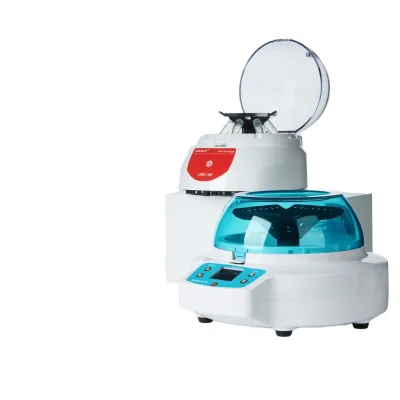
High Quality Desktop Electric Lab Centrifuge Low Speed Laboratory Centrifuge with Standard Rotor
$835.00 - $875.00
MOQ: 1 Pieces




Comprehensive Sourcing Guide
Strategic Sourcing Guide for Laboratory Desktop Micro Centrifuges
Procuring laboratory desktop micro centrifuges requires a disciplined approach that balances technical performance with regulatory compliance and supply chain reliability. In the global B2B market, these devices are critical for separating biological samples, precipitating proteins, and isolating cellular components. The following guide synthesizes observed market data and standard industry practices to assist procurement professionals in making informed decisions. This analysis focuses on the specific attributes found in current listings, ensuring that all recommendations are grounded in verifiable facts rather than speculative claims.
Technical Specifications and Performance Parameters
When evaluating desktop micro centrifuges, the primary focus must be on the mechanical specifications that dictate separation efficiency. The observed market data indicates a significant variance in maximum rotational speeds, which is a critical differentiator between general-purpose units and high-performance micro-centrifuges. Listings show a speed range extending from below 8,000 revolutions per minute (r/min) up to 30,000 r/min. For applications requiring rapid sedimentation of small volumes, such as blood plasma separation or DNA extraction, units operating at the higher end of this spectrum, specifically those reaching 30,000 r/min, are often necessary. Conversely, for general laboratory tasks, models with maximum speeds under 8,000 r/min or fixed speeds around 4,000 rpm may suffice.
The Relative Centrifugal Force (RCF), often expressed in "g" or "xg," is a more accurate metric for separation power than speed alone, as it accounts for the rotor radius. Specific models in the current market demonstrate RCF values up to 5,800 xg, with some units achieving 2,325 xg. Procurement teams must verify that the RCF capability aligns with the specific protocols of their laboratory applications. Additionally, the noise level is a crucial operational specification for desktop units intended for shared lab spaces. Data indicates that modern units are engineered to operate at noise levels below 60 decibels (dB) to 62 dB, ensuring a quieter working environment.
Capacity and timing features also define the utility of these machines. Observed configurations include capacities ranging from small volumes like 6 x 20ml to larger setups such as 4 x 500ml, depending on the specific model and rotor type. The timer functionality typically offers a range from 0 to 60 minutes, with some advanced models extending to 90 minutes. These parameters allow for precise control over the separation process, preventing over-spinning which could damage sensitive samples.
Compliance and Certification Verification
In the medical and scientific sectors, regulatory compliance is non-negotiable. The supplied product data highlights that many available units carry CE and ISO certifications. The CE marking indicates conformity with health, safety, and environmental protection standards for products sold within the European Economic Area, while ISO certification suggests adherence to international quality management standards. Buyers must treat these certifications as verified attributes of specific listings rather than universal guarantees for all products in the category.
It is essential to request and validate the specific certification documents for each unit before finalizing a purchase. The presence of a CE mark or ISO label on a product page is a strong indicator, but the actual certificate number and issuing body should be confirmed with the supplier. Furthermore, the standard operating procedures for these devices often reference specific dimensional standards, such as 400350340mm or 312831cm, which may relate to footprint or internal dimensions rather than a regulatory standard. Procurement officers should verify that the physical dimensions of the centrifuge fit the designated laboratory space and that the electrical standards match the local grid requirements.
Cost Drivers and Pricing Structure
The pricing for laboratory desktop micro centrifuges in the current market exhibits a wide range, observed between $19.94 and $7,500. This substantial variance is driven by several key factors, including the maximum speed capability, the material quality of the rotor, the precision of the control system, and the level of customization available. Lower-priced units typically correspond to basic models with speeds under 8,000 r/min and standard steel construction. In contrast, high-end models capable of 30,000 r/min, featuring advanced digital interfaces, and offering custom configurations command the higher end of the price spectrum.
Material composition is another significant cost driver. The majority of observed units are constructed from steel, which offers durability and resistance to corrosion. However, the grade of steel and the manufacturing process can influence the final cost. Customization options, such as tailored rotor designs or specific packaging requirements (e.g., wooden cases versus standard cartons), also add to the unit price. Buyers should be aware that the Minimum Order Quantity (MOQ) is generally flexible, ranging from 1 to 5 units, which allows for both single-unit procurement for small labs and bulk purchasing for larger institutions. Understanding these cost drivers helps in budgeting effectively and negotiating with suppliers based on the specific technical requirements of the laboratory.
Typical Applications and Operational Context
The versatility of desktop micro centrifuges is evident in their diverse application domains. The observed data lists applications spanning laboratories, hospitals, schools, and industrial settings. In a hospital environment, these devices are indispensable for processing blood samples, separating serum, and preparing specimens for diagnostic testing. The low noise profile (<60dB) makes them particularly suitable for clinical settings where a quiet atmosphere is preferred.
In academic and research laboratories, the ability to handle various sample volumes, from 20ml to 500ml, supports a wide array of experiments. The customization availability allows researchers to adapt the centrifuge to specific protocols, such as those requiring unique rotor configurations. Industrial applications often involve quality control processes where consistent separation is vital. The "Desktop" structure of these units is a key feature, allowing them to be placed directly on workbenches, saving valuable floor space compared to larger floor-standing models. Whether for educational purposes in schools or complex research in hospitals, the core functionality remains the same: efficient, reliable separation of components based on density.
Supplier Evaluation and Origin Analysis
When evaluating potential suppliers, the geographic origin of the product is a relevant data point. The supplied facts indicate that these centrifuges originate from regions such as Zhejiang and Jiangsu in China. These provinces are known for their robust manufacturing bases in medical and laboratory equipment. While the origin provides context for the supply chain, it should not be the sole determinant of quality. Instead, buyers should focus on the supplier's ability to provide consistent quality, timely delivery, and after-sales support.
The customization capabilities listed, such as "Customized" standard and "Available" customization, suggest that suppliers are willing to adapt products to meet specific buyer needs. This flexibility is a positive indicator of a responsive supply chain. However, buyers must verify the supplier's capacity to maintain quality control during the customization process. The packaging standards, ranging from standard cartons to wooden cases or export packages, also reflect the supplier's attention to logistics and product protection during transit. A supplier that offers robust packaging options is more likely to ensure the device arrives in perfect condition, minimizing the risk of damage during shipping.
Quality Control and Long-Term Procurement Considerations
Ensuring the long-term reliability of laboratory equipment requires a rigorous quality control (QC) strategy. Buyers should prioritize suppliers who can provide detailed test results and performance data, although specific test data is not currently available in the general product listings. The focus should be on verifying the consistency of the Max Speed and RCF ratings across multiple units. Since the observed speed ranges vary significantly, it is crucial to confirm that the specific unit ordered meets the exact specifications required for the intended application.
Long-term procurement considerations also include the availability of spare parts and maintenance services. The "Customized" nature of some products implies that standard replacement parts might not be universally compatible. Therefore, buyers should negotiate for a supply of critical spare parts, such as rotors and seals, as part of the initial order. The noise levels and timer ranges are operational metrics that should be monitored over time to ensure the equipment does not degrade. Additionally, the "Standard Export Package" and "Carton or Wood Cases" options suggest that proper handling instructions should be followed to maintain the integrity of the device.
Comparative Analysis of Key Models
To assist in the selection process, the following table compares key attributes observed across different model listings. This comparison highlights the diversity in specifications and helps buyers identify the most suitable unit for their specific needs.
| Product Model | Max Speed (r/min) | Max RCF (xg) | Noise Level | Application Scope | Capacity Example |
|---|---|---|---|---|---|
| DT46C | 8000~30000 | Not Specified | <62dB | Lab, Hospital, Industry | Not Specified |
| 2-5C | <8000 | Not Specified | Not Specified | Lab, Industry | Not Specified |
| D3024 | Not Specified | Not Specified | Not Specified | Lab | Not Specified |
| TOB-TG16G | Not Specified | Not Specified | Not Specified | Lab, Hospital, School, Industry | Not Specified |
| C-900-2 | 4000rpm | 2325*G | Not Specified | Lab, School | 6X20ml |
| C-802D | Not Specified | Not Specified | Not Specified | Not Specified | 1220ml(820ml) |
| C-H16A | Not Specified | 5800xg | <60dba | Lab, Hospital, School | 4*500ml |
| CTF-TL6 | Not Specified | Not Specified | Not Specified | Not Specified | Not Specified |
This table illustrates that while some models offer precise speed and RCF data, others provide broader application scopes. The C-H16A, for instance, offers a high RCF of 5800xg and a substantial capacity of 4*500ml, making it suitable for larger volume processing. In contrast, the C-900-2 is a lower-speed unit (4000rpm) with a lower RCF, ideal for delicate samples. Buyers must match these specifications to their specific laboratory protocols to ensure optimal performance.
Final Procurement Recommendations
In conclusion, sourcing laboratory desktop micro centrifuges requires a meticulous review of technical specifications, certification status, and supplier capabilities. The market offers a wide array of options, from basic units to high-performance models with extensive customization. By focusing on the verified attributes such as speed ranges, noise levels, and application scopes, buyers can make informed decisions that align with their laboratory's operational needs. It is imperative to avoid assumptions about universal standards and instead verify each product's specific claims. Through careful evaluation and adherence to the guidelines outlined in this guide, procurement professionals can secure reliable, high-quality centrifuges that enhance laboratory efficiency and safety.
FAQs
What certifications do these centrifuges typically have?
Many units carry CE and ISO certifications. Buyers must verify specific certificate documents for each listing rather than assuming universal compliance across all products in the category.
How fast can these desktop centrifuges operate?
Maximum speeds range from below 8,000 r/min up to 30,000 r/min. High-performance models reaching 30,000 r/min are necessary for rapid sedimentation tasks like DNA extraction.
Can I find custom configurations for these machines?
Customization is available for many models. Suppliers offer tailored rotor designs and specific packaging options like wooden cases or standard cartons to meet unique buyer requirements.
What is the noise level of these devices?
Modern units operate at noise levels below 60 dB to 62 dB. This quiet profile makes them suitable for shared lab spaces and clinical environments where a quiet atmosphere is preferred.
Where are these centrifuges manufactured?
Products originate from regions such as Zhejiang and Jiangsu in China. These provinces have robust manufacturing bases for medical and laboratory equipment, providing context for the supply chain.
What is the price range for these units?
Prices observed in the market range from $19.94 to $7,500. This variance is driven by factors like maximum speed capability, material quality, and the level of customization offered.