Source Laboratory Optical Instrument Quartz Tube for Lab and Hospital
Find 30 Laboratory Optical Instrument Quartz Tube options from Jiangsu Lianyungang suppliers. Compare clear, heat-resistant glass tubes with custom sizes, ISO and CE certifications, and desktop or separation structures for lab, hospital, and school applications; compare the available evidence and request quotations based on your requirements.
Key considerations
Products List


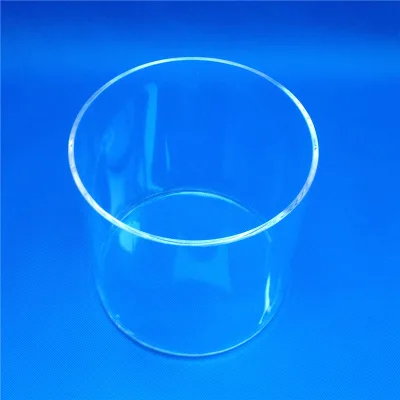


High Purity Optical Quartz Tube Fused Silica Glass Tube for Laboratory Equipment
$5.00 - $25.00
MOQ: 10 Pieces


Custom Fused Quartz Glass Test Tube for Laboratory and Industrial Applications
$0.50 - $50.00
MOQ: 1 Pieces


Comprehensive Sourcing Guide
Laboratory Optical Instrument Quartz Tube Sourcing Guide
Procuring quartz tubes for laboratory optical instruments requires distinguishing between general industrial glass and high-purity optical-grade components. The observed market data indicates a diverse range of applications, from metallurgy and chemical processing to specific laboratory and hospital environments. Buyers must verify that the supplier's "Glass Type" and "Processing" capabilities align with the precise optical requirements of their instrumentation, as generic quartz tubes may lack the necessary transmittance or surface figure for sensitive optical measurements.
The product listings reveal significant variation in structural attributes, including "Desktop" structures versus "Separation Type" configurations, and diverse shapes like "Round," "Rectangle," or "Square." Sourcing decisions should prioritize suppliers who explicitly offer "Customized" models and specific dimensions, such as the observed diameter ranges from 3mm to 800mm. It is critical to confirm that the "Surface Figure" and "Diameter Tolerance" meet the strict optical standards required for your specific instrument, rather than assuming standard industrial tolerances will suffice for high-precision laboratory work.
Product Scope and Observed Listing Signals
The available product scope encompasses a wide array of quartz glass forms, including tubes, hollow glass, and specialized optical components with transmittance exceeding 95%. Listings frequently highlight features such as "Heat Resistance," "Impact Resistance," and "Hardness," which are essential for laboratory environments subject to thermal cycling or physical stress. However, buyers must carefully cross-reference these general features with the specific "Usage" category, ensuring the product is explicitly designated for "Optical" applications rather than general chemical or construction uses.
Observations of packaging and origin suggest that suppliers in Jiangsu Lianyungang and other Chinese regions offer both "Carton" and "Wooden Box" options, often with "Foam Carton Wooden Case" protection for delicate optical items. The presence of "Recycled" glass attributes in some listings necessitates a clear distinction between virgin quartz for optical clarity and recycled variants that may introduce impurities. Procurement teams should verify the "Material" purity and "Technics" such as "Fused Glass" or "Blown and Pressed" methods to ensure the final component meets the rigorous clarity and structural integrity standards of optical instrumentation.
Technical Specifications to Verify
Technical verification must begin with dimensional precision, as optical instruments often require tight tolerances on diameter and thickness. The observed data includes specific tolerances of +/-0.1mm for both diameter and thickness, alongside surface figure ratings like Lambda/10, which are critical for minimizing optical distortion. Buyers should demand certified test reports confirming these specific tolerances for their ordered batch, as standard industrial quartz may not consistently achieve the Lambda/10 surface quality required for high-end spectroscopy or laser applications.
Beyond dimensions, the optical properties and processing methods define the functional viability of the tube. Key specifications to validate include the "Transmittance" percentage, which should ideally exceed 95% for optimal light passage, and the "Color" consistency, typically "Clear" or "Transparent." The "Processing" steps, such as "Cutting," "Polishing," "Bending," and "Fire Polishing," directly influence the final optical performance. Procurement teams must ensure the supplier's "Coating" capabilities, such as "HC" coatings, are compatible with the intended wavelength range and environmental conditions of the laboratory instrument.
Compliance and Safety Documentation
Compliance documentation is a primary filter for selecting reliable suppliers of laboratory-grade quartz. The observed listings frequently cite "ISO" and "CE" certifications, with some entries mentioning "RoHS" compliance. While these certifications indicate a baseline of quality management and safety adherence, buyers must verify that the specific product batch carries valid, up-to-date certificates rather than relying on general company claims. It is essential to request the actual certification documents to confirm they cover the specific "Glass Type" and "Processing" methods used in the optical tube manufacturing.
Safety and material compliance extend to the chemical stability and environmental impact of the quartz glass. Suppliers should provide Material Safety Data Sheets (MSDS) detailing the chemical composition and any potential hazards associated with the "Fused Glass" or "Hollow Glass" production processes. Although some listings mention "Recycled" content, optical applications often require virgin materials to prevent trace impurities that could interfere with sensitive measurements. Buyers must explicitly confirm that the "Certification" status applies to the final optical product and not just the raw material or general manufacturing facility.
Cost Drivers and Commercial Terms
Cost drivers for laboratory optical quartz tubes are heavily influenced by the degree of customization and the precision of the manufacturing process. The observed market shows a wide price range, likely reflecting the difference between standard "Round" tubes and highly customized "Separation Type" or "Single-lens" components with specific "Surface Figure" requirements. Buyers should anticipate higher costs for products requiring complex "Processing" steps like "Fire Polishing" or "Sealing," as well as those with tight "Diameter Tolerance" and "Thickness Tolerance" specifications that demand advanced quality control.
Commercial terms regarding Minimum Order Quantity (MOQ) and lead times vary significantly across the observed listings, with MOQs ranging from 1 to 5000 units. The "Customization" availability suggests that smaller, bespoke orders may incur higher per-unit costs or longer lead times compared to standard stock items. Procurement teams should negotiate clear terms regarding "prod_packing," such as "Wooden Crate" or "Carton," as specialized packaging for fragile optical components can add to the total landed cost. It is advisable to clarify whether the quoted price includes the cost of "Logo Printing" or other value-added services that might be requested for branding or traceability.
Supplier Qualification and Quality Control
Supplier qualification should focus on the manufacturer's ability to maintain consistent quality in high-precision optical components. The presence of "ISO" and "CE" certifications is a positive indicator, but buyers must assess the supplier's internal quality control protocols for critical parameters like "Transmittance" and "Surface Figure." A qualified supplier will have documented procedures for inspecting "Diameter Tolerance" and "Thickness Tolerance" at every stage of the "Processing" workflow, from initial cutting to final polishing and sealing.
Quality control verification should also include an audit of the supplier's production environment and testing capabilities. Buyers should request evidence of "Test Results" for optical clarity and structural integrity, ensuring that the "Glass Type" and "Material" purity meet the specific demands of laboratory instruments. The "Structure" of the supplier's quality assurance system, including how they handle "Customized" orders and manage "prod_model" variations, is crucial. A robust quality control framework ensures that every batch of quartz tubes delivered maintains the high standards required for sensitive optical applications without deviation.
Long-Term Procurement Checks
Long-term procurement success depends on establishing a reliable supply chain capable of sustaining consistent quality and delivery schedules. Buyers should implement a periodic review process to verify that the supplier continues to meet the "Certification" requirements and maintains the "prod_standard" specifications over time. Regular audits of the "Processing" methods and "Material" sourcing can help identify any drift in quality that might affect the performance of laboratory optical instruments, ensuring that the "Transmittance" and "Surface Figure" remain within the agreed-upon tolerances.
Building a strategic partnership with the supplier involves clear communication regarding future needs and potential design changes. Since "Customization" is a key feature of the market, buyers should maintain an open dialogue about evolving "prod_model" requirements and new "Application" scenarios. Establishing a shared understanding of "prod_packing" standards and "Lead Time" expectations will facilitate smoother logistics and reduce the risk of supply disruptions. Regular performance reviews based on actual product data and supplier responsiveness will help maintain a high standard of procurement efficiency and product reliability.
FAQs
What certifications do laboratory optical instrument quartz tubes have?
These quartz tubes typically hold ISO and CE certifications to ensure quality and safety standards. Some products also meet RoHS requirements for environmental compliance. Buyers should verify specific certification documents with the supplier before placing orders to confirm the exact standards met by the batch.
Can I request custom dimensions for these quartz glass tubes?
Yes, customization is available for these quartz tubes to meet specific project needs. The standard outer diameter ranges from 3mm to 800mm, and custom sizes can be arranged. Buyers can specify unique dimensions, shapes, or processing requirements like cutting and polishing directly with the manufacturer.
Which applications are suitable for this Laboratory Optical Instrument Quartz Tube?
These tubes are designed for use in laboratories, hospitals, and schools for various optical and separation tasks. They also serve industries like glass casting, metallurgy, and chemical processing. The high heat resistance and clarity make them ideal for demanding scientific and industrial environments requiring precise optical performance.
How is the product packed for safe international shipping?
The quartz tubes are packed in wooden boxes, foam cartons, or wooden cases to prevent damage during transit. Additional options include cartons and pallets depending on the order size. This robust packaging ensures the fragile glass items arrive safely at the destination regardless of the shipping distance.
What is the typical lead time for customized orders?
Lead times vary based on the specific customization and order volume requested by the buyer. While exact dates depend on current production schedules, suppliers in Jiangsu Lianyungang generally handle customized requests efficiently. Buyers should confirm the specific timeline with the manufacturer before finalizing the purchase agreement.
What material properties make this quartz tube suitable for optical use?
Made from high-quality glass, these tubes offer clear transparency with transmittance exceeding 95%. They feature excellent heat resistance, impact resistance, and hardness for durability. The surface figure is often Lambda/10, ensuring high precision for optical applications requiring minimal distortion and maximum light transmission efficiency.
What is the minimum order quantity for these quartz glass tubes?
The minimum order quantity ranges from 1 to 5000 units depending on the supplier and product type. Small orders are possible for testing, while larger volumes may offer better pricing. Buyers should check specific supplier terms to determine the exact MOQ applicable to their customized requirements and budget constraints.