Find Laboratory Nitrogen Concentrator for Lab Hospital Industry
Source 30 Laboratory Nitrogen Concentrator units with digital displays and automatic performance for lab, hospital, and industrial applications. Compare models featuring nitrogen flow up to 15L/Min and temperature ranges up to 180C from verified Chinese manufacturers.
Key considerations
Products List


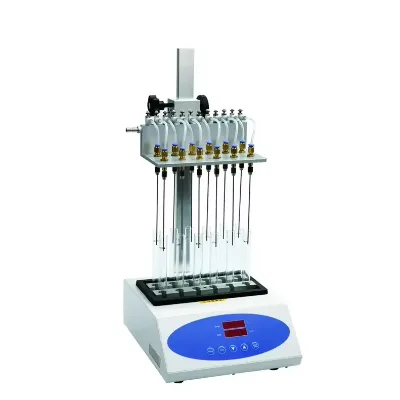


Portable Nitrogen Sample Concentrator Mini Nitrogen Sample Concentrator
$410.00 - $600.00
MOQ: 1 Pieces


Laboratory Liquid Nitrogen Generator Used for Biological Experiments
$20000.00 - $50000.00
MOQ: 1 Sets


Comprehensive Sourcing Guide
Strategic Sourcing Guide for Laboratory Nitrogen Concentrators
Selecting the right Laboratory Nitrogen Concentrator requires a disciplined approach that balances technical performance with supply chain reliability. These instruments are critical for gas chromatography, mass spectrometry, and trace element analysis, where the purity and stability of the nitrogen supply directly impact data integrity. The procurement process must move beyond simple price comparisons to a rigorous evaluation of specifications, certification status, and operational compatibility. Buyers must navigate a market where product attributes vary significantly between models, necessitating a clear understanding of what is explicitly supported by available data versus what requires direct supplier verification.
Technical Specifications and Performance Parameters
The core functionality of a Laboratory Nitrogen Concentrator is defined by its ability to generate high-purity nitrogen on demand while maintaining consistent pressure and flow rates. When evaluating potential units, buyers should prioritize the temperature range and heating efficiency, as these factors determine the speed of operation and the stability of the gas output. Available data indicates that specific models operate within a temperature range of Room Temperature +5℃ to 150℃ or up to 180℃, depending on the configuration. The heating time is a critical metric for throughput; observed specifications show a heating duration of ≤30 minutes to reach target temperatures from 40℃. This rapid warm-up capability is essential for laboratories requiring quick turnaround times between analytical runs.
Flow and pressure capabilities are equally vital for ensuring the concentrator meets the demands of sensitive instrumentation. The nitrogen flow rate for certain observed units ranges from 0 to 10 liters per minute, while other configurations support maximum gas flows up to 15 liters per minute. Pressure stability is maintained within limits such as ≤0.1 MPa for standard operation, with some units capable of handling maximum gas pressures up to 0.2 MPa. The power supply requirements typically align with standard laboratory infrastructure, operating on AC220V with a frequency of 50±1 Hz. Buyers must verify that their facility's electrical capacity matches these requirements, noting that some models specify a voltage tolerance of AC220V±22V.
Display and control interfaces also play a significant role in user experience and operational accuracy. Modern units feature digital displays, often utilizing LED technology, which provide real-time monitoring of temperature and time. Display accuracy is a key specification, with some models offering a precision of 0.1℃. The timing range allows for extended automated processes, with observed units supporting durations from 1 minute up to 99 hours and 59 minutes. Temperature uniformity is another performance indicator; data suggests a uniformity of ±1 degree at 60℃ for specific configurations, ensuring consistent results across all sample positions.
Compliance and Certification Verification
In the medical and laboratory sectors, compliance with international standards is non-negotiable. While specific certification statuses can vary by manufacturer, the presence of CE certification is a documented attribute for certain nitrogen concentrator models. This certification indicates conformity with health, safety, and environmental protection standards for products sold within the European Economic Area. However, buyers should not assume that all available units carry this certification without explicit verification from the supplier.
Beyond CE, the industry often references ISO standards such as ISO 9001:2015 for quality management and ISO 13485:2016 for medical device quality management. While these standards are mentioned in the broader context of the industry, they should be treated as background knowledge rather than guaranteed attributes of every listed product. Procurement teams must request current, valid certificates from the supplier to confirm that the specific model being purchased adheres to these rigorous quality frameworks. Relying on general industry knowledge without specific documentation can lead to compliance gaps, particularly in regulated environments like hospitals or pharmaceutical labs.
Cost Drivers and Pricing Dynamics
The pricing of laboratory nitrogen concentrators is influenced by a complex array of factors, including technical specifications, build quality, and the level of customization offered. The observed market range for these units is extensive, spanning from $1 to $200,000. This wide disparity reflects the difference between basic laboratory equipment and high-end, fully automated systems with advanced features. The minimum order quantity (MOQ) for these products is typically low, with observed data indicating an MOQ of 1 unit, allowing for flexible procurement strategies for small labs or pilot projects.
Key cost drivers include the complexity of the heating system, the precision of the digital display, and the materials used in the construction. Units with a net weight of 6kg and a portable structure may offer a different price point compared to heavier, industrial-grade models weighing up to 50kg or 100kg. Additionally, the inclusion of features such as ODM and OEM support can influence the final cost. Customization options allow buyers to tailor the instrument to specific workflow needs, but this flexibility often comes at a premium. Buyers should analyze the total cost of ownership, including energy consumption, maintenance requirements, and the cost of replacement parts, rather than focusing solely on the initial purchase price.
Typical Applications and Operational Environments
Laboratory nitrogen concentrators are designed for versatile use across multiple sectors, including research laboratories, hospitals, and industrial facilities. The specific application dictates the required specifications. For instance, units designated for trace element analysis often feature specific configurations, such as a 12-sample position array and an air needle length of 100mm. These features are optimized for high-throughput environments where multiple samples need to be processed simultaneously with consistent results.
The operating environment is another critical consideration. Most units are designed for normal pressure and temperature conditions, with a working temperature range of Room Temperature +5℃ to 150℃. However, some models are built to withstand higher temperatures up to 180℃, making them suitable for more demanding analytical processes. The structure of the equipment, whether portable or stationary, also impacts its deployment. Portable units, weighing as little as 6kg, offer flexibility for mobile laboratories or field applications, while larger, heavier units are better suited for fixed installations in dedicated lab spaces.
Supplier Evaluation and Origin Considerations
When evaluating suppliers, buyers must look beyond the product specifications to the manufacturer's background and location. The origin of the product is a significant factor in logistics and supply chain reliability. Observed data indicates that nitrogen concentrators are manufactured in various regions of China, including Hunan and Shandong provinces. Understanding the specific place of origin can help buyers anticipate shipping times, import duties, and the availability of local technical support.
Supplier credibility is often reflected in the clarity of their product documentation and the transparency of their manufacturing processes. Brands such as BIOSTELLAR are associated with specific models, but buyers should verify the authenticity and reputation of the brand before committing to a purchase. The availability of customization support, including ODM and OEM services, is another indicator of a supplier's flexibility and capability to meet unique requirements. Buyers should assess whether the supplier can provide the necessary documentation, such as user manuals, maintenance guides, and warranty terms, in a timely manner.
Quality Control and Long-Term Procurement Strategy
Ensuring the long-term reliability of laboratory nitrogen concentrators requires a robust quality control strategy. This involves not only inspecting the product upon delivery but also establishing a framework for ongoing maintenance and performance monitoring. The warranty period is a critical component of this strategy; observed data suggests a standard warranty of 1 year, which covers defects in materials and workmanship. Buyers should clarify the scope of this warranty, including what is covered and what constitutes a voided claim.
Packaging is another aspect of quality control that should not be overlooked. Products are typically shipped in standard export packages, which may include carton boxes or wooden boxes depending on the size and weight of the unit. Proper packaging ensures that the equipment arrives in pristine condition, minimizing the risk of damage during transit. For long-term procurement, buyers should consider the availability of spare parts and the ease of maintenance. Units with digital displays and automatic performance features may require specialized technicians for repairs, making it essential to verify the availability of local service support.
| Feature Category | Observed Specification Range | Procurement Verification Point |
|---|---|---|
| Temperature Range | Rt+5℃ to 150℃ / 180℃ | Confirm max operating temp for specific application |
| Heating Time | ≤30 min (40℃ to target) | Verify warm-up time for workflow efficiency |
| Nitrogen Flow | 0-10 L/Min / Up to 15 L/Min | Match flow rate to instrument requirements |
| Power Supply | AC220V / 50±1 Hz | Check facility voltage compatibility |
| Weight | 6kg to 100kg | Assess portability needs vs. stability |
| Warranty | 1 Year | Clarify coverage terms and exclusions |
| Origin | Hunan, Shandong, China | Evaluate logistics and support proximity |
Conclusion
Sourcing a Laboratory Nitrogen Concentrator is a multifaceted process that demands a thorough understanding of technical specifications, compliance requirements, and supplier capabilities. By focusing on verified data points such as temperature ranges, flow rates, and certification status, buyers can make informed decisions that align with their operational needs. The wide range of available options, from portable units to high-capacity industrial models, offers flexibility for diverse laboratory environments. However, the key to successful procurement lies in rigorous verification of every claim and a strategic approach to long-term maintenance and support. By adhering to these principles, organizations can ensure the acquisition of high-quality nitrogen concentrators that deliver reliable performance and support critical analytical workflows.
FAQs
What is the maximum temperature range for these units?
The maximum temperature range reaches up to 180 degrees Celsius for specific models. Other configurations operate between room temperature plus 5 degrees and 150 degrees Celsius depending on the selected product.
How long does the heating process take to reach target temperatures?
Heating time is typically 30 minutes or less when rising from 40 degrees Celsius to the target temperature. This rapid warm-up capability supports efficient laboratory workflows and quick sample processing.
Which certification is documented for these laboratory instruments?
CE certification is a documented attribute for certain nitrogen concentrator models in this category. Buyers should verify specific certificates with suppliers to ensure compliance with regional safety and environmental standards.
Can these units be customized for specific laboratory needs?
Customization is available for many models, including ODM and OEM support options. Buyers can request tailored specifications to match unique analytical requirements or specific workflow integration needs.
What is the standard warranty period for these products?
A standard warranty of 1 year is provided for these laboratory nitrogen concentrators. This coverage typically includes defects in materials and workmanship, though specific terms should be confirmed with the supplier.
How much does the nitrogen flow rate vary between models?
Nitrogen flow rates range from 0 to 10 liters per minute for standard units. Some configurations support maximum gas flows up to 15 liters per minute to meet higher throughput demands.
Where are these laboratory instruments typically manufactured?
Products originate from various regions in China, including Hunan and Shandong provinces. The specific place of origin affects logistics, shipping times, and the availability of local technical support.