Source Laser Cut Stainless Steel Gasket for Heavy Industry, Welding, and Pole Line Hardware
Compare 30 listings for Laser Cut Stainless Steel Gasket options suitable for heavy industry, welding, and pole line hardware applications. Buyers can review specifications like material grade, size, and surface treatment to find the right fit for their projects.
Key considerations
Products List


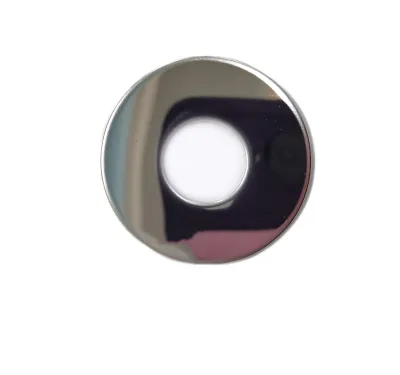
Custom Stainless Steel Gasket for High-Quality Durable Sealing Solutions
$0.07 - $0.10
MOQ: 100 Pieces


Comprehensive Sourcing Guide
Strategic Sourcing Guide for Laser Cut Stainless Steel Gaskets
Understanding Material Specifications and Manufacturing Processes
When sourcing laser cut stainless steel gaskets, the primary focus must be on verifying the material composition and the precision of the manufacturing process. The supplied product data indicates that Stainless Steel is the confirmed material base for these components. Buyers should not assume a specific grade, such as 304 or 316, unless explicitly stated in the supplier's technical datasheet, although the observed model number "304201316lq235" suggests a potential association with 304-grade stainless steel. The critical manufacturing attribute observed is the Laser Cutting process, often listed alongside stamping, welding, and bending. This method allows for high precision in creating complex geometries that traditional stamping might struggle to achieve, particularly for custom sizes.
The surface treatment is a vital specification for gasket performance. The data highlights two distinct finishes: Polished and Plain. A polished finish typically reduces friction and improves sealing integrity in dynamic applications, while a plain finish may be sufficient for static sealing where cost is a primary driver. The Flat style is the dominant configuration observed, which is standard for flat gasket applications. However, buyers must verify if the specific supplier offers Knitted Wire Mesh variants, as the data also lists "Knitted Wire Mesh" under style and application fields like "Filter" and "Demister Pad." This distinction is crucial because a laser-cut flat gasket serves a different function than a knitted mesh gasket used for filtration or demisting.
The dimensional capabilities are equally important. The observed specifications include an Inside Diameter of 10mm and an Outer Diameter ranging from 20mm to 150mm. Furthermore, the Wire Diameter for mesh variants is noted between 3mm and 12mm. For custom orders, the Size is listed as Customized, indicating that suppliers can produce non-standard dimensions. Buyers should confirm the tolerance levels for these custom sizes, as laser cutting offers tight tolerances but the final acceptance depends on the specific machine calibration and the supplier's quality control protocols. The Single Package Size of 1.5x1.5x0.05 cm suggests that individual units are extremely thin and lightweight, with a Single Gross Weight of 0.030kg, which impacts shipping logistics and packaging requirements.
Compliance, Certification, and Standard Verification
In the B2B procurement of industrial components like gaskets, compliance with industry standards is non-negotiable, yet the provided data presents a mixed picture regarding standardization. The product attributes list Standard or Customized as the prod_standard, and one specific entry notes a standard of 2x20mm, while another lists Customized as the standard. This variability requires the buyer to exercise extreme caution. You cannot assume that a supplier offering "Customized" sizes automatically adheres to international standards like ISO, DIN, or ASME unless they provide specific certification documentation.
The data mentions OEM (Original Equipment Manufacturer) as a prod_model, which implies the supplier is capable of producing parts to a client's specific design rather than adhering to a pre-existing catalog standard. This is common for specialized applications in Heavyindustry and Pole Line Hardware. However, for applications requiring strict regulatory compliance, such as in food processing, pharmaceuticals, or high-pressure piping, the buyer must explicitly request proof of material certification (Mill Test Reports) and verify if the gasket meets specific industry standards. The absence of a universally cited standard in the general product list means that the "Standard" designation is likely relative to the buyer's own drawing or the supplier's internal catalog.
Buyers should also scrutinize the Drawing Format availability, which is listed as Pdf/3D/CAD/Dwg/Igs/STP. The ability to receive files in these formats is a proxy for the supplier's technical capability and their adherence to digital standardization. If a supplier cannot provide CAD files in a universally accepted format like STEP (Igs/STP), it may indicate limitations in their engineering support. Furthermore, the Place of Origin is listed as Fujian, China and Xingtai, which are known manufacturing hubs. While these locations have robust industrial ecosystems, the specific factory's certification status (e.g., ISO 9001) is not confirmed in the provided text. Therefore, the procurement strategy must include a mandatory request for current quality management system certificates before placing any order.
Cost Drivers and Pricing Structure Analysis
The pricing landscape for laser cut stainless steel gaskets is influenced by several dynamic factors, including material costs, customization levels, and order volume. The observed listed price range in the data is 0.01-5 USD, which represents a significant variance. This wide range likely reflects the difference between a single standard washer and a complex, custom-engineered gasket assembly. The MOQ (Minimum Order Quantity) ranges from 1 to 10,000, with a specific high-confidence fact noting an MOQ of 100. This discrepancy suggests that pricing is highly tiered; buying a single sample may cost more per unit than buying a batch of 100, but the absolute cost for 10,000 units will be significantly lower per piece.
The Selling Units are listed as Single Item, which is convenient for prototyping but inefficient for mass production. For large-scale procurement, buyers should negotiate for bulk packaging options. The data mentions various packaging types, including Carton, Wooden Case, and Pack of 10. The choice of packaging directly impacts the final landed cost. For instance, a Wooden Case is more expensive than a Carton but is necessary for heavy industrial shipments to prevent damage. The Sample for Knitted Mesh is noted as Free, which can reduce the initial cost of evaluation for mesh-based gaskets, but this may not apply to solid laser-cut stainless steel gaskets.
Another critical cost driver is the Surface Treatment. A Polished finish requires additional processing steps compared to a Plain finish, which will increase the unit cost. Similarly, the Process list includes Welding and Belding (likely a typo for Bending), which are value-added services that increase the price. Buyers should request a detailed cost breakdown that separates the raw material cost (stainless steel) from the processing cost (laser cutting, polishing, welding). The Customization attribute being Available is a double-edged sword; while it offers flexibility, it often incurs setup fees or higher unit costs due to the non-standard nature of the tooling or programming required.
Typical Applications and Functional Requirements
The versatility of laser cut stainless steel gaskets is evident in the diverse Application fields listed in the data. The primary applications identified are Heavyindustry, Pole Line Hardware, and Welding. In heavy industry, these gaskets are likely used in flange connections, pump housings, and valve assemblies where resistance to corrosion and high pressure is essential. The Stainless Steel material choice is particularly suited for these environments due to its inherent resistance to rust and chemical degradation.
For Pole Line Hardware, the gaskets may serve as insulating or sealing components in electrical transmission infrastructure. The Flat style and Standard or Heavy Spring Washer Type (observed in the data) suggest that these components might also function as locking mechanisms or vibration dampeners in addition to sealing. The Heavy spring washer type indicates a design intended to maintain tension under thermal cycling or vibration, which is critical for outdoor hardware exposed to the elements.
The data also references Filter, Gasket, and Demister Pad under the Field category, alongside Knitted Wire Mesh. This indicates that the supplier's capabilities extend beyond simple flat gaskets to more complex filtration and separation components. A laser-cut gasket might be used as a structural support or a sealing ring within a larger demister assembly. The Combination Washer Structure is listed as both A Type and B Type, suggesting different mechanical configurations for specific load-bearing or sealing requirements. Buyers must match the application's mechanical stress profile with the correct washer structure and spring type to ensure long-term reliability.
Supplier Evaluation and Technical Capabilities
Evaluating a supplier for laser cut stainless steel gaskets requires a deep dive into their technical infrastructure and quality assurance processes. The Process list includes Stamping, Laser Cutting, Welding, and Bending, indicating a comprehensive manufacturing facility capable of handling multiple fabrication steps in-house. This vertical integration is a positive indicator, as it reduces the risk of quality issues arising from third-party subcontracting. However, the presence of these processes does not guarantee that every supplier listed possesses all of them; buyers should verify the specific capabilities of the vendor they are engaging.
The Drawing Format support (Pdf/3D/CAD/Dwg/Igs/STP) is a key metric for supplier evaluation. A supplier that can accept and return files in these formats demonstrates a mature engineering workflow. The Model Number variations, such as 304201316lq235, f60, and metal stamping parts, suggest a diverse product catalog. Buyers should look for suppliers who can clearly map these model numbers to specific technical drawings and material specifications. The Place of Origin being Fujian, China or Xingtai provides geographical context, but the specific factory's location within these regions may affect lead times and communication efficiency.
Customization is a central attribute, but the extent of this customization varies. Some entries list OEM models, while others list Standard models. A supplier capable of true OEM support will have the engineering staff to interpret complex CAD files and provide feedback on manufacturability. The Sample availability is another critical factor; while Knitted Mesh samples are free, buyers should confirm if laser-cut stainless steel gasket samples are available and what the lead time is for their production. The Single Package Size of 1.5x1.5x0.05 cm implies that samples are small and easy to ship, but the Packing options like Wooden Case or Cartons for bulk orders must be discussed to ensure the gaskets arrive without damage.
Quality Control and Long-Term Procurement Strategy
Quality control in the production of stainless steel gaskets hinges on the consistency of the laser cutting process and the accuracy of the surface treatment. The Inside Diameter of 10mm and Outer Diameter of 20mm-150mm are specific measurements that must be verified against the buyer's requirements. The Wire Diameter of 3mm-12mm for mesh variants adds another layer of complexity to quality control, as the mesh density and wire thickness directly affect filtration efficiency and structural integrity. Buyers should implement a rigorous incoming quality inspection (IQI) protocol that includes dimensional checks, visual inspection for surface defects (scratches, burrs), and material verification.
The Standard or Customized nature of the product means that quality benchmarks can vary. For custom orders, the Drawing serves as the primary quality standard. Buyers must ensure that the supplier's internal quality control checks align with the tolerances specified in the CAD files. The Surface Treatment of Polished or Plain must be consistent across the entire batch. Any variation in finish can lead to sealing failures or premature corrosion. The Spring Washer Type (Standard or Heavy) also requires verification to ensure the spring rate matches the application's requirements.
Long-term procurement considerations involve building a stable supply chain that can scale with demand. The MOQ of 100 is a reasonable starting point for many businesses, but the range up to 10,000 suggests that the supplier can handle significant volume growth. Buyers should negotiate Lead Times and Packing arrangements that align with their production schedules. The Combination Washer Packaging options, such as All Inclusive or Half a Pack, offer flexibility in inventory management. For critical applications, it is advisable to maintain a safety stock of gaskets to mitigate supply chain disruptions. Finally, the Brand Name Mxd is mentioned, but buyers should not rely solely on brand recognition; instead, they should focus on the supplier's track record, technical capabilities, and quality assurance systems to ensure a reliable long-term partnership.
FAQs
What material is used for laser cut stainless steel gaskets?
The primary material is stainless steel, as confirmed by product specifications. Buyers should verify the specific grade, such as 304, in the technical datasheet since the model number suggests 304-grade association but explicit confirmation is required for compliance.
How are these gaskets manufactured and finished?
Manufacturing processes include laser cutting, stamping, welding, and bending. Surface treatments are available as polished or plain, with polished finishes reducing friction and plain finishes offering cost efficiency for static sealing applications.
Which dimensions and sizes are available for these gaskets?
Standard sizes include an inside diameter of 10mm and outer diameters ranging from 20mm to 150mm. Customized sizes are available, allowing for non-standard dimensions tailored to specific heavy industry or pole line hardware requirements.
Can I get samples for knitted wire mesh gaskets?
Yes, free samples are available specifically for knitted wire mesh variants. However, buyers must confirm if solid laser-cut stainless steel gasket samples are also provided and inquire about their specific lead times and shipping costs.
What is the minimum order quantity for these gaskets?
The minimum order quantity ranges from 1 to 10,000 units depending on the supplier and product type. A high-confidence fact indicates an MOQ of 100 for certain items, suggesting tiered pricing structures based on order volume.
Where are these gaskets manufactured and shipped from?
Products originate from manufacturing hubs in Fujian and Xingtai, China. Buyers should verify the specific factory location and quality management system certificates, as the general origin does not guarantee specific certification status for every listed supplier.
How are these gaskets packaged for shipment?
Packaging options include cartons, wooden cases, and packs of 10. The choice of packaging impacts the final landed cost, with wooden cases being necessary for heavy industrial shipments to prevent damage during transit.