Source Lathe Machine Tool Turning Facing and Boring Holder for Milling, Turning, and Boring
Compare 30 Lathe Machine Tool Turning Facing and Boring Holder options from verified Chinese manufacturers. Products feature ISO standards, carbon steel or alloy materials, and customizable logo printing for industrial machining needs.
Key considerations
Products List


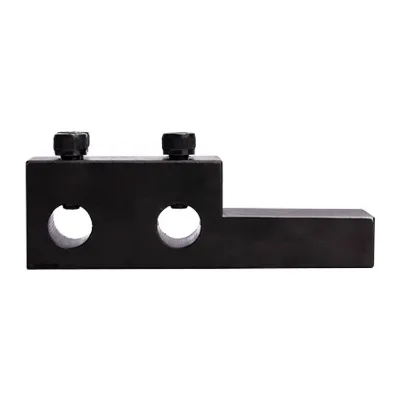
Lathe Turning Toolholder CNC Cooling Cutting Milling Turning Tool Holder
$158.00 - $166.00
MOQ: 2 Pieces


Carbide Holder Boring Bar Solid Carbide Cutting Tools for Milling Lathe
$35.00 - $138.00
MOQ: 5 Pieces




Comprehensive Sourcing Guide
Strategic Sourcing Guide for Lathe Machine Tool Turning Facing and Boring Holders
Understanding Core Technical Specifications and Variants
When sourcing lathe machine tool turning facing and boring holders, buyers must first navigate a complex landscape of technical specifications that define the tool's compatibility and performance. The market offers a diverse array of models, ranging from specific series like the BT40 and MWLNR series to generic designations such as the M type and MGEHR1616-2. These model identifiers are not merely naming conventions; they dictate the mechanical interface, shank dimensions, and clamping mechanisms required for specific machine setups. For instance, the BT40 specification refers to a standardized taper interface commonly used in high-speed machining centers, while the MWLNR series often denotes a specific configuration for indexable turning tools.
Material composition is another critical technical variable. Sourcing data indicates that holders are frequently manufactured from Carbon Steel, Hard Alloy, or specific alloy grades such as 40cr and 20crmnti. The choice of material directly influences the tool's rigidity, thermal stability, and resistance to wear during heavy-duty facing or boring operations. A holder made from 40cr or 20crmnti offers a balance of toughness and hardness suitable for general turning applications, whereas Hard Alloy variants may be selected for high-precision or abrasive environments. Buyers should verify the exact alloy grade against their machining requirements, as the material dictates the maximum cutting forces the holder can withstand without deformation.
The structural design of the holder is equally significant. The market includes both indexable turning tool structures and solid designs. Indexable structures allow for the replacement of worn cutting edges without discarding the entire holder, enhancing cost-efficiency in high-volume production. These structures often utilize matching inserts that adhere to ISO standards, ensuring interchangeability across different tool brands. Furthermore, the accuracy of the holder is a paramount specification; observed data points to precision levels as tight as 0.003mm, which is essential for maintaining tight tolerances in finishing operations. Buyers must confirm that the listed accuracy matches the tolerance requirements of their specific workpieces.
Compliance, Certification, and Standard Verification
Navigating the regulatory and standard compliance landscape is essential for ensuring that purchased holders meet international safety and quality benchmarks. The sourcing environment reveals a mix of certification statuses, with some products carrying ISO 9001 certification, while others may be customized or non-customized regarding their certification status. It is imperative for buyers to distinguish between products that are fully certified and those where certification is a variable attribute. The presence of ISO 9001 indicates a manufacturer's commitment to a quality management system, but the specific scope of this certification must be verified to ensure it covers the manufacturing of precision tooling.
In addition to quality management systems, product-specific standards play a crucial role. The observed data references standards such as "Bt Lbk," "middle," "carbon," and "ISO." These labels often refer to the manufacturing standard or the material grade standard applied to the tool. For example, an "ISO" standard designation typically aligns the tool with international norms for dimensions and tolerances, facilitating global compatibility. Conversely, standards labeled as "carbon" or "middle" may refer to material hardness or specific regional manufacturing protocols. Buyers should not assume that all listed products adhere to the same standard; instead, they must request explicit documentation confirming that the product meets the ISO or other relevant standards required for their facility's operations.
Safety and environmental compliance are also critical considerations. Some suppliers offer products with certifications including ISO RoHS, CE, and GS. These certifications indicate adherence to restrictions on hazardous substances (RoHS), European safety standards (CE), and German safety standards (GS). While these are valuable indicators of compliance, buyers must verify that these certifications are current and applicable to the specific batch of tools being purchased. Relying on general certification claims without verifying the specific product model against the certification scope can lead to non-compliance issues, particularly in regulated industries.
Cost Drivers and Pricing Dynamics
The pricing of lathe machine tool turning facing and boring holders is influenced by a multitude of factors, creating a wide observed range from 1 to 300 USD. This variance is not arbitrary but is driven by the complexity of the design, the quality of materials, and the level of customization required. Basic holders made from standard carbon steel with minimal coating and no customization will naturally fall at the lower end of the price spectrum. In contrast, holders featuring specialized coatings, high-grade alloys like 40cr or 20crmnti, and precision engineering will command higher prices.
Customization is a primary cost driver in this sector. The availability of customization options allows buyers to tailor holders to specific machine setups or workpiece geometries. However, customized products often incur higher costs due to the additional engineering, tooling, and labor required. The data indicates that customization is available for many products, but it is also noted that some items are non-customized. Buyers must weigh the benefits of a tailored solution against the increased unit cost and potential lead time. Furthermore, the inclusion of specific features such as logo printing, whether with or without, can also impact the final price, though this is often a secondary factor compared to material and structural complexity.
Minimum Order Quantity (MOQ) is another significant factor affecting the total cost of procurement. The observed MOQ range spans from 1 to 50 units. For small-scale operations or prototyping, suppliers with an MOQ of 1 offer significant flexibility, allowing buyers to test products without a large upfront investment. However, larger orders often benefit from economies of scale, potentially reducing the unit price. Buyers should analyze their projected usage volume to determine the optimal MOQ strategy. Ordering in bulk may reduce the per-unit cost but requires careful inventory management to avoid overstocking. Additionally, the packing method, whether in plastic boxes, carton boxes, or custom requests, can influence shipping costs and overall procurement expenses.
Typical Applications and Operational Context
Lathe machine tool turning facing and boring holders are designed for a variety of industrial applications, primarily centered around metal removal processes. The primary application context identified is the Lathe Machine, where these holders serve as the critical interface between the machine spindle and the cutting insert. They are specifically engineered for turning, facing, and boring operations, which are fundamental to shaping cylindrical parts. The versatility of these holders is further enhanced by their compatibility with various machine types, including milling machines and CNC lathes, as indicated by the "CNC" controlling mode and "Electric" power source specifications.
The operational environment of these tools varies from general manufacturing to high-precision engineering. For instance, the "Indexable Turning Tool" structure is particularly suited for high-volume production environments where rapid tool changes and consistent performance are required. The use of matching ISO inserts ensures that the cutting edges are standardized, allowing for quick replacements and reduced downtime. In contrast, tools with specific hardness ratings, such as those with a hardness of HRC43-47 or above 55 degrees, are selected for applications requiring high wear resistance and durability.
Specific applications may also dictate the choice of coating. The market offers both coated and uncoated options, with coatings ranging from black to nickel (Ni) coating. Coated tools are generally preferred for applications involving higher cutting speeds and temperatures, as the coating provides a barrier against heat and wear. Uncoated tools may be suitable for softer materials or lower-speed operations where the cost of coating is unnecessary. Additionally, the inclusion of accessories such as screws, shims, wrenches, and lever pins is common, ensuring that the tool can be securely mounted and adjusted. Buyers should ensure that the required accessories are included in the procurement package to avoid delays in setting up the tooling.
Supplier Evaluation and Geographic Considerations
Evaluating suppliers requires a careful assessment of their geographic location, production capabilities, and quality assurance processes. The sourcing data highlights several key production origins, including China, specifically regions like Shandong and Zhuzhou, Hunan. These regions are known for their robust manufacturing ecosystems and expertise in tool production. However, the geographic location alone should not be the sole determinant of supplier selection. Buyers must investigate the specific capabilities of the manufacturers in these regions to ensure they align with the buyer's quality and delivery expectations.
Quality assurance is a critical component of supplier evaluation. The data indicates that many suppliers perform 100% inspection on their products, a practice that significantly reduces the risk of receiving defective tools. This level of inspection suggests a commitment to quality control, but buyers should verify the specifics of the inspection process. Does the 100% inspection cover dimensional accuracy, surface finish, and coating integrity? Understanding the depth of the inspection protocol is essential for ensuring that the received products meet the required specifications. Furthermore, the condition of the products is noted as "New," which is a standard expectation but should be explicitly confirmed in the purchase agreement to avoid receiving refurbished or used items.
Supplier reliability is also influenced by their ability to support OEM and ODM requests. The availability of OEM/ODM support indicates that the supplier is capable of working with buyers to develop custom solutions or produce tools under the buyer's brand. This flexibility is valuable for companies looking to differentiate their product offerings or require specialized tooling. However, buyers should assess the supplier's track record in handling such requests to ensure they can deliver on time and to specification. The controlling mode of the supplier's production process, such as CNC integration, can also be an indicator of their technological capability and ability to produce high-precision tools.
Quality Control and Long-Term Procurement Strategy
Implementing a robust quality control strategy is essential for maintaining the integrity of the machining process and ensuring the longevity of the tools. The observed data points to specific quality attributes, such as hardness ratings (HRC43-47, Above 55 °) and accuracy levels (0.003mm). These metrics should be used as benchmarks for incoming quality control checks. Buyers should establish a protocol for verifying these attributes upon receipt of the goods, utilizing calibrated measurement tools to confirm that the tools meet the specified tolerances.
Long-term procurement considerations involve building a sustainable relationship with suppliers that can support evolving production needs. This includes evaluating the supplier's ability to provide consistent quality over time, their responsiveness to issues, and their capacity to scale production as demand increases. The availability of customization and the range of product models, such as the MGEHR1616-2 or M type, suggest that suppliers with diverse portfolios are better positioned to adapt to changing requirements. Additionally, the packaging options, ranging from plastic boxes to cartons or custom requests, should be evaluated for their ability to protect the tools during transit and storage, preventing damage that could compromise quality.
Buyers should also consider the lifecycle of the tools. Factors such as the coating type, material hardness, and structural design will influence the tool's lifespan and performance. Tools with superior coatings and high-hardness materials may offer a longer service life, reducing the frequency of replacements and the associated costs. However, the initial investment in higher-quality tools must be balanced against the budget constraints and production volume. A strategic approach involves selecting tools that offer the best balance of performance, durability, and cost for the specific application, ensuring that the procurement strategy supports long-term operational efficiency and cost-effectiveness.
Comparative Analysis of Product Attributes
To facilitate informed decision-making, the following table summarizes key product attributes observed in the market, highlighting the variations that buyers should consider during the sourcing process.
| Attribute Category | Observed Variations | Sourcing Implication |
|---|---|---|
| Material | Carbon Steel, Hard Alloy, 40cr, 20crmnti | Select based on required rigidity and wear resistance. |
| Model Series | BT40, MWLNR series, M type, MGEHR1616-2 | Ensure compatibility with existing machine spindles and tooling systems. |
| Coating | Coated (Black/Ni), Uncoated | Choose coated for high-speed/high-heat; uncoated for general use. |
| Certification | ISO 9001, ISO RoHS, CE, GS, or Customized | Verify specific certifications match regulatory requirements. |
| Accuracy | 0.003mm (observed) | Confirm tolerance matches workpiece requirements. |
| Customization | Available, Non-Customized | Assess need for tailored dimensions or branding. |
| Origin | China (Shandong, Zhuzhou Hunan) | Consider logistics and supply chain stability. |
| Packing | Plastic Box, Carton Box, Custom Request | Evaluate protection needs and shipping costs. |
| Inspection | 100% Inspection (observed) | Verify inspection scope and documentation. |
This comparative overview underscores the importance of detailed specification matching. Buyers should not rely on general product descriptions but must cross-reference specific attributes against their operational needs. By doing so, they can mitigate risks associated with incompatible tools and ensure that the procurement process yields high-quality, reliable results.
FAQs
What certifications do these holders typically have?
Many products carry ISO 9001 certification, while others may have ISO RoHS, CE, or GS certifications. Buyers must verify if the certification is customized or non-customized to ensure it matches their specific compliance requirements for safety and quality management systems.
Which materials are used for manufacturing these holders?
Holders are commonly made from Carbon Steel, Hard Alloy, or specific alloy grades like 40cr and 20crmnti. The choice of material depends on the required rigidity and wear resistance, with some products also utilizing 42CrMo for enhanced durability in heavy-duty applications.
Can I request custom logo printing on the tool holders?
Yes, customization is available, including options with or without logo printing. Buyers can select from plastic boxes, carton boxes, or custom packing requests, though the availability of specific customization features may vary by product model and supplier capacity.
What is the accuracy range for these turning tool holders?
Precision levels can reach as tight as 0.003mm for high-accuracy applications. This level of precision is essential for maintaining tight tolerances in finishing operations, and buyers should confirm the specific accuracy rating matches their workpiece requirements before purchasing.
Which coating options are available for these holders?
Coating options include black, nickel (Ni), or uncoated finishes depending on the specific product model. Coated tools are generally preferred for higher cutting speeds and temperatures, while uncoated versions may suit softer materials or lower-speed operations where cost efficiency is prioritized.
What is the minimum order quantity for these holders?
The observed minimum order quantity ranges from 1 to 50 units depending on the supplier and product type. Small-scale operations can test products with an MOQ of 1, while larger orders may benefit from economies of scale but require careful inventory management.
Where are these holders typically manufactured?
Products originate from China, with specific manufacturing hubs in Shandong and Zhuzhou, Hunan. Buyers should evaluate the specific capabilities of manufacturers in these regions to ensure they align with quality expectations and delivery timelines for their specific procurement needs.