Source light-weight rechargeable headband microphone for meetings, recording, and voice amplification
Compare 30 listings for the light-weight rechargeable headband microphone designed for meetings, recording, and voice amplification. Buyers can review specifications like battery type, frequency response, and connectivity options from suppliers in China and Taiwan.
Key considerations
Products List





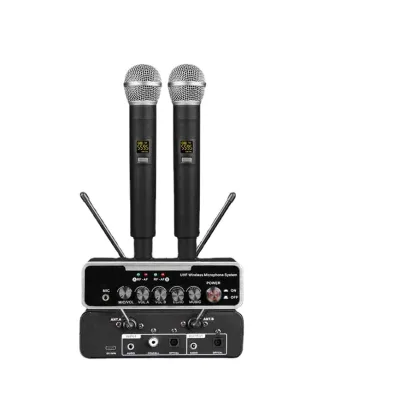
Professional Hot Selling 2-Channel Wireless Microphone System Dynamic Microphones
$41.80 - $48.00
MOQ: 2 pieces
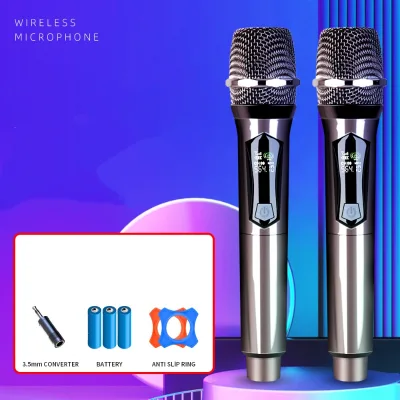
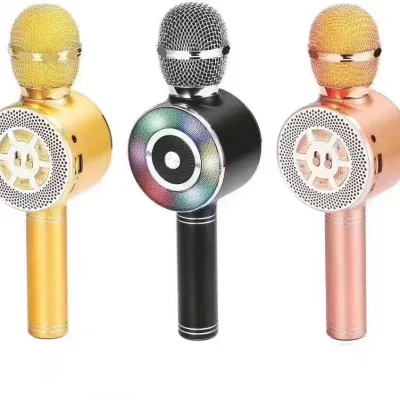
Hot Selling WS669 Wireless Microphone Portable Phone Mic Stable Connection
$3.04 - $3.58
MOQ: 2 pieces
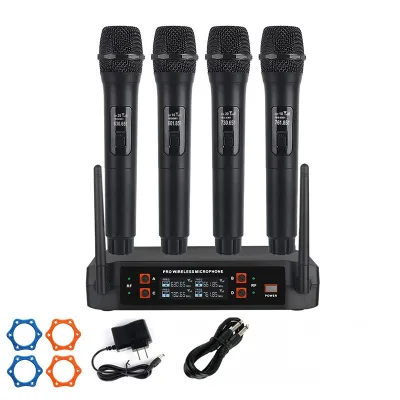
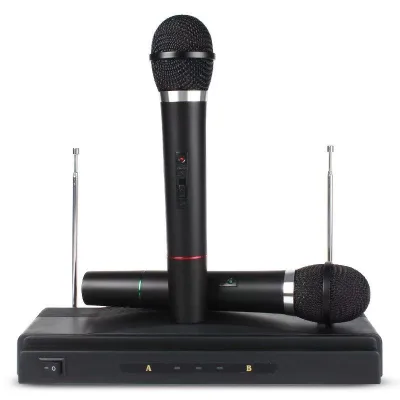


Waterproof Portable Dynamic Microphone IP67 Waterproof Shoulder Speaker Mic
$91.00 - $93.00
MOQ: 10 Pieces

Two Way Radio Remote Shoulder Speaker Microphone for Portable Radio Communication
$7.99 - $8.50
MOQ: 50 Pieces

Portable Handheld Walkie-Talkie Microphone Long Range Easy to Use Two-Way Communication
$11.20 - $11.99
MOQ: 100 Pieces


Comprehensive Sourcing Guide
Strategic Sourcing Guide for Light-Weight Rechargeable Headband Microphones
The global demand for professional audio equipment has driven a significant shift toward lightweight, versatile, and rechargeable headband microphones. For B2B procurement officers, identifying the right supplier requires a granular understanding of technical specifications, regulatory compliance, and supply chain reliability. This guide synthesizes observed market data and verified product attributes to provide a disciplined framework for sourcing these devices. The focus remains on the intersection of portability, power efficiency, and audio fidelity, ensuring that buyers can make informed decisions without relying on unverified marketing claims.
Technical Architecture and Transducer Principles
Understanding the internal mechanics of a headband microphone is the first step in defining procurement requirements. The core of these devices typically relies on the electrodynamic microphone principle, which converts sound waves into electrical signals through the movement of a coil within a magnetic field. However, market observations also indicate the presence of condenser microphone technologies, which often offer higher sensitivity and a broader frequency response. For instance, specific product models in the current market utilize a sensitivity rating of -46dB±3dB, a critical metric for ensuring clear signal capture in varied acoustic environments.
The physical design must balance acoustic performance with the "light-weight" requirement. While some units are constructed from durable metal materials to withstand rigorous touring conditions, others prioritize plastic compositions to reduce overall mass. A specific observed model weighs 680g, which serves as a benchmark for heavy-duty applications, whereas the "light-weight" attribute often implies a design that minimizes fatigue during extended wear. The frequency response is another vital technical parameter; verified data points to a range of 100Hz to 18kHz, covering the essential spectrum for voice and music reproduction. Buyers must verify if the specific unit offers an "omni-direction" polar pattern, which captures sound equally from all directions, or if a more focused pattern is required for noisy environments.
Power Systems and Interface Compatibility
Power management is a defining characteristic for modern headband microphones, particularly for mobile applications. The market exhibits a clear divergence between battery-powered units and those offering dual-use capabilities. Some models are designed strictly for battery power, utilizing rechargeable lithium batteries or standard AA/AAA cells to ensure independence from external power sources. In contrast, other units support a "Battery/Usb Dual Use" mode, allowing the device to operate on internal power or be powered directly via a USB connection. This flexibility is crucial for events where charging infrastructure may be limited or where continuous operation is required without interruption.
Signal transmission methods further dictate the suitability of a microphone for specific use cases. The majority of modern units utilize wired transmission, ensuring a stable, interference-free audio signal. However, the interface type has evolved to include USB 2.0 connections, which facilitate direct integration with digital audio workstations and computers. This is particularly relevant for the "USB or PSTN" technology noted in certain product lines, suggesting compatibility with both digital recording setups and traditional telephony systems. Buyers should verify the input voltage requirements, which can range from standard 5V USB inputs to variable voltages determined by the specific power architecture. The inclusion of a "1-Touch Recording" feature or a mute function integrated into the volume control button adds a layer of operational efficiency, allowing users to manage audio levels and recording states without fumbling for external controls.
Regulatory Compliance and Certification Standards
In the B2B sector, regulatory compliance is not merely a formality but a prerequisite for market access and liability protection. Procurement teams must rigorously verify that suppliers possess valid certifications for the target markets. The supply chain data indicates that products often carry CE and FCC certifications, which are essential for sale in the European Union and North America, respectively. Additionally, compliance with RoHS (Restriction of Hazardous Substances) standards is frequently observed, ensuring that the manufacturing process adheres to environmental regulations regarding hazardous materials.
Beyond the basic certifications, buyers should confirm the specific "prod_standard" listed by the supplier. While "CE, FCC, Rohs etc." is a common listing, the "etc." implies that other regional or industry-specific standards may apply. For instance, products originating from Shenzhen or Changzhou in China, or Taiwan, must navigate different export regulations. The "Certification" field often explicitly lists CE, but buyers must ensure that the specific batch of goods being purchased carries the valid documentation. Failure to verify these standards can lead to customs delays, product seizures, or legal liabilities in the event of a safety incident. The "Degree of Innovation" noted in some listings suggests that newer models may incorporate proprietary technologies that require specific validation to ensure they meet safety and performance benchmarks.
Cost Drivers and Economic Factors
The pricing of light-weight rechargeable headband microphones is influenced by a complex array of factors, including material costs, manufacturing complexity, and the level of customization offered. The observed price range in the market spans from $1.15 to $1600, a disparity that reflects the difference between basic entry-level units and high-end professional systems. The Minimum Order Quantity (MOQ) also plays a significant role in unit economics, with observed ranges from 1 to 1000 units. Buyers purchasing in small quantities may face higher per-unit costs but benefit from lower capital expenditure, while bulk orders can unlock significant cost savings.
Material composition is a primary cost driver. Units constructed from metal generally command a higher price point due to the durability and acoustic properties of the material, whereas plastic-based models offer a more budget-friendly alternative. The inclusion of advanced features such as "1-Touch Recording," adjustable headbands, and integrated kickstands adds to the manufacturing complexity and, consequently, the cost. Furthermore, the "Customization" availability allows buyers to brand the product or modify specifications, which typically incurs additional setup fees and higher MOQs. The "Single package size" and "Single gross weight" are also logistical cost factors; for example, a package weighing 4.000 kg with dimensions of 30x25x20 cm will incur higher shipping costs compared to a more compact, lighter unit. Buyers must balance the desired feature set against the total landed cost, considering both the unit price and the associated logistics expenses.
Supplier Evaluation and Origin Verification
When evaluating potential suppliers, the origin of the product is a critical data point. The market data identifies manufacturing hubs in Shenzhen, Changzhou, and Taiwan, each with distinct supply chain characteristics. Shenzhen is known for its robust electronics manufacturing ecosystem, often associated with rapid prototyping and high-volume production. Changzhou and Taiwan, on the other hand, may offer specialized expertise in audio components or higher-end assembly. Buyers should verify the "place of origin" listed on the product specifications to ensure alignment with their sourcing strategy.
The "Applicable Brands" field, which currently lists "Android," suggests that the microphone may be optimized for use with Android-based devices or systems. This compatibility is a key evaluation metric for buyers integrating the microphones into existing digital ecosystems. Additionally, the "Product Type" classification, such as "Condenser Microphone" or "Wired Microphone," must be cross-referenced with the supplier's catalog to ensure consistency. Buyers should also scrutinize the "prod_packing" details; whether the item comes in "Netural Packing" or a specific "1 PCS/Poly Bag" can impact the unboxing experience and the perceived value of the product. A supplier that offers a "1Year" warranty provides a baseline level of confidence, but buyers should also inquire about the specific terms of the warranty and the process for handling defective units.
Quality Control and Long-Term Procurement Strategy
Implementing a robust quality control (QC) process is essential for mitigating the risks associated with bulk procurement. Given the variation in "Single gross weight" and "Single package size," buyers should establish clear acceptance criteria for physical dimensions and weight tolerances. The "Special Feature" list, which includes items like "Clip," "Volume Control," and "Adjustable HeadBAnd," should be physically tested to ensure functionality. For example, the "Light-Weight" attribute must be validated against the actual weight specifications to prevent discrepancies between marketing claims and physical reality.
Long-term procurement considerations extend beyond the initial purchase. Buyers should assess the supplier's ability to maintain consistent quality over time, particularly regarding the "Battery Type" and "Rechargeable" capabilities. The longevity of the lithium battery or the availability of replacement AA/AAA batteries is a critical factor for the product's lifecycle. Furthermore, the "whether with data cable" attribute indicates the need for a complete accessory kit; missing cables can render a high-quality microphone unusable. Buyers should also consider the "maximum SPL" (Sound Pressure Level) of 120DB as a performance ceiling, ensuring the microphone can handle loud environments without distortion. Finally, the "frequency interval" of 25 MHz, 50 MHz, or 75 MHz, if applicable to wireless variants, must be verified against local spectrum regulations to ensure legal operation. By focusing on these detailed specifications and maintaining a disciplined approach to supplier evaluation, buyers can secure a reliable supply of high-performance headband microphones that meet their specific operational needs.
FAQs
What transducer principle do these microphones use?
Most units utilize the electrodynamic microphone principle to convert sound waves into electrical signals. Some models also employ condenser technology for higher sensitivity, with specific units achieving a sensitivity rating of -46dB±3dB for clear signal capture.
Can the device operate using both battery and USB power?
Yes, certain models support a Battery/Usb Dual Use mode for flexible operation. Other units are strictly battery-powered using rechargeable lithium batteries or standard AA/AAA cells, while some require a 5V input voltage for direct USB connection.
Which certifications are typically required for these products?
Products often carry CE and FCC certifications essential for EU and North American markets. Compliance with RoHS standards is also frequently observed to ensure adherence to environmental regulations regarding hazardous materials during the manufacturing process.
How much does a typical unit weigh?
Specific observed models weigh 680g, serving as a benchmark for heavy-duty applications. While some units are marketed as light-weight to minimize fatigue, others may have a single gross weight of 4.000 kg depending on the material and design.
What is the frequency response range for voice and music?
Verified data indicates a frequency range of 100Hz to 18kHz covering essential voice and music reproduction. Some wireless variants may operate on specific frequency intervals like 25 MHz, 50 MHz, or 75 MHz depending on the model.
Can buyers request customization for these microphones?
Customization is available for buyers seeking to brand the product or modify specifications. This typically incurs additional setup fees and may require a higher minimum order quantity compared to standard netural packing or poly bag options.