Source Light Weight Floating Brake Discs for cars, trucks, and motorcycles
Find 30 verified listings for Light Weight Floating Brake Discs suitable for cars, trucks, and motorcycles. Buyers can compare specifications, certifications, and pricing to select the right components for their vehicle needs.
Key considerations
Products List


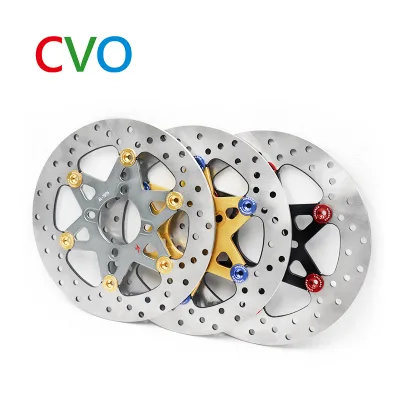
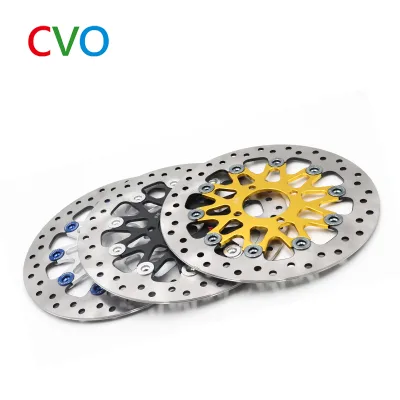

Brake Rotor 2-Piece Floating Brake Disc Auto Brake System Break Disc for AUD I
$165.00 - $195.00
MOQ: 5 pcs




Comprehensive Sourcing Guide
Strategic Sourcing Guide for Light Weight Floating Brake Discs
Understanding the Technical Architecture of Floating Brake Discs
The core keyword "Light Weight Floating Brake Discs" points to a specific engineering solution designed to optimize thermal management and reduce unsprung mass in braking systems. In the context of the available product data, these components are distinct from solid discs due to their construction, which often involves a floating design to accommodate thermal expansion. The observed product attributes indicate that these discs are primarily manufactured from steel, a material chosen for its durability and heat resistance, though the "light weight" designation suggests specific manufacturing techniques or alloy compositions that reduce mass without compromising structural integrity.
The "floating" aspect is critical for high-performance applications, particularly in motorcycles and modified vehicles, where rapid heat dissipation is essential to prevent brake fade. The product listings highlight specific models such as the "CVO-111" and "CVO-113," which are explicitly described as "Floating Brake Discs." These units often feature a "Round pore brake disc" design, a characteristic that aids in cooling by allowing airflow through the rotor surface. The dimensions observed in the supply chain data vary, with specific sizes noted as 245 mm and 267 mm, indicating that buyers must match these specifications precisely to their vehicle's mounting points and caliper requirements.
Furthermore, the positioning of these discs varies between front and rear applications. The data confirms that products are available for both "Front" and "Rear" positions, allowing for comprehensive braking system upgrades. The weight specifications provided in the listings range from 0.900 kg to 1.186 kg per single gross weight, depending on the specific model and packaging configuration. This variance underscores the importance of verifying the exact weight of the component before procurement, as the "light weight" benefit is a function of the specific model selected. The usage is explicitly stated as "Used for modification disc," suggesting that these parts are often targeted at enthusiasts or professional tuners looking to enhance vehicle performance rather than standard replacement for mass-market sedans.
Compliance, Certification, and Quality Standards
When sourcing brake discs, verifying compliance with international standards is paramount to ensure safety and reliability. The supply data reveals a complex landscape of certifications associated with these products. High-confidence facts indicate that suppliers often claim adherence to "ISO/TSISOISOIATF-ISOClassification:Disc" and "ISO/TSIATF-ECE,AMECA." These references point to adherence to automotive industry standards, specifically those related to quality management systems (IATF 16949) and safety regulations (ECE). However, the notation "ISO/TSISOISOISOISOClassification:Disc" appears to be a concatenation of multiple standard identifiers, suggesting that buyers should request clear, singular certification documents rather than relying on aggregated strings of text.
The product listings also mention "OEM Standard" as a primary specification. This implies that the manufacturing process aims to replicate the quality and fitment of original equipment manufacturer parts. In addition to OEM standards, the data notes "OE Standard, 100% Guaranteed" as a quality attribute, which serves as a performance claim that requires independent verification during the supplier evaluation phase. Buyers should not assume that every listed product automatically meets these standards without requesting physical test reports or valid certificates from the supplier.
It is crucial to distinguish between high-confidence facts and low-confidence background information. While the provided text mentions standards like ISO13485, ISO14001, and ISO9001 in a low-confidence section, these should not be treated as confirmed attributes of the specific brake discs unless explicitly verified by the supplier. The "CVO" brand is mentioned as a specific manufacturer identifier, but the sourcing guide must remain neutral and not endorse this brand over others. Instead, buyers should focus on the supplier's ability to provide valid, up-to-date certification documents that align with the specific market requirements of their destination, such as ECE regulations for European markets or specific DOT standards for North America.
Cost Drivers and Pricing Dynamics
The pricing structure for Light Weight Floating Brake Discs is influenced by several variables, including material costs, manufacturing complexity, and certification compliance. The observed price range in the market data spans from 0.2 USD to 400 USD. This wide disparity indicates that the market includes both low-cost generic components and high-end, specialized performance parts. The lower end of the spectrum likely represents basic steel discs with minimal processing, while the upper end may include advanced floating designs with specific surface treatments, proprietary alloys, or comprehensive accessory kits.
The minimum order quantity (MOQ) is another significant cost driver, with observed ranges from 1 to 1000 units. Buyers purchasing small quantities may face higher per-unit costs due to the lack of economies of scale, whereas bulk orders can significantly reduce the average cost. The data indicates that packaging plays a role in logistics costs, with options ranging from "Box packaging" (1 pair/box) to "Pallet" configurations. The single package sizes vary, with dimensions such as 27x10.5x10 cm and 22x22x20 cm, which directly impact shipping volume and freight charges.
Additionally, the inclusion of accessories can affect the final price. Some listings mention "Shims + Sensors + Clip + Other Accessories" as part of the package. The presence of these components, particularly sensors and clips, adds value but also increases the unit cost. Buyers must evaluate whether these accessories are necessary for their specific application or if they can source them separately to reduce costs. The "Good Quality with Reasonable Price" attribute suggests that there is a competitive market, but buyers should be wary of prices that seem too low, as they may indicate compromised quality or a lack of proper certification.
Typical Applications and Fitment Considerations
The primary application for Light Weight Floating Brake Discs, as indicated by the product data, is the motorcycle market. The attribute "Fit for: Motorcycle" is explicitly stated, confirming that these components are designed for two-wheeled vehicles rather than passenger cars. The "Usage: Used for modification disc" further reinforces that these parts are often sought after for performance upgrades, racing, or customization projects where reducing unsprung mass improves handling and braking response.
However, the data also includes a "Car Model: All Models" specification, which presents a potential point of confusion. This likely refers to the versatility of the supplier's catalog or a generic compatibility claim that requires careful verification. Buyers must cross-reference the specific model numbers, such as "CVO-111" or "CVO-113," with their vehicle's technical specifications to ensure proper fitment. The available sizes, including 245 mm and 267 mm, are critical dimensions that must match the vehicle's brake caliper and hub assembly.
The color options, including black, yellow, and gray, are aesthetic choices that do not affect performance but are relevant for buyers seeking specific visual matches for their custom builds. The "Feature: Round pore brake disc" is a technical characteristic that enhances cooling, making these discs particularly suitable for high-stress applications where heat buildup is a concern. The "Advantage: No Noise, No Dust, Long Life" claims are common marketing points for brake discs, but buyers should verify these performance characteristics through independent testing or customer reviews, as they are not guaranteed by the general product listing alone.
Supplier Evaluation and Verification Protocols
Selecting a reliable supplier for Light Weight Floating Brake Discs requires a rigorous evaluation process. The product origin is consistently listed as "China," with specific mentions of "Guangdong, China" as the place of origin. While this provides a geographical baseline, buyers should conduct due diligence to verify the specific factory capabilities and quality control processes of the supplier. The "Delivery time" is noted as 10-15 days, which is a standard lead time for many international shipments, but buyers should confirm if this is a fixed duration or a variable estimate based on order volume and current production schedules.
Supplier evaluation should include a review of their customization capabilities. The attribute "Customization: Available" suggests that suppliers may offer tailored solutions, such as specific hole patterns, thicknesses, or coating options. This flexibility is valuable for buyers with unique requirements, but it also introduces complexity in the ordering process. Buyers must clearly communicate their specifications to avoid receiving non-compliant products.
Quality assurance is another critical factor. The data mentions "High Qaulity" and "Hight-Quality" as attributes, but these are subjective terms. Buyers should request detailed quality control reports, including material composition analysis and dimensional tolerance checks. The "Warranty: 3 months" is a specific term provided in the data, which serves as a baseline for after-sales support. However, buyers should negotiate warranty terms that align with the expected lifespan of the product, especially given the "Long Life" claims associated with the floating disc design.
Quality Control and Long-Term Procurement Strategy
Implementing a robust quality control strategy is essential for sourcing brake discs that meet safety and performance standards. The "Quality: OE Standard, 100% Guaranteed" claim requires verification through third-party testing. Buyers should establish a protocol for sampling and inspection upon receipt of goods, focusing on critical dimensions, material hardness, and surface finish. The "Single gross weight" variations observed (0.900 kg to 1.186 kg) highlight the need for precise weighing and measurement to ensure consistency across batches.
Long-term procurement considerations involve building a sustainable relationship with suppliers who can consistently deliver high-quality products. The "Main Market" data shows a global reach, including South America, North America, Eastern Europe, and Southeast Asia, indicating that suppliers are experienced in handling international logistics and compliance. Buyers should leverage this experience to negotiate favorable terms, such as volume discounts, flexible payment schedules, and priority shipping options.
The "Packaging Details" of "1 pair/box" and "Box packaging" are important for logistics and inventory management. Buyers should ensure that the packaging is robust enough to prevent damage during transit, especially for delicate components like floating brake discs. The "Single package size" and "Single gross weight" data provided can be used to optimize shipping costs and warehouse space planning.
In conclusion, sourcing Light Weight Floating Brake Discs requires a balanced approach that combines technical understanding, rigorous supplier evaluation, and strategic procurement planning. By focusing on verified specifications, valid certifications, and clear communication of requirements, buyers can secure high-quality components that enhance vehicle performance and safety. The market offers a wide range of options, from basic replacements to high-performance modifications, but success depends on the buyer's ability to navigate the complexities of the supply chain and ensure that every component meets the highest standards of quality and reliability.
FAQs
What certifications do Light Weight Floating Brake Discs have?
These discs typically hold ISO/TS IATF-ECE and AMECA certifications. Buyers should verify specific documents as some listings show concatenated standard strings that require clarification from the supplier before purchase.
Can I find custom Light Weight Floating Brake Discs?
Yes, customization is available for these brake discs. Buyers can request tailored specifications, but they must clearly communicate their unique requirements to ensure the supplier delivers components that match their vehicle's technical needs.
How long is the delivery time for these brake discs?
The standard delivery time ranges from 10 to 15 days. This estimate applies to typical orders, though actual lead times may vary based on order volume and current production schedules at the Guangdong, China facility.
Which materials are used for these brake discs?
These brake discs are primarily manufactured from steel. This material is selected for its durability and heat resistance, though specific weight variations exist depending on the model and floating design features.
What sizes are available for Light Weight Floating Brake Discs?
Available sizes include 245 mm and 267 mm variants. Buyers must match these specific dimensions to their vehicle's caliper and hub assembly to ensure proper fitment and safe operation.
What is the minimum order quantity for these discs?
The minimum order quantity ranges from 1 to 1000 units. Smaller orders may incur higher per-unit costs, while bulk purchases can significantly reduce the average price through economies of scale.
Are these brake discs suitable for motorcycle modification?
Yes, they are explicitly designed for motorcycle use and modification. The floating design helps reduce unsprung mass, making them ideal for performance upgrades and racing applications where heat dissipation is critical.