Source Lithium Electric Sports Car for Golf, Transport, and Recreation
Compare 30 listings of Lithium Electric Sports Car options including golf trolleys and BEVs with varying speeds and battery types. Buyers can evaluate specifications like voltage, power, and range to find suitable models for specific applications.
Key considerations
Products List


Electric Sports Car for Adults Electric Super Car Delivery Car Electric EV Car
$35700.00 - $36100.00
MOQ: 1 Pieces

EV Car E Auto EV Vehicles Electric Sports Car for Adults Electric Super Car
$30200.00 - $30600.00
MOQ: 1 Pieces

Electric Car Adult EV Vehicles Electric Sports Car Electric Car Adult SUV
$35700.00 - $36100.00
MOQ: 1 Pieces


High Speed Electric Cars EV Vehicles Electric Super Car Electric Sport Car Super Car
$30700.00 - $31300.00
MOQ: 1 Pieces


Energy Electric Vehicle Motors Car Automobile Cars Made in China Car SUV Electric
$12000.00 - $20000.00
MOQ: 1 Sets


$1700.00 - $1800.00
MOQ: 1 Pieces
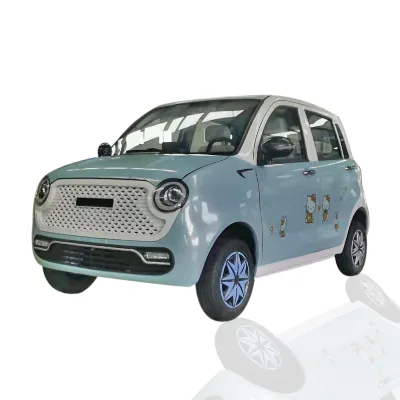


Lithium Battery Power Supply High Speed Electric Car with Power Inverter
$475.00 - $480.00
MOQ: 5 Pieces


Comprehensive Sourcing Guide
Sourcing Guide for Lithium Electric Sports Car Procurement
Defining the Product Category and Technical Scope
When sourcing a Lithium Electric Sports Car, buyers must first distinguish between high-performance passenger vehicles and specialized utility platforms that share similar powertrain architectures. The market data indicates a diverse range of offerings, from compact electric vehicles designed for specific environments like golf courses to full-scale passenger SUVs. A critical observation in the current supply landscape is the variation in body types. Some units are classified as "Closed" for protected transport, while others are "Open," suggesting utility or recreational applications. The core powertrain technology relies on lithium batteries, specifically noted as Ternary Lithium Battery types in certain high-specification models, which offer a balance of energy density and thermal stability.
The electrical architecture varies significantly across the catalog. While some utility-focused units operate on 48V or 60V systems with power outputs ranging from 300W to 600W, high-performance passenger variants utilize significantly higher capacities. For instance, specific models in the dataset are equipped with a maximum motor power of 150kW and a maximum torque of 310 N.M. The voltage of the battery system in these larger vehicles is not explicitly detailed in the provided facts but is implied to be much higher to support speeds up to 160 km/h. Buyers must verify the voltage and power rating against their specific application requirements, as a 60V system suitable for a golf trolley is entirely insufficient for a road-legal sports car.
Performance Specifications and Operational Limits
Understanding the performance envelope is essential for matching the vehicle to the intended use case. The data reveals a wide spectrum of operational capabilities. In the lower power segment, maximum speeds are observed between 20-30 km/h, with a maximum range of approximately 100 km. These units often feature a gradeability of 20-30% and a climbing ability of 25%, making them suitable for moderate inclines on private property or golf courses. The turning radius for these compact units is recorded at 3.7 meters, indicating high maneuverability in tight spaces.
Conversely, the high-performance segment presents a different profile. Vehicles identified with models such as the ID.6 X Pure+ or ID.4 X Pro demonstrate a maximum speed of 160 km/h. The physical dimensions for these larger vehicles are substantial, with sizes reaching 487618481680 mm and a wheelbase of 2965 mm. The curb weight for these models is noted around 2280 kg, while slightly smaller variants weigh approximately 2120 kg. The drive mode is specified as Rear Drive, and the gear shift type is a single-speed transmission for electric vehicles, which is standard for modern EVs to maximize efficiency and reduce mechanical complexity. Buyers must carefully compare these specifications, as the difference between a 30 km/h utility vehicle and a 160 km/h passenger car dictates the regulatory and infrastructure requirements for deployment.
Compliance, Certification, and Regulatory Standards
Navigating the regulatory landscape is a primary concern for B2B procurement. The supply chain data indicates that products often carry multiple certifications, including CE, EEC, CCC, and ISO. The presence of CE and EEC markings suggests compliance with European safety and electromagnetic compatibility standards, which is crucial for exporting to or operating within the European market. The CCC certification points to compliance with Chinese Compulsory Certification, a mandatory requirement for products sold within China.
However, buyers must exercise caution and verify that these certifications are valid for the specific model and destination market. The dataset lists certifications alongside various product types, from golf trolleys to SUVs. It is not guaranteed that a single certification covers all variants within a supplier's catalog. Furthermore, the product standards vary; some units are described with a "Plastic cover" standard, while others adhere to specific dimensional standards like 2350X1210X1890 or 487618481680 mm. These dimensions likely refer to packaging or specific chassis configurations rather than a universal safety standard. Procurement teams should request valid certification documents for the exact model number intended for purchase, ensuring that the certification applies to the specific battery chemistry and motor configuration being acquired.
Cost Drivers and Procurement Economics
The pricing structure for lithium electric vehicles is influenced by battery capacity, motor power, and body construction. The observed price range in the market is extensive, spanning from 7 USD to 80,000 USD. This massive variance reflects the difference between a basic utility cart and a fully equipped passenger SUV. The lower end of the spectrum likely corresponds to the 300-600W electric golf trolleys, while the higher end aligns with the 150kW passenger vehicles.
Other significant cost drivers include the customization options and OEM capabilities. The data confirms that customization is available and OEM services are accepted, which allows buyers to tailor specifications such as color (White, Black, Blue, Red) and body type. However, these customizations often incur additional costs and may affect the Minimum Order Quantity (MOQ). The observed MOQ range is 1 to 100 units. For standard models, a buyer might procure a single unit for testing, whereas custom OEM runs may require orders closer to the 100-unit threshold. The origin of the products is primarily Taizhou and China, which influences logistics costs. Buyers should also consider the loading weight, which is recorded at 270 kg for certain units, affecting shipping volume and freight charges.
Supplier Evaluation and Operational Capabilities
When evaluating potential suppliers, buyers should look for evidence of robust manufacturing capabilities and logistical readiness. The data indicates that the products originate from Taizhou and China, a region known for its automotive and component manufacturing clusters. A key operational metric is the loading capacity for shipping containers. One specific observation notes that a 40HQ container can hold 10 pieces of a particular vehicle type. This low density suggests that these vehicles are large and bulky, likely requiring careful stowage planning to maximize container utilization.
Suppliers should also demonstrate flexibility in packaging. While some products are packed in steel, others have packaging described as "to Be Negotiated," and some list "No" for specific packing attributes, indicating a need for direct discussion regarding protective measures during transit. The ability to handle different body types, from closed to open configurations, suggests a versatile production line. Buyers should verify the supplier's capacity to handle the specific voltage and battery type required, as mixing 48V, 60V, and high-voltage systems in a single order requires distinct supply chain management. Additionally, the acceptance of OEM orders implies that the supplier has the engineering resources to modify designs, but buyers must clarify the lead times and costs associated with these modifications.
Quality Control and Long-Term Procurement Considerations
Ensuring long-term reliability requires a focus on quality control protocols and after-sales support. The materials used in construction vary, with some units featuring plastic covers and others utilizing steel components. The gradeability and climbing ability figures (20-30% and 25% respectively) serve as performance benchmarks that should be validated through on-site testing or third-party verification. For high-speed vehicles, the single-speed transmission and rear-drive configuration must be tested for durability under load.
Buyers should also consider the battery lifecycle. The use of Ternary Lithium Batteries is noted, which offers high energy density but requires specific thermal management systems to ensure safety. The maximum range of 100 km for lower-speed units and the high-speed capabilities of larger models imply different battery management strategies. Long-term procurement should include agreements for spare parts availability, particularly for the battery packs and motor controllers. The "Customization" attribute suggests that unique parts may be required, making it vital to establish a supply chain for proprietary components. Finally, the "No" entry for certain packing attributes in the data highlights the need for explicit packaging agreements to prevent damage during shipping, which is a critical quality control step before the product reaches the end user.
Comparative Analysis of Vehicle Segments
To assist in decision-making, the following table summarizes the key differences between the observed vehicle segments based on the provided data. This comparison highlights the distinct technical and operational profiles available in the market.
| Feature | Utility / Golf Segment | High-Performance Passenger Segment |
|---|---|---|
| Primary Type | Golf Trolley / BEV | SUV / BEV |
| Body Type | Closed or Open | SUV |
| Power Output | 300-600W | 150kW (Max) |
| Voltage | 48V or 60V | High Voltage (Implied) |
| Max Speed | 20-30 km/h | 160 km/h |
| Curb Weight | ~270kg (Loading) | 2120-2280kg |
| Dimensions | Compact (Turning Radius 3.7m) | 487618481680 mm |
| Battery Type | Not Specified | Ternary Lithium Battery |
| Drive Mode | Not Specified | Rear Drive |
| Typical Application | Golf Courses, Private Estates | Road Transport, Public Use |
This comparison underscores the necessity for buyers to clearly define their operational needs before engaging with suppliers. The gap between a 300W golf trolley and a 150kW SUV is not merely a matter of scale but involves entirely different regulatory frameworks, infrastructure requirements, and cost structures. By aligning the procurement strategy with these distinct technical profiles, buyers can mitigate risks and ensure the acquisition of a vehicle that meets both performance and compliance standards.
FAQs
What certifications do lithium electric sports cars typically hold?
Products often carry CE, EEC, CCC, and ISO certifications. These markings indicate compliance with European safety standards and Chinese compulsory requirements, but buyers must verify validity for the specific model and destination market before purchase.
Can buyers customize the color and body type of these vehicles?
Customization is available for colors like White, Black, Blue, and Red, as well as body types such as Closed or Open. OEM services are accepted, though custom orders may affect the minimum order quantity and require specific lead time negotiations.
How does the motor power vary across different vehicle segments?
Utility models feature low power outputs between 300 and 600 watts, while high-performance passenger SUVs reach up to 150 kilowatts. This significant difference dictates the maximum speed, ranging from 30 km/h for golf trolleys to 160 km/h for road vehicles.
What is the typical minimum order quantity for these electric vehicles?
The observed minimum order quantity ranges from one to one hundred units depending on the product type. Standard models may allow single-unit procurement, whereas custom OEM runs often require orders closer to the one hundred unit threshold to be viable.
Which battery types are used in high-performance lithium electric cars?
High-performance models utilize Ternary Lithium Batteries to support high speeds and range. Lower power utility units operate on 48V or 60V systems, requiring distinct supply chain management and battery chemistry verification for each specific vehicle application.
How much weight can a 40HQ container typically hold for these vehicles?
A 40HQ container can hold approximately ten pieces of specific vehicle types. This low density indicates the vehicles are large and bulky, requiring careful stowage planning to maximize container utilization during international shipping from origins like Taizhou.