Source Low Switching Losses IGBT Module for Solar, Industrial, and Power Electronics
Find 30 verified options for Low Switching Losses IGBT Module designed for solar cells, industrial equipment, and power electronic components. Compare specifications including RoHS certification, IGBT standards, and customizable packaging from manufacturers in China.
Key considerations
Products List


High Efficiency IGBT Module for Induction Heating Equipment with Low Switching Loss
$100.00 - $1000.00
MOQ: 1 Pieces


Bespoke IGBT Power Module: Low Switching Loss for Inverters & Servo Drives
$20.00 - $50.00
MOQ: 1 Pieces


Customizable IGBT Power Module: Low-Loss Design for Inverters & Servo Drives
$23.50 - $31.50
MOQ: 10 Pieces


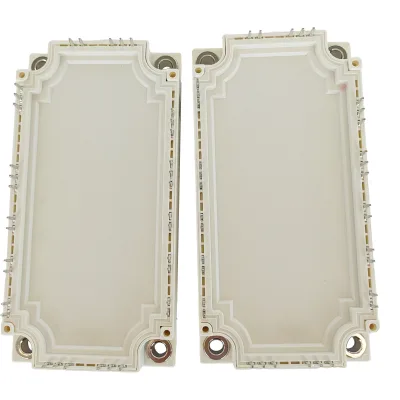


Comprehensive Sourcing Guide
Strategic Sourcing Guide for Low Switching Losses IGBT Modules
Understanding the Technical Landscape of IGBT Modules
When sourcing low switching losses Insulated Gate Bipolar Transistor (IGBT) modules, buyers must first distinguish between the specific semiconductor technologies available in the current market. The core keyword implies a focus on efficiency, where the device minimizes energy dissipation during the transition between on and off states. Based on observed product attributes, the manufacturing technology for these components often centers on Integrated Circuits Devices and Optoelectronic Semiconductors, utilizing digital signal processing or analog-digital composite functions. The material composition is critical; high-performance modules frequently employ Power Semiconductor materials with a Copper baseplate to ensure superior thermal conductivity.
The internal architecture of these modules often includes specific isolation mechanisms to prevent electrical breakdown. For instance, observed specifications indicate the use of Al2O3 (Aluminum Oxide) for internal isolation, which provides basic insulation classified as Class 1. This is a vital parameter for ensuring safety in high-voltage environments. Furthermore, the physical design must account for creepage and clearance distances to prevent arcing. Verified data points to a minimum creepage distance of ≥33mm and a clearance of ≥19mm, with a Comparative Tracking Index (CTI) exceeding 400. These metrics are not merely suggestions but fundamental design constraints that define the module's ability to operate reliably under stress.
The signal processing capabilities of the module also play a role in its switching performance. While some applications require pure digital processing, others may benefit from analog-digital composite functions to manage complex load variations. The standard specifications for these devices often align with the IGBT standard, ensuring compatibility with existing power electronic systems. Buyers should note that while some models are designated as "Automotive grade," others fall under general industrial standards, and the selection depends heavily on the specific application environment.
Compliance and Certification Verification
In the global B2B market, compliance is the gateway to procurement. For IGBT modules, the presence of specific certifications is non-negotiable for ensuring that the components meet international safety and environmental standards. The most frequently observed certification in this category is RoHS (Restriction of Hazardous Substances), which confirms that the module is manufactured without specific hazardous materials. Some listings also indicate CE certification, suggesting conformity with health, safety, and environmental protection standards for products sold within the European Economic Area.
Buyers must verify that the "Original" brand status claimed by suppliers is supported by valid documentation. The term "Original" implies that the components are genuine and not refurbished or counterfeit, a critical distinction in the semiconductor market where reliability is paramount. Additionally, the manufacturing origin is a key compliance factor. Products are observed to originate from specific regions in China, such as Jiangsu and Ningbo, which are known hubs for semiconductor manufacturing. However, the origin alone does not guarantee quality; it must be paired with the correct certifications.
The packaging and labeling standards are also part of the compliance framework. Modules are typically supplied in boxes or standard export packaging, which must protect the sensitive semiconductor materials during transit. The "Standard Specifications or Customized" standard indicates that while many products adhere to industry norms, there is flexibility for specific regulatory requirements. Buyers should ensure that the supplier provides a Certificate of Conformity (CoC) that explicitly lists the RoHS and CE status, along with any other relevant regional certifications required for the destination market.
Cost Drivers and Pricing Dynamics
The pricing of low switching losses IGBT modules is influenced by a complex interplay of factors, including material costs, manufacturing complexity, and supply chain logistics. The observed price range in the market spans from $0.5 to $1000 USD, reflecting the vast diversity in module sizes, power ratings, and performance characteristics. A module priced at the lower end of this spectrum may be a smaller, lower-power component, while those at the higher end likely represent high-power industrial or automotive-grade units with advanced cooling and isolation features.
Material costs are a primary driver, particularly the use of copper baseplates and high-grade power semiconductor materials. The internal isolation using Al2O3 and the specific metallization required for low switching losses also contribute to the final cost. Furthermore, the level of customization available significantly impacts pricing. While standard models may be available at lower price points, "Customized" or "Customizable" options, such as size adjustments or specific packaging requirements, will incur additional costs.
The Minimum Order Quantity (MOQ) is another critical cost factor. The observed MOQ range is 1 to 1000 pieces, offering flexibility for both prototyping and mass production. Buyers sourcing small quantities may face a higher unit cost due to the lack of economies of scale, whereas bulk orders can leverage lower per-unit pricing. Shipping terms also play a role in the total cost of ownership. Options such as DHL, UPS, FedEx, EMS, and HK Post offer varying levels of speed and cost, with expedited shipping adding to the overall expense.
Typical Applications and Performance Requirements
The versatility of IGBT modules is evident in their wide range of applications. Based on the observed product attributes, these components are essential in Solar Cell systems, where efficient power conversion is critical for maximizing energy harvest. They are equally vital in Refrigerator applications, managing the compressor motors and control systems with high efficiency. The industrial sector is another major application area, where these modules power heavy machinery and automation systems.
Beyond these primary sectors, the modules are used in Temperature Measurement devices, Televisions, Radios, and LCD Display Controllers. The ability to function as a Diode or Detector in various electronic circuits further expands their utility. The "Range of Applications" is explicitly listed as Industrial, suggesting that these modules are designed to withstand the rigorous demands of factory environments. The "Automotive grade" designation indicates suitability for electric vehicles and hybrid systems, where low switching losses translate directly to extended battery life and reduced heat generation.
The specific application dictates the required performance metrics. For instance, a module used in a solar inverter must handle high voltages and frequent switching cycles, necessitating the high CTI and robust isolation mentioned earlier. In contrast, a module for a refrigerator might prioritize compact size and standard mounting types. Buyers must align the module's specifications, such as the "Standard" mounting type and "Natural" surface treatment, with the environmental conditions of the end application.
Supplier Evaluation and Selection Criteria
Selecting the right supplier is as important as selecting the right component. When evaluating potential partners, buyers should look for suppliers that offer "One-Stop Service," which implies a comprehensive approach to procurement, including sourcing, quality assurance, and logistics. The availability of "Customization" is a strong indicator of a supplier's flexibility and technical capability. A supplier that can accommodate specific model numbers like "A series," "Sic A6," or "N3" demonstrates a deep inventory and technical understanding of the product line.
The "Brand Name" attribute, often listed as "Original," should be verified through direct communication with the manufacturer or authorized distributors. Buyers should avoid suppliers who cannot provide clear evidence of their supply chain integrity. The "Standard Export Packaging" and "Customizable" packaging options suggest that the supplier is prepared to handle various logistical needs, but the buyer must confirm that the packaging meets the specific requirements of their internal storage and handling processes.
Geographic location is another factor in supplier evaluation. With origins in Jiangsu and Ningbo, China, buyers should consider the logistics implications of sourcing from these regions. While these locations are hubs for manufacturing, the distance to the buyer's facility will impact lead times and shipping costs. The "Shipping by" options, including major carriers like DHL and FedEx, indicate that the supplier has established relationships with logistics providers, which is a positive sign for reliability.
Quality Control and Technical Verification
Quality control is the backbone of a successful procurement strategy for semiconductor components. Buyers must verify that the modules meet the specified technical parameters before finalizing an order. Key verification points include the mounting torque specifications, which are critical for ensuring a secure mechanical and thermal connection. For M5 mounting, the torque should be between 3.0 and 6.0 Nm, while terminal torque for M4 and M8 terminals should be 1.8-2.1 Nm and 8.0-10 Nm, respectively. Deviations from these ranges can lead to thermal runaway or mechanical failure.
The surface treatment of the module, observed as "Natural," should be inspected to ensure it meets the requirements for the specific environment. In harsh industrial settings, additional protective coatings might be necessary, and the supplier should be able to confirm if the standard "Natural" treatment is sufficient or if customization is available. The "Internal Isolation" of Al2O3 must be confirmed through testing or certification, as this is the primary barrier against electrical breakdown.
Buyers should also verify the "Standard Specifications or Customized" status of the product. If a custom specification is required, the supplier must provide detailed drawings and test results to confirm that the module meets the design intent. The "Size Customizable" attribute suggests that physical dimensions can be adjusted, but this must be done without compromising the electrical performance or safety margins.
Long-Term Procurement and Supply Chain Resilience
Sourcing IGBT modules is not a one-time transaction but a long-term partnership that requires strategic planning. The "Customized" and "Customizable" attributes highlight the importance of flexibility in the supply chain. As technology evolves, buyers may need to adapt their designs to newer models or standards. A supplier that offers a broad range of models, from "HP1" to "Pim," provides the necessary flexibility to transition between different generations of technology.
Lead times and inventory management are critical for maintaining production continuity. While specific lead times are not provided in the source data, the presence of a wide MOQ range (1-1000) suggests that suppliers can accommodate both immediate needs and long-term planning. Buyers should establish a relationship with suppliers who can guarantee consistent supply, especially for "Automotive grade" or other high-demand components.
The "One-Stop Service" model offered by some suppliers can significantly reduce the administrative burden on the procurement team. By consolidating sourcing, quality control, and logistics under one provider, buyers can streamline their operations and reduce the risk of supply chain disruptions. However, it is essential to maintain a diversified supplier base to mitigate risks associated with geopolitical issues or regional manufacturing disruptions.
Conclusion
Sourcing low switching losses IGBT modules requires a meticulous approach that balances technical specifications, compliance requirements, and supply chain reliability. By understanding the material composition, isolation standards, and application-specific needs, buyers can make informed decisions that ensure the performance and longevity of their products. The observed data highlights the importance of verifying certifications like RoHS and CE, checking torque specifications, and evaluating the supplier's ability to provide customization and one-stop services. With a clear understanding of these factors, buyers can navigate the complex semiconductor market and secure high-quality components that meet their exacting standards.
FAQs
What certifications do low switching losses IGBT modules have?
These modules typically hold RoHS certification, with some listings also showing CE certification. This confirms compliance with environmental standards and safety regulations for the European market, ensuring the components are free from hazardous substances.
Which applications are suitable for these IGBT modules?
They are designed for solar cells, refrigerators, and general industrial power electronic components. Some models also support temperature measurement, television, and LCD display controllers, covering a broad range of industrial and consumer electronics needs.
Can I request customized specifications for these modules?
Yes, customization is available for size, packaging, and standard specifications. Buyers can request specific models like the A series or Sic A6, and suppliers often offer standard export packaging or customizable options to meet unique project requirements.
How are these modules manufactured and what materials are used?
Manufacturing involves integrated circuits or optoelectronic semiconductor technologies using power semiconductor materials. The baseplate is typically made of copper, and internal isolation uses Al2O3 to provide basic Class 1 insulation for reliable high-voltage performance.
What are the mounting torque requirements for these modules?
Mounting torque for M5 terminals should be between 3.0 and 6.0 Nm. Terminal torque for M4 and M8 terminals ranges from 1.8 to 2.1 Nm and 8.0 to 10 Nm respectively, ensuring secure mechanical and thermal connections.
Where are these low switching losses IGBT modules produced?
Products originate from manufacturing hubs in Jiangsu and Ningbo, China. These regions are known for semiconductor production, and the modules are shipped via carriers like DHL, UPS, and FedEx from these specific locations.
What is the minimum order quantity for these modules?
The minimum order quantity ranges from 1 piece to 1000 pieces depending on the supplier. This flexibility allows buyers to source small prototype quantities or large bulk orders without strict high-volume constraints.