Source Luxury Onyx Marble Stone Tile for floors, walls, and countertops
Compare 30 listings of Luxury Onyx Marble Stone Tile with options in white, grey, and green. Buyers can review thickness, finishes, and customization details for floor, wall, and countertop applications before requesting quotes.
Key considerations
Products List


Luxury Premium Interior Decoration Natural Stone Marble Wall Floor Tiles
$48.00 - $72.00
MOQ: 500 Square Meters

Marble Tiles and Marble Golden Sapphire Luxury Jade Slab Polished
$98.00 - $128.00
MOQ: 300 Square Meters

Marble Slabs Interior/Design Backlit Translucent Staircase Onyx Stone Floor/Wall Tiles
$88.00 - $98.00
MOQ: 500 Square Meters


Natural Stone Crystal White Onyx Big Marble/Slabs Jade/Onyx Wall Tiles
$150.00 - $200.00
MOQ: 10 Square Meters


Luxury Interior Design Decoration Natural White/Golden/Beige/Pink Onyx Stone Tile
$45.00 - $60.00
MOQ: 100 Square Meters
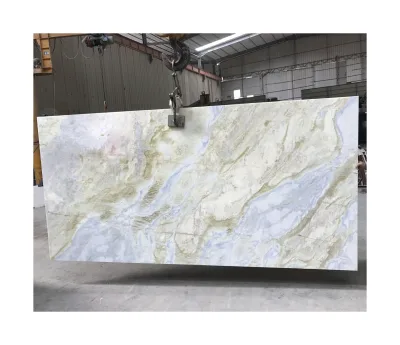


Luxury Bathroom Marble Design Natural Marble Floor and Wall Tile
$120.00 - $250.00
MOQ: 20 Square Meters

Custom Luxury Onyx Marble Tile Onyx Tile Floor Wall Agate Marble Price Natural Stone Onyx
$39.00 - $59.00
MOQ: 100 Square Feet

Comprehensive Sourcing Guide
Strategic Sourcing Guide for Luxury Onyx Marble Stone Tiles
The procurement of luxury onyx marble stone tiles represents a specialized segment within the global stone industry, characterized by high aesthetic value, variable natural patterns, and specific technical handling requirements. Buyers entering this market must navigate a complex landscape where natural stone variability intersects with precise manufacturing tolerances. This guide synthesizes observed market data and technical attributes to provide a structured framework for evaluating suppliers, verifying product specifications, and managing the procurement lifecycle for onyx and marble products. The following sections detail the critical dimensions of sourcing, from technical definitions to quality assurance protocols.
Technical Specifications and Material Attributes
Understanding the precise technical specifications of onyx and marble is the first step in defining procurement requirements. The market data indicates a diverse range of product forms, including big slabs, cut-to-size pieces, and standard tiles. A critical observation in the current supply base is the variation in thickness, which is a primary determinant of structural integrity and application suitability. Available thickness specifications observed in the market include 10mm, 18mm, 20mm, and standard sizes ranging up to 30mm. For instance, specific listings show 10mm tiles with a size of 300x300mm, while other offerings provide 20mm slabs suitable for heavy-duty applications.
The surface finishing processes are equally critical for defining the final aesthetic and tactile experience. The observed data highlights a wide array of available finishes, including polished, honed, flamed, bushhammered, sandblasted, tumbled, and acid finishes. A polished degree of above 85 degrees is a common benchmark for high-gloss onyx, which is essential for maximizing the translucency and depth of the stone. However, buyers must verify the specific finish required for their project, as a bush-hammered edge or a flamed surface offers a completely different texture compared to a mirror-polished face.
Color and stone form are defining characteristics that vary significantly. While onyx is often associated with translucency, the observed market includes specific color variants such as Grey, White, and Green. The "Green Onyx Marble" and "Chiva White Marble" are examples of specific product names found in listings, indicating that buyers should not assume a single color profile for the category. Furthermore, the stone form can range from big slabs to tiles, with diagonal tolerances typically specified at +/-1mm for larger formats. Density is another technical parameter, with observed values around 2.6 g/cm³, which serves as a baseline for weight calculations during logistics planning.
Compliance, Certification, and Standard Verification
In the luxury stone sector, compliance and standard verification are paramount to ensuring that the material meets international safety and quality expectations. The supplied data indicates that product standards can be customized or aligned with specific grade requirements, such as "Grade A." Buyers must distinguish between generic market claims and verified certifications. While some background knowledge suggests the existence of ISO 9001:2015 or ROHS certifications, these should not be assumed as standard for every listed product without explicit verification from the supplier.
Instead of relying on general assumptions, procurement teams should request specific documentation for each order. The data mentions that SGS standards are available for customized orders, suggesting that third-party inspection is a viable pathway for quality assurance. When evaluating a supplier, buyers should explicitly ask for the test results that correspond to the claimed standard. For onyx, which is often used in interior applications, verifying that the stone does not emit harmful levels of radiation or heavy metals is a standard due diligence step. The "Standard Size" of 300/600x600x15/18/20/30mm provides a reference point, but buyers must confirm if the specific batch adheres to these dimensions or if they are custom-cut.
Furthermore, the "prod_standard" field in the data shows entries for "customized" and "SGS," indicating that the standard is not always a fixed international norm but can be a negotiated agreement. This flexibility allows for tailored quality control but requires the buyer to define the acceptance criteria clearly in the purchase order. The absence of a universal mandatory certification for all onyx products means that the burden of verification falls on the buyer to ensure the supplier's quality management system aligns with the project's specific needs.
Cost Drivers and Pricing Dynamics
The pricing of luxury onyx marble tiles is influenced by a complex interplay of factors, including material rarity, processing complexity, and logistics. The observed price range in the market spans from 0 to 700 USD, a wide variance that reflects differences in stone quality, thickness, finish, and order volume. It is crucial to understand that the lowest price point often corresponds to lower-grade material or smaller, less complex cuts, while the upper end of the range likely includes premium slabs with superior translucency and intricate veining.
Volume is a significant cost driver, as evidenced by the Minimum Order Quantity (MOQ) range of 1 to 1200 units. Specific listings indicate an MOQ of 200 square meters for certain green onyx products, while others may accept smaller quantities. Buyers should be aware that ordering below the standard MOQ may incur a premium or result in longer lead times. Additionally, the transportation method—whether by sea or train—impacts the final landed cost. The "Business Term" options, including FOB, CNF, CIF, EXW, and DDU, dictate who bears the cost and risk of shipping, which must be factored into the total cost of ownership.
The "Delivery Time" is another variable that affects cost. The observed range of 10-25 days after payment received suggests that production lead times are relatively short but can fluctuate based on order complexity. Customized orders, which require specific cutting or finishing, may extend this timeline. Buyers should also consider the cost of packaging, as the data notes the use of wooden cartons, wooden crates, and bundles. Robust packaging is essential for onyx due to its brittleness, and the cost of high-quality wooden crates is often included in the unit price or charged separately.
Typical Applications and Design Integration
Luxury onyx marble tiles are selected for their unique ability to transmit light, creating a luminous effect that is highly prized in high-end interior design. The observed applications for these materials include countertops, flooring, wall cladding, and staircases. The specific product names, such as "Bathroom/Wall Chiva White Marble Slab/Tile," highlight the versatility of the material across different room types. However, the suitability of onyx for specific applications depends heavily on the thickness and finish selected.
For flooring and high-traffic areas, the 20mm thickness with a polished or bush-hammered finish offers the necessary durability. The data lists "Usage" as Floor, Wall, Kitchen, and Countertop, confirming its broad applicability. However, onyx is softer than granite, making it more susceptible to scratching and etching. Therefore, for kitchen countertops, a honed or flamed finish might be preferred over a high-gloss polish to hide minor imperfections and reduce the visibility of wear.
The "Stone Form" also dictates the application. Big slabs are ideal for seamless wall cladding or large countertop surfaces where joint lines are to be minimized. In contrast, tiles with standard sizes like 300x300mm are better suited for flooring patterns or mosaic installations. The "Edge Processing" options, such as flat or bush-hammered edges, allow designers to create specific aesthetic profiles that complement the overall design scheme. Buyers should ensure that the selected application matches the technical capabilities of the specific tile variant, particularly regarding water absorption and slip resistance.
Supplier Evaluation and Operational Capabilities
Evaluating a supplier for luxury onyx requires a focus on their operational capabilities, logistics network, and customization flexibility. The data indicates that the origin of these products is China, with a port of loading at "Any Port of China." This suggests a robust export infrastructure, but buyers must verify the specific port to optimize shipping routes and costs. The availability of transportation by sea or train provides flexibility in logistics planning, allowing buyers to choose the most cost-effective or time-efficient method based on their location.
Supplier evaluation should also include an assessment of their customization capabilities. The "prod_standard" and "Customization" fields confirm that suppliers are willing to accommodate specific requirements, such as custom sizes and finishes. This is particularly important for onyx, where natural variations in the stone require precise cutting to match design intent. The "Business Term" options, including T/T or L/C at Sight, indicate standard payment practices, but buyers should negotiate terms that protect their interests, especially for large orders.
The "Sample" availability is a critical factor in the evaluation process. The data explicitly mentions that samples are free, which allows buyers to physically inspect the stone's color, translucency, and texture before committing to a large order. This step is non-negotiable for luxury projects, as digital images often fail to capture the true depth and character of onyx. Buyers should request samples of the exact batch intended for the project to ensure consistency, as natural stone can vary significantly between batches.
Quality Control and Long-Term Procurement Considerations
Quality control in the onyx market must address the inherent variability of natural stone. The observed "Thickness Tolerance" of +/-0.5mm and "Diagonal Tolerance" of +/-1mm provide measurable benchmarks for acceptance. However, these tolerances are minimums, and buyers should establish stricter internal standards if the project demands high precision. The "Finish" options, ranging from polished to acid, require rigorous inspection to ensure uniformity across the entire order.
Long-term procurement considerations involve the durability and maintenance of the installed stone. Onyx is known for its beauty but requires specific care to maintain its appearance. Buyers should verify the "Application" suitability for their specific environment; for example, using onyx in a wet area like a shower requires a specific sealant treatment that may not be standard. The "Packing" methods, including wooden crates and bundles, are designed to prevent breakage during transit, but the buyer must inspect the goods immediately upon arrival to document any transit damage.
Finally, the "Delivery Time" of 10-25 days after payment received is a standard expectation, but buyers should plan for potential delays due to customs or logistics issues. Establishing a clear communication channel with the supplier and defining the acceptance criteria in the contract are essential for mitigating risks. By adhering to these structured evaluation and quality control protocols, buyers can successfully navigate the complexities of sourcing luxury onyx marble stone tiles, ensuring that the final installation meets both aesthetic and functional requirements.
FAQs
What thickness options are available for luxury onyx marble stone tiles?
Available thickness options include 10mm, 18mm, and 20mm for various applications. Buyers can also find standard sizes ranging up to 30mm depending on the specific product form and customization requirements.
Can suppliers provide customized finishes for luxury onyx marble stone tiles?
Yes, suppliers offer customized finishes such as polished, flamed, bushhammered, and sandblasted. The standard size and thickness can also be adjusted to meet specific project needs and design preferences.
How long does delivery take for Luxury Onyx Marble Stone Tile orders?
Delivery typically takes 10 to 25 days after payment is received. This timeline applies to standard orders, though customized requests may require additional processing time before shipment.
Which certifications are available for Luxury Onyx Marble Stone Tile products?
Products can meet SGS standards or be produced according to customized order specifications. Buyers should verify specific grade requirements like Grade A or other quality benchmarks before placing an order.
What is the minimum order quantity for luxury onyx marble stone tiles?
Minimum order quantities range from 1 unit up to 1200 units depending on the supplier. Specific listings may require a minimum of 200 square meters for certain green onyx variants.
How are luxury onyx marble stone tiles packed for international shipping?
Tiles are packed in wooden cartons, wooden crates, or bundles to ensure safety during transit. The packaging is designed to prevent breakage given the brittle nature of the stone material.