Source Luxury Packaging Vacuum Metallized Pigment for coatings
Find 30 verified listings for Luxury Packaging Vacuum Metallized Pigment suitable for ceramic pigments, ink pigments, and plastic applications. Compare specifications including model numbers, packaging types, and D50 values from multiple Chinese manufacturers.
Key considerations
Products List

Metallic Luster, Pearl and Glitter Effect Vacuum Metallized Pigment for Cosmetics
$85.00 - $99.00
MOQ: 1 kilograms


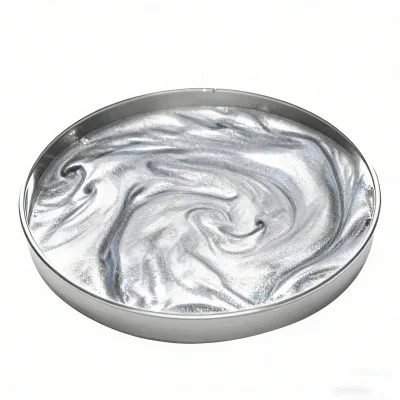
Vacuum Metallized Pigment Aluminum Silver Paste Vmp for Self-Spraying Paints
$85.00 - $99.00
MOQ: 1000 kg





Comprehensive Sourcing Guide
Strategic Sourcing Guide for Luxury Packaging Vacuum Metallized Pigments
Understanding the Technical Landscape of Vacuum Metallized Pigments
The procurement of vacuum metallized pigments for luxury packaging requires a deep understanding of the material's physical and chemical properties. These pigments are distinct from standard metallic powders, often engineered to provide high reflectivity and a specific aesthetic finish that mimics the look of vacuum-deposited metal films. Based on the available market data, the core material in question is frequently identified as aluminum paste, characterized by an inorganic pigment style. The physical form is typically observed as a powder, which offers versatility in mixing and application processes.
A critical technical specification for buyers to evaluate is the particle size distribution, often denoted as the D50 value. In the observed product data, a D50 value of 8 micrometers is noted. This metric is vital for determining the fineness of the pigment, which directly influences the smoothness of the final finish and the opacity of the coating. For luxury applications, where surface defects are unacceptable, the consistency of this particle size is paramount. Furthermore, the solubility characteristics must be verified; while the data lists "Solubility" as a general attribute, the actual performance depends heavily on the solvent system used in the specific ink or coating formulation. Buyers must ensure the pigment is compatible with the intended vehicle, whether it is water-based, solvent-based, or UV-curable.
The appearance of the pigment is another key observation. The data indicates a "Light Yellow" color for certain variants, which suggests a specific grade or oxidation state. In luxury packaging, the color consistency is often more critical than the raw pigment color, as the final metallic effect is achieved through the alignment of the platelets during application. The hardness of the material is also a factor; some observed products are described as "Soft," which may indicate a specific processing method or a composite material designed to reduce abrasion during handling. Understanding these physical attributes allows procurement specialists to match the right pigment grade to the specific demands of high-end cosmetic, pharmaceutical, or consumer electronics packaging.
Compliance, Certification, and Regulatory Verification
Navigating the regulatory landscape is a non-negotiable aspect of sourcing materials for luxury goods, particularly when the end products may come into contact with food, cosmetics, or consumer goods. The supply chain for vacuum metallized pigments is global, but the manufacturing hubs identified in the data point to specific regions in China, such as Shandong and Anhui. While the origin provides context for logistics, the regulatory compliance is the primary concern for international buyers.
Certification verification is the first step in this process. The available data references a certification status of "ISOISORoHS," which implies adherence to International Organization for Standardization (ISO) management systems and the Restriction of Hazardous Substances (RoHS) directive. However, buyers must treat this as a starting point for verification rather than a guaranteed status for every unit. RoHS compliance is essential for electronics and general consumer goods, ensuring that heavy metals like lead, mercury, and cadmium are within permissible limits. For luxury packaging intended for food or cosmetic use, additional certifications such as FDA compliance (for the US) or EU Regulation 10/2011 (for plastics and coatings) may be required, even if not explicitly listed in the general product attributes.
The European Inventory of Existing Commercial Chemical Substances (EINECS) is another regulatory marker found in the data, listed as "Vacuum Metallized Pigment." This classification is crucial for chemical registration under REACH (Registration, Evaluation, Authorisation and Restriction of Chemicals) in the European Union. Buyers must confirm that the specific EINECS number corresponds to the exact chemical composition of the batch they intend to purchase. A generic listing may not cover all variations of the product, especially if the manufacturer offers custom formulations.
Furthermore, the "Non-volatile" content is a specific attribute listed as 10%. This figure represents the percentage of the product that remains after the evaporation of solvents or carriers. In the context of luxury packaging, a low non-volatile content might indicate a high solvent load, which could impact the drying time and the final film thickness. Buyers should verify this figure against their specific application requirements, as a 10% non-volatile content may be suitable for certain ink formulations but insufficient for high-build coatings. The verification of these regulatory and chemical attributes ensures that the supply chain remains compliant with international trade laws and safety standards, mitigating the risk of product recalls or market rejection.
Cost Drivers and Economic Factors in Procurement
The economics of sourcing vacuum metallized pigments are influenced by a complex interplay of raw material costs, processing complexity, and logistical factors. The observed price range in the market spans from $0.01 to $1,800, a vast disparity that reflects the diversity of product types, from small sample quantities to bulk industrial drums. This wide range indicates that the unit price is not a linear function of volume alone but is heavily dependent on the specific model number, packaging format, and customization level.
One of the primary cost drivers is the packaging specification. The data shows various packing options, including "15kg/Drum," "25kg/Drum," "1kg/Drum," and "5kg/Drum," as well as "Carton" and "Palletized" options. The choice of packaging directly impacts the cost per kilogram. Smaller packaging units, such as 1kg drums, are typically more expensive per unit weight due to the higher labor and material costs associated with handling smaller quantities. Conversely, bulk packaging like 25kg drums or palletized shipments reduces the cost per kilogram but requires larger minimum order quantities (MOQs). The observed MOQ range of 1 to 30,000 units further illustrates this dynamic; buyers seeking low volumes will face a higher unit cost, while those capable of committing to large orders can negotiate more favorable pricing structures.
Customization is another significant factor influencing cost. The data explicitly states that "Customization: Available." Custom formulations, such as specific particle sizes, color modifications, or tailored solvent systems, require additional R&D and production setup time. These bespoke solutions command a premium over standard off-the-shelf products. For luxury packaging, where brand differentiation is key, customization is often necessary, but buyers must budget for the associated costs and potential lead time extensions.
Logistics and origin also play a role in the final landed cost. With production centers in Shandong and Anhui, China, buyers must consider shipping costs, which vary based on the weight and volume of the shipment. The single package size of 20x15x35 cm and a gross weight of 2.000 kg per unit provide a baseline for calculating freight. However, for bulk orders, the efficiency of palletization becomes critical. Buyers should evaluate the total cost of ownership, including freight, insurance, and customs duties, rather than focusing solely on the ex-works price. The "Various Specifications for Option" standard mentioned in the data suggests that buyers can select packaging and dimensions that optimize their logistics, thereby reducing overall procurement costs.
Typical Applications and Performance Requirements
Vacuum metallized pigments are versatile materials used across a wide spectrum of industries, with a particular emphasis on sectors where aesthetics and durability are paramount. The observed usage data highlights applications in "Ceramic Pigments, Coating Pigment, Ink Pigments, Leather Pigments, Plastic & Rubber Pigment," as well as "Packaging Film, Food Cling Film, Glass Protection Film, Agriculture, Industry, Gift Packaging, Textile and Apparel." This breadth of application underscores the adaptability of the material, but it also means that performance requirements vary significantly depending on the end use.
In the luxury packaging sector, the primary application is for high-end cosmetic and perfume bottles, gift boxes, and premium consumer electronics. In these contexts, the pigment is often used in inks or coatings to create a metallic sheen that mimics the look of vacuum-deposited aluminum. The "Aluminum" type and "Inorganic Pigment" style are particularly suited for this, offering a bright, reflective finish. The "Spray" method mentioned in the data suggests that these pigments are compatible with spray application techniques, which are common in the production of complex packaging shapes.
For food and cosmetic packaging, the pigment must meet stringent safety standards. The data lists "Food" and "Cosmetic" under usage categories, indicating that the material is intended for these sensitive applications. However, the "Solubility" attribute requires careful verification to ensure that the pigment does not leach harmful substances into the product. The "Moisture Proof" feature is also critical for packaging films, ensuring that the metallic finish remains intact in humid environments.
In the textile and leather industries, the pigment is used to add metallic accents to fabrics and leather goods. The "Soft" hardness attribute observed in some products may be beneficial here, as it allows the pigment to flex with the material without cracking. The "Multiple Extrusion" processing type suggests that the material can be integrated into polymer matrices during the extrusion process, making it suitable for the production of metallized films and sheets.
The "Glass Protection Film" application highlights the durability requirements of the pigment. In this context, the pigment must withstand abrasion and environmental exposure while maintaining its optical properties. The "Light Yellow" color observation may be relevant for specific film grades where a warm metallic tone is desired. Buyers must match the specific application requirements with the correct pigment grade, ensuring that the material's physical and chemical properties align with the performance needs of the final product.
Supplier Evaluation and Quality Assurance Protocols
Selecting the right supplier is a critical decision that impacts the quality, consistency, and reliability of the supply chain. With a product count of 30 and a wide range of models (e.g., AP-1108, E-7704, AP-1305), buyers must employ a rigorous evaluation process to identify suppliers who can meet their specific needs. The first step is to verify the supplier's ability to provide the specific model numbers and specifications required. The data lists multiple model numbers, indicating that different suppliers may specialize in different product lines. Buyers should request detailed technical data sheets (TDS) for each model to confirm the D50 value, non-volatile content, and other critical attributes.
Quality assurance protocols are essential to ensure consistency. The "ISOISORoHS" certification is a good starting point, but buyers should also request batch-specific test reports. These reports should verify the particle size distribution, color consistency, and chemical composition of the specific batch being shipped. The "Single gross weight" of 2.000 kg and "Single package size" of 20x15x35 cm provide a baseline for checking packaging integrity, but buyers should also inspect the packaging for signs of damage or contamination.
The "Customization: Available" attribute suggests that suppliers are willing to work with buyers to develop custom formulations. However, this requires a high level of collaboration and trust. Buyers should evaluate the supplier's R&D capabilities and their track record in delivering custom solutions. The "Various Specifications for Option" standard indicates flexibility, but buyers must ensure that the supplier can maintain quality control across different specifications.
Supplier evaluation should also include an assessment of their production capacity and lead times. The observed MOQ range of 1 to 30,000 units suggests that suppliers can accommodate both small and large orders, but buyers should confirm the lead times for custom orders. The "Process Type: Multiple Extrusion" and "Material: Laminated Material" attributes indicate complex manufacturing processes, which may require longer lead times. Buyers should establish clear communication channels with the supplier to monitor production progress and address any issues promptly.
Finally, buyers should consider the supplier's location and logistics capabilities. With production centers in Shandong and Anhui, China, buyers should evaluate the supplier's ability to handle international shipping and customs clearance. The "Palletized" and "Carton" packing options offer flexibility, but buyers should ensure that the packaging is suitable for long-distance transport and storage.
Long-Term Procurement and Supply Chain Resilience
Sourcing vacuum metallized pigments for luxury packaging is not just a transactional activity; it is a strategic partnership that requires long-term planning and resilience. The variability in product attributes, such as the "Light Yellow" color and "Soft" hardness, suggests that buyers must maintain a flexible approach to their procurement strategy. The wide price range and MOQ options indicate that buyers can scale their orders based on demand, but they must also plan for potential supply chain disruptions.
One key consideration is the standardization of specifications. The "Various Specifications for Option" standard implies that buyers have the freedom to choose different grades, but this can lead to complexity in inventory management. Buyers should aim to standardize their pigment requirements where possible, selecting a limited number of models that meet the majority of their needs. This approach simplifies the procurement process and reduces the risk of supply chain disruptions.
Another important factor is the development of alternative suppliers. Relying on a single supplier for a critical material like vacuum metallized pigments poses a significant risk. Buyers should identify and qualify backup suppliers who can provide similar products in the event of a disruption. The data shows multiple model numbers and origins, suggesting that there are multiple sources available. Buyers should leverage this diversity to build a resilient supply chain.
Finally, buyers should focus on building strong relationships with their suppliers. The "Customization: Available" attribute highlights the importance of collaboration in the procurement process. By working closely with suppliers, buyers can ensure that their specific needs are met and that the supply chain remains agile and responsive to market changes. Long-term contracts and volume commitments can also help secure better pricing and priority production slots, further enhancing supply chain resilience.
In conclusion, sourcing vacuum metallized pigments for luxury packaging requires a comprehensive approach that balances technical specifications, regulatory compliance, cost considerations, and supply chain resilience. By following the guidelines outlined in this guide, buyers can make informed decisions that ensure the quality and reliability of their products in the competitive luxury market.
FAQs
What is the D50 value for the observed aluminum paste pigment?
The observed D50 value is 8 micrometers, indicating the particle size distribution for this specific grade. This metric influences the fineness and smoothness of the final metallic finish applied to luxury packaging surfaces.
Which certifications are available for these vacuum metallized pigments?
Available certifications include ISO, ISO standards, and RoHS compliance. Buyers should verify these specific documents to ensure the product meets international safety and environmental regulations for consumer goods.
How is the product typically packaged for shipment?
The product is commonly packaged in drums of 1kg, 5kg, 15kg, or 25kg, or in cartons and palletized units. The specific packing option depends on the model number and order quantity requirements.
Can the pigment be customized for specific applications?
Yes, customization is available for this inorganic pigment. Buyers can request tailored formulations to meet specific requirements for ink, coating, or plastic applications in the luxury packaging sector.
What is the non-volatile content percentage of the pigment?
The non-volatile content is observed at 10 percent. This figure represents the solid residue remaining after solvent evaporation and is critical for determining drying times and final film thickness in coatings.
Which locations are the primary origins for these pigments?
Primary production origins include Shandong and Anhui in China. These regions serve as the main manufacturing hubs for the aluminum paste and vacuum metallized pigment variants listed in the product data.
What are the typical usage categories for this aluminum pigment?
Typical usage includes ceramic, coating, ink, leather, plastic, rubber, food, cosmetic, and textile applications. The material is versatile for creating metallic effects in luxury packaging films and protective layers.