Source Luxury Reactive Print Bedding Set for Home Hotel Resort
Compare 30 Luxury Reactive Print Bedding Set options from verified suppliers. Explore varying materials, patterns, and customization features to find the right fit for home, hotel, or resort needs.
Key considerations
Products List


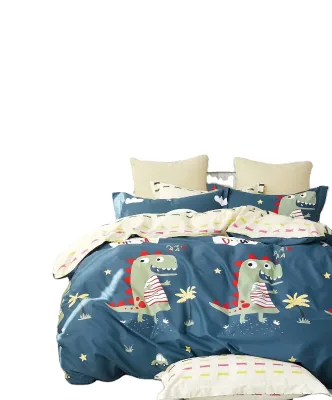


$25.00 - $45.00
MOQ: 2 Pieces

$25.00 - $45.00
MOQ: 2 Pieces


Comprehensive Sourcing Guide
Strategic Sourcing Framework for Luxury Reactive Print Bedding Sets
The global market for luxury bedding has evolved significantly, driven by a demand for high-performance textiles that combine aesthetic sophistication with functional durability. For procurement professionals targeting a Luxury Reactive Print Bedding Set, the sourcing strategy must extend beyond simple price comparisons. It requires a deep understanding of the specific chemical processes involved in reactive dyeing, the structural integrity of the fabric weave, and the rigorous compliance standards necessary for high-end hospitality and residential applications. This guide provides a comprehensive framework for evaluating suppliers, verifying technical specifications, and mitigating supply chain risks associated with premium textile procurement.
Understanding Reactive Dyeing and Fabric Composition
The term "reactive print" refers to a specific dyeing mechanism where the dye molecule forms a covalent bond with the fiber molecule. This process is distinct from disperse or vat dyeing and is particularly effective for cellulosic fibers like cotton and linen, as well as specific blends. When sourcing a luxury set, the buyer must verify the material composition to ensure the dyeing process was appropriate for the fiber type. In the current market, observed material specifications for high-quality bedding often include 100% Cotton, 100% Linen, or blends such as Polyester/Acrylic.
The choice of material directly influences the visual outcome of the reactive print. Cotton and linen offer superior breathability and a natural hand feel, which are critical for luxury positioning. However, the supply chain data indicates a diverse range of materials, including 100% Polyester and blends. While polyester is often associated with digital printing or disperse dyeing, some suppliers may utilize reactive dyes on specific modified polyester fibers or blends. Buyers must explicitly confirm the fiber content to ensure the "reactive" claim is technically valid. A mismatch between the dye chemistry and the fiber type can lead to poor color fastness, bleeding, or a lack of the vibrant, deep hues associated with luxury reactive prints.
Furthermore, the technical construction of the fabric, described as either "Knitted" or "Woven," plays a pivotal role in the final product's performance. Woven fabrics, such as those with a "Plain" or "European-style" weave, typically offer a crisp, structured drape suitable for formal hotel settings. Knitted fabrics provide elasticity and a softer touch, often preferred for residential luxury bedding. The observed market data shows a mix of these techniques, with some products listed as "Woven" and others as "Knitted." Procurement teams must align the fabric construction with the intended application, whether it is for a high-traffic hotel environment requiring durability or a residential setting prioritizing comfort.
Technical Specifications and Customization Parameters
Defining precise technical specifications is the first line of defense against quality inconsistencies. In the luxury segment, "Full" and "Queen" sizes are standard, but the definition of these sizes can vary by region and manufacturer. Buyers should not assume that a "Queen" size from one supplier matches the dimensions of another. The supply chain observations reveal that "Customize size" is a frequently offered standard, allowing for bespoke dimensions that align with specific bed frames or regional preferences. This flexibility is a key advantage for luxury buyers who require exact fits for high-end furniture.
The pattern execution is another critical specification. The market data indicates a variety of pattern types, including "Plain Dyed," "Embroidered," "Printed," and "Yarn Dyed." For a "reactive print" product, the expectation is a high-resolution, vibrant image that is integrated into the fiber. However, suppliers may also offer "Embroidered" or "Yarn Dyed" alternatives that mimic the look of prints or add texture. Buyers must distinguish between a true reactive print and other decorative techniques. The "Plain Dyed" option, while simple, may not meet the aesthetic requirements of a luxury set unless the color depth is exceptional.
Customization extends beyond dimensions and patterns to include packaging and branding. The observed data lists packaging options such as "PVC Bag," "OPP Bag," "Carton," and "Fabric Bag." For luxury goods, the unboxing experience is paramount. A "Carton" with internal protective layers or a "Fabric Bag" that allows for reuse can significantly enhance the perceived value. Additionally, the "OEM" (Original Equipment Manufacturer) capability is marked as "Acceptable" in the market, indicating that suppliers are willing to apply private labels, specific logos, or custom tags. This is essential for brands looking to maintain a consistent identity across their product lines.
Compliance, Certification, and Safety Standards
In the luxury bedding sector, compliance is not merely a regulatory hurdle but a core component of brand reputation. While specific certification statuses like "OEKO-TEX" are mentioned in background contexts, buyers must treat these as verification targets rather than guaranteed attributes of every listed product. The primary safety concern in textile manufacturing is the presence of harmful substances, including formaldehyde, heavy metals, and azo dyes.
The supply chain data explicitly notes that certain products are "Without Ethylene Oxide Sterilization." This is a crucial detail for buyers targeting markets with strict regulations on sterilization residues. Ethylene oxide is a potent sterilizing agent, but its residues can be hazardous to human health. Luxury buyers should verify whether their target products have undergone alternative sterilization methods or if they are marketed as "non-sterilized" for specific use cases.
When evaluating compliance, buyers should request third-party test reports that cover color fastness to washing, rubbing, and light, as well as pH levels and formaldehyde content. The "Good" quality rating observed in the market is a subjective observation and should be substantiated by objective test data. For international trade, adherence to standards such as REACH in Europe or CPSIA in the United States is mandatory. Buyers must ensure that the supplier's "prod_standard" aligns with the regulatory requirements of the destination market. The observation that "100% Polyester" is listed as a standard in some contexts suggests that material purity claims must be rigorously tested, as blends or impurities can affect compliance.
Cost Drivers and Economic Considerations
The pricing of luxury reactive print bedding sets is influenced by a complex interplay of factors, including material costs, dyeing complexity, labor intensity, and order volume. The observed price range in the market spans from $2 to $55 USD, a significant variance that reflects differences in quality, brand positioning, and production scale. The lower end of this range likely corresponds to basic polyester blends with standard printing, while the upper end reflects high-thread-count cotton or linen with intricate reactive dyeing and premium packaging.
Order volume is a primary cost driver. The Minimum Order Quantity (MOQ) observed in the market ranges from 1 to 1000 units. For buyers seeking customization, such as specific patterns or branding, a higher MOQ is often required to amortize the setup costs of the reactive dyeing process. The data shows an MOQ of 100 units for certain models, while others allow for single-unit orders. Buyers must balance the need for customization with the economic feasibility of the order. Smaller orders may incur higher per-unit costs due to the fixed costs of dye preparation and machine setup.
Material costs also play a significant role. 100% Cotton and 100% Linen are generally more expensive than polyester blends. The choice between "Plain Dyed" and "Yarn Dyed" or "Embroidered" techniques further impacts the cost. Yarn dyeing, for instance, involves dyeing the yarn before weaving, which is a more labor-intensive and costly process than piece dyeing. Buyers should analyze the cost structure of the supplier to understand where the value is being added. A higher price point should correlate with tangible benefits such as superior color fastness, better fabric hand feel, or more durable construction.
Supplier Evaluation and Quality Control Protocols
Selecting the right supplier requires a multi-faceted evaluation process that goes beyond the initial product listing. The market data indicates that suppliers offer various "prod_model" identifiers, such as "BS0005," "TB-20," and "CB-03," which can serve as reference points for specific product lines. However, the true test of a supplier's capability lies in their quality control (QC) protocols and their ability to maintain consistency across batches.
Buyers should implement a rigorous QC strategy that includes pre-production sample approval, in-line inspection, and final random inspection. For reactive print bedding, the focus should be on color consistency, pattern alignment, and fabric integrity. The "Quality: Good" observation is a starting point but must be validated through physical inspection. Buyers should check for defects such as color bleeding, uneven dye distribution, or loose threads. The "Usage" category, which includes "Home" and "Hotel," suggests that the products are designed for both residential and commercial environments. Hotel-grade bedding, in particular, must withstand frequent washing and high-traffic use, requiring higher durability standards than residential sets.
The "Customization: Available" attribute indicates that suppliers are flexible, but this flexibility must be managed carefully. Buyers should establish clear communication channels to define the scope of customization, including acceptable tolerances for color variation and size dimensions. The "Group: Universal" and "Age Group: Adults" or "Children" classifications help in targeting the right market segment, but buyers must ensure that the safety and comfort standards align with the intended demographic. For children's bedding, additional safety checks regarding choking hazards and chemical safety are essential.
Long-Term Procurement and Supply Chain Resilience
Sourcing luxury bedding is not a one-time transaction but a long-term partnership that requires strategic planning. The "Location: China" observation highlights the dominance of Chinese manufacturing in this sector, offering a robust supply chain but also introducing logistical considerations. Buyers should assess the supplier's lead times, production capacity, and ability to scale during peak seasons. The "prod_packing" options, ranging from simple polybags to custom cartons, should be evaluated for their impact on shipping efficiency and product protection.
Long-term procurement considerations also include the potential for supply chain disruptions. Diversifying the supplier base and maintaining safety stock can mitigate risks associated with production delays or raw material shortages. The "OEM: Acceptable" status suggests that suppliers are capable of adapting to changing brand needs, but buyers should formalize these capabilities in long-term contracts. Additionally, the "Standard: Customize size" feature offers a competitive advantage for buyers looking to differentiate their product lines, but it requires careful inventory management to avoid overstocking of non-standard sizes.
Sustainability is another emerging factor in long-term procurement. While the provided data does not explicitly detail sustainable practices, buyers should inquire about the environmental impact of the reactive dyeing process, water usage, and waste management. The "Ethylene Oxide Sterilization: Without" attribute is a positive indicator for certain markets, but broader sustainability metrics, such as water recycling and energy efficiency, should be part of the supplier evaluation criteria.
Application Scenarios and Market Positioning
The versatility of luxury reactive print bedding sets allows for diverse applications across the hospitality and residential sectors. The "Usage: Home, Hotel" classification underscores this dual applicability. In the hotel industry, the bedding must project a sense of luxury and comfort while maintaining high durability. The "Bedding Style: Hotel" observation suggests that some products are specifically designed for commercial use, featuring robust construction and easy-care properties.
For the residential market, the focus shifts to aesthetic appeal and comfort. The "Style: Simple-style" or "European-style" options cater to different interior design preferences. The "Pattern: Printed" and "Embroidered" options allow for personalization, enabling buyers to create unique collections that stand out in a crowded market. The "Item Contain: 1 PC Bedsheet" or "3 PCS" configurations provide flexibility in product bundling, allowing buyers to offer complete sets or individual components based on customer demand.
Understanding the specific application scenarios helps in tailoring the procurement strategy. For high-end hotels, the priority is consistency and durability, requiring strict quality control and standardized sizes. For boutique residential brands, the focus may be on unique designs and customization, necessitating a more flexible supplier relationship. By aligning the product specifications with the intended application, buyers can optimize their inventory and maximize market penetration.
Conclusion
Sourcing a Luxury Reactive Print Bedding Set requires a meticulous approach that balances technical precision, compliance rigor, and economic efficiency. By leveraging the observed market data and applying a disciplined evaluation framework, procurement professionals can navigate the complexities of the global textile market. The key lies in verifying material compositions, understanding the nuances of reactive dyeing, and establishing robust quality control protocols. As the market continues to evolve, staying informed about new standards and supplier capabilities will be essential for maintaining a competitive edge in the luxury bedding sector.
FAQs
What materials are used for luxury reactive print bedding sets?
Luxury reactive print bedding sets typically use 100% Cotton, 100% Linen, or Polyester blends. The specific material choice depends on the desired breathability and dye absorption, with cotton and linen offering superior natural hand feels for high-end applications.
Which customization options are available for bedding set sizes?
Customization for size is available, allowing buyers to specify dimensions like Full or Queen. Suppliers often support customized size standards to ensure exact fits for specific bed frames or regional preferences in both home and hotel environments.
Can buyers find bedding sets with specific packaging requirements?
Yes, packaging can be customized to meet specific branding or protection needs. Options observed include PVC bags, OPP bags, cartons, and fabric bags, allowing buyers to select the unboxing experience that best aligns with their luxury product positioning.
What is the typical minimum order quantity for these bedding sets?
The minimum order quantity ranges from 1 to 1000 units depending on the supplier and product model. Some models require an MOQ of 100 units, while others allow for smaller orders, balancing customization costs with production feasibility.
How are these bedding sets constructed in terms of fabric technique?
The fabric construction varies between knitted and woven techniques to suit different applications. Woven fabrics offer a crisp drape suitable for hotels, while knitted options provide elasticity and a softer touch preferred for residential luxury settings.
What safety standards apply to the sterilization of these products?
Some products are explicitly produced without Ethylene Oxide Sterilization to ensure safety compliance. Buyers should verify third-party test reports for harmful substances and ensure the sterilization method aligns with the regulatory requirements of their target destination market.