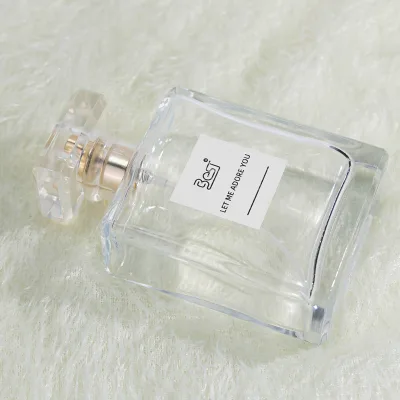
Source Luxury Screen Printed Perfume Bottle for Cosmetics
Find 30 Luxury Screen Printed Perfume Bottle options from Chinese manufacturers. Compare glass materials, cap styles, and customization services for cosmetics and personal care products. Explore various volumes and shapes to meet your specific branding needs; compare the available evidence and request quotations based on your requirements.
Key considerations
Products List


Wholesale Luxury 50ml Custom Square Screen Logo Printed Perfume Bottles
$0.30 - $0.50
MOQ: 10000 Pieces

Wholesale Luxury 100ml Custom Square Screen Logo Printed Perfume Bottles
$0.20 - $0.25
MOQ: 10000 Pieces


Wholesale 100ml Luxury Custom Screen Logo Printing Slim Glass Perfume Bottle
$0.30 - $0.50
MOQ: 10000 Pieces

High Quality 30ml/50ml/100ml Luxury Glass Perfume Bottle with Pump Spray
$0.09 - $0.40
MOQ: 10000 Pieces




Comprehensive Sourcing Guide
Luxury Screen Printed Perfume Bottle Sourcing Guide
Sourcing a Luxury Screen Printed Perfume Bottle requires balancing visual refinement against the technical realities of glass packaging production. These bottles serve fragrance, cosmetics, and personal care brands that need packaging capable of carrying brand identity directly on the glass surface through screen printing. Because the product sits at the intersection of decorative glass manufacturing and printing craftsmanship, buyers must evaluate suppliers on both dimensions rather than treating the bottle as a commodity container.
This guide is built on observed product-page signals from a set of 30 listings under the Olila brand name, all originating from China. The evidence base includes stated materials, cap options, volume ranges, minimum order quantities, and packaging descriptions. Where the listings provide concrete data—such as 30/50/100/150ml volume standards or ABS, PP, wooden, Surlyn, acrylic, plastic, Zamac, and leather cap materials—this guide cites it directly. Where listings are silent, the guide frames the topic as a verification task for the buyer rather than asserting a supplier capability.
Product Scope and Observed Listing Signals
The observed listings describe glass perfume bottles across several model families, including a generic Perfume Bottle model, a Perfume Glass Bottle model, and specific references such as PBL2334, MS625#, and 545#. Volume standards recur across the set: 30/50/100/150ml or custom sizes, plus distinct 80ml and 80/100ml standards, and paired sets of 30/50/100ml and 50/90ml. Shapes include cylinder and square variants, with narrow-mouth bottlenecks and transparent melt glass cited as common attributes. Buyers should treat these as the practical core of the category.
Listing signals also reveal customization breadth. Cap materials span ABS, PP, wood, Surlyn, acrylic, plastic, Zamac, and leather, giving brands a wide aesthetic range from minimalist acrylic to premium Zamac or leather-wrapped closures. Sealing is by pump sprayer, usage is stated for perfume, cosmetics, and personal care products, and OEM/ODM acceptance appears alongside general customization availability. One listing cites an MOQ of 20,000 pieces, another 20,000 PCS, and others 10,000 or 10,000PCS—so MOQ expectations in this category cluster in the five-figure range, though the overall observed listing range spans 2 to 10,000 and buyers should confirm per-item terms.
Technical Specifications to Verify
Volume and neck dimensions are the first technical anchors to lock down. The listings confirm a 15mm neck size on one item and volume standards of 30/50/100/150ml or custom, 80ml, 80/100ml, 100ml, 30/50/100ml, and 50/90ml on others. Buyers should match the neck finish precisely to the pump sprayer they intend to use, since a mismatch causes leaking or fitment failure. Confirm whether quoted volumes are nominal or filled capacity, and whether the glass weight and wall thickness are consistent across a production run.
Surface treatment deserves equal scrutiny. Screen printing is the stated surface handling method, and buyers should clarify how many print colors are included in the quoted price, what curing method is used, and how the print will resist abrasion from handling and from alcohol-based fragrance contents. Ask for print alignment tolerances on curved cylinder versus flat square geometries, since registration is harder on rounded surfaces. Also confirm glass type details—the listings cite melt glass—and whether color beyond transparent is achievable, since one listing states custom colors are available while another lists transparent only.
Compliance and Safety Documentation
Fragrance packaging touches skin and holds alcohol-based contents, so buyers should request documentation confirming the glass and printing inks are suitable for cosmetic contact. The listings themselves do not assert certifications, and low-confidence background references to ISO9001, ISO14001, REACH, ROHS, and CE should not be treated as verified. Instead, ask each candidate supplier to provide current certificates directly and check their validity and scope. A certificate that names the correct legal entity and covers the specific product family is worth far more than a logo on a product page.
Practical documentation requests should include material safety data for printing inks, confirmation that inks are cured and compatible with alcohol-laden fragrance formulations, and evidence of lead and heavy-metal limits where the destination market requires them. For pumps and plastic components, request food-grade or cosmetic-grade resin declarations. Buyers shipping to regulated markets should also verify that the supplier can support any market-specific labeling and packaging requirements, and that packaging—described in the listings as standard export cartons, pallets, and paper dividers—protects glass adequately for the chosen transport mode, whether by ship, air, or courier as one listing states.
Cost Drivers and Commercial Terms
Unit economics in this category are driven by volume, decoration complexity, and closure choice. Observed listed prices span roughly USD 0.09 to 2, which reflects the gap between simple small-format bottles and larger or more elaborately finished units. Each additional screen-print color, custom glass color, or premium cap material such as Zamac or leather increases unit cost and may raise the MOQ. Buyers should obtain itemized quotations separating glass, closure, printing, and packaging so they can see exactly which option moves the price.
Commercial terms observed in the listings include payment by T/T, Western Union, or PayPal, free samples, and paper-pack product packing. Buyers should confirm the sample-to-production price relationship—free samples are common, but sample approval should be tied to a written specification before mass production. Clarify which Incoterms apply, who arranges freight given the stated ship/air/courier options, and how carton and pallet configuration affects landed cost. Because MOQs cited in the listings run from 10,000 to 20,000 pieces, negotiate phased delivery schedules if warehouse capacity is limited rather than accepting a single large shipment by default.
Supplier Qualification and Quality Control
Qualifying a screen printed glass bottle supplier starts with sample evaluation under realistic conditions. Fill approved samples with an alcohol-based fragrance analog, age them, and inspect for print adhesion, color consistency, and glass defects such as seams, bubbles, or uneven bases that cause wobbling. Because the listings confirm pump sprayer sealing, test each sample pump for actuation force, priming behavior, and leak resistance in both upright and inverted orientations before committing to a production order.
For production control, define an inspection protocol in writing: AQL sampling levels, defect classifications for print registration and glass quality, and dimensional checks against the agreed neck size and volume standards. Request pre-shipment inspection rights or third-party inspection, and require that export packaging—standard export cartons, pallets, and paper dividers per the listings—be used consistently. Ask how the supplier handles breakage claims and what evidence, such as photos and carton condition, is required to process a claim. A supplier's willingness to put QC tolerances in writing is one of the strongest qualification signals available before the first order ships.
Long-Term Procurement Checks
Long-term value in this category comes from specification continuity and repeat-order stability. Once a bottle design is approved, freeze the specification document covering glass dimensions, neck finish, print artwork and colors, closure type, and packaging configuration, and require written confirmation before any re-order. The listings show OEM/ODM acceptance and customized service, which is useful for evolving brand lines, but any design change—cap material swap, new volume like moving from 50ml to 90ml—should trigger fresh samples and updated QC criteria rather than reusing prior approvals.
Monitor supplier performance across successive orders using simple metrics: defect rate at incoming inspection, on-time delivery against agreed schedules, and responsiveness on documentation requests. Re-validate certifications periodically rather than assuming they remain current, and re-confirm MOQ and pricing tiers annually, since raw material costs for glass and Zamac closures fluctuate. Maintain a second qualified source for critical SKUs where feasible, sharing the frozen specification so a switch does not force redesign. Buyers who treat the specification as a living, version-controlled document protect both brand consistency and negotiating leverage over the life of the product line.
FAQs
What customization options are available for these glass bottles?
Customization is available for these glass bottles to meet specific brand needs. The manufacturer offers customized services including screen printing on the surface and various cap materials like ABS, PP, or wood. Buyers can select from standard export carton packaging or request tailored packing solutions for their cosmetic products.
Which volumes are offered for the Luxury Screen Printed Perfume Bottle?
The product line offers multiple volume options including 30ml, 50ml, 80ml, 90ml, 100ml, and 150ml. Some specific models support custom volume requirements. These glass bottles are designed for daily use in cosmetics and personal care products, ensuring versatility for different perfume formulations and packaging strategies.
Can I order samples before placing a bulk order for these bottles?
Yes, samples are available and provided free of charge to potential buyers. This allows clients to verify the quality of the melt glass and screen printing before committing to large quantities. The manufacturer accepts OEM and ODM requests, making it easy to test designs prior to full production runs.
What is the minimum order quantity for purchasing these glass bottles?
The minimum order quantity varies by supplier but typically ranges from 2 to 10,000 pieces. Some listings indicate an MOQ of 20,000 pieces for specific models. Buyers should verify the exact MOQ with the vendor, as it depends on the chosen shape, volume, and customization level for the cosmetic packaging.
How are these perfume bottles packaged for international shipping?
These bottles are packaged using standard export cartons with paper dividers and pallets to ensure safety during transit. Additional packing options include paper packs or courier services. The packaging is designed to protect the glass material and screen-printed designs while meeting international shipping standards for cosmetic products.
Which payment terms are accepted for bulk orders of these bottles?
Accepted payment terms include T/T, Western Union, and PayPal for secure transactions. These options provide flexibility for international buyers sourcing glass bottles from China. Buyers should confirm specific payment schedules with the supplier to align with production timelines and shipping arrangements for their cosmetic packaging needs.
What shapes are available for the Luxury Screen Printed Perfume Bottle?
Available shapes include cylinder, square, and other custom forms to suit brand aesthetics. The bottles feature a narrow mouth design suitable for pump sprayers. These glass bottles are manufactured with melt glass technology and can be customized with screen printing to enhance the visual appeal of cosmetic and personal care products.