Source Manual Handheld Carton Coding Machine for Food, Drug, and Chemical
Compare 30 Manual Handheld Carton Coding Machine options from verified suppliers. These thermal inkjet devices support daily industrial, food, drug, and chemical product applications with customizable features and high-resolution printing capabilities; compare the available evidence and request quotations based on your requirements.
Key considerations
Products List


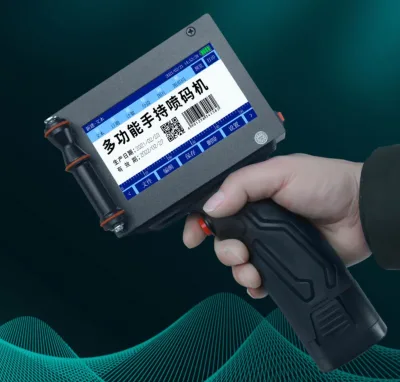


Hand Manual Coder/Handheld Inkjet Coding Machine/Hand Batch Number Printer
$360.00 - $880.00
MOQ: 1 Pieces


Date Code Hand Jet Printer/Handheld Inkjet Printer Printing Coding Machine
$138.00 - $148.00
MOQ: 1 Pieces

25.4mm Handheld Inkjet Printer Gun Portable Coding Machine for Carton Box
$270.00 - $530.00
MOQ: 1 Pieces
Comprehensive Sourcing Guide
Manual Handheld Carton Coding Machine Sourcing Guide
Buyers evaluating manual handheld carton coding machines must first distinguish between fully automatic industrial lines and portable units designed for on-demand marking. The observed product data indicates a specific subset of devices classified as thermal foam coding machines, which operate on thermal inkjet technology to apply high-resolution text and graphics directly onto packaging surfaces. These units are particularly suited for daily industrial applications where flexibility is required, allowing operators to manually guide the device across various carton sizes without complex integration into a conveyor system.
When reviewing listings, procurement teams should note that while some models are described as manual, others may feature semi-automatic capabilities or specific motor-driven components that assist in the coding process. The observed listings highlight a wide price range, suggesting significant variation in build quality, resolution capabilities, and included accessories. Buyers must carefully cross-reference the stated "Automatic Grade" with their actual workflow needs, ensuring the selected device matches the intended frequency of use and the specific material types, such as porous or non-porous surfaces, that require coding.
Product Scope and Observed Listing Signals
The product scope for these handheld units typically centers on high-resolution inkjet printing, with observed specifications supporting resolutions between 150 and 600 dpi. This range allows for clear, legible coding of batch numbers, expiration dates, and barcodes on diverse packaging materials, including food, drug, chemical products, and general daily industrial goods. The devices are engineered to support ink solutions for porous, semi-porous, and non-porous substrates, making them versatile tools for supply chains that handle mixed inventory types without requiring frequent hardware changes.
Listing signals often include specific physical dimensions and weight metrics that indicate portability and ease of handling. Observed data points to compact form factors, such as dimensions around 235100150mm, and lightweight designs weighing approximately 1.1 to 2.0 kg, which facilitate one-handed operation. Buyers should verify the screen interface, as many models feature 4.3-inch touch screens for intuitive menu navigation and language support, including English, Japanese, French, German, Spanish, and Portuguese, ensuring that operators in different regions can utilize the machine effectively without extensive training.
Technical Specifications to Verify
Technical verification must begin with the power and voltage requirements, as observed listings show variations ranging from 110V to 220V and specific power ratings like 21V or 16V. It is critical to confirm that the device's voltage compatibility matches the local electrical infrastructure to prevent operational failures or safety hazards. Additionally, the processor specifications, such as a quad-core CPU up to 1.5GHz, indicate the computational power available for handling complex graphics or rapid data processing, which directly impacts the speed and reliability of the coding operation during high-volume production runs.
Buyers should also scrutinize the print head capabilities and the physical print parameters, including print distance and height. The observed data suggests a print distance of 2-5mm and a print height of 2-12.7mm, which defines the operational clearance required between the device and the carton surface. Verifying the "Multi Print Head Seamless Joint" acceptance is essential for applications requiring continuous, high-quality lines without visible gaps. Furthermore, confirming the ink supply type and the availability of customization options ensures the machine can be tailored to specific branding or regulatory labeling requirements.
Compliance and Safety Documentation
Compliance verification is paramount when sourcing industrial coding equipment, with observed listings frequently citing CE and SGS standards as key indicators of safety and quality. Buyers must request current certification documents to ensure the device meets the regulatory requirements of the destination market, particularly regarding electrical safety and electromagnetic compatibility. While some background data mentions ROHS, the primary focus should remain on the explicit CE and SGS certifications provided in the product specifications to guarantee that the machinery adheres to international safety norms.
Safety documentation should also include detailed machinery test reports, which are noted as provided in several observed listings. These reports offer objective evidence of the device's performance under stress and validate the reliability of core components like the motor. Procurement teams should ensure that the warranty terms, typically observed as one year, are clearly defined in the contract and that the supplier provides comprehensive after-sales service, including online technical support, to address any potential safety or operational issues that may arise during the product's lifecycle.
Cost Drivers and Commercial Terms
Cost drivers for manual handheld carton coding machines are heavily influenced by the resolution capabilities, the complexity of the control system, and the inclusion of advanced features like touch screens and multi-language support. The observed price range of 22 to 30,000 USD reflects a broad spectrum of value, where lower-cost units may offer basic functionality while higher-priced models provide superior print accuracy, robust processors, and extended warranty coverage. Buyers must analyze the total cost of ownership, including the recurring cost of ink supplies and the potential need for replacement parts, rather than focusing solely on the initial purchase price.
Commercial terms such as Minimum Order Quantity (MOQ) and delivery lead times are critical factors in the procurement decision. Observed data indicates an MOQ of 1 set, offering flexibility for small businesses or pilot projects, while delivery is generally promised "in Time," though specific lead times should be confirmed with the supplier. Packaging standards, such as box or pallet configurations, also impact logistics costs and must be factored into the budget. Buyers should negotiate clear terms regarding training, which is often offered as free, and ensure that the supplier provides a detailed breakdown of all costs to avoid hidden fees.
Supplier Qualification and Quality Control
Supplier qualification requires a thorough assessment of the manufacturer's technical support capabilities and their track record in the industry. The observed listings emphasize strong technical support and free training, which are vital for ensuring that operators can utilize the machine effectively from day one. Buyers should verify the supplier's location, with Guangdong, China being a common origin, and assess their ability to provide timely after-sales service, including online technical support and machinery test reports, to maintain operational continuity.
Quality control processes should be validated through the inspection of core components and the overall build quality of the machine. The use of stainless steel materials and the presence of a motor as a core component suggest a focus on durability and resistance to wear. Buyers must request evidence of the manufacturing process, including the single package size and gross weight, to ensure that the product meets the specified standards. Additionally, verifying the "Automatic Grade" classification and the specific model numbers, such as T-YS or M5, helps confirm that the supplier is providing the exact specifications required for the intended application.
Long-Term Procurement Checks
Long-term procurement success depends on establishing a reliable supply chain for consumables and spare parts, particularly the ink solutions required for porous, semi-porous, and non-porous surfaces. Buyers should confirm that the supplier offers a consistent supply of compatible inks and that the machine's design allows for easy maintenance and part replacement. The availability of customization options and the ability to support multiple languages ensure that the equipment remains relevant as business needs evolve or expand into new markets.
Finally, buyers must plan for the lifecycle management of the device, including the warranty period and the availability of technical updates. The observed one-year warranty provides a baseline for protection, but suppliers with a reputation for strong technical support and free training offer added value that extends the useful life of the equipment. Regular checks on the machine's performance, such as print accuracy and resolution consistency, should be scheduled to ensure that the device continues to meet the high-resolution standards required for regulatory compliance and brand integrity over the long term.
FAQs
What is the resolution of the thermal foam coding machine?
The resolution ranges from 150 to 600 dpi for high precision marking. This capability ensures clear text on various surfaces including porous and non-porous materials. The system supports a print accuracy of up to 600 dpi for detailed industrial applications.
Can the machine operate on different voltage standards?
Yes, the device supports voltage inputs ranging from 110V to 220V for global compatibility. Some models also operate at 16V or 21V depending on the specific configuration. This flexibility allows safe operation in diverse industrial environments without additional transformers.
Which ink solutions does the printer support for coding?
The ink solution supports porous, semi-porous, and non-porous surfaces effectively. It is designed for daily industrial use in food, drug, and chemical product sectors. The system ensures reliable adhesion across a wide variety of packaging materials and textures.
How long is the warranty period for this equipment?
The equipment comes with a standard one-year warranty covering core components like the motor. Free training and online technical support are provided to ensure smooth operation. This warranty protects your investment against manufacturing defects during the initial usage period.
What is the minimum order quantity for purchasing this machine?
The minimum order quantity is one set, allowing flexible procurement for small businesses. This low entry barrier enables buyers to test the thermal inkjet technology before scaling up. Customization is available even for single-unit orders to meet specific production needs.
Which certifications does the coding machine hold for safety?
The machine holds CE and SGS certifications to ensure compliance with international safety standards. These certifications verify that the product meets rigorous quality and safety requirements for industrial use. Buyers can trust the device for safe operation in regulated environments.
What is the delivery time for the handheld coding machine?
Delivery is guaranteed to be on time according to the agreed schedule. The supplier ensures timely shipment to meet production deadlines without unnecessary delays. This reliability is crucial for maintaining continuous workflow in industrial packaging lines.