Source Manual Home Gym Machine for Home, Gymnasium, and Community
Explore 30 listings for a Manual Home Gym Machine designed for home, gymnasium, and community use. Buyers can compare specifications, certifications, and packaging details to find suitable options.
Key considerations
Products List


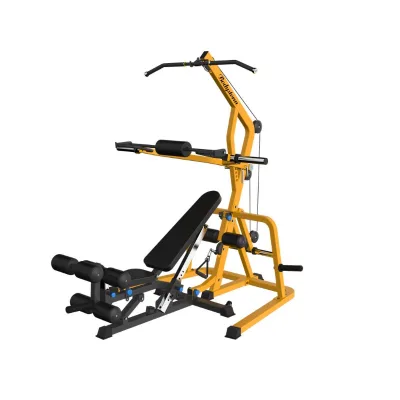


Hot Selling Home Gym Fitness Training Standard Weight Multifunctional Workout Machine
$56.00 - $60.00
MOQ: 20 Pieces


$358.00 - $398.00
MOQ: 5 Pieces


Home Gym High Quality Professional Multi-Functional Fitness Gym Machine
$125.00 - $128.00
MOQ: 100 Pieces


Comprehensive Sourcing Guide
Strategic Sourcing Guide for Manual Home Gym Machines
The global market for manual home gym machines has evolved significantly, driven by a growing consumer preference for equipment that minimizes reliance on electricity while maximizing functional training capabilities. For procurement professionals and business buyers, navigating this sector requires a rigorous understanding of technical specifications, material integrity, and compliance frameworks. This guide synthesizes available market data to provide a structured approach to sourcing manual home gym solutions, focusing on the specific attributes observed in current supply chains. The objective is to equip buyers with the knowledge to evaluate suppliers and products without relying on unverified claims or speculative data.
Technical Specifications and Structural Integrity
When evaluating manual home gym machines, the primary technical differentiator lies in the construction materials and dimensional specifications. The observed supply chain data indicates a strong preference for steel as the foundational material, with specific listings highlighting stainless steel for frame components. This choice is critical for durability, particularly in environments where equipment faces frequent, high-impact usage. The structural integrity of these machines is often defined by their assembled dimensions, which vary based on the intended exercise zones. For instance, specific models have been observed with dimensions such as 170026002150mm or 190016202090mm, suggesting that buyers must verify the footprint against their intended installation space.
Weight is another critical specification. Data points show a wide variance in net weight, ranging from 35 kg for lighter units to 110 kg for heavier, more robust systems. This variance often correlates with the stability of the machine; heavier units generally offer better stability for compound movements but require more complex logistics. Furthermore, the folding mechanism is a key technical feature. While some units are designed to remain in a fixed "Unfolded" state for maximum stability, others offer "Folded" configurations to save space. Buyers must verify the specific folding status of the model they intend to purchase, as the "Folded" attribute is not universal across all manual gym machines. The presence of specific model numbers, such as STH008, ZC-C07, and DA19A, indicates that standardization is limited, and procurement teams must treat each model as a unique specification requiring individual verification.
Compliance and Certification Verification
In the B2B procurement of fitness equipment, compliance is not merely a formality but a prerequisite for market access and liability protection. The observed data highlights several certification standards that are frequently associated with manual home gym machines. These include CE (Conformité Européenne), RoHS (Restriction of Hazardous Substances), and ISO9001. The presence of CE and RoHS certifications suggests adherence to European safety and environmental standards, which is essential for exporting to or operating within regulated markets. Additionally, the ISO9001 certification points to a supplier's commitment to quality management systems, ensuring consistent production processes.
However, buyers must exercise caution when interpreting these certifications. The data lists certifications in various combinations, such as "CE, ISORoHS" or "CE, ISO9001," indicating that not every product may carry the full suite of certifications. It is imperative for procurement teams to request valid, up-to-date certification documents directly from the supplier rather than relying on marketing claims. The absence of a specific certification in a product listing does not necessarily imply non-compliance, but it does require a deeper audit of the supplier's quality assurance protocols. Furthermore, while "ISO 9001" is mentioned as a background standard, the specific application of this standard to the final product must be confirmed. Buyers should verify that the certification covers the specific manufacturing facility and product line being sourced, ensuring that the quality management system is actively applied to the production of the manual gym machines.
Cost Drivers and Pricing Dynamics
The pricing landscape for manual home gym machines is characterized by a significant range, observed between $0.8 and $1265 USD. This wide disparity is driven by several factors, including the complexity of the design, the quality of materials, and the level of customization. Lower-priced units often correspond to simpler designs with basic steel frames and minimal features, while higher-priced units may include advanced multi-system capabilities, premium finishes, or specialized ergonomic designs. The "Workbench Multisystem" and similar complex units likely command higher price points due to their multifunctional nature.
Material costs play a substantial role in pricing. The use of stainless steel versus standard steel can significantly impact the final cost, as can the inclusion of additional components like padded seating or adjustable resistance mechanisms. Additionally, packaging requirements influence the overall cost. Listings indicate a variety of packaging methods, from standard cartons to plywood boxes protected by thick bubbled PE film. The choice of packaging affects both the unit price and the shipping cost, as heavier and more robust packaging increases freight charges. Buyers should analyze the total landed cost, including packaging and shipping, rather than focusing solely on the ex-factory price. The "Selling Units" being listed as "Single item" suggests that pricing is often quoted per unit, but bulk orders may offer volume discounts, which should be negotiated based on the specific MOQ (Minimum Order Quantity) requirements.
Typical Applications and Usage Scenarios
Manual home gym machines are versatile and serve a diverse range of applications, from residential home gyms to commercial facilities. The observed data categorizes these applications under "Home," "Gymnasium," "Community," and "Commercial" settings. This versatility allows buyers to target different market segments with the same core product, provided the specifications meet the specific demands of each environment. For instance, a machine designed for a "Home Gym" might prioritize space-saving features and aesthetic design, while a unit intended for a "Commercial" gymnasium must prioritize durability, high usage capacity, and safety features.
The "Exercise Part" specification, such as "Leg," indicates that many of these machines are specialized for specific muscle groups. However, the "Workbench Multisystem" suggests that some units are designed for full-body or multi-system training. Buyers should align the product's intended exercise part with their target market's needs. For example, a community center might require a mix of specialized leg machines and general-purpose workbenches to cater to a diverse demographic. The "Appliance" attribute further clarifies the intended setting, with some units explicitly marked for "Home, Gymnasium, Community." Understanding these application nuances is crucial for matching the right product to the right client, ensuring that the equipment meets the functional requirements of the end-user.
Supplier Evaluation and Operational Capabilities
Selecting the right supplier is a critical step in the procurement process. The data indicates that suppliers are primarily located in China, with specific origins noted as "Shandong, China." This regional concentration suggests a mature supply chain with established logistics networks. When evaluating suppliers, buyers should consider the "Supply Ability," which is listed as 500 sets per month for certain models. This metric provides insight into the supplier's capacity to fulfill large orders without compromising lead times.
Lead times are another vital factor, with observed delivery times ranging from 10 to 15 days. This relatively short lead time suggests efficient production processes, but buyers must confirm if this applies to custom orders or standard stock items. Customization is a key feature, with "Customized Logo Available" and "Color: Optional" listed as attributes. This flexibility allows buyers to brand the equipment for their specific clients, but it may extend the lead time. Buyers should verify the impact of customization on the production schedule and ensure that the supplier has the capacity to handle custom orders without disrupting standard production. Additionally, the "Port of dispatch" options, including Qingdao, Shanghai, and Tianjin, offer logistical flexibility, allowing buyers to choose the most cost-effective shipping route based on their destination.
Quality Control and Long-Term Procurement Considerations
Quality control is paramount in the fitness equipment industry, where safety and durability are non-negotiable. The "Packing" details, such as the use of plywood boxes and thick bubbled PE film, indicate a focus on protecting the product during transit. However, buyers should also implement their own quality control measures, such as pre-shipment inspections, to ensure that the products meet the agreed-upon specifications. The "Net Weight" and "Product Weight" specifications should be verified against the actual product to ensure consistency and prevent discrepancies that could affect shipping costs or structural integrity.
Long-term procurement considerations involve building a sustainable relationship with suppliers. The "Customization" attribute suggests that suppliers are willing to adapt to buyer needs, which is a positive sign for long-term partnerships. Buyers should also consider the "MOQ" (Minimum Order Quantity), which ranges from 1 to 1000 units. This flexibility allows buyers to start with smaller orders to test the market before committing to larger volumes. However, buyers must be aware that lower MOQs may result in higher per-unit costs. Finally, the "Feature" attribute, listed as "Fintess" (likely a typo for Fitness), underscores the importance of selecting products that deliver on their functional promises. Buyers should prioritize suppliers who demonstrate a commitment to quality and reliability, ensuring that the manual home gym machines they source will perform effectively over the long term.
Comparative Analysis of Key Product Attributes
To facilitate decision-making, the following table summarizes the key attributes observed in the supply chain data. This comparison highlights the diversity of options available and the specific factors buyers should consider when selecting a product.
| Attribute | Observed Values | Procurement Consideration |
|---|---|---|
| Material | Steel, Stainless Steel | Verify grade and finish for durability and corrosion resistance. |
| Dimensions | 170026002150mm, 190016202090mm, etc. | Match footprint to installation space; verify assembled size. |
| Weight | 35 Kg, 110kg | Heavier units offer stability; lighter units are easier to move. |
| Certification | CE, RoHS, ISO9001 | Request valid certificates; verify scope and validity. |
| Customization | Logo, Color, Model | Confirm lead time impact and minimum order requirements. |
| Packaging | Carton, Plywood Box, PE Film | Assess protection level and impact on shipping costs. |
| Origin | China (Shandong) | Verify logistics routes and port of dispatch options. |
| Lead Time | 10-15 Days | Confirm if this applies to custom or standard orders. |
| MOQ | 1 Set to 1000 | Balance order size with per-unit cost and inventory needs. |
This table serves as a reference for buyers to systematically evaluate potential products and suppliers. By focusing on these specific attributes, procurement teams can make informed decisions that align with their operational requirements and budget constraints. The diversity of options in the market allows for tailored solutions, but it also necessitates a disciplined approach to verification and due diligence.
Conclusion
Sourcing manual home gym machines requires a balanced approach that combines technical expertise with strategic supplier evaluation. The observed data reveals a market characterized by diverse specifications, varying certification levels, and flexible customization options. Buyers must navigate this landscape with a focus on verifying technical details, confirming compliance, and assessing supplier capabilities. By adhering to the principles outlined in this guide, procurement professionals can secure high-quality manual home gym machines that meet the needs of their clients while mitigating risks associated with unverified claims and inconsistent quality. The key to success lies in rigorous due diligence, clear communication with suppliers, and a commitment to long-term value creation.
FAQs
What certifications do manual home gym machines typically have?
Manual home gym machines often carry CE, RoHS, and ISO9001 certifications. These standards indicate compliance with European safety and environmental regulations, as well as adherence to quality management systems. Buyers should verify specific certification documents directly from the supplier for each model.
Which materials are used for the frames of these machines?
Steel and stainless steel are the primary materials used for the frames of manual home gym machines. Stainless steel is often selected for enhanced durability and corrosion resistance, particularly in commercial or high-usage environments. The choice of material significantly impacts the overall weight and structural integrity of the unit.
Can buyers customize the logo and color of the equipment?
Yes, customization is available for both logos and colors on manual home gym machines. Suppliers offer options for customized logos and various color choices including black, red, yellow, and silver. This flexibility allows buyers to brand the equipment for their specific clients or match existing facility aesthetics.
How long is the typical delivery time for these orders?
The typical delivery time for manual home gym machines ranges from 10 to 15 days. This lead time applies to standard production cycles, though custom orders may require additional processing. Buyers should confirm the specific timeline with the supplier based on their order volume and customization requirements.
What is the minimum order quantity for purchasing these units?
The minimum order quantity for manual home gym machines can range from 1 set to 1000 units depending on the supplier. Some models allow for single-item purchases, while others may require larger bulk orders. This flexibility enables buyers to test the market with small orders before committing to larger volumes.
Where are the suppliers of these machines primarily located?
Suppliers of manual home gym machines are primarily located in China, with specific origins noted in Shandong. The region offers established logistics networks with dispatch ports including Qingdao, Shanghai, and Tianjin. This concentration supports efficient production and shipping for international buyers.