Source Mechanical Time Delay Timer Switch for Kitchen and Industrial Use
Find and compare 30 Mechanical Time Delay Timer Switch options from Zhejiang suppliers. These devices offer 220V operation, 16A capacity, and customizable settings for kitchen appliances and industrial control systems; compare the available evidence and request quotations based on your requirements.
Key considerations
Products List
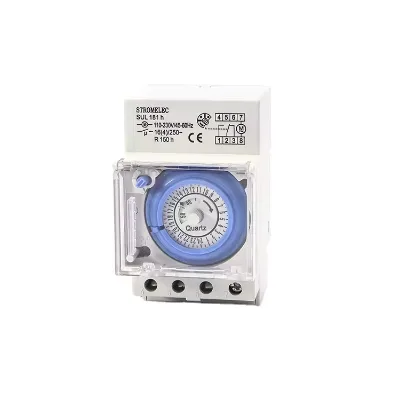


Timer Industrial Controls Timer Switch 360 Minutes Countdown Timer Motor Timer
$0.30 - $1.00
MOQ: 1000 Pieces


Digital Timer Switch Manufacturer High Quality British Standard Electronic Controller Timer
$4.96 - $5.26
MOQ: 2000 pieces

Comprehensive Sourcing Guide
Mechanical Time Delay Timer Switch Sourcing Guide
Procuring mechanical time delay timer switches requires a clear understanding of their operational mechanics and specific application constraints. These devices are primarily designed for kitchen appliances and general home equipment, offering reliable timing functions without complex electronic components. Buyers must distinguish between purely mechanical models and those with electronic counter features, as the underlying theory significantly impacts durability and precision. The observed market includes units with synchronous counter functions and reversible settings, which cater to diverse industrial and household needs. Understanding these fundamental differences is the first step in selecting the right component for your assembly line or product design.
When evaluating suppliers, it is crucial to verify the physical and electrical parameters that define the switch’s compatibility with your end product. Key attributes such as rated voltage, current capacity, and setting time ranges must align with your appliance’s specifications. For instance, many listed units operate at 220V or 240V with a rated current of 16A, suitable for standard household loads. Additionally, the mechanical life and endurable life metrics provide insight into the component’s longevity under frequent use. Buyers should prioritize suppliers who provide transparent data on these operational limits to ensure the timer switch can withstand the expected cycle count over the product’s lifespan.
Product Scope and Observed Listing Signals
The current market landscape for mechanical time delay timers shows a wide range of model numbers and functional variations. Listings frequently reference specific model identifiers such as SUL181h, JY-TM023, JY-TM025, and DFJ-A, indicating a fragmented supplier base with diverse product lines. These models often support multiple time settings, including 5, 15, 30, 60, 90, and 120 minutes, allowing for flexible configuration in various appliances. The presence of both "with bell" and "without bell" options suggests that auditory feedback is a customizable feature rather than a standard inclusion. Buyers should carefully review the specific model details to ensure the timing increments and audible alerts match their design requirements.
Observed listing signals also highlight the importance of packaging and physical dimensions in the procurement process. Single package sizes are typically compact, such as 9x5.4x6.5 cm, with a gross weight around 0.152 kg, facilitating efficient shipping and storage. The minimum order quantities (MOQ) vary significantly, ranging from 10 to 2000 units, which impacts inventory planning and cash flow for different buyer sizes. Price points observed in the market range from $0.30 to $6.14, reflecting differences in brand, certification, and feature sets. Procurement teams must balance these commercial terms with technical requirements to achieve the best value without compromising on quality or compliance.
Technical Specifications to Verify
Verifying the electrical and mechanical specifications is critical to ensuring the timer switch integrates seamlessly into your product. Key parameters to confirm include the rated voltage, which is often listed as 220V or 240V, and the contact capacity, typically rated at 16A at 250V. The frequency support, usually 50 Hz or 60 Hz, must match the electrical grid of the target market. Additionally, the working angle, which can be 270 or 315 degrees, and the operating torque of 3kgfcm are essential for proper installation and user experience. Buyers should request detailed datasheets to confirm these values, as variations can affect the switch’s performance and compatibility with existing appliance designs.
The timing mechanism and counter functionality are other vital technical aspects to scrutinize. Some models operate on a mechanical theory with a reserve time of 150 hours, while others may feature electronic counters with addition or summation capabilities. The minimum and maximum setting times, ranging from 30 minutes to 24 hours, define the operational window of the device. Furthermore, the carry mode, such as synchronous counter or decimal counter, influences how the timer interacts with other components. It is also important to check the IP level, which is often IP20 for these types of switches, to ensure adequate protection against dust and accidental contact in the intended application environment.
Compliance and Safety Documentation
Compliance with international safety and environmental standards is non-negotiable for global procurement. Buyers must verify that the mechanical time delay timers hold relevant certifications such as ROHS, TUV, ISO9001, and CE. These certifications indicate that the product meets specific requirements for hazardous substance restriction, quality management, and electrical safety. The presence of CE marking is particularly important for products destined for the European market, while ROHS compliance ensures the absence of certain dangerous materials. Procurement teams should request valid certification documents from suppliers and cross-reference them with official databases to confirm their authenticity and current status.
Beyond certifications, understanding the standard compliance and testing protocols is essential for risk mitigation. The listed products often adhere to a "Standard" classification, but buyers should clarify which specific national or international standards this refers to. For instance, ISO 9001:2008 is mentioned in background contexts, but buyers should confirm if the supplier has updated to more recent versions. Additionally, verifying the testing procedures for mechanical life and electrical endurance provides confidence in the product’s reliability. Buyers should ask for test reports or third-party validation data to ensure that the claimed life cycles, such as 10,000 times or more, are substantiated by rigorous testing protocols.
Cost Drivers and Commercial Terms
Several factors influence the final cost of mechanical time delay timers, including customization, packaging, and order volume. Customization options, such as adding bells or altering timing increments, can increase the unit price and potentially raise the MOQ. Suppliers may offer discounts for larger orders, but the observed MOQ range of 10 to 2000 units requires careful planning to avoid excess inventory. Buyers should negotiate clear pricing tiers based on volume and consider the total landed cost, including shipping and duties, rather than just the unit price. Understanding these cost drivers helps in budgeting accurately and identifying opportunities for savings through strategic ordering.
Packaging and logistics also play a significant role in the commercial terms of the procurement. Products are typically packed in standard exporting cartons or wooden boxes, which affect shipping efficiency and protection during transit. The single item selling unit and standard packing methods simplify inventory management but may require additional handling if bulk packaging is preferred. Buyers should clarify the packaging specifications with suppliers to ensure they meet their storage and distribution requirements. Additionally, lead times and payment terms should be negotiated to align with production schedules and cash flow needs, ensuring a smooth supply chain operation.
Supplier Qualification and Quality Control
Selecting a qualified supplier is paramount to ensuring consistent quality and reliable supply. Buyers should assess the supplier’s manufacturing capabilities, quality control processes, and track record in the industry. Suppliers located in Zhejiang, China, are common sources for these components, but buyers must verify their production capacity and quality assurance systems. Requesting samples for testing is a critical step to evaluate the physical quality, timing accuracy, and durability of the timer switches. Buyers should also inquire about the supplier’s ability to provide customization and their responsiveness to technical queries, as these factors impact the long-term partnership.
Quality control measures should be integrated into the procurement process to minimize defects and ensure product consistency. Buyers should establish clear quality acceptance criteria, including visual inspection, functional testing, and dimensional checks. Implementing a pre-shipment inspection protocol can help identify potential issues before the goods are dispatched. Additionally, buyers should require suppliers to provide a certificate of conformity for each batch, confirming that the products meet the agreed-upon specifications. Regular audits and performance reviews of suppliers can further enhance quality control and foster a collaborative relationship focused on continuous improvement.
Long-Term Procurement Checks
Long-term procurement success depends on continuous monitoring of supplier performance and market trends. Buyers should regularly review supplier delivery times, product quality, and responsiveness to issues. Establishing key performance indicators (KPIs) such as defect rates and on-time delivery percentages provides a quantitative basis for evaluating supplier performance. Regular communication with suppliers helps in addressing potential problems early and maintaining a stable supply chain. Additionally, staying informed about changes in regulations and standards ensures that the procured components remain compliant with evolving market requirements.
Technological advancements and market shifts may necessitate periodic reviews of the product specifications and supplier base. Buyers should assess whether the current mechanical time delay timers still meet the evolving needs of their products or if upgrades are required. Exploring alternative suppliers or new technologies can provide opportunities for cost savings or improved performance. However, any changes should be carefully evaluated to ensure they do not disrupt the supply chain or compromise product quality. By maintaining a proactive approach to procurement, buyers can secure a reliable and competitive supply of mechanical time delay timers for their operations.
FAQs
What are the voltage and current ratings for this timer switch?
The rated voltage is 220V or 240V with a contact capacity of 16A at 250V. The rated current is 16A, supporting frequencies of 50 Hz and 60 Hz. These electrical specifications ensure compatibility with standard household and kitchen appliances requiring precise timing control.
How long can the timer be set for operation?
The maximum setting time is 24 hours, while the minimum setting time is 30 minutes. Specific time intervals available include 5, 15, 30, 60, 90, and 120 minutes. This range allows flexible scheduling for various kitchen or industrial applications requiring precise duration control.
Is customization available for the Mechanical Time Delay Timer Switch?
Yes, customization is available for this product. Buyers can request specific modifications to meet unique operational requirements. The supplier offers tailored solutions, ensuring the timer switch aligns with particular application needs or branding preferences while maintaining standard mechanical and electrical performance characteristics.
What certifications does the timer switch hold?
The product holds ROHS, TUV, ISO9001, and CE certifications. These credentials verify compliance with international safety and quality standards. Buyers can rely on these documented certifications to ensure the timer switch meets regulatory requirements for export and use in various global markets.
Where is the Mechanical Time Delay Timer Switch manufactured?
The place of origin is Zhejiang, China. The product is manufactured in this region, which is known for its industrial production capabilities. Buyers sourcing from this location can expect standard export packaging and reliable supply chain logistics for bulk orders of these timer switches.
What is the minimum order quantity for this timer switch?
The observed minimum order quantity ranges from 10 to 2000 units. This flexibility allows buyers to place small trial orders or large bulk purchases. The specific MOQ depends on the supplier and customization requirements, providing options for both small businesses and large-scale industrial procurement.