Source Mitsubishi Car Crankshaft Oil Seal for Engines, Transmission, Industry
Compare 30 listings for Mitsubishi Car Crankshaft Oil Seal from manufacturers in Hebei, China. Options include FPM, ACM, and PTEF materials with single or double lips for engine and transmission applications.
Key considerations
Products List


Truck Crank Oil Seal Crankshaft Oil Seal for Car Crank Truck Crank Oil Seal Factory Price
$3.00 - $6.00
MOQ: 1000 Pieces


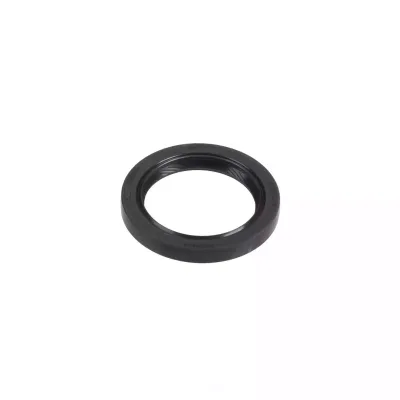
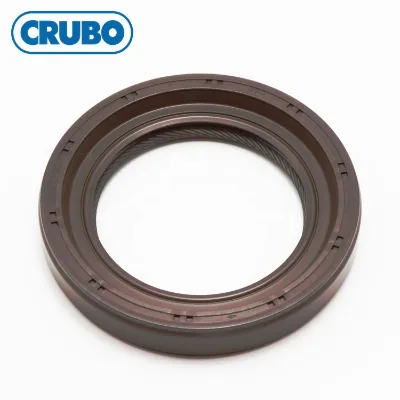


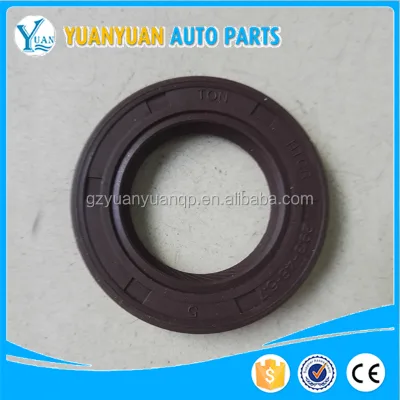


Comprehensive Sourcing Guide
Strategic Sourcing Guide for Mitsubishi Car Crankshaft Oil Seals
Understanding the Technical Landscape of Crankshaft Seals
When sourcing crankshaft oil seals for Mitsubishi vehicles, buyers must first distinguish between the specific engineering requirements of the engine and transmission systems. The core component, often identified as an automotive crankshaft seal, serves a critical function in preventing lubricant leakage while keeping external contaminants out. Based on available product data, these seals are engineered for high-speed applications, specifically designed to operate within the demanding environment of diesel engines. The technical specifications indicate a working temperature range of -35 to +120 degrees Celsius, which is a vital parameter for ensuring the seal maintains its integrity under varying thermal loads.
The material composition is a primary differentiator in this category. Supply chain observations reveal the use of FPM (Fluoroelastomer), ACM (Acrylonitrile Butadiene), and PTEF (Polytetrafluoroethylene) compounds. Each material offers distinct advantages; FPM is typically selected for superior oil and heat resistance, while ACM provides a balance of cost and performance for general automotive applications. The hardness of these seals is reported to range from 20 to 90 Shore A, allowing procurement teams to match the durometer to the specific shaft speed and pressure conditions of the Mitsubishi engine in question.
Lip configuration is another critical technical variable. The market data indicates the availability of both single-lip and multi-lip configurations, with some products described as having a "Haplotype" or "Assembled" structure. The lip type directly influences the seal's ability to handle atmospheric pressure versus high-pressure environments. For standard automotive crankshafts, the seal must withstand the rotational speed of the engine while maintaining a tight barrier against oil. The "High Speed" attribute noted in product listings suggests that these components are designed to minimize friction and heat generation at the interface between the rotating shaft and the stationary housing.
Compliance, Standards, and Certification Verification
In the B2B procurement of automotive sealing components, verifying compliance with international and industry-specific standards is non-negotiable. The provided data references specific standard codes such as "03C103170" and "036103171B," which likely correspond to internal manufacturer specifications or regional automotive standards. Additionally, the Harmonized System (HS) code 84849000 is consistently associated with these mechanical seals, which is essential for accurate customs classification and duty calculation during international trade.
Buyers must exercise caution when interpreting "Standard" or "Standard or Customized Size" labels. While these terms appear in product descriptions, they do not automatically guarantee compliance with a specific global automotive standard (such as ISO or SAE) unless explicitly verified. The "Standard" attribute in the context of "All size valve seals" suggests a broad compatibility, but for a specific Mitsubishi model, the buyer must cross-reference the OEM part number, such as "8976023793/Ah4365m," against the supplier's certified documentation.
Certification status is a frequent area of ambiguity in supplier listings. While the data confirms the product origin as Hebei, China, and identifies the supplier type as a Manufacturer, it does not provide explicit evidence of third-party certifications like IATF 16949 or ISO 9001. Procurement teams should not assume these certifications exist based on the "Manufacturer" label alone. Instead, the verification process must include a direct request for the supplier's quality management system certificates. The "Condition: 100% New" attribute is a basic requirement, but it does not replace the need for a Certificate of Conformance (CoC) that details the specific material batch and testing results for the ordered quantity.
Cost Drivers and Pricing Dynamics
The pricing structure for Mitsubishi crankshaft oil seals is influenced by a complex interplay of material costs, customization requirements, and order volume. The observed price range in the market spans from $0.01 to $49 USD, a variance that reflects the difference between generic standard sizes and specialized, high-performance custom seals. The lower end of this spectrum typically corresponds to standard sizes produced in high volumes with basic material compositions, while the upper end often includes seals with specialized coatings, complex lip geometries, or those manufactured from premium FPM compounds.
Material selection is a primary cost driver. Seals made from FPM generally command a higher price point than those made from ACM or standard rubber compounds due to the superior chemical and thermal resistance of fluoropolymers. Furthermore, the customization factor plays a significant role. The data confirms that customization is available for lip types, colors, and dimensions. Customizing the size or the specific lip configuration to match a unique Mitsubishi engine variant will inevitably increase the unit cost and may introduce additional tooling charges.
Order volume, represented by the Minimum Order Quantity (MOQ), is another critical variable. The observed MOQ range extends from 1 to 20,000 units. Buyers purchasing small quantities for repair shops or prototype development will face a higher per-unit cost compared to those placing bulk orders for fleet maintenance or original equipment manufacturing. The "Rich in Size and Quantity" stock attribute suggests that standard items may be available with lower MOQs, but specialized orders will likely require adherence to higher volume thresholds to justify production runs.
Typical Applications and Operational Context
The primary application for these crankshaft oil seals is within the automotive sector, specifically for engines and transmissions. The data explicitly lists "Engine" and "Transmission" as usage categories, with a specific mention of "Diesel" engine types. This indicates that the seals are designed to handle the higher torque and thermal loads associated with diesel powertrains, which are common in many Mitsubishi commercial and passenger vehicles.
Beyond the engine block, these seals are applied in various machine and industrial settings, as noted by the "Machine/ Industry/Automobile" application tag. This versatility suggests that the same component technology may be adapted for heavy machinery or industrial pumps, provided the dimensional and material specifications align. The "Atmospheric Type" and "Pressure Type" classifications further define the operational context; atmospheric seals are typically used where the internal pressure is not significantly higher than the external environment, while pressure seals are required for systems with internal pressurization.
The color options, ranging from Red, Green, Blue, Yellow, and Orange to Black and Brown, are often used for identification purposes in assembly lines or maintenance scenarios. While the color itself does not alter the mechanical performance, it can be a critical factor for inventory management and error prevention in large-scale assembly operations. The "Durable, Oil-Resistant, Heat Resistant, Dustproof" feature set confirms that these seals are intended for harsh environments where exposure to oil, high temperatures, and particulate matter is constant.
Supplier Evaluation and Manufacturer Capabilities
When evaluating potential suppliers for Mitsubishi crankshaft oil seals, the distinction between a trading company and a manufacturer is paramount. The provided facts identify the supplier type as a "Manufacturer," which implies direct control over the production process, material sourcing, and quality control. This is generally preferable for buyers seeking consistent quality and the ability to customize products. However, buyers must verify this claim through site audits or by requesting proof of manufacturing capacity.
The origin of the products is consistently listed as Hebei, China, a region known for its manufacturing base. While the location is clear, the specific facility details are not provided. Buyers should assess the supplier's logistical capabilities, including their ability to meet lead times and manage shipping from Hebei to global destinations. The "After Sale Service: 12 Months" attribute is a significant indicator of supplier confidence, suggesting a warranty period that covers defects in material or workmanship.
Packaging standards also reflect the supplier's attention to detail. Options range from "Cartons + Poly Bags" to "Plastic Bag" and "Bag+ Individual Box + Carton." For high-value or precision components, the "Individual Box + Carton" option is preferable to prevent damage during transit. The "Product Packing: as Customers' Request" attribute highlights the flexibility of the manufacturer, allowing buyers to specify packaging that meets their internal logistics or retail requirements.
Quality Control and Long-Term Procurement Strategy
Ensuring long-term supply chain stability requires a robust quality control strategy. The "Condition: 100% New" attribute is a baseline, but it must be supported by a rigorous inspection regime. Buyers should implement incoming quality control (IQC) procedures that verify the hardness (20-90 Shore A), dimensions (e.g., 8512713 mm), and material composition of each batch. The "Standard or Customized Size" specification necessitates that the supplier provides dimensional inspection reports for every shipment, especially for custom orders where tooling tolerances are critical.
Long-term procurement considerations involve building a relationship with a manufacturer capable of scaling production. The "Rich in Size and Quantity" stock suggests that the supplier has a robust inventory of standard parts, which can reduce lead times for urgent replacements. However, for long-term contracts, buyers should negotiate agreements that secure material supply for FPM and ACM compounds, as global fluctuations in raw material prices can impact availability and cost.
The "OEM" number "8976023793/Ah4365m" serves as a critical reference point for quality assurance. Procurement teams should establish a protocol where every delivered batch is cross-referenced against this OEM number to ensure compatibility with the specific Mitsubishi model. Additionally, the "12 Months" after-sale service period should be formalized in the contract, detailing the process for handling returns or replacements in the event of premature failure.
Comparative Analysis of Seal Specifications
To facilitate decision-making, buyers can compare the key attributes of available crankshaft oil seals using the following matrix. This comparison highlights the variations in material, lip type, and application that influence the final selection.
| Attribute | Specification A | Specification B | Specification C |
|---|---|---|---|
| Material | FPM | ACM | PTEF |
| Lip Type | Single Lip | Haplotype | Assembled |
| Pressure Type | Atmospheric | Pressure Type | Pressure Type |
| Working Temp | -35~+120°C | -35~+120°C | -35~+120°C |
| Hardness | 20-90 Shore A | 20-90 Shore A | 20-90 Shore A |
| Color Options | Red, Green, Custom | Red, Orange, Green | Black, Brown, Red |
| OEM Reference | 8976023793/Ah4365m | 03C103170 | 036103171B |
| Packing | Carton + Poly Bag | Plastic Bag | Bag + Box + Carton |
This table illustrates that while the thermal and hardness ranges remain consistent across different configurations, the material and lip types vary significantly. Buyers must align these technical attributes with the specific operational demands of their Mitsubishi engine to ensure optimal performance and longevity. The selection process should prioritize the material that offers the best balance of oil resistance and cost for the specific application, while ensuring the lip configuration matches the pressure dynamics of the engine crankcase.
FAQs
What materials are used for these seals?
These seals are made from FPM, ACM, or PTEF compounds. Each material offers distinct advantages, with FPM selected for superior oil and heat resistance while ACM provides a balance of cost and performance for general automotive applications.
Which lip types are available for purchase?
Both single-lip and multi-lip configurations are available, including Haplotype and Assembled structures. The lip type directly influences the seal's ability to handle atmospheric pressure versus high-pressure environments in diesel engines.
Can I request custom sizes and colors?
Yes, customization is available for lip types, colors, and dimensions. Buyers can specify colors like Red, Green, or Black, and request standard or customized sizes to match specific Mitsubishi engine variants.
How does the working temperature range affect performance?
The seals operate effectively within a working temperature range of -35 to +120 degrees Celsius. This range ensures the seal maintains its integrity under varying thermal loads typical in demanding automotive environments.
What is the minimum order quantity for these parts?
The minimum order quantity ranges from 1 to 20,000 units depending on the specific product. Buyers purchasing small quantities for repair shops face higher per-unit costs compared to those placing bulk orders.
Where are these manufacturers located?
The products originate from Hebei, China, where the suppliers are identified as manufacturers. This location indicates a manufacturing base known for producing automotive sealing components with direct control over the production process.
What is the after-sales service period?
The supplier offers a 12-month after-sales service period covering defects in material or workmanship. This warranty period is formalized in contracts to handle returns or replacements in the event of premature failure.