Source Medical Hospital ISE Electrolyte Analyzer for labs, clinics, and hospitals
Find 30 Medical Hospital ISE Electrolyte Analyzer options from verified Chinese manufacturers. Compare specifications like ISE method, sample volume, and parameters including K, Na, Cl, and Ca for diagnostic needs.
Key considerations
Products List


Medical Equipment Electrolyte Analyzer Price Blood Electrolyte Analyzer
$950.00 - $1100.00
MOQ: 1 Sets


Audicom Hospital Clinic K, Na, Cl, Li, Ca, pH, CO2 ISE Electrolyte Analyzer
$800.00 - $1000.00
MOQ: 1 Pieces


China Clinical Automatic Blood ISE Electrolyte Analyzer for Labs and Hospital
$360.00 - $1280.00
MOQ: 1 Pieces


Clinical Analytical Instruments Blood Gas Analyzer Price Electrolyte Analyzer
$368.00 - $868.00
MOQ: 1 Pieces
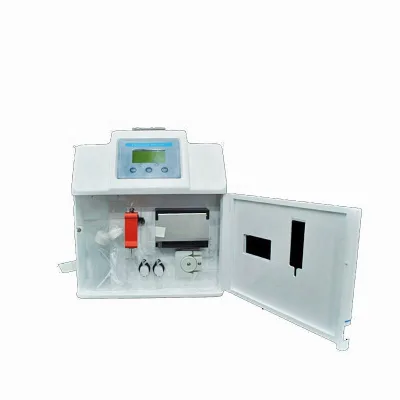
Laboratory Semi-auto Blood Gas Electrolyte Analyzer ISE Electrolyte Analyzer Machine
$663.85 - $1123.44
MOQ: 1 Minimum
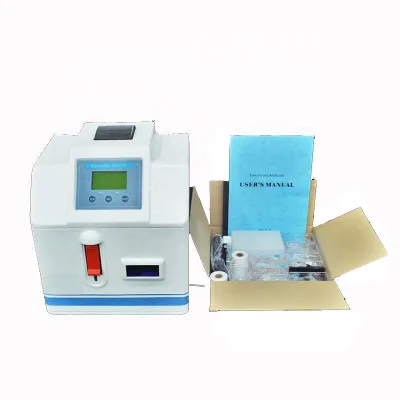

Hospital Clinical Analytical Instrument Automatic Electrolyte Analyzer
$460.00 - $1250.00
MOQ: 1 Pieces

Laboratory and Hospital Blood Gas Medical Automatic Electrolyte Analyzer
$800.00 - $840.00
MOQ: 1 Pieces

Hospital Clinical Portable Dry Electrolyte Analyzer Blood Testing Electrolyte Analyzer
$800.00 - $1200.00
MOQ: 1 Pieces

Medical Reliable Long-Life Electrode Automatic Electrolyte Analyzer for Sale
$800.00 - $840.00
MOQ: 1 Pieces


Sy-B140A Good Price Medical Full Auto Blood ISE Electrolyte Analyzer for Sale
$499.00 - $1749.00
MOQ: 1 Pieces


My-B030A Lab Medical Equipment ISE Serum Urine Electrolyte Analyzer Machine
$850.00 - $1300.00
MOQ: 1 Pieces
Comprehensive Sourcing Guide
Strategic Sourcing Guide for Medical Hospital ISE Electrolyte Analyzers
Procuring an Ion Selective Electrode (ISE) electrolyte analyzer for a medical hospital requires a rigorous evaluation of technical capabilities, regulatory compliance, and total cost of ownership. These instruments are critical for rapid diagnosis, providing immediate data on potassium, sodium, chloride, calcium, and other electrolytes essential for patient management. The market offers a variety of models, ranging from compact point-of-care units to high-throughput laboratory systems. Buyers must navigate a landscape where specifications vary significantly between manufacturers, necessitating a detailed approach to selection that prioritizes clinical accuracy and operational reliability over superficial features.
Technical Specifications and Analytical Performance
The core function of an ISE analyzer is the measurement of specific ions using electrochemical sensors. When evaluating potential units, the primary technical metric is the measuring method. The supplied data confirms that the relevant devices utilize the ISE Method, which is the industry standard for electrolyte analysis. Buyers should verify that the specific model under consideration supports the required measuring items for their clinical needs. Available configurations in the observed market include measurements for Potassium (K), Sodium (Na), Chloride (Cl), Calcium (Ca), and Hydrogen (H). Furthermore, advanced models may offer calculating items such as Nca (Non-Calcium) and TCA, as well as a broader parameter set including pH, Lithium (Li), Total Carbon Dioxide (Tco2), and Anion Gap (AG).
Sample volume requirements are a critical operational constraint. Different models accommodate varying sample sizes, with observed ranges spanning from 100 microliters (UL) to a broader range of 60-300 UL depending on the number of parameters tested. For instance, some units require a minimum of 60-150 μL for 3 to 11 parameters, while others specify a fixed 100 UL sample size. The measuring time is another vital performance indicator; efficient analyzers can deliver results in approximately 25 seconds, which is crucial for emergency departments and intensive care units where time is a decisive factor.
Data management capabilities also distinguish modern analyzers. High-end models feature internal graphic thermal printers for immediate hard-copy results and LCD displays for user interaction. Storage capacity varies, with some systems capable of retaining up to 10,000 test results, while others offer expanded storage for up to 50,000 results. This capacity ensures that historical data is available for trend analysis and quality assurance without requiring immediate external data transfer. Calibration methods should be verified as well, with options ranging from automatic calibration to on-demand procedures, ensuring the instrument maintains accuracy over extended periods of use.
Compliance, Certification, and Regulatory Standards
In the medical device sector, compliance is not merely a formality but a prerequisite for patient safety and legal operation. When sourcing ISE electrolyte analyzers, buyers must rigorously verify certification status. The observed product data indicates that many units carry MSDS (Material Safety Data Sheet) and CE certifications. Additionally, some listings reference ISO standards and specific ISOCE markings, though buyers should treat these as observations to be confirmed rather than guaranteed attributes for every unit.
The regulatory landscape requires that the device meets the standards of the destination country. For example, the CE mark indicates conformity with health, safety, and environmental protection standards for products sold within the European Economic Area. However, the presence of a certification label on a product listing does not automatically validate its status for all markets. Buyers must confirm that the specific model number, such as the AC9801, EL-1100, or BKE Series, holds valid certification for their specific jurisdiction.
Furthermore, the product standards listed, such as "Ion selective electrode (ISE)" or specific dimensional standards, provide insight into the manufacturing adherence to technical norms. While some documents mention ISO and CE standards, the exact version or specific ISO number (e.g., ISO 13485 for quality management) is often not explicitly detailed in general listings. Therefore, procurement teams must request official certification documents from the supplier to ensure the device meets the specific regulatory requirements of their hospital's accreditation body.
Cost Drivers and Pricing Structure
The financial aspect of sourcing medical analyzers involves more than just the sticker price. The observed price range for these devices spans from $360 to $3,200 USD, a significant variance that reflects differences in throughput, feature sets, and build quality. Lower-priced units often correspond to simpler, single-parameter or low-throughput models, while the higher end of the spectrum typically includes multi-parameter systems with advanced touch screens, larger sample capacities, and extensive data storage.
Beyond the initial capital expenditure, buyers must consider the Minimum Order Quantity (MOQ). The data indicates an MOQ of 1 unit for the observed products, suggesting that hospitals can purchase single units without being forced into bulk inventory commitments. This flexibility is advantageous for facilities testing new technologies or replacing a single malfunctioning unit. However, the long-term cost is heavily influenced by consumables, reagents, and maintenance contracts.
Power supply requirements also impact operational costs. Units vary in their power consumption, with some requiring AC220V ±20% at 50Hz and others supporting a wider range of AC110~240V, 50/60Hz. Energy efficiency, measured in volt-amperes (VA), ranges from 70 VA to 120 W. While these differences may seem minor, they affect the electrical infrastructure requirements of the laboratory and the long-term utility costs. Buyers should also account for the warranty period, which is typically listed as 1 Year, and the potential costs associated with extending this coverage or purchasing service contracts.
Typical Applications and Clinical Utility
ISE electrolyte analyzers are indispensable in various clinical settings, primarily where rapid decision-making is required. The ability to analyze whole blood, serum, plasma, and cerebrospinal fluid makes these devices versatile for emergency medicine, intensive care, and general laboratory diagnostics. The specific application depends on the model's throughput and sample handling capabilities.
For high-volume laboratories, analyzers with 30 sample positions, 5 emergency positions, and 2 QC positions are ideal. These configurations allow for continuous operation and the ability to prioritize critical samples, ensuring that emergency patients receive results without delay. In contrast, smaller clinics or point-of-care settings may prefer compact units with fewer sample positions but faster turnaround times per test.
The measuring time of 25 seconds is particularly valuable in critical care scenarios where electrolyte imbalances can be life-threatening. Rapid detection of abnormalities in potassium, sodium, or calcium levels allows clinicians to initiate immediate treatment protocols. Additionally, the capability to calculate derived parameters like the Anion Gap (AG) and Total Carbon Dioxide (Tco2) provides a more comprehensive picture of the patient's acid-base balance, which is essential for managing conditions such as diabetic ketoacidosis or renal failure.
Supplier Evaluation and Quality Control
Selecting a reliable supplier is as important as selecting the right device. The observed data indicates that products originate from specific regions, such as Hubei and China, and come in various packing configurations, including standard safety exporting packages, cartons, and wooden packing. Buyers should evaluate suppliers based on their ability to provide consistent quality and after-sales support.
Quality control should be a central part of the procurement process. Buyers must verify that the supplier adheres to recognized quality management systems, such as ISO standards, and that the devices undergo rigorous testing before shipment. The working conditions specified for the devices, such as a temperature range of 5°C to 35°C and relative humidity of ≤80%, highlight the environmental constraints that the supplier's logistics and storage practices must accommodate to prevent damage during transit.
Customization options are another factor to consider. Some suppliers offer OEM (Original Equipment Manufacturer) support and customization, which can be beneficial for hospitals with specific branding or workflow requirements. However, buyers must ensure that any customization does not compromise the device's regulatory compliance or analytical performance. The availability of a 1-year warranty is a baseline expectation, but the scope of this warranty, including coverage for parts and labor, should be clearly defined in the contract.
Long-Term Procurement Considerations
Sourcing an ISE electrolyte analyzer is a long-term investment that requires careful planning for maintenance, upgrades, and lifecycle management. The device's physical dimensions, such as 490390700mm or 405214471mm, must be compatible with the available laboratory space. Buyers should also consider the power supply requirements, ensuring that the facility's electrical infrastructure can support the device's voltage and frequency needs, which may vary from AC220V to AC110~240V.
Data storage and connectivity are increasingly important in modern healthcare. With storage capacities ranging from 10,000 to 50,000 test results, hospitals must plan for data integration with their Laboratory Information Systems (LIS). The presence of internal graphic thermal printers is a useful feature, but digital connectivity options for seamless data transfer should also be verified.
Finally, the total cost of ownership includes the cost of reagents and consumables. While the initial price of the analyzer is a significant factor, the ongoing cost of maintaining the device through reagent replacement and calibration is often higher over the device's lifespan. Buyers should negotiate pricing for consumables as part of the procurement agreement to ensure predictable operational costs. By thoroughly evaluating technical specifications, compliance, cost drivers, and supplier reliability, hospitals can make informed decisions that enhance patient care and operational efficiency.
| Feature Category | Low-End / Compact Models | High-End / Laboratory Models |
|---|---|---|
| Sample Volume | 60-150 μL | 60-300 μL |
| Measuring Time | ~25 seconds | ~25 seconds |
| Sample Positions | Limited (e.g., 60-300UL range) | 30 Sample + 5 Emergency + 2 QC |
| Data Storage | Up to 10,000 results | Up to 50,000 results |
| Display | LCD | 7-Inch High-Definition Touch Screen |
| Power Supply | AC220V ±10% | AC110~240V, 50/60Hz |
| Dimensions | ~405214471 mm | ~490390700 mm |
| Packing | Carton / Wooden | Standard Safety Exporting Package |
This comparison highlights the trade-offs between portability and throughput. While compact models offer flexibility, high-end models provide the capacity and data management features necessary for busy hospital laboratories. Buyers must align these specifications with their specific clinical volume and workflow requirements to ensure the selected analyzer delivers optimal value and performance.
FAQs
What measuring method do these analyzers use?
These devices utilize the Ion Selective Electrode (ISE) method for analysis. This standard approach allows for the measurement of specific ions like Potassium, Sodium, and Chloride with high accuracy and speed.
Which certifications are available for these units?
Many units carry MSDS and CE certifications to ensure safety and compliance. Some listings also reference ISO standards, though buyers must verify specific model validity for their jurisdiction before purchase.
How much sample volume is required for testing?
Sample volume requirements vary by model, typically ranging from 60 to 300 microliters. Specific configurations may require as little as 100 microliters or up to 300 microliters depending on the number of parameters tested.
Can the device measure multiple electrolyte parameters?
Yes, the analyzers can measure items including K, Na, Cl, Ca, and H. Advanced models also calculate derived parameters like Nca, TCA, pH, and Anion Gap for comprehensive clinical assessment.
What is the typical measuring time for results?
Efficient models can deliver results in approximately 25 seconds. This rapid turnaround is critical for emergency departments and intensive care units where immediate electrolyte data is necessary for patient management.
Which power supply options are supported by the units?
Power requirements vary, with some units supporting AC220V and others accepting AC110 to 240V. Most models operate at 50 or 60Hz with power consumption ranging between 70 VA and 120 Watts.
How many test results can the system store?
Data storage capacity depends on the specific model, ranging from 10,000 to 50,000 test results. This allows hospitals to retain historical data for trend analysis and quality assurance without immediate external transfer.