Source Metal Thatch Rake for farming, gardening, and lawn care
Find 30 Metal Thatch Rake options with varying tooth counts and handle materials. Buyers can compare specifications like carbon steel heads, steel handles, and customization support from suppliers in Zhejiang and Hebei, China.
Key considerations
Products List


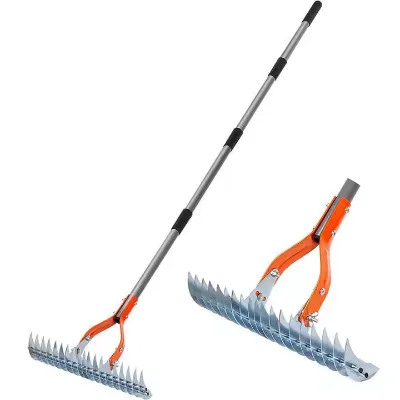


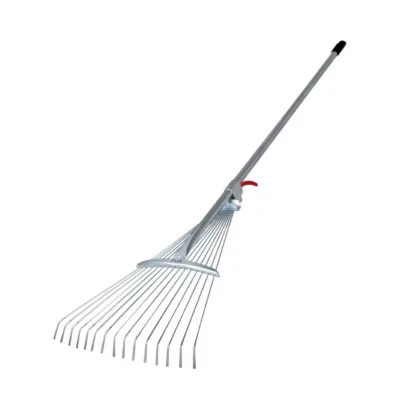
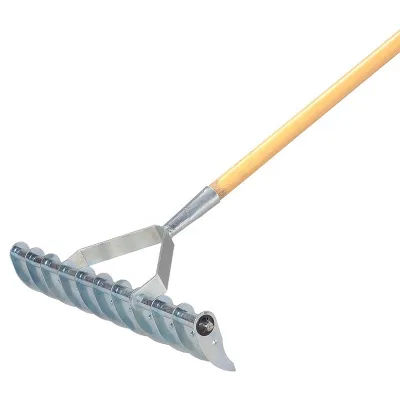


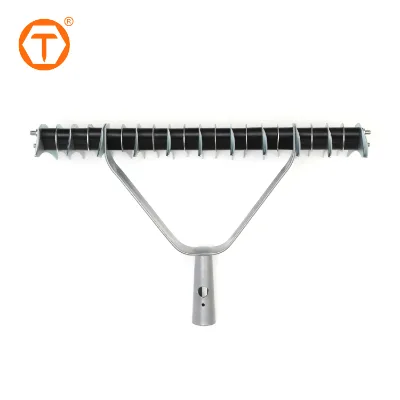

Garden Metal Thatch Rake Hand Dethatching Rake for Lawn Soil Loosening Dead Grass Removal
$11.00 - $11.50
MOQ: 300 Pieces


Comprehensive Sourcing Guide
Strategic Sourcing Guide for Metal Thatch Rakes
The global market for agricultural and landscaping tools continues to demand robust, durable equipment capable of handling heavy-duty thatch removal and soil aeration. For procurement professionals sourcing metal thatch rakes, the decision-making process must balance technical specifications, material integrity, and supply chain reliability. The current landscape offers a diverse array of options, ranging from standard flat rakes to specialized steel disc models. This guide provides a disciplined framework for evaluating suppliers and products, ensuring that the final selection aligns with operational requirements without relying on unverified marketing claims.
Technical Specifications and Material Composition
When evaluating a Metal Thatch Rake, the primary focus must be on the composition of the head and the tines, as these components directly determine the tool's efficacy and longevity. Based on available market data, the head material is predominantly Carbon Steel, a choice that offers a favorable balance between hardness and cost-efficiency. Carbon steel provides the necessary rigidity to penetrate compacted soil and break up thatch layers without bending under moderate pressure. However, buyers must verify the specific grade of steel used, as not all carbon steel alloys offer identical corrosion resistance or tensile strength.
The configuration of the tines is equally critical. The market exhibits significant variation in tooth count, with observed specifications ranging from single-tooth designs to multi-tooth configurations such as 14, 15, 16, 20, 21, and 22 teeth. A higher tooth count, such as the 21 or 22-teeth models, generally provides better coverage for fine thatch removal in lawns, while fewer teeth, like the 14 or 15-teeth variants, may be better suited for heavier, coarser debris. Some products are explicitly categorized as "Steel Disc Rakes" or "Sharp Rakes," indicating specialized designs for specific soil conditions. The shape of the teeth also varies, with options including "Sharp Rake" profiles designed for aggressive penetration.
The handle material is another decisive factor. Most observed products utilize Steel for the handle, which ensures structural integrity. However, the connection mode between the head and the handle varies significantly. Buyers should scrutinize whether the product uses an "Insert Sleeve Connection" or a "Screw Connection." Insert sleeve connections often provide a larger surface area for load distribution, potentially reducing the risk of the head detaching during high-impact use. Conversely, screw connections offer modularity but may require periodic tightening to maintain security. The overall dimensions, such as an overall width of tines measuring 38cm or a handle length of 102cm, must be selected based on the user's height and the specific area being treated.
Design Variations and Customization Capabilities
The diversity in product design allows for targeted procurement based on specific application needs. The market offers "Flat Rake" types alongside "Lawn rake" designs, each serving distinct purposes. Flat rakes are typically preferred for leveling soil and spreading mulch, while lawn rakes are optimized for gathering leaves and light thatch. Furthermore, the availability of "More Other Designs Available" suggests that suppliers can adapt the rake geometry to meet unique customer requirements.
Customization is a significant feature in this sector. A substantial portion of the market supports "Customized" orders, with suppliers offering OEM and ODM support. This capability allows buyers to request specific modifications, such as altering the number of teeth, changing the color to "Black Color" or "Green or Other Colors Available," or adjusting the handle length. Some suppliers indicate that "All Sizes Available" is a standard offering, which implies a high degree of flexibility in production. However, buyers must distinguish between "Customized" and "Non-Customized" SKUs, as the latter may have stricter constraints on lead times and minimum order quantities. The "Shrink: Not Stretchable" attribute indicates that the materials used do not undergo significant dimensional changes under stress, a crucial detail for maintaining tool accuracy over time.
Compliance, Certification, and Origin Verification
In the B2B procurement of agricultural tools, verifying the origin and adherence to standards is essential for risk management. The primary manufacturing hubs identified in the current data are Zhejiang, China, and Hebei China. These regions are known for their established metalworking industries, but buyers must ensure that the specific supplier adheres to the stated "prod_standard." While some listings mention "all sizes available" as a standard, others reference specific measurements like "12'" or specific model numbers such as "GJ-35-21," "SG-081," "H409B," and "H409C."
Buyers should not assume that all listed products meet international safety or quality certifications unless explicitly verified. The data does not provide a universal certification status for the entire category. Instead, procurement teams must request specific documentation for each batch, such as material test reports for the carbon steel and stainless steel components. The "Grade: DIY" designation for some products suggests they may be intended for lighter, non-industrial use, which could impact their suitability for commercial landscaping operations. Conversely, products with a "3 Years" warranty indicate a higher confidence in durability, though this warranty term must be validated against the supplier's specific terms and conditions.
Cost Drivers and Pricing Dynamics
The pricing structure for metal thatch rakes is influenced by several variables, including material costs, customization levels, and order volume. The observed price range in the market spans from $0.45 to $15.37 USD. This wide disparity is likely driven by differences in material quality, manufacturing complexity, and the extent of customization. Lower-priced items in the $0.45 range may correspond to basic models with minimal features or smaller order quantities, while the upper end of the spectrum reflects premium configurations, such as those with stainless steel tines or specialized designs.
Minimum Order Quantity (MOQ) is a critical cost driver. The observed MOQ range is extensive, spanning from 1 unit to 3,000 units. Suppliers with lower MOQs, such as 1, offer flexibility for small-scale testing or niche orders but may command a higher per-unit price. Conversely, bulk orders approaching the 3,000-unit threshold often benefit from economies of scale, reducing the unit cost significantly. Buyers must balance the need for inventory flexibility with the financial advantages of bulk purchasing. Additionally, the "prod_packing" method, whether "in Carton" or "CTN," can impact logistics costs and the overall landed price.
Typical Applications and Performance Expectations
The intended scope of use is a primary determinant in selecting the right rake. The data indicates that these tools are designed for "Agriculture" and "Gardens," covering a broad spectrum of applications from large-scale farming to residential landscaping. The "Lawn rake" classification specifically targets turf maintenance, where the "Lightweight" advantage is a significant performance factor. Reducing the weight of the tool minimizes operator fatigue during prolonged use, which is essential for commercial landscaping crews.
Performance expectations should be managed based on the specific model selected. For instance, the "Single Tooth" design is likely intended for precision work or specific soil aeration tasks, whereas the "16 Teeth" or "20 Teeth" models are better suited for general thatch removal and leaf gathering. The "Power Source: Manuel" designation confirms that these are manual tools, relying on human effort rather than mechanical power. This necessitates ergonomic considerations, such as handle length and grip comfort, to ensure efficient operation. The "Overall Width Of Tines" of 38cm provides a standard working width, but buyers should verify if wider or narrower options are available for specific terrain types.
Supplier Evaluation and Quality Control Protocols
Selecting a reliable supplier requires a rigorous evaluation process that goes beyond the initial product listing. Buyers should prioritize suppliers who demonstrate transparency regarding their "place of origin" and "prod_origin." While Zhejiang and Hebei are identified as key regions, the specific factory capabilities must be assessed. Key evaluation criteria include the supplier's ability to provide "OEM, ODM" services, their adherence to delivery timelines, and their quality control measures.
Quality control should focus on the integrity of the "Insert Sleeve Connection" or "Screw Connection." Buyers should request samples to test the tensile strength of these joints under load. The "3 Years" warranty offered by some suppliers is a positive indicator, but it must be backed by a clear service agreement. Additionally, the "Delivery: Within 30days" lead time is a standard benchmark, but buyers should confirm if this applies to customized orders, as design changes may extend the production cycle.
To ensure consistent quality, procurement teams should implement a sampling protocol before placing large orders. This involves testing the "Carbon Steel" and "STAINLESS STEEL" components for corrosion resistance and hardness. The "Single package size" and "port size" details, such as 32.5*12.3cm, should be verified to ensure compatibility with existing storage and shipping logistics.
Long-Term Procurement Considerations
Sourcing metal thatch rakes is not merely a transactional activity but a strategic decision that impacts long-term operational efficiency. Buyers should consider the availability of replacement parts, such as replacement tines or handles, to extend the lifecycle of the tools. The "Customized" nature of many products means that future reorders may require re-validation of specifications to ensure consistency.
Furthermore, the "All Sizes Available" attribute suggests a need for a flexible supply chain that can adapt to changing market demands. Buyers should establish a long-term relationship with suppliers who can scale production up or down based on seasonal fluctuations in agricultural and landscaping activity. The "Warranty" period is a key metric for long-term cost management; a 3-year warranty reduces the total cost of ownership by mitigating the risk of premature failure.
In conclusion, sourcing metal thatch rakes requires a meticulous approach that balances technical specifications, material quality, and supplier reliability. By focusing on the verified attributes of Carbon Steel construction, diverse tooth configurations, and robust connection modes, buyers can make informed decisions that meet their specific operational needs. The wide range of customization options and price points offers flexibility, but success depends on rigorous due diligence and clear communication with suppliers regarding standards, lead times, and quality expectations.
FAQs
What materials are used for the head and handle of metal thatch rakes?
The head is typically made of Carbon Steel while the handle is constructed from Steel. Some models feature Stainless Steel tines for enhanced durability. These materials provide the necessary rigidity for penetrating compacted soil without bending under moderate pressure during heavy-duty use.
Which tooth configurations are available for different soil conditions?
Available configurations range from single teeth to multi-tooth designs with 14, 15, 16, 20, 21, or 22 teeth. Higher counts like 21 or 22 teeth offer better coverage for fine thatch removal in lawns, while fewer teeth suit heavier debris. The shape can also be a Sharp Rake for aggressive penetration.
Can I customize the color and design of the Metal Thatch Rake?
Yes, customization is available for color options like Black or Green, and various designs are offered. Suppliers support OEM and ODM services to alter specifications such as tooth count or handle length. However, some SKUs are non-customized and may have stricter constraints on lead times.
How are the rake heads connected to the handles securely?
Connection modes include Insert Sleeve Connection and Screw Connection. Insert sleeve connections provide a larger surface area for load distribution, reducing detachment risks. Screw connections offer modularity but may require periodic tightening to maintain security during high-impact use in agricultural or garden settings.
What is the typical delivery time for custom Metal Thatch Rake orders?
Delivery is generally within 30 days for standard and customized orders. This timeline applies to most configurations, though specific design changes may extend production cycles. Buyers should confirm if the 30-day window holds for bulk orders or complex customizations before finalizing procurement plans.
Which supplier locations are primary hubs for manufacturing these tools?
Primary manufacturing hubs are located in Zhejiang, China, and Hebei China. These regions host established metalworking industries capable of producing Carbon Steel and Stainless Steel rakes. Buyers should verify specific factory capabilities and origin details to ensure quality control and supply chain reliability for their orders.
What is the price range and minimum order quantity for these rakes?
Prices range from 0.45 to 15.37 USD depending on material quality and customization. Minimum order quantities vary widely from 1 to 3000 units. Lower MOQs offer flexibility for testing, while bulk orders near 3000 units benefit from economies of scale, significantly reducing the per-unit cost.