Source Minimalist American Style Crystal Chandelier for Hotels, Homes, and Restaurants
Find and compare 30 Minimalist American Style Crystal Chandelier options from Zhongshan suppliers. Evaluate features like LED lighting sources, crystal materials, and various certifications to select the ideal fixture for your commercial or residential project needs.
Key considerations
Products List


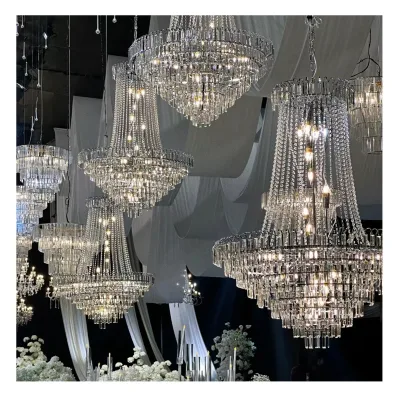


Retro American Vintage Living Room Pendant Crystal Hanging Lighting Luxury Chandeliers
$396.00 - $1188.00
MOQ: 30 Pieces


Comprehensive Sourcing Guide
Minimalist American Style Crystal Chandelier Sourcing Guide
Sourcing lighting fixtures that balance aesthetic elegance with functional reliability requires a disciplined approach to specification verification and supplier evaluation. The term "minimalist American style" often implies clean lines, uncluttered designs, and a focus on material quality, yet the actual product listings may vary significantly in terminology and visual presentation. Buyers must navigate the gap between marketing descriptors and physical attributes to ensure the final product aligns with their interior design vision and technical requirements. This guide provides a structured framework for evaluating crystal chandeliers, focusing on observable data points, technical compliance, and commercial terms to mitigate procurement risks.
The following sections break down the critical decision points for sourcing these fixtures. By adhering to evidence-based verification steps, procurement teams can avoid common pitfalls such as mismatched voltage standards, inadequate warranty coverage, or non-compliant safety certifications. The goal is to transform vague aesthetic preferences into concrete, verifiable specifications that suppliers can accurately quote and deliver. This approach ensures that the final installation meets both the stylistic expectations of the project and the rigorous safety standards required for commercial and residential applications.
Product Scope and Observed Listing Signals
The observed product landscape for crystal chandeliers reveals a diverse range of styles, materials, and technical configurations. Listings frequently describe products using terms like "European," "Contemporary," or "Traditional," which may overlap with the desired minimalist aesthetic. For instance, some products are explicitly labeled as "E14 Crystal Chandelier Pendant Light" or "LED Crystal Chandelier Pendant Light," featuring body materials composed of iron and crystal. The visual finish often includes polished gold or chrome treatments, while the crystal itself may be clear or amber. Buyers should carefully review product images and descriptions to distinguish between purely decorative elements and those that contribute to a minimalist design language, such as simplified geometric forms or reduced ornamentation.
Technical attributes vary widely across listings, indicating that a single keyword search yields heterogeneous results. Observed specifications include lamp holders ranging from E14 to E39, with lighting sources supporting up to 40W per bulb. The irradiated area is a critical functional metric, with some products covering 10-15 square meters and others extending to 30 square meters or more. Additionally, the input voltage ranges from AC85-265V, suggesting compatibility with various global power standards, while specific models may list narrower ranges like 90V-260V. Understanding these variations is essential for matching the fixture to the intended application, whether it be a living room, hotel lobby, or conference room, where lighting density and coverage are paramount.
Technical Specifications to Verify
Voltage compatibility is a primary technical consideration that must be verified before placing any order. While many listings indicate a broad input voltage range of AC85-265V, which accommodates most international grids, some products specify narrower ranges such as 90V-260V or a fixed 36V. Buyers must confirm that the supplier’s product matches the local electrical infrastructure to prevent damage or malfunction. Additionally, the lamp holder type, commonly E14 or E26/E27, must align with the available bulbs or integrated LED strips. For projects requiring specific beam angles, such as 80°, or particular color temperatures like warm white, these details should be explicitly confirmed in the technical datasheet rather than assumed from the product title.
Material composition and physical dimensions also play a crucial role in the installation and longevity of the chandelier. The body material is typically a combination of iron and crystal, with finishes such as polished gold or chrome. Buyers should verify the product dimensions, such as a diameter of 600mm and a height of 340mm, to ensure the fixture fits the ceiling height and spatial constraints of the installation site. Furthermore, the weight of the fixture, determined by the iron and crystal content, must be considered when evaluating ceiling support requirements. For minimalist designs, the structural integrity of the iron frame and the clarity of the crystal are key indicators of quality, so requesting detailed material specifications or sample images is advisable.
Compliance and Safety Documentation
Certification requirements are non-negotiable for legal and safe operation in most markets. The observed listings include a wide array of certifications, such as CE, CCC, RoHS, EMC, LVD, FCC, and VDE, among others. Buyers must identify which certifications are mandatory for their target market and verify that the supplier can provide valid documentation for these standards. For example, products intended for the European market typically require CE marking, while those for China may need CCC certification. It is crucial to distinguish between self-declared certifications and those issued by recognized testing laboratories, as the latter provide greater assurance of compliance with safety and electromagnetic compatibility standards.
Beyond certifications, warranty and guarantee terms offer insight into the supplier’s confidence in their product quality. Observed warranty periods range from 3 years for color guarantees to 10 years for the overall product, with some listings specifying a 6-year warranty. Buyers should carefully review the terms of these warranties, including what components are covered and the process for claiming replacements or repairs. Additionally, the color guarantee, which may last 3 years, is particularly relevant for crystal and metal finishes, ensuring that the aesthetic appeal remains intact over time. Understanding these terms helps in calculating the total cost of ownership and assessing the long-term reliability of the chandelier.
Cost Drivers and Commercial Terms
Pricing for crystal chandeliers varies significantly based on material quality, design complexity, and certification requirements. The observed price range spans from $4.9 to $3890, reflecting the diversity of products available. Lower-priced items may feature simpler designs or fewer crystals, while higher-priced options likely include premium materials, intricate craftsmanship, or additional features like integrated LED strips. Buyers should analyze the price in relation to the specified attributes, such as the number of bulbs, the type of crystal, and the finish quality, to determine if the cost aligns with the expected value. It is also important to consider the minimum order quantity (MOQ), which ranges from 1 to 500 units, as this can impact the unit price and overall budget.
Delivery times and packaging methods are other critical commercial factors that affect the procurement timeline and product safety. The observed delivery date is typically 25-30 days after the deposit, which buyers must factor into their project schedules. Packaging is usually carton-packed with foam inside or wooden-packed, which is essential for protecting the fragile crystal components during transit. Buyers should verify the packaging standards to ensure that the products arrive in pristine condition, minimizing the risk of damage and associated costs. Additionally, the origin of the products, often Zhongshan, China, may influence shipping costs and lead times, so coordinating logistics early in the process is recommended.
Supplier Qualification and Quality Control
Supplier qualification involves assessing the manufacturer’s capability to produce consistent, high-quality products. Buyers should verify the supplier’s production capacity, quality control processes, and ability to handle customization requests, as many listings indicate that customization is available. This includes options for custom colors, dimensions, or lighting solutions services such as lighting and circuitry design. Engaging with suppliers who offer these services can enhance the final product’s fit for specific project requirements. Additionally, requesting samples or visiting the factory, if feasible, can provide valuable insights into the manufacturing standards and attention to detail.
Quality control checks should be implemented at various stages of production to ensure compliance with specifications. Buyers should define clear acceptance criteria for materials, such as the grade of iron and crystal, and the finish quality. Inspections should also cover electrical safety, including proper wiring and secure lamp holder connections. For minimalist designs, visual inspections are crucial to ensure that the aesthetic elements, such as symmetry and finish uniformity, meet the desired standards. Establishing a robust quality control protocol helps in identifying and rectifying defects early, reducing the risk of receiving substandard products.
Long-Term Procurement Checks
Long-term procurement success depends on establishing strong relationships with reliable suppliers and maintaining open communication channels. Buyers should regularly review supplier performance metrics, such as on-time delivery rates, product quality consistency, and responsiveness to issues. This ongoing evaluation helps in identifying potential risks and addressing them proactively. Additionally, staying informed about industry trends and technological advancements in lighting can inform future sourcing decisions, ensuring that the products remain relevant and competitive. Building a network of trusted suppliers provides flexibility and options for future projects.
Finally, buyers should continuously monitor the market for new products and suppliers that may offer better value or innovation. This includes exploring new materials, designs, or technologies that could enhance the aesthetic or functional performance of the chandeliers. By maintaining a proactive approach to sourcing, buyers can adapt to changing market conditions and customer preferences, ensuring that their lighting solutions remain effective and appealing. Regularly updating the sourcing strategy based on market insights and supplier performance helps in achieving long-term procurement goals and delivering high-quality products to end-users.
FAQs
What certifications do these chandeliers hold?
These chandeliers hold multiple certifications including CE, CCC, RoHS, EMC, LVD, SAA, VDE, and Energy Star. The specific certifications depend on the model and target market, ensuring compliance with international safety and environmental standards for various regions.
Can I customize the design style of the light?
Yes, customization is available for the design style, allowing you to choose between contemporary or traditional European styles. You can also request specific colors and finishes, such as polished gold or chrome, to match your interior requirements exactly.
What is the warranty period for the crystal chandelier?
The warranty period varies by model, with options ranging from 6 years to 10 years. This coverage ensures long-term reliability for your lighting investment, protecting against defects in materials and workmanship under normal usage conditions.
How long is the delivery time after deposit?
The delivery time is typically 25 to 30 days after the deposit is received. This timeline guarantees quality control during production and ensures the finished product meets the specified standards before shipping from the Zhongshan, China facility.
What is the input voltage range for these lights?
The input voltage range is AC 85-265V, making the lights compatible with various global power standards. Some models also support a range of 90V to 260V, ensuring stable operation in different electrical environments without needing a transformer.
Which materials are used for the body construction?
The body is constructed from iron and crystal, providing a durable and elegant structure. The crystal components are available in clear or amber colors, while the metal finish can be polished gold or chrome to suit different aesthetic preferences.
What is the irradiated area for the LED chandelier?
The irradiated area ranges from 10 to 15 meters for specific models and up to 30 square meters for others. This ensures adequate lighting coverage for living rooms, hotels, restaurants, and luxury homes depending on the selected product dimension and wattage.
Can I get lighting design services with the purchase?
Yes, lighting and circuitry design services are available as part of the product offering. This service helps integrate the chandelier seamlessly into your space, ensuring optimal placement and electrical configuration for the best visual and functional outcome.